Starting a window tinting business is an exciting venture that combines technical precision with smart business sense. The window film market is a multi-billion dollar industry, with steady demand for tinting services across automotive, residential, and commercial properties.
This guide will take you through the practical steps of validating your business concept, obtaining necessary licenses, acquiring equipment, and building supplier relationships to help you launch a successful window tinting business in the U.S.
Step 1: Plan your business and validate the concept
First, gauge local demand. Visit car dealerships and auto body shops to ask if they outsource their tinting work. You can also talk to commercial property managers about their needs for solar or security film. This direct feedback is more valuable than generic market reports.
Analyze your local competition
Use Google Maps to find every tint shop in a 20-mile radius. Study their websites and Google Business Profiles. Note their services, pricing, and what customers say in reviews. This shows you where the service gaps and opportunities are in your specific market.
Estimate your startup costs
Your initial investment will vary, but you can plan for a few key expenses. A mobile operation is the leanest way to begin. Many new owners make the mistake of buying cheap film to lower these initial costs, which often leads to discoloration and failure, damaging their reputation early on.
- Tools: Expect to spend $150-$450 on professional-grade heat guns, squeegees, and knives.
- Initial Film Inventory: A starter set of quality film rolls will run between $500 and $1,500.
- Plotter: A digital film plotter is a larger investment at $3,000-$6,000, but it dramatically reduces waste and speeds up jobs.
- Business Fees: Budget $100-$700 for LLC formation and local permits.
Here are 3 immediate steps to take:
- Identify 5-10 local competitors and analyze their customer reviews.
- Create a startup budget spreadsheet with categories for equipment, film, and legal fees.
- Call two local auto detailers and ask if they would be open to a partnership.
Step 2: Set up your legal structure and get licensed
Most new tint shops form a Limited Liability Company (LLC). This structure protects your personal assets, like your home and car, if the business is ever sued. It is a much safer route than operating as a sole proprietor, which leaves you personally liable.
An LLC also offers pass-through taxation, meaning business profits pass to your personal tax return. Once your LLC is formed, get a free Employer Identification Number (EIN) from the IRS website. You will need an EIN to open a business bank account.
Secure your permits and licenses
You will need a state business license or permit, often from the Secretary of State. Since you sell film and labor, you also need a seller’s permit to collect sales tax. Your city or county clerk handles local business permits, which typically cost $50-$150.
While the industry has few direct regulations, state laws dictate legal tint darkness, or Visible Light Transmission (VLT). Many new owners make the mistake of ignoring these rules. Check your state’s DMV website, as installing illegal tint can lead to fines for everyone involved.
Here are 4 immediate steps to take:
- Decide on a business name and register your LLC with the state.
- Apply for a free Employer Identification Number (EIN) on the IRS website.
- Look up your state’s specific VLT percentage laws for vehicle windows.
- Call your city hall to ask about the cost and process for a local business permit.
Step 3: Secure your insurance and manage risk
Protect your business with the right insurance. General liability is your first line of defense, covering accidental damage to a customer’s vehicle. A slip with a knife can happen. Aim for at least a $1 million policy, which typically costs $400 to $900 annually.
If you operate a mobile business, you need a commercial auto policy for your work vehicle. Many new owners mistakenly believe their personal auto insurance provides coverage, but a claim during a job will likely be denied. For a physical shop, add commercial property insurance.
You might also consider professional liability insurance. This covers claims of faulty workmanship, like film that peels or bubbles prematurely. Once you hire your first employee, workers' compensation is not optional, it is legally required in most states.
Get quotes from insurers who understand auto services. Providers like Hiscox, Next Insurance, and CoverWallet specialize in policies for tradespeople. They understand the specific risks you face better than a general agent and can offer more relevant coverage.
Here are 3 immediate steps to take:
- Request general liability quotes from two specialized insurers like Hiscox or Next Insurance.
- Ask an agent about a commercial auto policy for your work vehicle.
- Look up your state’s workers' compensation requirements for small businesses.
Step 4: Set up your location and buy equipment
For a physical shop, look for a space between 800 and 1,200 square feet. This provides enough room for a clean bay and a small office. Check with your city’s planning department to ensure the property has commercial or light industrial zoning appropriate for auto services.
When you negotiate a lease, confirm you can install bright lighting and have reliable water access. A dust-free environment is vital, so ask about the HVAC system. Some landlords may require you to install a specific water drainage or filtration system, so clarify this upfront.
Purchase your equipment and film
With a location in mind, you can start to buy your gear. Many new owners buy cheap film from online marketplaces to save money, but this often leads to discoloration and failure, which hurts your reputation. Stick to known brands to ensure quality work from day one.
- Heat Gun: A professional model from Steinel or Wagner will cost $80-$200.
- Knives and Squeegees: Expect to pay $100-$250 for a quality set from brands like Olfa or Fusion Tools.
- Film Plotter: A plotter from Graphtec or Roland is a larger investment at $3,000-$6,000, but it reduces film waste and cuts your installation time significantly.
You can open accounts with distributors like Express Window Films or Global Window Films. They will ask for your business license and EIN. Most have minimum orders of one or two film rolls, which will run you $500-$1,000 to start.
Here are 4 immediate steps to take:
- Identify three available commercial properties that meet the size and zoning needs.
- Price out a Graphtec plotter and a Steinel heat gun from an equipment supplier.
- Contact a film distributor to ask about their new account requirements.
- Create a list of questions for potential landlords about lighting, water, and HVAC.
Step 5: Set up your finances and payment processing
Accept payments efficiently
Most customers will pay with a credit or debit card. For larger commercial jobs or special-order films, you should require a deposit of 25-50% upfront. This protects you from no-shows and covers your initial material costs.
When you choose a payment processor, focus on low transaction fees and mobile capability. Many new owners accept high rates or clunky hardware that hurts profitability, especially on smaller automotive jobs. You need a system that works anywhere.
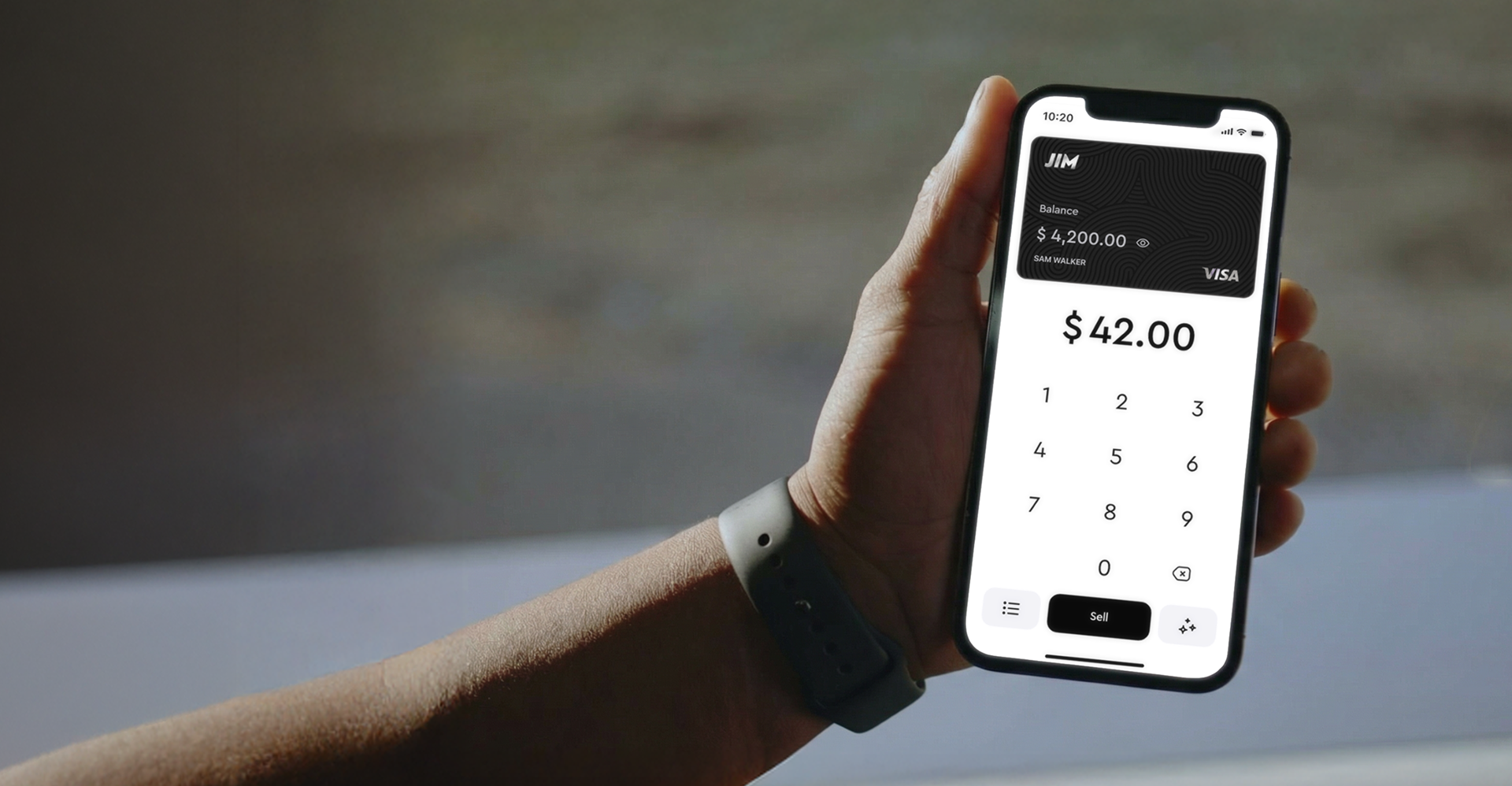
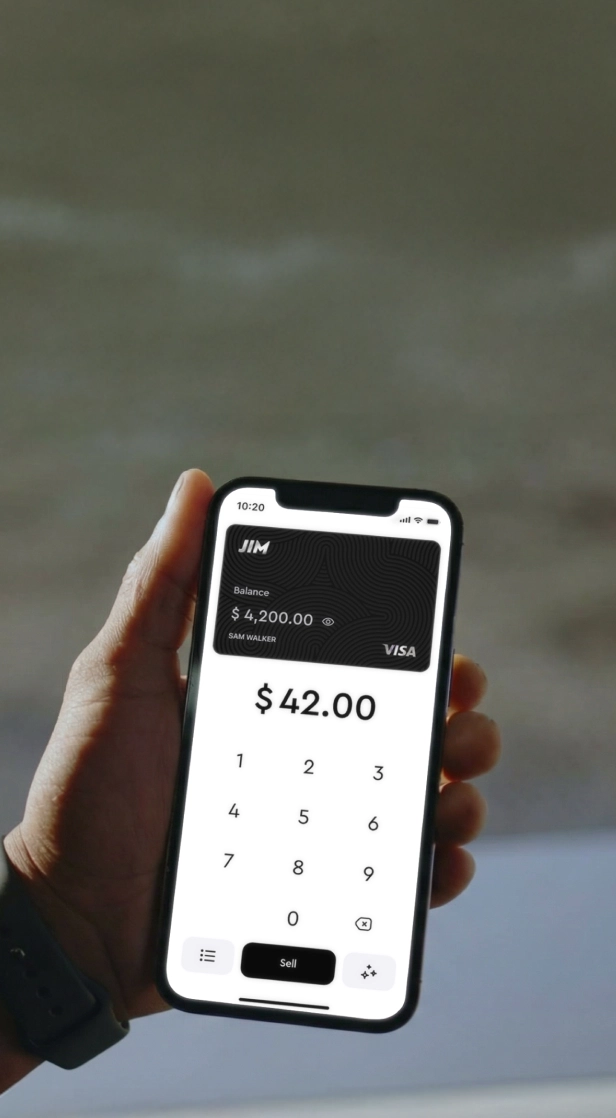
For tinting businesses that accept payments on-site or on-the-go, JIM offers a streamlined solution. With JIM, you can accept debit, credit, and digital wallets directly through your smartphone. Just tap and you are done.
At just 1.99% per transaction with no hidden costs or extra hardware needed, it is a strong offer. Other providers often charge between 2.5% and 3.5%. It is particularly useful for mobile installers who need to collect payment immediately after a job is complete.
Here is how it works:
- Get Started: Download the JIM app for iOS.
- Make a Sale: Type the sales amount, hit sell, and ask your customer to tap their card or device on your phone.
- Access Funds: Your money is available right on your JIM card as soon as the sale is done - no waiting for bank transfers.
Here are 3 immediate steps to take:
- Decide on your deposit policy for large jobs, such as 50% upfront.
- Compare the total cost of two other payment processors against the 1.99% flat rate from JIM.
- Download the JIM app to explore its interface.
Step 6: Fund your business and manage finances
Secure your startup capital
Most tint businesses start with personal savings or a small loan. The SBA Microloan program is a good fit, offering up to $50,000. You can expect interest rates between 8% and 13%. Lenders will want to see a solid business plan and a decent credit score.
For your plotter, you might want to consider equipment financing. This is a loan specifically for that purchase. The plotter itself acts as collateral, which can make approval easier than a traditional bank loan. Suppliers often have financing partners they can recommend.
Plan your working capital
Many new owners focus only on equipment costs. You also need cash for the first six months. Plan for about $3,000 to $5,000 to cover fuel, insurance, marketing, and replacement film rolls. This buffer keeps you afloat before jobs become consistent.
Here are 3 immediate steps to take:
- Look up the SBA Microloan program to find a local intermediary lender.
- Ask your preferred equipment supplier if they offer financing for plotters.
- Create a six-month operating budget that includes marketing and insurance costs.
Step 7: Hire your team and set up operations
Your first hire will likely be a Window Tint Installer who handles everything from window prep to final application. Many new owners focus only on technical skill, but you should also look for a professional attitude. This person will represent your business directly with customers.
Expect to pay an experienced installer between $20 and $30 per hour. While the industry has no mandatory certifications, training from film manufacturers like 3M or XPEL is a valuable credential. It shows a commitment to quality and modern techniques.
Once you have jobs lined up, you need a way to manage them. A simple calendar works at first, but you will quickly outgrow it. Scheduling software like Tint Wiz or Shopmonkey helps you manage appointments, track job details, and avoid double-bookings.
As a benchmark, a full-time installer should generate two to three times their salary in revenue. If you pay an installer $50,000 a year, they should bring in $100,000 to $150,000 in business. This metric helps you decide when it is financially smart to expand your team.
Here are 4 immediate steps to take:
- Draft a job description for a Window Tint Installer, including both technical and soft skills.
- Look up the cost and schedule for a manufacturer certification program like XPEL's.
- Sign up for a free trial of scheduling software like Tint Wiz to test its features.
- Calculate the annual revenue target for an installer paid $25 per hour.
Step 8: Market your business and get customers
Build your local presence
Start with your Google Business Profile. Fill it out completely with your services, hours, and photos of your work. Your first goal should be to get 5-10 positive customer reviews. This is the single most effective way for local customers to find you online.
You should also revisit the auto shops and dealerships you contacted earlier. Offer them a 10-15% commission for every referral that becomes a paying customer. This turns other local businesses into a sales team for you, with no upfront cost.
Showcase your work online
Create a simple one-page website on a platform like Squarespace. It only needs to show your services, contact information, and photos of completed jobs. Many new owners get stuck trying to build a perfect site. Just get something professional online quickly.
Use Instagram to post before-and-after photos and videos. Use local hashtags like #[YourCity]WindowTinting to attract nearby car enthusiasts. This visual proof of your skill builds trust faster than any advertisement.
Here are 4 immediate steps to take:
- Claim and fully complete your Google Business Profile.
- Create a referral agreement offering a 10-15% commission to two local auto shops.
- Set up an Instagram account and post three examples of your best work.
- Outline a simple one-page website listing your core services and contact info.
Step 9: Set your pricing and create service packages
Develop your service tiers
Most tint shops offer a "good, better, best" model. This guides customers and increases your average ticket. For example, you could offer a standard carbon film, a mid-grade ceramic film, and a premium infrared-blocking film. Price reflects performance and warranty.
Many new shops underprice their work to attract customers, but this can make it hard to cover costs and invest in quality film. Your price should reflect your skill and materials. Your material cost should be around 15-25% of the job price.
For a standard sedan, your pricing might look like this:
- Standard Carbon: $250 - $350
- Mid-Grade Ceramic: $400 - $550
- Premium IR Ceramic: $600 - $800
SUVs and trucks typically cost an additional $50 to $100 per tier. Also, set prices for add-ons like a windshield strip ($40-$60) or a full windshield ($200+). This ensures you capture all revenue opportunities from a single job.
To set your final numbers, call at least three local competitors. Ask for a quote on a specific vehicle, like a "2023 Toyota Camry," to see what the market rate is. Adjust your prices to be competitive but not the cheapest.
Here are 4 immediate steps to take:
- Call three local competitors to get a cash price for tinting a common sedan.
- Create three service packages with distinct film types and benefits.
- Calculate your material cost for each package to ensure a 75-85% gross margin.
- Set fixed prices for add-on services like sunroofs and windshield strips.
Step 10: Implement quality control and scale your operations
Maintain high standards
Your reputation depends on flawless work. Create a final inspection checklist for every vehicle. Look for zero bubbles, no contamination under the film, and perfectly straight edges. Many new owners skip this final check when they get busy, which is a mistake.
Your callback rate is your most important quality metric. Aim for a rate below 3%. If more than three out of 100 customers return with issues like peeling or discoloration, you have a problem with your installation process or film quality.
Know when to grow
Once your lead installer is booked solid for two weeks straight, it is time to hire. This prevents burnout and stops you from turning away profitable jobs. A good benchmark is to hire when you consistently turn down five or more jobs per week.
As you add staff, scheduling software like Tint Wiz or Shopmonkey becomes a necessity. These platforms help you manage multiple calendars, track job progress, and maintain clear communication with a growing team, which a simple calendar cannot do.
Here are 4 immediate steps to take:
- Create a post-installation quality checklist to use on every job.
- Calculate your callback rate for the last 30 days.
- Set a revenue or job-count trigger for hiring your next installer.
- Explore the multi-user features in a trial of Tint Wiz or Shopmonkey.
You now have a clear path to start your tinting business. Your skill and attention to detail are what will set you apart. Focus on flawless work from day one, and your reputation will grow. You have what it takes to succeed.
When you complete that first job, make payment simple. JIM turns your phone into a card reader for a flat 1.99% fee, no extra hardware needed. Your money is available instantly. Download JIM and get ready to collect payment.
.avif)