Starting a yoni steam business is a rewarding venture that combines a passion for holistic wellness with smart business sense. The growing interest in natural health makes this a great time to enter the market, but that accessibility doesn't guarantee success.
This guide will take you through the practical steps of validating your business concept, obtaining necessary licenses, acquiring equipment, and building supplier relationships to help you launch a successful yoni steam business in the U.S.
Step 1: Plan and validate your business idea
First, gauge local demand. You can visit nearby wellness centers and spas to see if they offer similar services. Also, explore online communities on Facebook or Reddit to understand what potential clients look for in a yoni steam session and what they are willing to pay.
Once you understand the market, analyze your direct competitors. Use Google Maps to find local yoni steam providers. Review their websites, service menus, and pricing. This helps you identify gaps in the market and define what makes your business unique.
Startup cost breakdown
Planning for initial investments helps ensure a smooth launch. Your primary expenses will fall into a few categories. Many new owners miscalculate their initial herb inventory, so plan to stock at least 3-4 different blends to start.
- Yoni Steam Sauna or Chair: $200 - $700
- Initial Herb & Supply Stock: $150 - $400
- Business Registration (LLC): $50 - $500, depending on your state
- Liability Insurance: $300 - $600 annually
- Website & Booking Software: $50 - $200 for initial setup
Your total startup costs will likely range from $750 to $2,400. This prepares you for the main upfront expenses without unexpected surprises.
Here are 4 immediate steps to take:
- List five local competitors and document their pricing and services.
- Draft a preliminary budget with estimated costs for equipment and insurance.
- Research the LLC formation process and fees for your state.
- Identify three potential herb suppliers and request their wholesale price lists.
Step 2: Establish your legal and licensing framework
You might want to form a Limited Liability Company (LLC). This structure protects your personal assets from business debts and lawsuits. An LLC also offers pass-through taxation, meaning profits are taxed on your personal return, which simplifies paperwork. Filing costs range from $50 to $500.
Once your LLC is approved, get an Employer Identification Number (EIN) from the IRS. It is free and you will need it to open a business bank account and file taxes. Think of it as a Social Security number for your business.
State and local requirements
Many new owners get stuck here because regulations for yoni steaming are not always clear. Some states classify it under esthetics or massage, which requires a professional license. Always call your state's Board of Cosmetology to confirm their rules before you offer services.
You will also need a general business license from your city or county clerk's office. If you plan to sell herbs or other products, you must obtain a seller's permit from your state's department of revenue. This permit allows you to collect sales tax and is usually free.
Here are 3 immediate steps to take:
- Call your state's Board of Cosmetology to ask about their specific rules for yoni steaming.
- Visit your Secretary of State's website to review LLC filing fees and timelines.
- Apply for a free EIN on the official IRS website.
Step 3: Secure your insurance and manage risk
With your legal structure in place, the next move is to protect your business. Insurance can feel like a large expense, but it shields you from claims that could otherwise close your doors. You will need a few specific types of coverage.
Choose the right insurance policies
General liability insurance covers slip-and-fall accidents on your property. Professional liability insurance, also called malpractice insurance, is for claims related to the service itself. Many new owners mistakenly believe a general policy covers client injuries from steaming, but it does not.
Expect to pay between $400 and $900 annually for a combined general and professional liability policy with $1 million in coverage. If you own your space, you will also need commercial property insurance. Specialized providers understand your risks better. You might want to get quotes from companies like Beauty & Bodywork Insurance (BBI), Hiscox, or NEXT Insurance.
To further manage risk, use a detailed client intake form. This document should ask about allergies, skin sensitivities, and contraindications. Also, have every client sign a liability waiver before their session. This shows they understand the potential risks involved.
Here are 4 immediate steps to take:
- Request quotes from two specialized insurance providers like BBI or Hiscox.
- Confirm your professional liability policy explicitly covers burns and allergic reactions.
- Draft a client intake form that asks about allergies and health conditions.
- Find a liability waiver template designed for holistic wellness services.
Step 4: Set up your location and equipment
Find and prepare your space
You can start with a small commercial space. A 200-400 square foot studio is often enough for a single steam station. Before you sign a lease, contact your city's planning department to confirm the zoning allows for "personal service" or "wellness" businesses.
When you negotiate your lease, ask about a tenant improvement (TI) allowance. This is money from the landlord to help you build out the space. It can cover costs for plumbing or ventilation, which are sometimes needed for a steam service.
Purchase your equipment and supplies
With your location picked, you can buy your core equipment. A quality yoni steam sauna costs between $200 and $700. You will also need an electric burner ($20-$50) and stainless steel pots ($30-$60). A frequent mistake is to buy residential-grade items that wear out fast.
For herbs, look for wholesale suppliers on platforms like Faire or Etsy Wholesale. Many have low minimum order quantities, sometimes just 1-5 pounds per blend. This lets you offer variety without a huge upfront investment in inventory.
Here are 4 immediate steps to take:
- Contact your city's planning department about zoning for a wellness business.
- Ask potential landlords about a tenant improvement allowance.
- Create an equipment list with budget estimates for commercial-grade items.
- Request wholesale price lists from three herbal suppliers.
Step 5: Set up your payment system
Establish your payment policies
You will need a reliable way to accept payments, as most clients expect to pay with a card. You might also want to require a small deposit to hold appointments. This is a common practice in wellness services that helps reduce no-shows.
Choose a payment processor
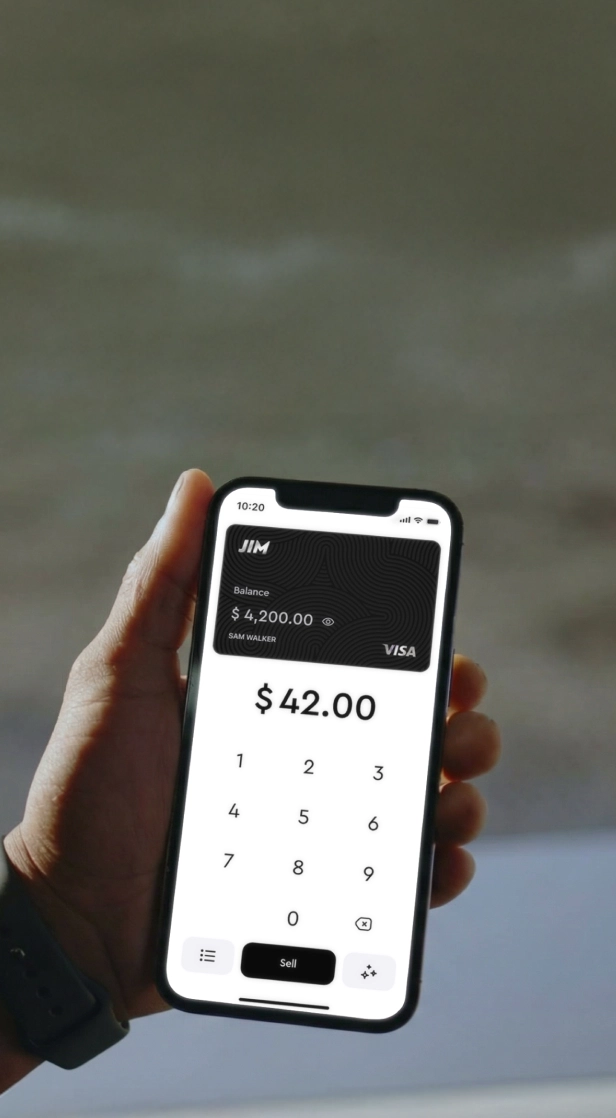
Many new owners get surprised by high transaction fees that eat into profits. When you select a processor, look for one with transparent pricing. For a yoni steam business that needs to accept payments on-site or on-the-go, JIM offers a streamlined solution.
With JIM, you can accept debit, credit, and digital wallets directly through your smartphone—just tap and done. At just 1.99% per transaction with no hidden costs or extra hardware needed, it is particularly useful for selling retail products after a session or for mobile services.
This rate is lower than the typical 2.5% to 3.5% that other providers offer. Getting started is straightforward:
- Get Started: Download the JIM app for iOS.
- Make a Sale: Type the sales amount, hit sell, and ask your customer to tap their card or device on your phone.
- Access Funds: Your money is available on your JIM card as soon as the sale is done, with no waiting for bank transfers.
Here are 3 immediate steps to take:
- Calculate your potential monthly processing fees based on a 1.99% rate.
- Decide if you will require deposits to secure appointments.
- Download the JIM app to explore its interface.
Step 6: Secure your funding and manage finances
With your business plan ready, you can seek funding. SBA Microloans are a good fit for wellness startups. These loans range from $500 to $50,000. Lenders typically look for a credit score above 640 and a solid business plan to approve you.
Interest rates for these loans usually fall between 8% and 13%. You can find a list of intermediary lenders that distribute these funds on the Small Business Administration (SBA) website. The application process often takes 30 to 90 days.
Explore grant opportunities
Unlike loans, grants do not need repayment. You might want to look into the Amber Grant for Women, which awards $10,000 monthly. Also, check your city or county's economic development website for local grants aimed at new small businesses.
Now that we have covered funding, let's talk about cash flow. Many new owners focus on startup costs but forget to budget for the first six months of operations. Plan for $3,000 to $5,000 in working capital to cover rent, supplies, and marketing before you build a steady client base.
Here are 4 immediate steps to take:
- Research SBA Microloan lenders in your state.
- Calculate your operating budget for the first six months.
- Check the Amber Grant website for application deadlines.
- Search your city’s economic development page for local business grants.
Step 7: Hire your team and set up operations
As you grow, you may need to hire a Yoni Steam Practitioner. This person handles client consultations, prepares herbal blends, and maintains equipment sanitation. Expect to pay an hourly rate between $18 and $25, depending on experience and your location.
While most states do not require a specific license for yoni steaming, you might want your staff to get certified. Private certifications from organizations like the Peristeam Hydrotherapy Institute add credibility and can increase client trust.
Streamline your daily workflow
To manage appointments, consider a dedicated scheduling platform. Many new owners try to use a personal calendar, but this often leads to double-bookings. Software like Acuity Scheduling or Vagaro automates bookings, sends client reminders, and can process payments.
As you build your team, keep an eye on your labor costs. In service businesses, payroll often accounts for 40% to 50% of total revenue. If you project $5,000 in monthly sales, plan for about $2,000 to $2,500 in wages to stay profitable.
Here are 4 immediate steps to take:
- Draft a job description for a Yoni Steam Practitioner with a clear pay range.
- Research two private yoni steam certification programs for staff training.
- Compare the features of Acuity Scheduling and Vagaro for your business.
- Calculate your target labor cost based on 40% of your revenue projections.
Step 8: Market your business and get clients
Your first clients will likely come from local searches. You should set up a Google Business Profile immediately. Fill out every section and upload high-quality photos of your space. Encourage your first few clients to leave reviews, as this builds trust with new prospects.
Build your online presence
Use Instagram to showcase your studio's ambiance and herbal blends. Post short videos that explain the process. Use local hashtags like #yonisteam[yourcity] or #[yourcity]wellness to attract a nearby audience. Consistency is more important than frequency, so aim for 3-4 posts per week.
Create partnerships and promotions
You can also partner with complementary businesses like yoga studios or acupuncturists for cross-promotions. Offer their clients an exclusive discount. A simple "New Client Special," such as 20% off the first session, is an effective way to get people in the door.
Many new owners spend heavily on paid ads too soon. Instead, focus on these organic methods first. Your goal is to keep your customer acquisition cost (CAC) between $25 and $75 per new client, which is typical for wellness services.
Here are 4 immediate steps to take:
- Create and complete your Google Business Profile with photos.
- Identify three local wellness businesses to approach for a partnership.
- Draft a "New Client Special" to use in your first month.
- Plan your first two weeks of Instagram content.
Step 9: Develop your pricing strategy
Your pricing sets the tone for your brand. For a standard 30-minute yoni steam session, most businesses charge between $50 and $90. Your price should reflect your location, the ambiance of your space, and your expertise.
Once you set a single-session price, you can create packages. A package encourages repeat visits and improves cash flow. For example, you might offer a bundle of three sessions for $180, which gives clients a $10 discount per session compared to a $70 single-session price.
Price your retail products
For retail herbs, a 100% markup is standard. If a wholesale bag of herbs costs you $10, you should price it at $20. Many new owners only price based on the cost of herbs and forget to factor in their time and expertise, which can hurt profits.
To stay competitive, review the service menus of at least three other local wellness providers. Note their prices for single sessions and packages. This helps you position your business without under-valuing your service from the start.
Here are 4 immediate steps to take:
- Set a price for a single 30-minute yoni steam session.
- Create one package deal for multiple sessions.
- Calculate the retail price for one herbal blend using a 100% markup.
- List the prices of three local competitors for comparison.
Step 10: Maintain quality and scale your business
Maintain service quality
To ensure a consistent client experience, you should document every step of your service. This includes the consultation, the steam session itself, and any follow-up communication. This becomes your brand’s quality promise.
You can measure service quality with client feedback. A simple post-session survey can work well. Aim for a client return rate of at least 40% within three months. Also, keep your online review average above 4.8 stars.
For retail products, always vet your herb suppliers. A common misstep is to prioritize lower costs over quality, which can affect client outcomes. You might want to request a certificate of analysis to confirm the purity of your herbs.
Know when to grow
With your quality standards in place, you can look for growth signals. If you are consistently booked at 80% capacity for two consecutive months, it is a good time to consider hiring another practitioner.
When your waitlist regularly has more than five clients per week, you might think about adding another steam station. This shows that client demand can support the investment in new equipment and potentially a larger space.
Here are 4 immediate steps to take:
- Draft a standard operating procedure (SOP) for your signature yoni steam session.
- Set a target client return rate of 40% for your first six months.
- Review your booking data to check your capacity for the last two months.
- Request a certificate of analysis from your primary herb supplier.
Starting a yoni steam business is about creating a space for wellness. Remember that your clients' trust is your greatest asset, so prioritize their comfort and safety above all else. You have the roadmap, now go build something special.
As you get started, keep your operations simple. For payments, JIM turns your smartphone into a card reader for a flat 1.99% fee, with no extra hardware. It makes getting paid easy from day one. Download JIM.
.avif)