Starting an automated business is an exciting venture that combines tech skills with solid business savvy. The appeal comes from lower overhead and the potential for passive income, which makes it an attractive market. But that accessibility also means more competition, so a strong plan is what separates the successful from the rest.
This guide will take you through the practical steps of validating your business concept, securing funding, acquiring the right equipment, and obtaining necessary licenses to help you launch a successful automated business in the U.S.
Step 1: Validate your business idea
Start with focused market research. Use local government or chamber of commerce websites to find foot traffic data for potential areas. You can also join online communities on Reddit, like r/vending, to see what works for others and what questions customers ask.
Next, analyze your direct competition. A simple but effective method is to use Google Maps to pinpoint existing automated services in your target zones. Visit these locations at various times to observe customer volume and product selection. A common misstep is picking a location without this firsthand observation.
Understand your startup costs
Mapping out your initial investment is a key part of your plan. For a single vending machine, expect costs to range from $3,000 to $7,000. This typically includes the machine itself ($2,000-$5,000), initial inventory ($300-$600), and potential location fees or business registration ($100-$400).
- Here are 3 immediate steps to take:
- Identify three potential high-traffic locations using local demographic data.
- Scout two competitors on Google Maps and visit them in person to note their offerings.
- Create a preliminary budget that lists expected costs for one machine and its initial stock.
Step 2: Establish your legal structure and get licensed
You might want to consider forming a Limited Liability Company (LLC). It separates your personal assets from business debts, a protection you don't get as a sole proprietor. State filing fees typically range from $50 to $500, and you can complete the process online in a few days.
With your business structure chosen, your next move is federal registration. Apply for an Employer Identification Number (EIN) on the IRS website. It’s free, the application is instant, and it functions as your business's tax ID number.
Next, secure state and local permits. You will need a state seller's permit to collect and pay sales tax. Also, contact your city or county clerk about a vending machine operator's license, which can cost between $25 and $150 per machine annually.
A detail that trips people up is local permitting. Don't assume a state business license covers everything. Many operators get fined for overlooking specific city-level vending permits, so a quick call to your local city hall can prevent future headaches.
- Here are 3 immediate steps to take:
- Decide on an LLC and file the formation documents with your state's Secretary of State.
- Apply for a free EIN online through the official IRS website.
- Contact your city and county clerk's offices to ask about vending-specific permits and fees.
Step 3: Secure your insurance and manage risk
Most property managers will require a Certificate of Insurance (COI) showing at least $1 million in general liability coverage before placing a machine. This protects against third-party claims, like customer injury. Expect annual premiums to range from $400 to $700.
With that handled, you need to protect your assets. Property insurance covers your machines against theft, fire, and vandalism. A frequent misstep is assuming general liability covers your equipment; it does not. You need a separate policy to protect the physical machine.
When you shop for policies, look at providers like The Hartford, Hiscox, or Next Insurance. They specialize in small business coverage and can provide quick quotes online. If you use a vehicle for business, you will also need a commercial auto policy.
- Here are 3 immediate steps to take:
- Request quotes for a $1 million general liability policy from two of the providers mentioned.
- Ask a potential location manager for their specific insurance requirements in writing.
- Confirm your property insurance quote explicitly covers theft and vandalism for off-site equipment.
Step 4: Find your location and buy equipment
Secure your spot
A vending machine only needs about 3-4 square feet of space. While locations must be in commercially zoned areas, the real key is the placement agreement with the property owner. Focus your energy on securing that permission, not on zoning paperwork.
When you negotiate, propose a revenue share instead of a flat monthly rent. A 10-25% commission paid to the location owner is standard and ties your costs directly to performance. Always get your final terms in a written placement agreement.
Purchase your machine
With a location in mind, you can buy your hardware. New machines cost between $3,000 and $7,000, while refurbished units from suppliers like UsedVending.com run from $1,200 to $3,000. You can typically buy a single machine, so there are no minimum order quantities to worry about.
Many new operators stumble by purchasing a machine that cannot accept modern payments. Make sure any model you consider has a credit card and mobile payment reader. This single feature can significantly lift your revenue, as fewer people carry cash.
Also, check for parts availability before you buy a used machine. An obscure brand might be cheap upfront but impossible to repair later. Stick to well-known manufacturers like Crane, Royal, or Vendo for better long-term support.
- Here are 4 immediate steps to take:
- Draft a proposal for a property manager that offers a 15% revenue share.
- Compare prices for a new machine versus a refurbished one from an online supplier.
- Confirm that any machine you consider buying is equipped with a credit card reader.
- Check parts availability for any used machine model you are considering.
Step 5: Set up your payment system
Your machine's built-in card reader will handle customer sales. You will find that over 60% of vending revenue comes from cashless payments, so this feature is non-negotiable. These integrated systems typically charge transaction fees between 5% and 7%.
Now, think about your other business transactions. You need a professional way to pay location commissions or sell used equipment. This is where a mobile payment solution becomes valuable for on-the-spot transactions without extra hardware.
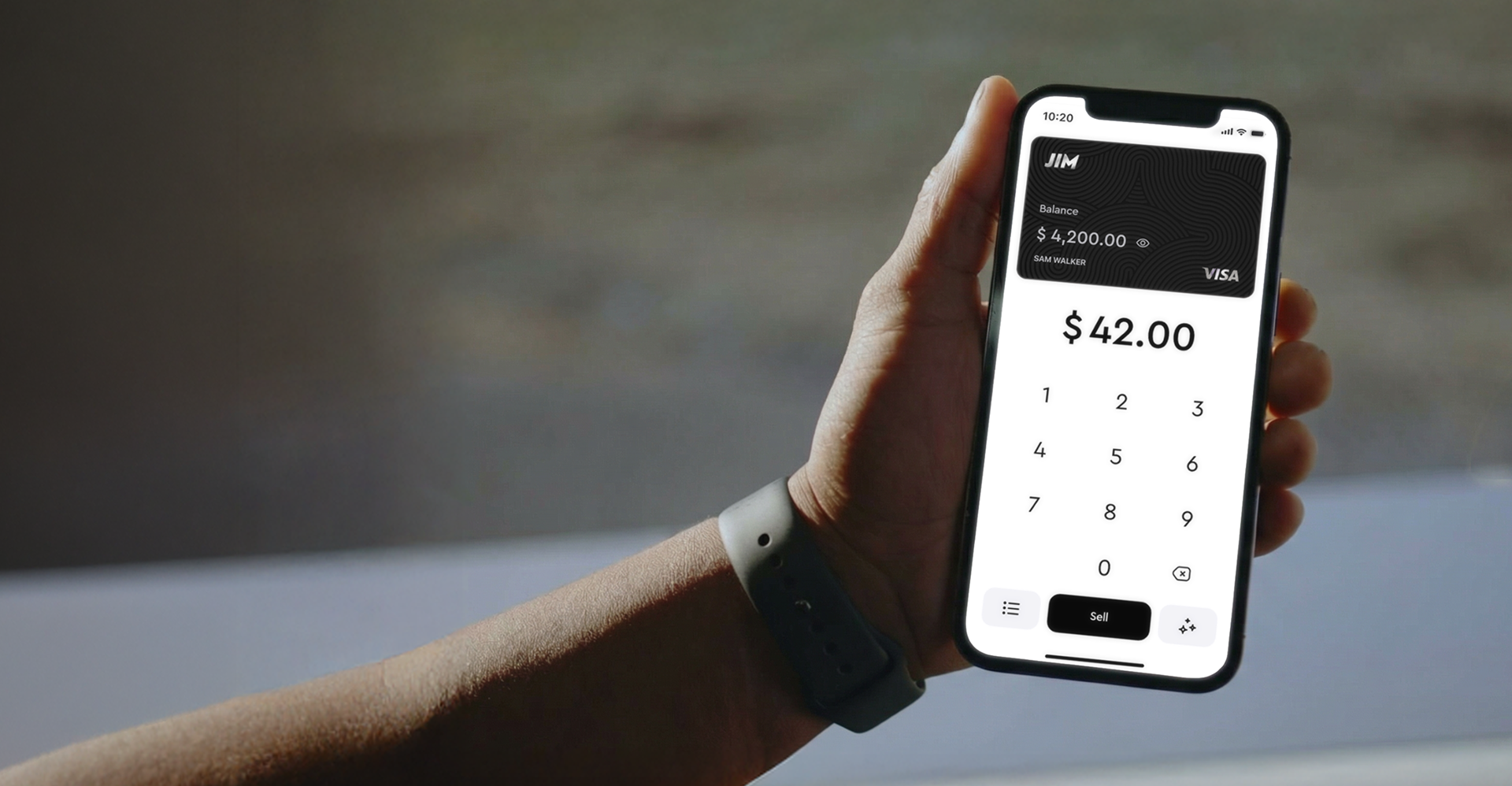
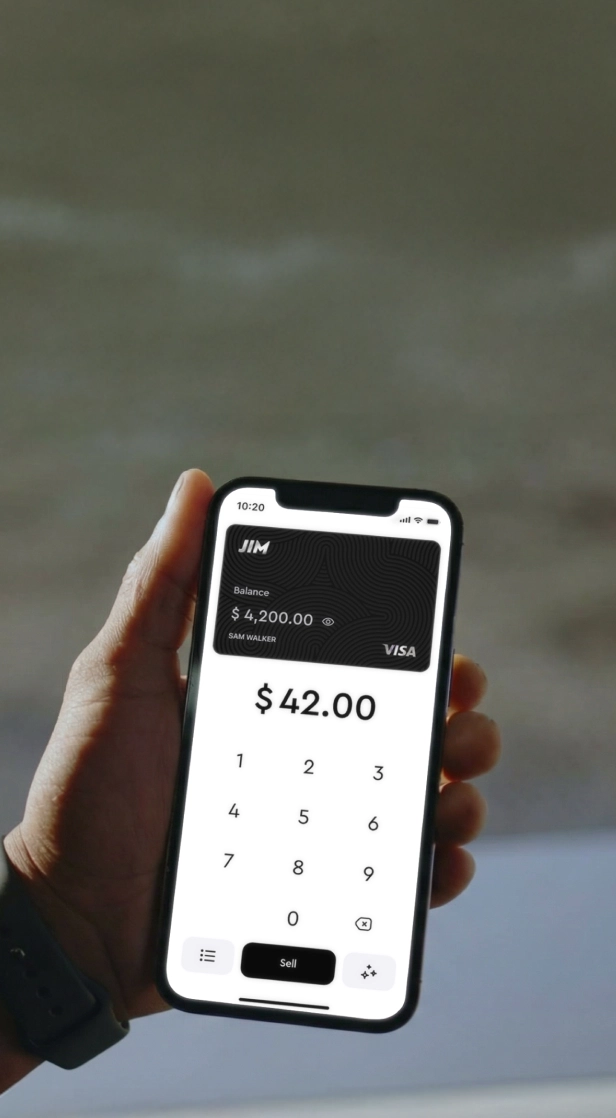
For an automated business that needs to accept payments on-site or on-the-go, JIM offers a streamlined solution. With JIM, you can accept debit, credit and digital wallets directly through your smartphone - just tap and done.
At just 1.99% per transaction with no hidden costs or extra hardware needed, it is a better deal than the 2.5% to 3.5% rates from other providers. It is particularly useful for commission payouts or equipment sales.
- Get Started: Download JIM app for iOS
- Make a Sale: Type the sales amount, hit sell, and ask your customer to tap their card or device on your phone
- Access Funds: Your money is available right on your JIM card as soon as the sale is done - no wait for bank transfers
Here are 3 immediate steps to take:
- Research the transaction fees for the card reader on any machine you plan to buy.
- Download the JIM app to see how it works for mobile payments.
- Compare JIM's 1.99% rate with at least one other mobile payment solution for small businesses.
Step 6: Fund your business and manage finances
Explore your funding options
Equipment financing is a direct path to getting your machine. Lenders offer loans from $5,000 to $25,000, with the machine as collateral. Expect interest rates between 8% and 20% and a term of 3-5 years. A credit score above 650 often helps secure better terms.
You might also look into an SBA Microloan. These government-backed loans range up to $50,000, though most new vending businesses borrow between $5,000 and $15,000. You will need a detailed business plan and a personal credit score of at least 680 to qualify.
Calculate your working capital
With funding for the machine sorted, your focus shifts to operational cash. You need enough capital to run for the first six months without stress. A common misstep is to drain your account on the machine and have nothing left for stock, fees, and unexpected costs.
For a single machine, plan for about $3,000 to $5,000 in working capital for the first six months. This budget should cover:
- Initial and replenishment inventory: $1,500 - $2,500
- Location commissions and payment processing fees: $500 - $1,000
- Insurance premiums and business permits: $300 - $600
- A contingency fund for repairs or slow sales: $700 - $900
Here are 3 immediate steps to take:
- Check your personal credit score through a free service to see where you stand.
- Contact your bank to ask about equipment financing or SBA Microloan options.
- Create a six-month operating budget listing inventory, fees, and a contingency fund.
Step 7: Staff and operate your business
Manage your route
In the beginning, you will be your own Route Driver. Your tasks include restocking products, collecting cash, and cleaning the machines. If you decide to hire, a part-time Route Restocker typically earns between $15 and $25 per hour. No special certifications are needed.
A common miscalculation is underestimating the time required. Servicing a route of 10-15 machines can easily take 8-12 hours per week, including travel and stocking. It is an active role, not a completely passive one, especially as you grow your machine count.
Streamline your operations
To work efficiently, use a Vending Management System (VMS). Software from providers like Cantaloupe or VendSys gives you real-time inventory data from your machines. This way, you only visit locations that actually need service, which saves significant time and fuel.
This data also shows you what is selling and what is not. You can use these insights to optimize your product selection, reduce spoilage, and maximize profit per machine. It helps you make decisions based on facts, not guesswork.
Here are 3 immediate steps to take:
- Map out a weekly schedule for servicing your first machine, including travel and restock time.
- Request pricing for a VMS from a provider like Cantaloupe to understand the monthly cost.
- Create a simple checklist for each machine visit that covers inventory, cash collection, and cleaning tasks.
Step 8: Market your business and get customers
Your primary marketing goal is to secure locations. Create a one-page sell sheet for property managers that details the benefits. Highlight the zero cost to them, the added amenity for their employees or tenants, and the 10-25% revenue share you offer.
A professional approach is more effective than simple cold calling. When you pitch a location, have your insurance documents and a sample placement agreement ready. This preparation shows you are a serious partner and builds trust from the start.
Boost sales at your machine
Once placed, the machine markets itself. A clean, well-lit, and fully stocked machine is your best advertisement. Many operators miss this, but a neglected machine can quickly lead to removal. A simple sticker with your business name and service number is also a good idea.
You can also use social media to build goodwill. When you install a new machine, take a photo and tag the host business in a post. It is free, positive exposure for both of you and strengthens your relationship with the location owner.
Here are 3 immediate steps to take:
- Create a one-page sell sheet that outlines the benefits for a location owner.
- Design a branded sticker with your contact information to place on each machine.
- Draft a short social media post template to announce new machine placements.
Step 9: Price your products and manage inventory
Set your pricing strategy
Your pricing starts with your cost per item. A standard vending machine markup is between 100% and 200%. If a candy bar costs you $0.60 wholesale, a price of $1.25 to $1.50 is a good starting point. This gives you a healthy gross margin.
Next, check your competitors. Visit other machines in the area and note their prices for similar items. If their prices are lower, you may need to adjust yours to compete. You can afford a slightly lower margin if it means more sales volume.
A mistake many new operators make is forgetting hidden costs. Your price must cover more than just the product. Factor in payment processing fees (5-7%), location commissions (10-25%), and potential spoilage to protect your actual profit.
Manage your inventory
Effective inventory management prevents lost sales and wasted products. Use the sales data from your Vending Management System (VMS) to see which items sell fast and which sit on the shelf. This information is gold for optimizing your stock.
Pay close attention to expiration dates, especially for items like pastries or sandwiches. It is better to stock fewer of these items at first. You can increase the quantity once you confirm they have a steady sales history at that location.
Here are 4 immediate steps to take:
- Calculate the final sale price for three of your planned products using a 150% markup.
- Visit a competitor’s machine and record their prices for five comparable items.
- Adjust your product prices to account for a 15% location commission and a 6% processing fee.
- Create a simple spreadsheet to track the expiration dates for your initial inventory.
Step 10: Maintain quality and scale your operations
Establish your quality standards
As you expand, it is easy to let service quality slip. To prevent this, set clear standards from the start. Your machines should have an uptime of at least 98%, get cleaned at every service visit, and have a service number sticker that is clearly visible.
Use your Vending Management System (VMS) to monitor product freshness. Track sales data to identify slow-moving items and aim to keep your spoilage rate below 2%. This not only protects your profit but also keeps customers happy and builds trust in your machines.
Plan your growth milestones
Once your route grows to 15-20 machines, you will find that servicing them takes 10-15 hours per week. This is your signal to consider hiring a part-time route restocker. This frees you up to focus on securing new locations and managing the business.
Deciding when to buy more machines should be a data-driven choice. A solid benchmark for reinvestment is when your existing machines achieve a payback period of under 24 months. This confirms your model is profitable and ready for expansion.
Here are 3 immediate steps to take:
- Set three quality metrics for your business, such as a 98% machine uptime goal.
- Calculate the payback period for your first machine to establish a profitability benchmark.
- Identify a machine count (e.g., 15 machines) that will trigger your plan to hire a route restocker.
You have the roadmap to launch your automated business. Remember that success isn't just about the machine, but the service behind it—keeping it stocked, clean, and reliable. Your attention to these details will set you apart. Now, go make it happen.
As you handle payments like location commissions, a simple solution like JIM lets your phone accept cards for a flat 1.99% fee, no extra hardware needed. It keeps your business finances clean from day one. Download JIM and you're all set.
.avif)