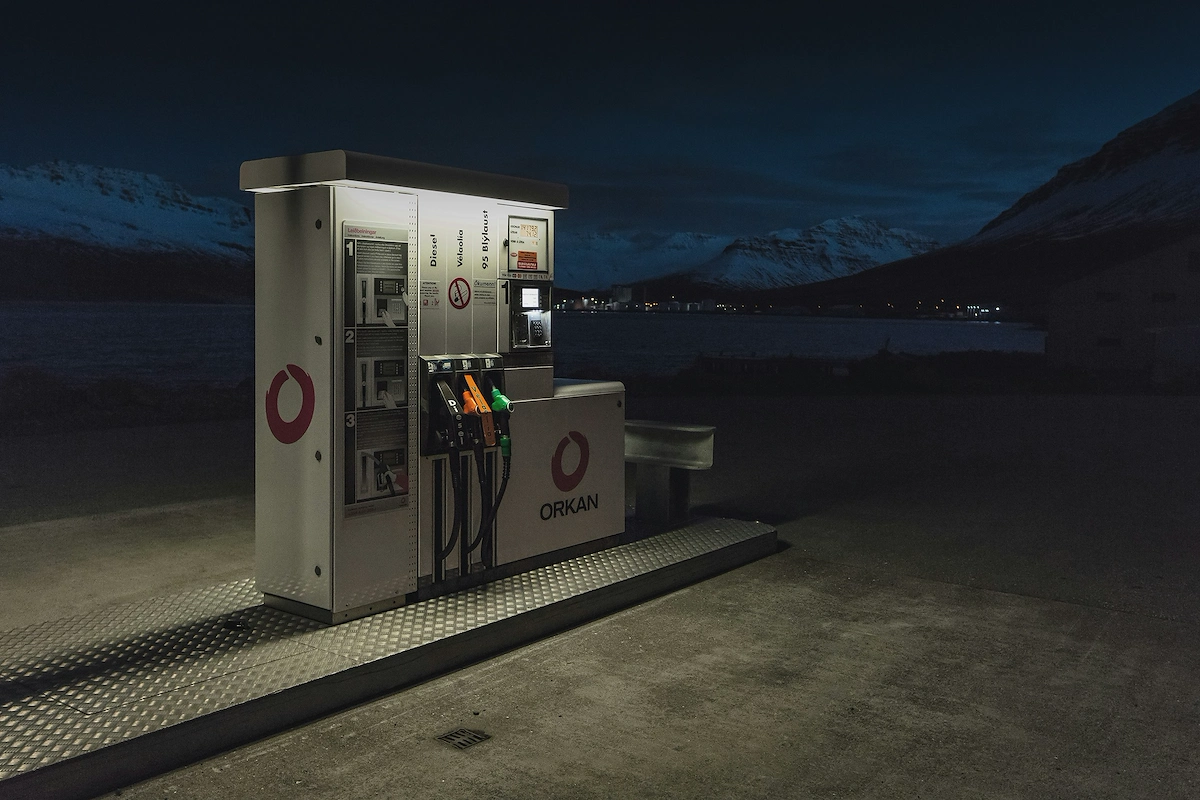
Starting an energy company is a rewarding venture that combines technical expertise and project management with sharp business acumen. With a market valued in the billions, there is consistent demand for energy across residential, commercial, and industrial sectors.
This guide will take you through the practical steps of validating your business concept, securing funding, obtaining the right permits, and building supplier relationships to help you launch a successful energy company in the U.S.
Step 1: Plan and validate your business concept
Market and competitor research
Start by analyzing data from the U.S. Energy Information Administration (EIA) to understand demand in your target region. You can also review publications from associations like the Solar Energy Industries Association (SEIA) for niche-specific insights.
To size up the competition, look at public filings from local utility companies. For deeper financial data on larger players, you might explore S&P Global Market Intelligence. This gives you a clear picture of the market landscape.
Estimate your startup costs
Initial capital needs are significant. A common misstep is to underestimate the total investment. Plan for equipment costs from $50,000 to over $500,000, depending on your focus. Licensing and permits can add another $5,000 to $25,000.
You should also budget for insurance ($10,000-$50,000 annually) and professional fees. It is a good practice to build a 20-25% contingency fund on top of your total estimate to handle unexpected expenses or project delays.
Here are 3 immediate steps to take:
- Review the latest state-level energy profiles from the EIA.
- Identify three local competitors and document their services and pricing.
- Draft a preliminary budget that includes a 25% contingency fund.
Step 2: Set up your legal structure and licensing
You might want to consider forming a Limited Liability Company (LLC). It protects your personal assets and offers pass-through taxation, which simplifies your filings. A C Corporation is an alternative if you plan to seek venture capital, but be aware of its double taxation structure.
Your operations will be governed by several agencies. At the federal level, the Federal Energy Regulatory Commission (FERC) oversees wholesale electricity and interstate transmission. Each state also has its own Public Utility Commission (PUC) or Public Service Commission (PSC) that regulates local utilities.
Secure necessary permits and licenses
State-level registration with your PUC is your first major hurdle. You will also need environmental permits from your state's Department of Environmental Protection (DEP). Many new owners get caught off guard by the timeline for these permits, which can take 6-12 months and cost over $10,000.
Do not forget local requirements. Your city or county planning department will require zoning approvals and building permits for any new construction or significant modifications. These can add several weeks or months to your project timeline, so start the conversation early.
Here are 3 immediate steps to take:
- Choose and register your business structure with your Secretary of State.
- Identify your state's Public Utility Commission and review its registration process.
- Contact your local planning department to understand zoning and building permit needs.
Step 3: Secure your insurance and manage risk
Your next move is to build a strong insurance portfolio. Many new owners get tripped up by selecting a generic policy that leaves them exposed. You will want to secure several specific types of coverage to protect your operations from day one.
Choose the right coverage
Start with a baseline of General Liability coverage, typically between $1 million and $2 million. If you provide consulting or design services, you will also need Professional Liability insurance. This covers errors and omissions in your work.
Here are the core policies to budget for:
- General Liability: Annual premiums range from $1,500 to $7,000.
- Professional Liability: Adds another $2,000 to $10,000 annually.
- Pollution Liability: Expect to pay $5,000 to $20,000 for this specialized coverage.
- Workers’ Compensation: Required in most states if you have employees.
A frequent mistake is assuming a general policy covers environmental incidents. It does not. You must obtain a separate Pollution Liability policy to cover cleanup costs, which is a non-negotiable requirement for most contracts.
With that in mind, approach insurance providers like The Hartford, Chubb, or Travelers. They have divisions that specialize in the energy sector and understand its unique risks better than a general agent.
Here are 3 immediate steps to take:
- Request quotes from at least two insurance brokers specializing in energy.
- Ask for a sample Pollution Liability policy to review its exclusions.
- Create an inventory of your physical assets to determine your Commercial Property coverage needs.
Step 4: Secure your location and equipment
Find your operational base
Your physical footprint depends on your niche. A solar installation business might need 2,000-5,000 square feet of warehouse space. A small power generation project requires acres. Look for properties zoned for industrial use (I-1 or I-2) to avoid lengthy variance requests.
When you negotiate a lease, push for a 5-10 year term. This helps absorb high initial build-out costs. Also, clarify who is responsible for environmental compliance and cleanup in the lease agreement. Many new owners overlook this and face unexpected liabilities later.
With your location sorted, you can acquire your equipment. The specific items will vary, but some purchases are common. For field operations, a used bucket truck can run from $50,000 to $150,000. Diagnostic gear like a thermal imaging camera costs between $1,000 and $5,000.
You can source equipment from major distributors like Graybar or WESCO. They typically require you to open a commercial account. Be prepared for minimum order quantities on items like cabling or connectors, so plan your initial inventory carefully to meet project needs without overspending.
Here are 3 immediate steps to take:
- Contact your local planning department to confirm industrial zoning requirements.
- Get quotes for a used bucket truck and a thermal imaging camera.
- Reach out to an electrical distributor like WESCO to understand its commercial account setup process.
Step 5: Set up your payment processing
First, establish your payment terms. For commercial clients, Net 30 or Net 60 terms are common. Residential work is typically due upon receipt. For large projects, it is standard practice to collect a 25-50% deposit upfront to cover initial material and labor costs.
Many new owners get caught with payment systems that do not fit their workflow. You need a solution that handles one-time invoices, recurring service contracts, and various payment methods. This flexibility is key to maintain healthy cash flow.
For energy companies that need to accept payments on-site or on-the-go, JIM offers a streamlined solution. With JIM, you can accept debit, credit, and digital wallets directly through your smartphone—just tap and done. It is particularly useful for field technicians who need to collect payment after a service call.
At just 1.99% per transaction with no hidden costs or extra hardware needed, it is a strong offer. Other payment solution providers often have average commission rates between 2.5% and 3.5%. With JIM, you can get started right away.
- Get Started: Download the JIM app for iOS.
- Make a Sale: Type the sales amount, hit sell, and ask your customer to tap their card or device on your phone.
- Access Funds: Your money is available right on your JIM card as soon as the sale is done—no waiting for bank transfers.
Here are 3 immediate steps to take:
- Define your standard payment terms for residential and commercial clients.
- Draft a policy for collecting project deposits, typically 25-50% upfront.
- Download the JIM app to explore its features for on-site payments.
Step 6: Fund your operations and manage finances
Secure your initial capital
Start with government-backed options. An SBA 7(a) loan can provide from $50,000 to $5 million. You will likely need a credit score above 680 and a detailed business plan. Interest rates typically fall between 8% and 12%.
In addition to loans, look into grants. The Department of Energy’s Small Business Innovation Research (SBIR) program funds high-risk R&D projects. These grants do not require repayment, but the application process is competitive and can take months.
Calculate your working capital
Many new owners focus on equipment and forget day-to-day costs. You need enough cash to cover payroll, insurance, and fuel for at least six months. A safe target for your initial working capital is between $75,000 and $200,000.
This buffer prevents cash flow problems while you wait for your first invoices to be paid. Relying on a single large project for initial revenue is a risky strategy. It is better to diversify your funding sources if possible.
Here are 3 immediate steps to take:
- Contact your local SBA district office to inquire about the 7(a) loan pre-qualification process.
- Review the current funding opportunities for the DOE's SBIR program.
- Create a six-month operating budget to determine your exact working capital needs.
Step 7: Hire your team and set up operations
Build your core team
Your first hires will likely be a Field Technician and a Project Manager. A qualified Field Technician can expect a salary between $50,000 and $75,000. A Project Manager who handles client relations and scheduling will command $80,000 to $120,000 annually.
Do not just look at experience. Many contracts require specific certifications. For solar work, look for NABCEP certification. For general safety, ensure your field staff has at least an OSHA 10 certification. Some owners hire uncertified staff and later lose out on bids.
Streamline your daily operations
With your team in place, you need a system to manage them. Field service software like Jobber or ServiceTitan helps with scheduling and invoicing. For larger, more complex projects, a construction management platform like Procore is a better fit.
As you grow, aim for a revenue target of $150,000 to $250,000 per employee. This is a healthy benchmark for service-focused energy companies and helps ensure your labor costs do not outpace your income. It is a simple metric to keep your business profitable.
Here are 3 immediate steps to take:
- Draft job descriptions for a Field Technician and Project Manager, including NABCEP or OSHA certifications.
- Request demos for field service software like Jobber to see how it fits your workflow.
- Calculate a revenue-per-employee target to guide your hiring and pricing strategy.
Step 8: Market your business and acquire customers
Develop your marketing channels
Your marketing strategy depends on your customer. For commercial clients, direct outreach on LinkedIn works well. You can also attend industry trade shows. For residential customers, focus on local SEO so you appear in Google Maps searches.
Many new owners try to be everywhere at once, which dilutes their budget. Instead, pick one or two channels and master them. A healthy Customer Acquisition Cost (CAC) in the energy sector can range from $500 to $2,000, so track your spending carefully.
Build credibility and trust
Trust is your most valuable asset. Create detailed case studies of your projects. Document the problem, your solution, and the outcome, like a 15% reduction in a client's energy costs. Get testimonials and feature them prominently on your website.
You can also write blog posts or LinkedIn articles on topics your customers care about. An article on "How to Read Your Utility Bill" positions you as an expert. This content helps attract clients who are already looking for solutions.
Here are 3 immediate steps to take:
- Set up a LinkedIn company page and connect with 50 local commercial property managers.
- Draft one case study from a hypothetical project, detailing the problem, solution, and a specific outcome.
- Research two local industry trade shows and note their exhibitor costs and dates.
Step 9: Develop your pricing strategy
Choose your pricing model
You can use a Time and Materials (T&M) model for service calls, where you bill for labor hours and parts. For larger installations, a Fixed-Price contract is more common. This gives clients cost certainty and protects you if you complete the work efficiently.
A standard practice is to apply a 20-30% markup on materials. Your target gross profit margin for projects should land between 40% and 50%. This range covers your overhead costs and leaves room for profit.
Set your rates
To set your labor rates, research what local competitors charge. You can often find this on their websites or by requesting a quote. Public bid databases also reveal what firms charge for government contracts, which gives you another data point.
Some new owners underbid just to win their first jobs, but this strategy is rarely sustainable. Your price must cover all costs. A rate of $90-$150 per hour for a certified technician is a realistic starting point in most markets.
Here are 3 immediate steps to take:
- Decide between a Time and Materials or Fixed-Price model for your primary service.
- Calculate your target project profit margin, aiming for at least 40%.
- Call two local competitors to get a quote for a standard service call.
Step 10: Implement quality control and scale your operations
To ensure consistent service, you can build your processes around a quality management system like ISO 9001. This framework helps you document procedures and deliver the same high standard on every job. Many owners only react to quality issues, which can damage their reputation.
Measure what matters
Track specific metrics to monitor performance. For service work, a First-Time Fix Rate above 85% is a strong target. You should also measure on-time project completion and customer satisfaction scores after each job. These numbers give you early warnings about operational problems.
With a quality framework in place, you can plan for growth. A good signal to hire is when your team’s utilization rate consistently exceeds 80-85%. Also, keep an eye on your revenue per employee. If it stays within the $150,000 to $250,000 range, your business is scaling efficiently.
As you take on larger projects, a platform like Procore helps manage complexity. For customer management, a CRM system like HubSpot can organize your sales pipeline and client communications as your customer base grows.
Here are 3 immediate steps to take:
- Research the basic requirements for ISO 9001 certification.
- Choose one key metric, like First-Time Fix Rate, to start tracking this month.
- Calculate your current revenue-per-employee to benchmark your efficiency.
Launching an energy company is about managing complex projects and regulations. Remember that your reputation for reliability is your greatest asset. With a solid plan, you have what it takes to build a successful business in this demanding field.
And when it comes to getting paid, keep it simple. JIM turns your smartphone into a card reader, so you can accept payments anywhere for a flat 1.99% fee. Download JIM to handle transactions from day one.
.avif)