How to start an esthetician business the right way

Start your esthetician business with our clear roadmap. Learn practical steps for funding, licensing, and insurance to avoid costly mistakes.

2 min read time

Copied
How to start an esthetician business
Main topics

Starting your own esthetician business is an exciting venture where you can blend a passion for skincare with smart business sense. With the professional skincare market valued in the billions, there's a steady demand for services that cater to everyone from teens with acne to adults seeking anti-aging treatments.

This guide will take you through the practical steps of validating your business concept, obtaining necessary licenses, selecting the right location, and acquiring equipment to help you launch a successful esthetician business in the U.S.

Step 1: Create and validate your business plan

First, research your local market. Use Google Maps and Yelp to find estheticians in your target area. Note their services, prices, and what clients say in reviews. This helps you spot gaps in the market you can fill.

Analyze the competition

Look beyond just pricing. Review competitor websites and social media accounts. A common oversight is to ignore the client experience they offer. See how easy it is to book an appointment with them and what their communication feels like.

Estimate your startup costs

Understanding your initial investment helps you plan effectively. A solo esthetician suite can have startup costs from $13,500 to over $50,000. It is wise to break down the expenses.

  • Licensing and legal fees: $500 - $2,000
  • Professional equipment: $5,000 - $15,000
  • Initial product inventory: $3,000 - $7,000
  • Lease deposit and renovations: $5,000 - $25,000+

A frequent misstep is to underestimate product inventory. You need enough backbar products for services and retail products for clients to buy. You might want to budget for at least two months of initial stock.

Here are 3 immediate steps to take:

  • List five local competitors and analyze their service menu, prices, and online reviews.
  • Create a startup budget spreadsheet with the cost categories listed above.
  • Research two professional skincare lines to compare their wholesale costs and opening order requirements.

Step 2: Set up your legal structure and get licensed

You will want to register your business as a Limited Liability Company (LLC). This structure protects your personal assets, like your home and car, from business debts or lawsuits. An LLC also offers pass-through taxation, meaning profits are taxed on your personal return, which simplifies paperwork.

Many new estheticians operate as a sole proprietorship to save on initial fees, but this leaves personal assets exposed. Forming an LLC typically costs between $50 and $500, a small price for significant peace of mind. It is a standard step for serious business owners.

Secure your licenses and permits

Your practice is governed by your state’s Board of Cosmetology. First, confirm your personal esthetician license is active. Then, check their requirements for an establishment license, which is often needed for your physical business location, even if it is a small suite.

You will also need a local Business Operating License from your city or county clerk. If you sell products, you must obtain a Seller’s Permit from your state’s tax department. This permit allows you to collect sales tax from customers. Processing times can take several weeks.

Here are 3 immediate steps to take:

  • Decide between an LLC and a sole proprietorship for your business structure.
  • Visit your State Board of Cosmetology website to review establishment license rules.
  • Contact your city clerk’s office about the application for a Business Operating License.

Step 3: Secure your business insurance

Protecting your new business requires the right insurance. While your LLC offers some protection, specific policies shield you from the unique risks of esthetician work, like client reactions or equipment mishaps. This is a non-negotiable part of your setup.

Key insurance policies to consider

  • General Liability: This covers "slip-and-fall" incidents in your studio. Most landlords require at least $1 million in coverage. Annual premiums typically range from $400 to $750.
  • Professional Liability: Also called malpractice insurance, this protects you if a client claims your service caused harm, like an allergic reaction or burn. Expect to pay $500 to $1,000 annually for a $1 million policy.
  • Commercial Property Insurance: This covers your expensive equipment and product inventory against theft, fire, or damage. The cost varies based on the value of your assets.
  • Workers' Compensation: If you plan to hire anyone, even part-time, most states require this. It covers lost wages and medical costs for employee injuries.

Some new owners mistakenly assume a general policy is enough, but professional liability is what covers your actual work. When shopping for policies, look at providers who specialize in the beauty industry. Companies like Hiscox, InsureBodywork, and Beauty & Bodywork Insurance (BBI) understand your specific needs.

Here are 3 immediate steps to take:

  • Get quotes from at least two specialized providers like Hiscox or BBI.
  • Review your lease agreement to confirm the minimum general liability coverage required.
  • Make a list of your equipment and inventory to estimate its value for a commercial property policy.

Step 4: Find a location and buy equipment

Choose your space

A solo treatment room typically requires 100 to 250 square feet. This gives you enough room for a treatment bed, a sink, and your supply trolley without feeling cramped.

Before you sign anything, check with your city’s planning department. You must confirm the location is zoned for "personal services." Some new owners sign a lease first, only to find the location is not approved for their business type.

When negotiating your lease, ask about a Tenant Improvement (TI) allowance to help cover costs for plumbing or electrical work. You might also propose a shorter initial term, like one to three years, for more flexibility.

Purchase your equipment

With your space in mind, you can select your equipment. It is a good idea to start with foundational pieces and expand later. Many new estheticians overspend on trendy devices they rarely use initially.

Here are some core items and their typical price ranges:

  • Treatment table: $500 - $2,000
  • Professional facial steamer: $150 - $500
  • LED magnifying lamp: $100 - $300
  • Hot towel cabinet: $150 - $400

You can find reliable equipment from industry suppliers like Minerva Beauty or Universal Companies. They often sell starter packages designed for new solo practices.

Here are 3 immediate steps to take:

  • Identify three potential locations and verify their zoning classification with your city.
  • Price out a startup equipment package from two suppliers like Minerva Beauty or Universal Companies.
  • Draft a list of questions for landlords, including about Tenant Improvement allowances and lease terms.

Step 5: Set up your payment processing

Most clients expect to pay with a card. You might also want to require a deposit, perhaps $50, when new clients book or for services over two hours. This protects your income from no-shows.

When you select a payment processor, look at the transaction fees. Many estheticians forget to account for hardware costs or monthly fees. A simple, transparent fee structure saves you money and headaches.

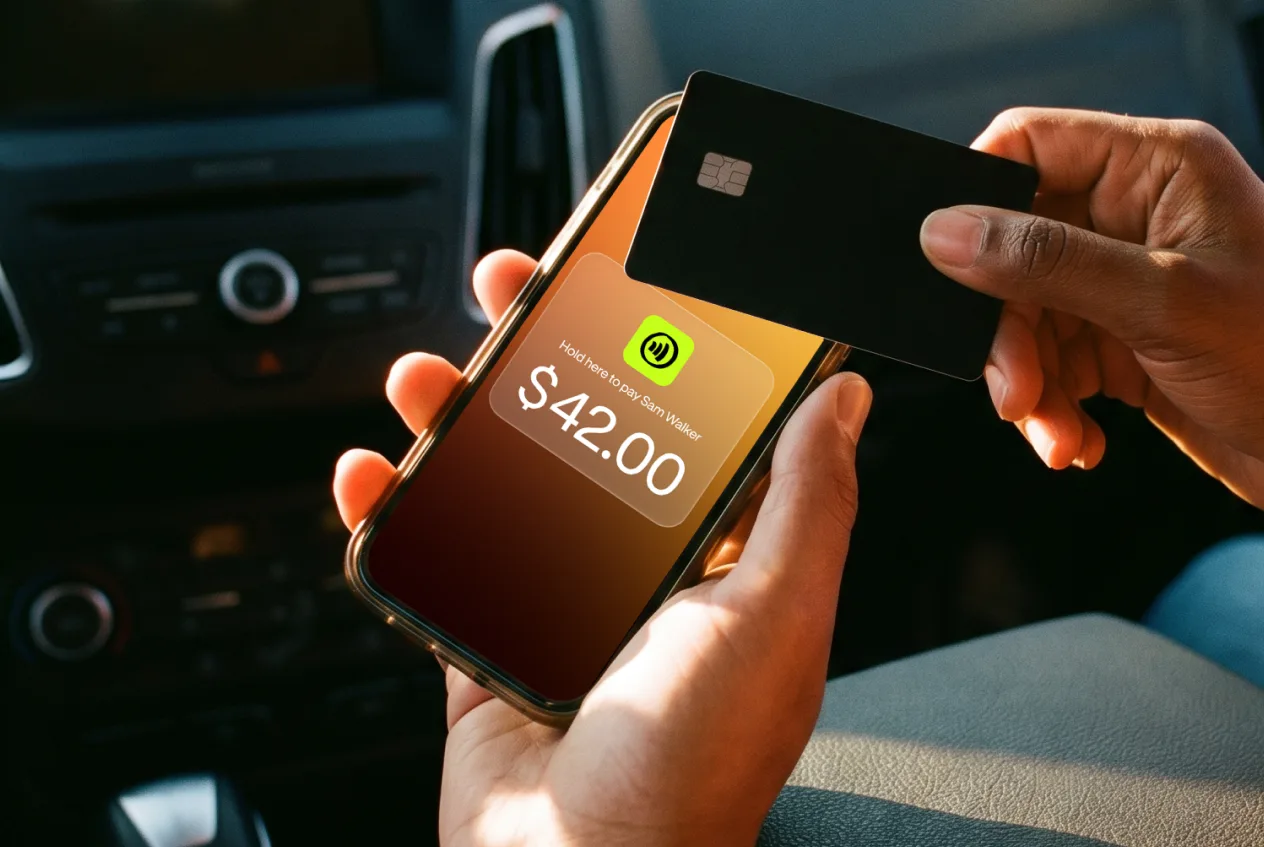
For estheticians who need to accept payments on-site or on-the-go, JIM offers a streamlined solution. With JIM, you can accept debit, credit and digital wallets directly through your smartphone. Just tap and done.

At just 1.99% per transaction with no hidden costs or extra hardware needed, it's particularly useful when you sell retail products after a facial. This is a great rate, since other providers often charge between 2.5% and 3.5%.

Getting started is straightforward:

  • Get Started: Download JIM app for iOS
  • Make a Sale: Type the sales amount, hit sell, and ask your customer to tap their card or device on your phone
  • Access Funds: Your money is available right on your JIM card as soon as the sale is done - no waiting for bank transfers

Here are 3 immediate steps to take:

  • Decide on your deposit policy for new clients and lengthy services.
  • Compare the total cost of two payment solutions, including transaction fees and any hardware needs.
  • Download the JIM app to see how it works for your business.

Step 6: Fund your business and manage finances

Secure your startup funding

You might not need a large bank loan. Consider an SBA Microloan, which offers up to $50,000 for equipment and inventory. Interest rates typically fall between 8% and 13%. Lenders will want to see a solid business plan with your application.

Also, look into Community Development Financial Institutions (CDFIs) in your area. They often support small, local businesses with more flexible terms. Some estheticians find success with grants like the Amber Grant, which awards funds to women entrepreneurs.

Plan your working capital

With funding in mind, calculate your working capital. This is the cash reserve to cover your first six months of operating expenses. You should budget for rent, insurance, product restocks, and marketing without reliance on immediate sales.

Some new owners get tripped up by underestimating this figure. For a solo practice, plan for $10,000 to $20,000 in working capital. This buffer prevents cash flow problems. You will also want to open a dedicated business bank account to keep finances separate.

Here are 4 immediate steps to take:

  • Research the SBA Microloan program requirements on the SBA website.
  • Find one Community Development Financial Institution (CDFI) that serves your area.
  • Calculate your estimated 6-month working capital based on your projected expenses.
  • Open a separate business bank account for your LLC.

Step 7: Hire staff and set up operations

Plan your team

Many solo estheticians wait to hire until they are consistently 70-80% booked. This ensures you have enough revenue to support a new team member. Your first hire might be a part-time Front Desk Coordinator.

A coordinator handles bookings, payments, and client communication for about $16-$22 per hour. This frees you to focus on services. When you hire another esthetician, they must have a valid state license.

Compensation for a second esthetician is often a 40-50% commission on their services, plus a smaller commission on retail sales. This model incentivizes them to build their own clientele within your business.

Choose your management software

To manage appointments and clients, you will want specialized software. Some new owners try to use a paper book, but this makes online booking and client history tracking nearly impossible. It is an inefficiency you can avoid from day one.

Look at systems like Vagaro, Square Appointments, or Fresha. They handle online booking, automated reminders, and client notes. Vagaro and Square have monthly fees around $30-$90, while Fresha offers a free base plan.

Here are 4 immediate steps to take:

  • Calculate your current client booking percentage to see if you can support a new hire.
  • Write a job description for a part-time Front Desk Coordinator.
  • Demo the free versions of Fresha and Square Appointments.
  • Outline your ideal client check-in and check-out process.

Step 8: Market your services and attract clients

Build your online presence

Your first clients will likely find you online. Set up a Google Business Profile immediately. Fill out every section with your services, hours, and high-quality photos of your space. Encourage your first few clients to leave reviews, as this heavily influences your local search ranking.

Instagram is your visual portfolio. Post before-and-after photos and educational reels about skincare. Aim for three to five high-quality posts per week. This builds trust with potential clients before they even book. An introductory offer, like a complimentary add-on, can encourage them to book.

Expand your reach

Allocate 5-10% of your projected revenue for marketing. Also, consider local partnerships. You can team up with a nearby hair salon or boutique for cross-promotions. This is a low-cost way to reach an established, relevant audience and build community connections.

It is tempting to rely only on social media, but you do not own your follower list. To build a more stable asset, create a simple email list. This lets you send newsletters with special offers or skincare tips directly to clients, giving you a direct line of communication.

Here are 4 immediate steps to take:

  • Set up and completely fill out your Google Business Profile.
  • Plan your first month of content for Instagram.
  • Create an introductory offer for new clients, like a complimentary add-on service.
  • Identify one local business to approach for a cross-promotion.

Step 9: Set your prices for services and products

Determine your service pricing

A straightforward method is cost-plus pricing. Calculate your cost per treatment, including products and supplies, then add your profit margin. If a facial costs you $20 in materials, a price of $100 gives you an 80% profit margin before accounting for your time.

You might also use value-based pricing, where the price reflects the client’s outcome. An advanced chemical peel could be $175, while a classic facial is $95. This strategy positions your services based on the specialized results and experience you deliver.

Price your retail products

For retail, the industry standard is keystone pricing, which is a 100% markup. If a serum costs you $25 wholesale, you sell it for $50. It can be tempting to price lower to compete with online retailers, but this devalues your professional expertise and hurts your bottom line.

To finalize your numbers, analyze the service menus of five local competitors. Use their pricing not to copy, but to position your business. If your experience is more luxurious or your techniques more advanced, your prices should reflect that difference.

Here are 4 immediate steps to take:

  • Calculate the cost-per-service for your top three treatments.
  • Decide on your retail markup, using 100% as a benchmark.
  • Create a price list for three direct competitors in your area.
  • Draft your service menu with initial prices for review.

Step 10: Maintain quality and scale your business

Establish your quality standards

To stand out, you can pursue advanced credentials. The NCEA Certified credential is the highest standard for estheticians in the U.S. This shows clients your commitment to excellence beyond basic licensure.

You should also track client retention. A good goal is to have 60-70% of new clients return for a second visit. For online reviews, aim for an average rating of 4.8 stars or higher.

Know when to grow

Once you are consistently 70-80% booked for three consecutive months, it is a strong signal to hire another esthetician. Some owners hire too soon, which strains cash flow before the demand is truly there.

Also, monitor your retail sales. When retail makes up 15-25% of your total revenue, you have a healthy product business. This indicates strong client trust and provides capital for expansion.

Your management software, like Vagaro or Square, has reporting features to track these metrics. Use them to make data-driven decisions instead of guess when the time is right to expand your space or team.

Here are 4 immediate steps to take:

  • Research the NCEA Certified credential requirements.
  • Calculate your new client retention rate from the last three months.
  • Use your software to find your retail-to-service revenue percentage.
  • Set a booking percentage goal that will trigger your search for a new hire.

You now have the roadmap to launch your esthetician business. Beyond the services, remember that clients return for the personal connection and trust you build. That relationship is your true differentiator. You have a solid plan, now it is time to take the first step.

As you focus on clients, keep your payments simple. JIM turns your phone into a card reader for a flat 1.99% fee, with no extra hardware. It is one less thing to manage as you grow. Download JIM and prepare for your first sale.

Sell and get paid instantly1 with JIM

Start selling
Hand holding a smartphone with the JIM app interface, showing a $2,100.00 Visa card balance and a keypad to enter a $42.00 transaction. The background features a futuristic rocky landscape and digital wrist overlay.