How to start an ice business in 2026: costs, licenses, and steps
See article summary
- The U.S. ice manufacturing market reaches $1.3 billion in 2026, with 266 active producers nationwide.
- Startup costs run $50,000 to $150,000, driven by the ice maker, walk-in freezer, and refrigerated delivery van.
- The FDA regulates packaged ice as food, so your facility must meet federal sanitation standards.
- A 10-lb bag sells for $2.50 to $4.00, with gross margins above 80% and net margins of 20% to 40%.
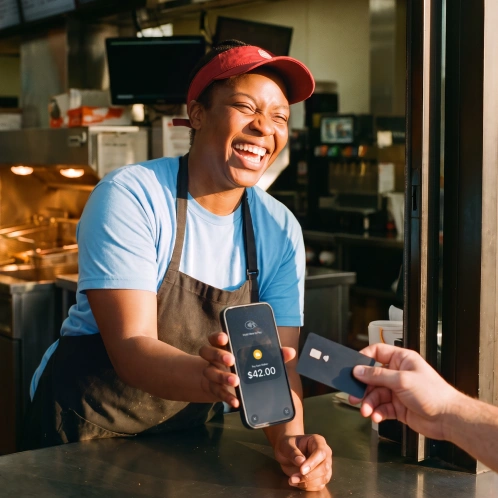
- JIM turns your phone into a card reader at 1.99% per sale, with no hardware, to collect on-delivery payments.
The U.S. ice manufacturing market reaches $1.3 billion in 2026, with 266 active producers nationwide, according to IBISWorld. Demand stays steady because restaurants, special events, construction sites, and grocery stores all need a reliable commercial ice supplier, which makes the packaged ice business a practical venture for an operator who can handle production logistics and a delivery route.
The work splits into three parts: produce clean ice at a low cost per bag, move it cold to commercial accounts, and collect payment without letting transaction fees eat your margin. The steps below cover funding, equipment, licenses, location, and pricing so you can launch a wholesale ice distribution operation in the U.S. without expensive first-year errors.
How do you validate your ice business idea and build a plan?
Call 10 restaurant general managers on a Tuesday afternoon and ask three questions: who supplies your ice now, how many bags do you use per week, and what do you pay per bag. Their answers tell you the local wholesale price, the volume a single account represents, and whether service gaps exist you can fill. This direct feedback beats generic industry reports every time.
Map every competing ice supplier in your delivery radius with Google Maps and local business directories. Note their service areas, delivery schedules, and any published pricing. A gap often opens on service reliability rather than price, since restaurants switch suppliers when deliveries run late, not when a bag costs 10 cents less.
Estimate your startup costs
Total startup cost typically runs $50,000 to $150,000, dominated by the ice maker, walk-in freezer, and refrigerated van. Underestimating equipment is the most common budget failure, so build your numbers from the ranges below before you approach a lender.
- Commercial Ice Maker: $5,000 - $20,000+
- Walk-In Freezer: $10,000 - $30,000
- Refrigerated Delivery Van: $35,000 - $70,000
- Baggers and Heat Sealers: $2,000 - $5,000
- Licenses and Permits: $500 - $2,000
A standard cargo van will melt your product and lose customers in July. A purpose-built refrigerated vehicle is a non-negotiable line item, not a place to cut.
Before you move on, survey at least 10 local businesses to understand their ice needs, identify every competing supplier in your target radius, and build a detailed startup budget from the cost ranges above.
How do you set up your legal structure and get licensed?
Form a Limited Liability Company (LLC) to separate your personal assets from business debts, then register with your state's Secretary of State and get a free Employer Identification Number from the IRS. An LLC also offers pass-through taxation, which simplifies your accounting compared to a corporation. An S-Corp election can lower self-employment taxes once you are profitable.
The FDA classifies packaged ice as food, so your production facility must meet federal sanitation standards under Current Good Manufacturing Practice regulations (21 CFR Part 110). You will also need to register your business with your state's Secretary of State and get a federal Employer Identification Number (EIN) from the IRS, which is free.
Secure local permits
Your local health department is your most important stop. They issue a food facility permit after an inspection, a process that takes 30 to 90 days and costs $100 to $1,000. Start this application early to avoid delays in your opening.
A failed first inspection can delay your launch by weeks. Before you apply, request the department's checklist and confirm your facility has washable surfaces, proper drainage, and a handwashing sink. One Ohio operator lost three weeks because the floor drain did not meet health code, a fix that cost $2,800 in concrete work before the inspector would return.
Register your LLC with your Secretary of State, apply for your free EIN on the IRS website, and request the food facility inspection checklist from your local health department before you sign a lease.
How do you insure your ice business against the right risks?
Your business needs several layers of protection. General liability covers customer injuries, commercial property protects your expensive equipment from theft or damage, and commercial auto covers your refrigerated van. A personal auto policy will not cover business use, so a commercial auto policy is mandatory the day you put a delivery van on the road.
Get the right coverage amounts
For general liability, a $1 million policy is standard and typically costs $500 to $1,500 annually, in line with small-business premium ranges cited by the National Association of Insurance Commissioners. Your refrigerated van is a major asset, so do not skimp on commercial auto coverage, which can run $2,000 to $5,000 per year.
If you plan to hire employees, you must also get workers' compensation insurance. This covers their medical costs and lost wages if they get hurt on the job. Look for an agent who understands food production, since a generalist may miss spoilage and equipment breakdown endorsements that matter for a packaged ice operation.
Request quotes for a $1 million general liability policy, confirm with an agent that your commercial auto policy covers a refrigerated delivery vehicle, and ask potential insurers whether their policies cover equipment breakdown and product spoilage.
How do you find a location and buy your equipment?
Look for a warehouse or light industrial space between 1,000 and 2,000 square feet, and confirm the local zoning allows manufacturing or food production. The floor must support heavy equipment and have proper drainage for water runoff. One operator signed a lease before checking the floor load rating and spent $12,000 on reinforced concrete before the ice maker could be installed.
When you negotiate your lease, ask about a Tenant Improvement (TI) allowance to help cover plumbing or electrical upgrades. A three-to-five-year lease term gives you stability as you build your customer base, and landlords are often more flexible on longer leases.
Purchase your core equipment
Your ice maker is the heart of the operation. Look at models from brands like Manitowoc or Hoshizaki that can produce at least 1,000 pounds of ice per day to meet initial demand. Your walk-in freezer must hold a temperature of -10°F or colder to keep the ice from clumping. For bagging, start with a manual bagger and heat sealer. An automatic system is faster but represents a much larger upfront investment.
You can find new and used equipment from local restaurant supply dealers. Buying used can save you 40% to 60%, but inspect the unit before you buy. Use this six-point used ice maker inspection checklist:
- Compressor age: Replace a compressor older than 10 years, since a rebuild can cost $2,000 plus.
- Running hours: Ask for the hour meter reading, the equivalent of mileage on a used car.
- Refrigerant type: Units using R-22 are being phased out, so confirm it uses R-404A or R-448A.
- Evaporator condition: Look for scale buildup or corrosion on the plate where ice forms.
- Water filter history: A neglected filter strains the pump and shortens the machine's life.
- Warranty or technician sign-off: Get a written warranty or pay a technician $150 to inspect the unit before you commit.
Check water and energy consumption
Water and electricity are your largest variable costs after labor, and they vary sharply by ice type. Use these benchmarks, drawn from manufacturer spec sheets, to estimate your per-bag cost before you buy:
| Ice type | kWh per ton | Gallons of water per ton |
|---|---|---|
| Cube ice | 5.5 - 7.0 | 12 - 20 |
| Flake ice | 4.0 - 5.5 | 15 - 25 |
| Nugget ice | 4.5 - 6.0 | 12 - 18 |
A nugget ice maker uses less energy than a cube ice maker of the same capacity, but it consumes more water per ton because of the higher ice-to-water ratio. Factor both numbers into your cost-per-bag calculation before you pick a machine.
Identify three potential locations zoned for light industrial use, request quotes for a 1,000 lb/day ice maker from two suppliers, and ask potential landlords about their policy on tenant improvements for floor drains and electrical work.
How do you set up payment processing for your ice route?
Most commercial clients like restaurants expect Net 30 payment terms, so you will invoice them monthly. For event sales or new customers, require payment upon delivery. This policy protects your cash flow while you build trust with your clients.
You need a flexible way to accept payments, especially on the road. Many processors charge between 2.5% and 3.5% per transaction, plus monthly fees. Look for a solution with transparent pricing and no long-term contracts or extra hardware costs, since those fees compound across hundreds of deliveries.
For an ice business that needs to accept payments on-site or on-the-go, JIM offers a streamlined solution. With JIM, you can accept debit, credit and digital wallets directly through your smartphone, just tap and done. At just 1.99% per transaction with no hidden costs or extra hardware needed, it's particularly useful for on-delivery payments, and the rate is well below the contactless payment solutions most small businesses default to.
Getting started is straightforward:
- Get Started: Download JIM app for iOS
- Make a Sale: Type the sales amount, hit sell, and ask your customer to tap their card or device on your phone
- Access Funds: Your money is available right on your JIM card as soon as the sale is done, with no waiting for bank transfers
Define your payment terms for commercial accounts versus one-time sales, compare the transaction fees and monthly costs of at least two payment processors using the credit card processing guide for small business as a reference, and download the JIM app to see how it works for on-the-go sales.
How do you secure funding and manage your finances?
The SBA 7(a) loan is a popular choice for startups. Lenders typically want to see a strong business plan and a credit score over 680, though the exact threshold varies by lender rather than by an SBA rule. For an ice business, loans often range from $50,000 to $150,000 to cover equipment and initial costs.
Another route is equipment financing. This type of loan specifically covers your ice maker, freezer, and van. Approval is often faster because the equipment itself serves as collateral, which frees up other capital for operations.
Many new owners focus on big-ticket items and run out of cash for daily operations. Budget for at least six months of working capital, which means having $20,000 to $40,000 set aside for rent, fuel, and marketing before you have steady income. While business grants exist, they are highly competitive and less common for this industry. Your best bet is to focus on local economic development programs, since the bulk of your funding will likely come from loans.
Contact your local Small Business Development Center (SBDC) for help with your loan application, calculate your working capital needs for the first six months of operation, and request quotes from at least two lenders for equipment financing.
How do you hire your team and set up operations?
Build your core team
Your first hire will likely be a Delivery Driver. This person is the face of your business, so look for someone reliable with good customer service skills. Expect to pay between $17 and $25 per hour. A Production Assistant will run the ice maker and bagger, a role that typically pays $15 to $20 per hour.
Always run a background check and review a driver's history before you make an offer. A single DUI or reckless driving conviction can push your commercial auto premium up by 40% or more, and some insurers will decline to underwrite the policy at all.
Establish your daily operations
Since packaged ice is food, your employees will likely need a Food Handler's Card. These are usually available online for under $15 and take about two hours to complete. For scheduling, an app like Homebase or When I Work helps manage shifts and track hours without manual spreadsheets.
As you grow, a reasonable benchmark is one full-time employee for every $100,000 to $150,000 in annual revenue. In the beginning, one driver can often handle production and deliveries until you build a steady client base of 15 to 20 regular accounts.
Draft job descriptions for a Delivery Driver and a Production Assistant, check your state and local requirements for a Food Handler's Card, and create a trial account with a scheduling app like Homebase to see its features.
How do you market your ice business and get customers?
Your first customers will likely come from direct outreach. Focus on high-volume users like restaurants, bars, and construction sites. A single restaurant can represent $200 to $500 in monthly revenue, so landing even a few clients provides a solid base.
Build your online presence
Set up a Google Business Profile immediately. This makes you visible on Google Maps when someone searches for "ice supplier near me." Many new owners skip this, but a professional online listing builds instant credibility with potential customers who vet you online.
A simple one-page website with your phone number, service area, and pricing is also effective. Build relationships with event planners and caterers too, since they can become a consistent source of referrals for weddings and corporate functions.
Use direct sales
With your online presence set, it is time for direct sales. Walk into local businesses during their off-hours, like mid-afternoon for a restaurant. Introduce yourself and leave a price sheet. This personal touch often works better than cold emails.
Create and verify your Google Business Profile with photos of your van and bags, develop a list of 20 local restaurants and construction companies to contact, and design a simple price sheet with your contact information to leave with prospects.
How do you set pricing and profit margins?
Choose your pricing model
Most of your revenue will come from per-bag sales. A standard 10-lb bag of ice often sells for $2.50 to $4.00 for one-time deliveries, according to the IBISWorld Ice Manufacturing report. For regular commercial clients, you can offer contract pricing, which might lower the cost to $2.00 per bag for a guaranteed weekly volume.
Add a flat delivery fee of $10 to $20, or build that cost into your per-bag price. Some businesses offer free delivery for orders over a certain amount, like $50, to encourage larger purchases.
Calculate your profit margins and break-even
Your cost to produce one bag of ice, including water, electricity, and the bag itself, should be between $0.30 and $0.50. This gives you a gross margin of over 80%. Forgetting to factor in delivery costs is where new owners often get tripped up, since fuel and driver wages can eat half that margin.
To find your true profit, subtract fuel, vehicle maintenance, and driver wages from your gross margin. After all expenses, a healthy net profit margin is between 20% and 40%. To find out what competitors charge, call them and ask for a quote for an event or a new restaurant.
Here is a worked break-even example. An $85,000 initial investment, producing 1,500 bags per week at a $1.50 net margin per bag, generates $2,250 in weekly profit. At that rate, you recover the investment in about 18 months, well inside the 14 to 22 month window typical for an operator with 20 to 25 regular commercial accounts.
Calculate your cost per bag by adding up your utility and packaging expenses, call two local competitors to get their price sheets for commercial accounts, and create a draft price list with separate rates for one-time and contract customers.
How do you manage seasonality and survive the off-season?
Demand peaks between Memorial Day and Labor Day, when roughly 80% of packaged ice is sold, according to the FDA. A single summer route can generate 70% of your annual revenue, so the off-season is where most new ice businesses fail. Plan for winter before you launch, not after your first summer.
Add year-round revenue streams to smooth the dip. Block ice sells to construction sites for concrete cooling, and dry ice serves medical transport and industrial cleaning accounts. Event contracts for weddings and corporate functions keep a route busy in shoulder seasons when bagged ice demand drops.
Renegotiate commercial contracts in the fall. A restaurant that buys 30 bags a week in July may drop to 10 in January, so lock in a minimum weekly volume at a slightly lower per-bag rate to keep the account active and your driver on a predictable schedule.
Identify two construction companies and two medical transport companies that need block or dry ice, draft a 12-month contract template with a minimum weekly volume clause, and build a winter revenue forecast that assumes a 60% drop in bagged ice sales.
How do you maintain quality and scale your operations?
Use the International Packaged Ice Association (IPIA) standards as your quality benchmark. Their Packaged Ice Quality Control Standards (PIQCS) cover everything from water testing to sanitation, and the PIQCS Plus accreditation is the mark members display on their bags. Adherence shows customers you are serious about safety and professionalism.
To measure service quality, track your on-time delivery rate and aim for 99% or higher. Log any customer complaints, and keep the rate below 1% of total orders to confirm you are on the right track.
Plan your growth
Add a second delivery driver only when you secure 20 to 25 regular accounts or your first driver consistently exceeds 40 hours per week. This ensures the revenue supports the new hire. Expanding before the route is full stretches your margins and burns cash.
When you regularly sell over 80% of your daily ice production, it is time to invest in another ice maker. For route management, software like Route4Me becomes useful once you have over 30 clients, since it optimizes delivery paths to save fuel and time.
Review the quality and safety standards on the IPIA website, create a simple log to track your on-time delivery percentage and any customer complaints, and start researching a second ice maker once you consistently sell 80% of your daily capacity.
Starting an ice business is about more than just making ice; it's about reliable service. Remember that consistent quality and on-time delivery build the trust that turns one-time buyers into loyal clients. You have the roadmap, so go build your business one delivery at a time.
And as you make those first sales, a simple payment solution helps. JIM turns your phone into a card reader to accept payments on the spot, with no extra hardware and a flat 1.99% fee. It keeps your cash flow simple from day one. Download JIM.
Frequently Asked Questions
Is an ice business profitable?
How much does it cost to start an ice business?
Do you need a license to sell packaged ice?
How much does an ice maker cost?
How long does it take to break even?
Is an ice business seasonal?



Sell and get paid in seconds with Jim