How to start a one person business: your solo launch plan

Our guide offers a clear roadmap to start your one-person business. Get practical steps on funding, licensing, and insurance to begin with confidence.

2 min read time

Copied
How to start a one person business
Main topics

Starting a one-person business is a rewarding venture that combines your unique skills with business savvy. Lower startup costs and digital platforms make market entry more accessible, but that accessibility doesn't guarantee an easy road to success.

This guide will take you through the practical steps of validating your business concept, obtaining necessary licenses, and acquiring equipment to help you launch a successful one-person business in the U.S.

Step 1: Plan and validate your business idea

Before you invest time and money, validate your idea. You can start with free government data. The U.S. Census Bureau's Business Dynamics Statistics offers insights into your target market's size and demographics, which helps you gauge demand without initial spending.

Analyze your competition

With your market defined, look at your competitors. For online businesses, you might use SEMrush to see their web traffic. For local services, a simple search on Google Maps and Yelp reveals who is nearby, what they offer, and what customers say in reviews.

A frequent misstep is to focus only on direct competitors. You should also check indirect rivals who solve the same customer problem in a different way. This gives you a complete view of the landscape.

Estimate your startup costs

Mapping out your finances early helps create a realistic budget. Initial costs for a one-person business can range from $500 to $2,000. This typically includes business registration ($100-$500), a website ($50-$300), and basic software subscriptions ($30-$100 monthly).

Here are 3 immediate steps to take:

  • Use U.S. Census data to define your target customer profile.
  • Identify five competitors and review their pricing and marketing.
  • Draft a startup budget that includes registration, software, and initial marketing costs.

Step 2: Establish your legal structure and licensing

Most one-person businesses choose between a sole proprietorship or a Limited Liability Company (LLC). A sole proprietorship is the default with no setup cost, but it mixes personal and business liabilities. An LLC offers protection by separating your personal assets from business debts.

Forming an LLC involves a state filing fee, which can range from $50 to $500. A frequent mistake is to mix personal and business bank accounts after forming an LLC. This action, called "piercing the corporate veil," can remove the liability protection you worked to create.

Get your federal and local paperwork

Once you decide on a structure, apply for a free Employer Identification Number (EIN) from the IRS website. You will need an EIN to open a business bank account and establish a financial identity for your company, even if you do not plan to hire employees.

Next, check your state's Secretary of State website for registration requirements. You should also contact your city or county clerk's office for a general business license. These local permits typically cost between $50 and $150 and can take one to two weeks to process.

Here are 4 immediate steps to take:

  • Choose between a sole proprietorship or an LLC for your business structure.
  • Apply for a free Employer Identification Number (EIN) on the IRS website.
  • Visit your Secretary of State website to review state filing requirements.
  • Contact your local city clerk to ask about a general business license.

Step 3: Secure your business insurance

Protecting your new venture starts with the right insurance. For most one-person businesses, general liability is the foundation. It covers claims like property damage or bodily injury. Professional liability, or errors and omissions insurance, is for service-based businesses and covers claims of negligence.

Key insurance policies to consider

General liability coverage of $1 million is standard, with annual premiums from $400 to $900. For professional liability, expect similar coverage with premiums between $600 and $1,500 per year. Many new owners assume one policy covers everything, but you often need both for full protection.

If you use your vehicle for work, your personal auto policy may not cover you. You might need a commercial auto policy. Also, if you hold inventory, consider commercial property insurance to protect your physical assets from theft or damage.

Find the right provider

When you choose a provider, look for one that understands small operations. Companies like Hiscox, Next Insurance, and The Hartford specialize in policies for small businesses and freelancers. They can help you get the correct coverage without overpaying for protection you do not need.

Here are 4 immediate steps to take:

  • Determine if you need general liability, professional liability, or both.
  • Budget for annual premiums, which often range from $400 to $1,500.
  • Request quotes from providers like Hiscox, Next Insurance, or The Hartford.
  • Check if your personal auto policy covers business use of your vehicle.

Step 4: Set up your workspace and get equipment

Choose your workspace

Most one-person businesses begin at home in a dedicated space of about 100-150 square feet. Before you start, check your city’s zoning ordinances for home-based businesses, as some areas have rules about customer traffic or signage that you need to know.

If a home office is not an option, you might look for a small commercial space. When you do, try to negotiate a 1-2 year lease instead of a standard 5-year term to keep your options open as you grow.

Acquire your equipment

With your space sorted, you can get your equipment. A reliable laptop ($800-$2,000), a multi-function printer ($150-$400), and an ergonomic chair ($200-$500) are typical starting points. A frequent misstep is buying top-of-the-line gear right away, which can strain your budget.

You might consider refurbished electronics or more basic models to protect your initial capital. You will also need software. Project management platforms like Trello offer free versions, and accounting software like QuickBooks Self-Employed costs around $15 per month.

Here are 4 immediate steps to take:

  • Review your city's zoning laws for home-based business operations.
  • Create an equipment budget that includes a laptop and an ergonomic chair.
  • Compare the costs of new versus refurbished electronics from reputable sellers.
  • Sign up for a free trial of a project management or accounting software.

Step 5: Set up your payment processing

First, decide on your payment terms. For services, you might ask for payment upon completion. For larger projects, a 50% deposit upfront is standard practice. This secures your time and covers initial costs. Make these terms clear in your client agreements.

Choose a payment solution

When you look at payment solutions, pay close attention to the fees. Many new owners get surprised by hidden monthly charges or long waits for their money. While many processors charge between 2.5% and 3.5% per transaction, you can find better options.

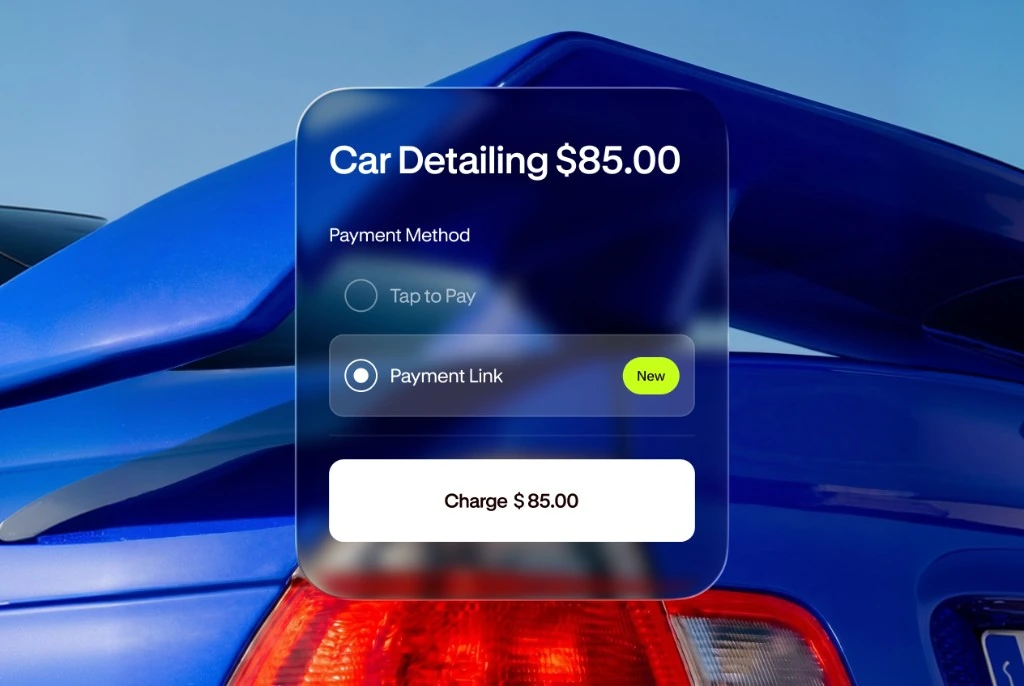
For businesses that need to accept payments on-site or on-the-go, JIM offers a streamlined solution. With JIM, you can accept debit, credit, and digital wallets directly through your smartphone. Just tap and you are done. At just 1.99% per transaction with no hidden costs or extra hardware needed, it is particularly useful for mobile service providers or market vendors.

Getting started is straightforward:

  • Get Started: Download the JIM app for iOS.
  • Make a Sale: Type the sales amount, hit sell, and ask your customer to tap their card or device on your phone.
  • Access Funds: Your money is available right on your JIM card as soon as the sale is done. There is no wait for bank transfers.

Here are 4 immediate steps to take:

  • Define your payment terms, such as payment on completion or deposits.
  • Compare payment processor fees, looking for rates below the typical 2.5%-3.5%.
  • Evaluate if a mobile solution like JIM fits your business model.
  • Download the JIM app to see how it works for on-the-go sales.

Step 6: Fund and manage your finances

Secure your startup funding

Many one-person businesses start with personal savings. If you need outside capital, an SBA Microloan is a strong option. These loans go up to $50,000, with interest rates often between 8% and 13%. Lenders will look for a good credit score and a clear business plan.

You could also use a personal loan, but this puts your personal assets at risk if the business struggles. Also, look for local grants or pitch competitions. Your local Chamber of Commerce or Small Business Development Center (SBDC) often has information on these opportunities.

Manage your day-to-day money

With funding sorted, focus on your working capital. You should have enough cash to cover all business expenses for the first six months. For most solo ventures, this means having $3,000 to $10,000 set aside before you make your first dollar.

A frequent misstep is to use a personal bank account for business transactions. This complicates taxes and can remove the liability protection from your LLC. Open a dedicated business checking account as soon as you have your EIN. Use it for all income and expenses.

Here are 4 immediate steps to take:

  • Calculate your estimated expenses for the first six months to find your working capital number.
  • Research SBA Microloan lenders in your area through the SBA website.
  • Open a separate business checking account to keep finances clean.
  • Create a simple spreadsheet to track every dollar that comes in and goes out.

Step 7: Hire your first help and streamline operations

Decide between a contractor and an employee

As you grow, you will need help. You can hire an independent contractor for specific projects or a part-time employee for ongoing work. A contractor offers flexibility, while an employee provides more stability and control over tasks.

A frequent oversight is misclassifying an employee as a contractor to avoid payroll taxes. The IRS has strict rules on this. If you control the what, how, and when of the work, that person is likely an employee.

Bring on a virtual assistant

Your first hire might be a Virtual Assistant (VA). A VA can manage emails, schedule appointments, or update social media. This frees you to focus on revenue-generating work. Expect to pay a US-based VA between $20 and $40 per hour.

With your VA onboard, you can use software to manage the workload. A project management platform like Asana helps assign tasks and track progress. For scheduling, a program like Calendly lets clients book time with you automatically, which reduces back-and-forth emails.

Here are 4 immediate steps to take:

  • Decide if a contractor or a part-time employee better suits your needs.
  • Review the IRS guidelines on independent contractors versus employees.
  • Research the cost of a Virtual Assistant for your specific tasks.
  • Explore a free plan on Asana or Calendly to see how they work.

Step 8: Market your business and get customers

Your first marketing efforts should focus on one or two channels. For a service business, you might publish expert articles on LinkedIn to attract B2B clients. If you sell products, Instagram or Pinterest could be a better fit. Post consistently three times a week to build momentum.

Once you have some traffic, build an email list. You can use a platform like Mailchimp, which has a free plan for up to 500 subscribers. A simple newsletter with a 20% discount can turn visitors into first-time buyers. The average email open rate is around 21%.

When you are ready for paid ads, start small. A budget of $10-$20 per day on Facebook Ads is enough to test your messaging. Many new owners make the mistake of not setting up conversion tracking, so they do not know if their ads work. Always install the Meta Pixel first.

Track your Customer Acquisition Cost (CAC). To calculate it, divide your total marketing spend by the number of new customers. A healthy CAC for a small online business is often under $50, but this varies widely by industry. This number tells you if your marketing is profitable.

Here are 4 immediate steps to take:

  • Choose one social media channel and plan your first three posts.
  • Sign up for a free Mailchimp account to start your email list.
  • Install the Meta Pixel on your website before you run any ads.
  • Calculate your target Customer Acquisition Cost (CAC).

Step 9: Price your products or services

Choose your pricing model

Your pricing model sets the foundation. For service businesses, hourly rates are simple. A new consultant might charge $50-$75 per hour. Project-based pricing offers a flat fee, like $2,500 for a website design, which clients often prefer for its predictability.

Value-based pricing ties your fee to the results you deliver. For example, you could charge 10% of the ad revenue you generate for a client. This model requires confidence in your work but can yield higher returns.

Set your final price

With a model selected, calculate your price. For products, a 50% markup is a standard retail starting point. If an item costs you $25 to acquire, you would price it at $50. For services, aim for a profit margin of at least 20-30% above your costs.

When you calculate your price, it is easy to only account for direct costs. You must also factor in your non-billable time for admin and marketing. A simple way to do this is to add 15-20% to your final rate to cover these overhead hours.

Here are 4 immediate steps to take:

  • Select a pricing model: hourly, project-based, or value-based.
  • Research the prices of three direct competitors for a benchmark.
  • Calculate your service rate by adding a 20-30% profit margin to your costs.
  • Add 15-20% to your price to account for non-billable administrative time.

Step 10: Maintain quality and scale your operations

Measure your service quality

To keep customers happy, you need to measure their satisfaction. You can send a simple one-question survey after each project to get a Customer Satisfaction (CSAT) score. Aim for an average score of 4 out of 5. A Net Promoter Score (NPS) survey is another option, where a score above 50 is excellent.

Know when to expand

Growth should be a deliberate decision. A good signal to hire help is when administrative tasks take up more than 10 hours of your week. Once you consistently hit $8,000 in monthly revenue, you might have the cash flow to bring on a part-time employee instead of just a contractor.

Many new owners wait too long to delegate tasks. They try to do everything themselves, which leads to burnout and a drop in quality. You should hire help before you feel completely overwhelmed, not after.

With growth, your simple spreadsheet will not be enough. You can move your client information into a free Customer Relationship Management (CRM) platform like HubSpot. This helps you track every interaction and manage your sales pipeline as you get busier.

Here are 3 immediate steps to take:

  • Set a target Customer Satisfaction (CSAT) score of 4 out of 5.
  • Define your hiring trigger, such as when admin work exceeds 10 hours per week.
  • Sign up for a free HubSpot CRM account to organize customer data.

This guide gives you the building blocks for your one-person business. Remember that success comes from consistent action, not a perfect launch. You have the plan. Now, take the first practical step and start building your future.

As you start to make sales, getting paid should be simple. A solution like JIM turns your smartphone into a card reader. You can accept payments for a flat 1.99% fee without extra hardware. Download JIM to get started.

Sell and get paid instantly1 with JIM

Start selling
Hand holding a smartphone with the JIM app interface, showing a $2,100.00 Visa card balance and a keypad to enter a $42.00 transaction. The background features a futuristic rocky landscape and digital wrist overlay.