Credit card gateway: A small business guide on how they work

See article summary
- A credit card gateway encrypts cardholder data, sends it to the issuing bank for approval, and returns a confirmation to your checkout in seconds.
- Cards made up over three quarters of the 236.6 billion noncash payments in the US in 2024, making a reliable gateway essential for capturing sales.
- The gateway authorizes the transaction in five steps; the payment processor and acquiring bank handle settlement and fund transfer.
- Compare gateways on pricing model, payout speed, PCI DSS compliance, and chargeback tools rather than marketing claims.
- Traditional processors settle funds in one to three business days; instant payout options shorten that window.
A credit card gateway is the secure software that encrypts cardholder data, sends it to the issuing bank for approval, and returns a confirmation to your checkout in seconds. For a small business, that gateway controls your checkout success rate, how fast funds reach your account, and how safely customer card data is handled.
Cards accounted for over three quarters of the 236.6 billion noncash payments US consumers and businesses made in 2024, according to the Federal Reserve 2025 triennial payments study. A reliable gateway is what lets your business capture those card payments without friction.
Before comparing credit card processing fees or transaction fees, it helps to understand how a gateway fits between your checkout, the card networks, and your bank.
What is a credit card gateway?
A credit card gateway is the secure software that connects your checkout system to payment processors and card networks such as Visa or Mastercard. It encrypts cardholder data, sends it to the issuing bank for approval, and returns a confirmation in real time.
Whether you process payments through a website, mobile app, or physical POS system, the gateway ensures every transaction moves safely through the network. The gateway itself does not move money. It authorizes the transaction; the payment processor and acquiring bank handle settlement.
Why do small businesses need a credit card gateway?
A payment gateway matters because it determines your checkout success rate, fund-flow speed, and cardholder-data security. Without one, your checkout cannot transmit card information to the issuing bank for authorization.
- Keep checkout fast and reliable: A stable gateway reduces lag at the point-of-sale and prevents failed online payment attempts that interrupt in-store and e-commerce sales.
- Support multiple payment methods: Gateways handle debit card, credit card, ACH, and mobile payments across payment pages, POS systems, and virtual terminals.
- Protect cardholder data: Built-in tokenization and PCI DSS controls secure card information. The PCI Data Security Standard defines the requirements that protect stored and transmitted cardholder data, including encryption and tokenization.
- Centralize transaction visibility: A single dashboard lets you review payment data, optimize transaction processing, and track processing fees in real time.
- Scale with your business: As transaction volume grows, the right gateway supports recurring payments, automation, and API connections without breaking your payment experience.
How does a credit card gateway work step by step?
A credit card payment moves through five steps in seconds, from the moment a customer taps or enters a card to the moment funds land in your account.
Step 1: Customer provides payment details
At checkout, online or in-person, the customer enters card information through a secure payment page, virtual terminal, or card reader.
Step 2: Encryption and tokenization
The gateway encrypts sensitive cardholder data, replacing it with a token that hides the actual numbers. This step keeps your business PCI DSS compliant and protects against data theft.
Step 3: Authorization request
The gateway sends the encrypted payment data to the acquiring bank, which forwards it to the card networks and issuing bank for approval.
Step 4: Response and settlement
The issuing bank verifies funds and fraud risk, then approves or declines the transaction. The gateway relays that response back to your POS or e-commerce dashboard in seconds. Common decline codes include "insufficient funds," "do not honor," and "expired card," each pointing to a different issue on the cardholder's side.
Step 5: Funds transfer
Once approved, the payment processor moves the funds from the customer's issuing bank to your merchant account, minus transaction fees. Authorization and capture can happen together or separately; auth-only holds the funds, while auth-plus-capture completes the charge.
Key features and functionality
Gateways from established providers offer more than basic transaction processing. Most include:
- Fraud protection tools that flag suspicious activity before authorization, using AVS, CVV checks, and velocity rules.
- Recurring payments for subscriptions or memberships.
- ACH and debit card acceptance for lower-cost transfers.
- APIs that let you integrate payment pages directly into your website or app.
- Dashboards for tracking sales, refunds, and transaction fees in one place.
If you sell both online and in-store, look for an all-in-one gateway that supports both environments. This keeps your reporting unified and simplifies reconciliation.
Payment gateway vs payment processor vs merchant account
These three terms describe different parts of the payment chain, and they are not interchangeable.
| Component | What it does | Who owns it |
|---|---|---|
| Payment gateway | Encrypts and transmits card data at checkout | Gateway provider or bundled processor |
| Payment processor | Routes the transaction through card networks to the issuing bank | Processor or acquirer |
| Merchant account | Receives settled funds before they transfer to your bank | Acquiring bank |
A gateway captures and secures the card data. A processor routes that data through the card networks for authorization. A merchant account is the holding account where approved funds settle before reaching your business bank account. Many payment service providers bundle all three into a single relationship, which is why small businesses often never interact with them separately.
How do you choose a credit card gateway?
Choose a gateway based on your sales channels, transaction volume, and payout needs. The criteria below help you compare options on measurable terms rather than marketing claims.
- Look at how you accept payments: If you process in-store, online, and through mobile payments, choose a gateway that supports both point-of-sale and e-commerce without separate systems.
- Review pricing and transaction fees: Compare flat-rate pricing to interchange-plus pricing and identify hidden monthly fees. Typical processing costs range from 1.5% to 3.5% plus $0.10 to $0.30 per transaction, depending on card type and whether the card is present. Visa's published interchange rates set the base cost every processor pays; the processor adds its markup on top.
| Pricing model | How it works | Best for |
|---|---|---|
| Flat-rate | Same percentage and fixed fee on every transaction | Small businesses wanting predictable costs |
| Interchange-plus | Base interchange cost plus a disclosed processor markup | Higher-volume merchants who can audit statements |
| Tiered | Transactions grouped into qualified, mid-qualified, non-qualified tiers | Rarely the cheapest; hard to predict effective rate |
- Confirm security and PCI DSS compliance: Work only with gateway providers that protect cardholder data using tokenization, encryption, and full PCI DSS standards.
- Check payout speed and bank account access: Traditional processors release funds in one to three business days. Same-day ACH and instant payout options shorten that window. Nacha's ACH payments fact sheet documents that ACH credits can be processed the same business day or scheduled the following day.
- Ask concrete evaluation questions: Does the provider publish uptime SLAs? Are support hours 24/7? What chargeback dispute tools are included? A clear chargeback process helps you recover revenue when a customer disputes a transaction.
- Evaluate dashboard and customer support quality: A usable dashboard and responsive support make it easier to track payment data, resolve failed transactions, and optimize your payment experience.
How JIM handles credit card gateway processing
A reliable credit card gateway is the foundation of fast, secure payment processing across in-store and online channels. When your gateway works smoothly, you reduce failed transactions, protect cardholder data, and keep funds moving into your bank account without delays.
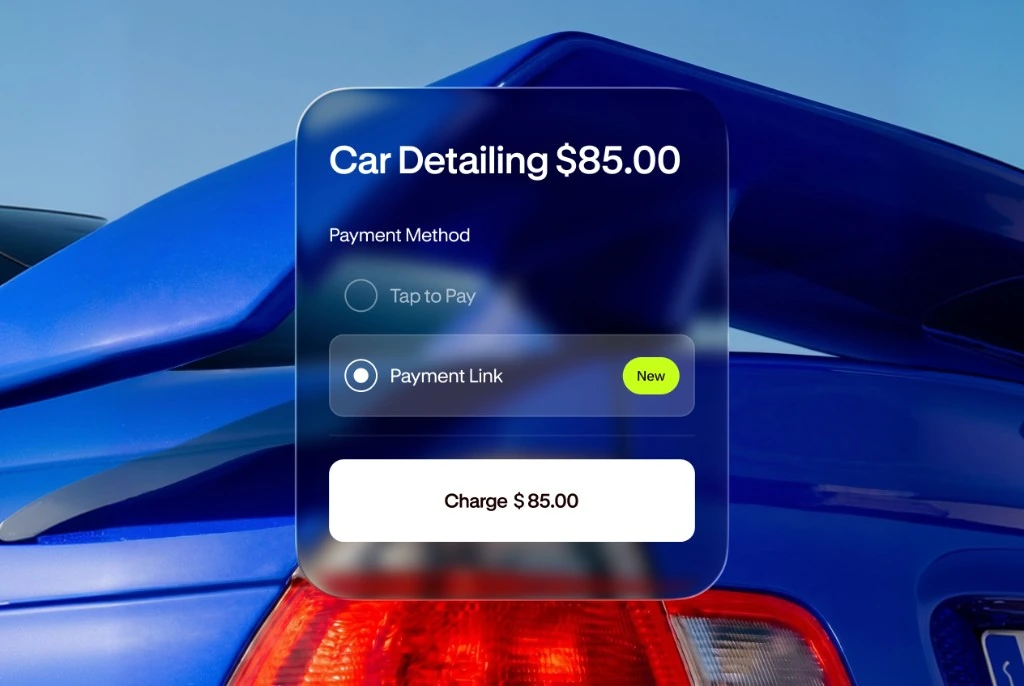
JIM brings payment gateway functionality, point-of-sale tools, and mobile payments into a single app, letting small business owners accept credit card payments on iPhone without a card reader or complicated merchant services setup. JIM charges a flat 1.99% per Tap to Pay sale, with no monthly fees and real-time payouts to your JIM Visa prepaid card. For remote sales, payment links cost 4.99% plus $0.30 per sale.
Want a faster way to optimize your payment experience? Explore JIM and see how simple it is to process payments anywhere.
Frequently Asked Questions
Is a payment gateway necessary?
Is the payment gateway legit?
What’s the best payment gateway?
How can you accept credit card payments without a machine?
What is a credit card gateway login?



Sell and get paid in seconds with Jim