Stripe vs square: Which payment processor fits your business?

See article summary
- Stripe charges 2.9% + $0.30 online and 2.7% + $0.05 in-person; Square charges 2.6% + $0.15 in-person and 2.9% + $0.30 online via API.
- Square settles in 1-2 business days; Stripe takes 2. Instant payouts cost 1.95% on Square and 1.5% on Stripe.
- Square wins for in-person sales with plug-and-play hardware and free POS software; Stripe wins for online and developer use.
- Square hardware runs $0 for a magstripe reader to $799 for a Register; advanced plans cost $49-$149 per month.
- JIM offers Tap to Pay on iPhone at 1.99% flat with instant payouts and no hardware purchase required.
You're comparing payment processors, and the same two names keep appearing: Stripe and Square. Both handle billions in transactions, both serve small businesses, and both charge around 3% per swipe. So why does every comparison article seem to land on "it depends"?
The difference between Stripe and Square isn't about which one is objectively better. It's about whether you're primarily selling online or in person, whether you need a ready-made solution or custom API integration, and how quickly you need access to your money. For business owners running ecommerce stores on Shopify or WooCommerce, the priorities differ from those running food trucks or pop-up shops.
Stripe wins for online businesses and developers who need custom checkout flows. Square wins for in-person sales and merchants who want an all-in-one point-of-sale system. Both charge 2.9% + 30 cents for standard online transactions, but Square charges 15 cents per in-person swipe versus Stripe's 5 cents, while Stripe's percentage is slightly higher at 2.7% versus Square's 2.6%.
How do Stripe and Square compare at a glance?
Stripe and Square serve different core needs: Stripe is built for online businesses and developers, while Square is built for in-person merchants who want plug-and-play hardware and software.
| Feature | Stripe | Square |
|---|---|---|
| In-Person Rate | 2.7% + $0.05 | 2.6% + $0.15 |
| Online Rate | 2.9% + $0.30 | 2.9% + $0.30 (API); 3.3% + $0.30 (checkout) |
| Payout Speed | 2 business days (standard) | 1-2 business days (standard) |
| Best For | Online businesses, SaaS, startups | In-person sales, retail, service providers |
| Hardware Required | Third-party card readers | Square Reader, Square Terminal, Square Register |
| Setup Complexity | Requires developer or tech-savvy user | Plug-and-play for non-technical users |
| Monthly Fees | None (base plan) | None (Square Free); $49-$149/mo for Plus and Premium |
Source: Stripe's official website, accessed August 2026. Square's official website, accessed August 2026.
How much do Stripe and Square really cost?
The true cost of payment processing goes beyond the headline rates. Both platforms use flat-rate pricing, but the details vary depending on how your customers pay, where their cards originate, and whether you need instant access to your funds.
Stripe Pricing Breakdown
Stripe charges 2.9% + $0.30 for online transactions and 2.7% + $0.05 for in-person payments using Stripe Terminal hardware. These rates apply to credit cards and debit cards from major networks.
Stripe becomes more expensive when you factor in international payments. Processing cards from outside the United States adds 1.5% to the transaction, and currency conversion adds another 1%. High-volume businesses can negotiate custom pricing, but startups and small operations typically pay standard rates.
Hidden costs to watch include fees for chargebacks ($15 per dispute), ACH returns, and premium features like Stripe Radar for advanced fraud prevention. If you're connecting Stripe to ecommerce platforms like Shopify or building custom checkout experiences, development costs add up quickly.
Square Pricing Breakdown
Square's base plan, Square Free, charges 2.6% + $0.15 for in-person transactions using a Square Reader, Square Terminal, or Square Register. Online payments through the Square eCommerce API run 2.9% + $0.30, matching Stripe's online rate. Online checkout and invoices through Square's hosted tools run 3.3% + $0.30 on the Square Free plan.
Source: Square's official fees, accessed August 2026.
Hardware costs represent a significant consideration. The magstripe-only Square Reader is free, but contactless and chip readers start around $59. A Square Terminal costs $299, while a full Square Register costs $799. These upfront costs impact your total investment, especially if you're outfitting multiple locations.
Square's POS software is free at the base tier. Advanced plans range from $49 per month for Square Plus to $149 per month for Square Premium, both priced per location, and unlock lower processing rates plus features like team management and loyalty programs.
Cost Comparison for $100 Transaction
Real numbers help clarify the Stripe vs Square cost difference. On a $100 in-person sale:
- Stripe charges: $2.75 (2.7% + $0.05)
- Square charges: $2.75 (2.6% + $0.15)
For a $100 online transaction through the Square eCommerce API:
- Both charge: $3.20 (2.9% + $0.30)
At $10,000 in monthly card transactions, you're paying roughly $270-$320 in processing fees with either platform. The difference becomes more noticeable at higher transaction volume, where even small percentage variations compound. According to the Federal Reserve's research on average interchange fees, merchants paid an average of 2.24% for debit card interchange, which both Stripe and Square mark up to cover their services.
Stripe vs Square for In-Person Payments
Square is the stronger choice for in-person payments. Its hardware, software, and POS features work together out of the box, while Stripe Terminal requires developer integration and third-party readers.
Square's In-Person Advantage
Square built its reputation on in-person transactions. The ecosystem includes purpose-built hardware options that connect seamlessly with Square's POS systems. You can accept contactless payments, chip cards, and magstripe swipes right out of the box.
Square's offline mode keeps your business running during internet outages, storing card transactions until connectivity returns. For coffee shops, boutiques, and salons, this reliability matters during peak hours.
The point-of-sale features extend beyond payment processing. Square tracks inventory, manages employee schedules, and builds customer profiles without requiring additional software. For iPad-based checkout, Square's interface remains one of the most user-friendly options available.
Stripe's In-Person Limitations
Stripe offers in-person payments through Stripe Terminal, but the implementation requires more technical effort. You'll need to integrate with third-party hardware and handle a more complex setup for physical locations.
For businesses with existing software systems or custom workflow requirements, Stripe's flexibility becomes valuable. But for service providers who want to accept a payment and move on, Stripe's approach adds friction. The platform clearly prioritizes online businesses over brick-and-mortar operations.
Alternatives for Mobile Businesses
If your work takes you to customer locations, events, or markets, both Stripe and Square require you to carry additional hardware. There's another approach worth considering.
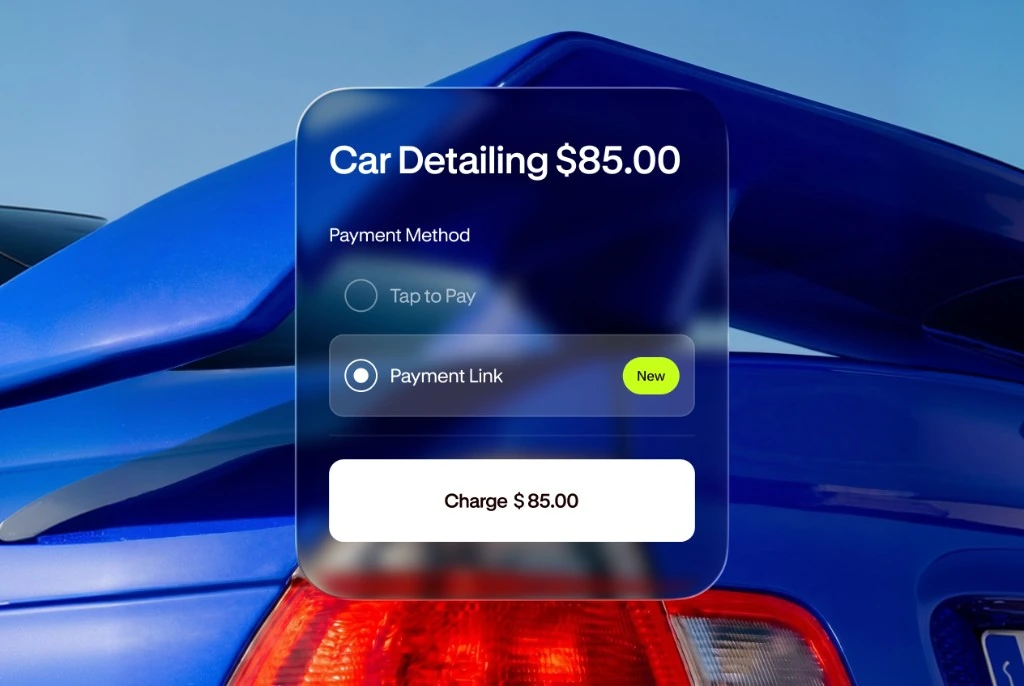
JIM's Tap to Pay turns your iPhone into a card reader. You accept credit cards, debit cards, and digital wallets like Apple Pay and Google Pay directly on your phone. No Square Reader to lose, no Stripe Terminal to configure. The payment experience stays simple: enter the amount, have your customer tap, and the sale completes instantly.
Stripe vs Square for Online Payments
For ecommerce and online businesses, Stripe is the stronger platform. Both handle online transactions, but their approaches reflect different priorities.
Stripe's Online Dominance
Stripe offers some of the most developer-friendly APIs in payment processing. Tech-savvy teams can build custom checkout experiences, implement subscription billing for SaaS products, and connect Stripe to virtually any software ecosystem through well-documented integrations.
For recurring payments, Stripe's billing functions handle complex scenarios: metered usage, trial periods, proration, and automatic retries for failed charges. Online businesses selling in Canada, Australia, and across Europe benefit from Stripe's global payment infrastructure with support for 135+ currencies.
Stripe's payment experience works seamlessly with Shopify, WooCommerce, and other ecommerce platforms. The platform handles 3D Secure authentication, fraud protection through Stripe Radar, and PCI compliance automatically.
Square's Online Capabilities
Square Online provides a free website builder with integrated checkout, making it accessible for business owners without technical backgrounds. You can launch an online store without hiring developers or paying for separate ecommerce software.
For businesses already using Square's POS for in-person sales, the unified dashboard brings online and offline transactions together. Inventory syncs automatically, and customer data consolidates in one place.
The limitations appear when you need customization. Square's online checkout works within its own ecosystem but offers less flexibility for custom integrations. If your workflow spans multiple platforms or requires specialized functions, you may find Square's approach restrictive.
How fast do Stripe and Square payouts arrive?
Payout speed affects everything from paying suppliers to making payroll. Square settles funds faster than Stripe by default, and both charge extra for instant access.
Standard Settlement Timelines
Stripe deposits funds into your bank account within 2 business days for most transactions. Square typically settles in 1-2 business days, with many sellers seeing funds the next business day.
Both platforms offer instant deposit options for an additional fee. Stripe Instant Payouts cost 1.5% of the transfer amount for US accounts (1% in most other countries). Square Instant Transfer charges 1.95% per transfer. These fees add up quickly if you're moving money frequently.
How Settlement Affects Small Businesses
The median small business holds only 27 days of cash reserves, according to the JPMorgan Chase Institute. Waiting even 1-2 business days for settlement can strain operations during busy periods.
For mobile businesses operating on thin margins, instant access to revenue changes the equation. JIM provides funds immediately on your JIM Visa Prepaid Card after each sale, eliminating both the waiting period and the extra fees that Stripe and Square charge for faster access.
Which is easier to set up: Stripe or Square?
Your technical comfort level should influence which payment processor you choose. Square is designed for non-technical users; Stripe assumes you have developer resources.
Square's Plug-and-Play Approach
Square designed its system for business owners who want to accept card transactions without becoming payment processing experts. Download the app, connect a reader, and you're processing payments within minutes.
The integrated approach means hardware and software work together out of the box. You don't need to evaluate compatibility, configure APIs, or troubleshoot connection issues. For bakeries, barber shops, and other local businesses, this ease of use represents real value.
Stripe's Technical Requirements
Stripe assumes you have developer resources available. The documentation is excellent, but implementing Stripe requires writing code or using platforms that have already built the integration.
For SaaS companies, online marketplaces, and tech startups, this technical flexibility matters. You can customize every aspect of the checkout experience and automate complex payment workflows. But for a salon owner who just wants to take payments, Stripe's approach creates unnecessary complexity.
When technical flexibility matters, such as building a custom invoicing system or automating subscription management, Stripe's investment pays off. When simplicity matters, it doesn't.
How do Stripe and Square reporting tools compare?
Both platforms offer business tools beyond payment processing, but Square bundles more into a single system while Stripe focuses on transaction data and financial metrics.
Square's Built-In Features
Square's all-in-one approach extends to business management tools. The dashboard tracks sales trends, identifies your best-selling items, and shows which times of day generate the most revenue.
Inventory management syncs across in-person and online channels. Employee management handles scheduling, time tracking, and permissions. Customer loyalty programs encourage repeat visits. These features come bundled rather than requiring separate subscriptions to third-party services.
For small business owners who want one system handling everything, Square's ecosystem reduces complexity. You're not stitching together multiple tools or reconciling data across platforms.
Stripe's Reporting Capabilities
Stripe's reporting focuses on transaction data: payment volume, success rates, dispute trends, and revenue breakdowns. The Stripe Dashboard handles financial reporting well, but it wasn't designed to manage your entire operation.
For inventory management, employee scheduling, or customer loyalty, you'll need to connect third-party tools. Stripe's API makes these integrations possible, but they require additional setup, additional subscriptions, and often additional technical support.
If your business already uses separate systems for operations and you just need a payment processor, Stripe fits cleanly. If you're building from scratch and want fewer moving parts, the integration overhead may not be worth it.
Stripe or Square: which should you actually pick?
The decision between Stripe and Square comes down to where your customers pay you, how much technical flexibility you need, and whether you prefer integrated business tools or best-of-breed integrations.
| Business Type | Deciding Criterion | Go With |
|---|---|---|
| Online store or SaaS | Advanced APIs, custom checkout, multi-currency | Stripe |
| Retail or food service location | All-in-one POS, inventory, employee management | Square |
| Developer building custom payments | Flexible APIs, subscription billing, global reach | Stripe |
| Non-technical merchant wanting speed | Plug-and-play setup, free POS software | Square |
| Mobile business carrying no hardware | Flat 1.99% rate, instant payouts, no reader | JIM |
If your business runs on mobility, speed, and simplicity, JIM offers a practical alternative. With Tap to Pay on iPhone, flat 1.99% pricing, and instant payouts, JIM removes the friction of hardware costs and settlement delays. No readers to purchase, no multi-day waiting periods, and no complex fee structures to decode.
If in-person mobility is your core need, a Tap to Pay solution like JIM removes hardware entirely. Download JIM and start accepting payments anywhere your business takes you.
Frequently Asked Questions
What are the disadvantages of Stripe?
How much is the Stripe fee for $100?
Who is Stripe's biggest competitor?
Does Stripe or Square have better reporting features?
Why do some businesses choose Stripe over Square?
Is Stripe a Chinese company?



Sell and get paid in seconds with Jim