How to start a baby clothing business: a founder's guide
See article summary
- Most founders launch a baby clothing brand with $3,000 to $15,000 and a single focused niche.
- Form an LLC, get a free EIN from the IRS, and secure a seller's permit for your state.
- Every SKU needs a CPSC Children's Product Certificate (CPC) confirming lead and flammability compliance.
- Price with keystone markup at 2 to 2.5 times your full landed cost of goods.
- Expect 60 to 90 days to first sale, with break-even between month 6 and month 12.
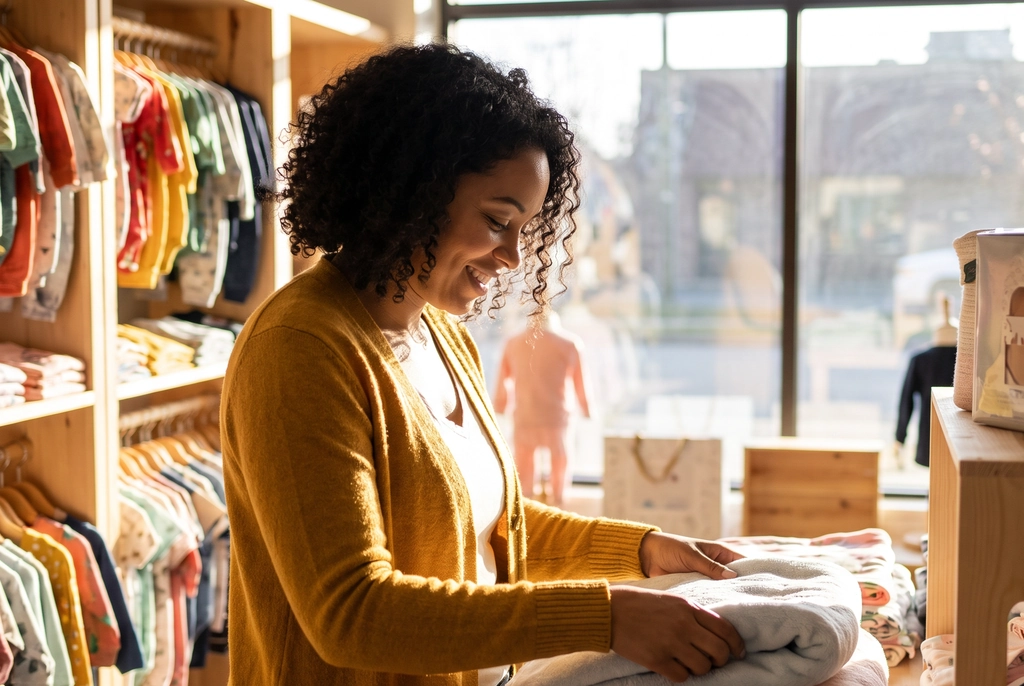
The global baby apparel market reached an estimated $177.1 billion in 2023 and is projected to hit $248.25 billion by 2030, according to Grand View Research baby apparel market data. That growth comes from steady demand for newborn essentials, toddler playwear, and specialty items like organic and gender-neutral basics, which gives a new baby clothing brand room to find a profitable niche rather than competing head-on with big-box retailers.
Most founders launch a baby apparel brand with $3,000 to $15,000, pick a single niche, form an LLC, clear CPSC safety certification, and reach first sales within 60 to 90 days. The steps below cover concept validation, legal setup, sourcing, pricing, and the marketing channels that actually move inventory in this category.
How do you validate a baby clothing niche?
Niche selection is the single highest-leverage decision for a baby apparel startup, because a focused line is easier to source, certify, and market than a broad catalog. Start by researching what parents actually buy. Use Google Trends to compare demand for terms like "organic baby clothes" versus "bamboo baby clothes." You can also browse parenting forums like Reddit's r/beyondthebump to see what styles and features are popular.
Trying to appeal to everyone is the fastest way to get lost in a crowded market. Instead, focus on a specific niche like preemie apparel, gender-neutral basics, or toddler formal wear. A clear focus helps you stand out and simplifies your marketing efforts from day one.
The table below compares four popular baby clothing niches by margin potential, competition, and sourcing difficulty to help you pick a defensible angle.
| Niche | Typical gross margin | Competition level | Sourcing difficulty |
|---|---|---|---|
| Organic cotton basics | 50-60% | High | Low (many certified mills) |
| Preemie and NICU apparel | 55-65% | Low | Medium (specialized patterns) |
| Gender-neutral playwear | 45-55% | Medium | Low |
| Toddler formal wear | 60-70% | Low | High (small MOQs, custom fabrics) |
Analyze competition and set prices
Look at what successful small brands are doing on platforms like Etsy and Faire. Analyze their product photos, pricing strategies, and customer reviews. This research gives you a realistic baseline for your own brand and helps you spot gaps in the market.
With this in mind, you can set your prices. A good starting point is the keystone pricing model, which is setting the retail price at 2 to 2.5 times your cost of goods. If a onesie costs you $8 to source and land, a $20 price tag is reasonable.
How much does it cost to start a baby clothing business?
Your initial investment for an online-only baby apparel store can range from $3,000 to over $15,000. The biggest variable is your first inventory order. Be careful not to over-order newborn sizes, as babies grow out of them within weeks. Focus more on 3-6 and 6-12 month sizes.
- Business Formation (LLC): $100 - $500
- Initial Inventory (50-100 units per style): $2,000 - $10,000
- E-commerce Website (Shopify): $500 - $3,000 for setup and theme
- Launch Marketing Budget: $500 - $2,000
Here are 3 immediate steps to take:
- Use Google Trends to compare search interest for three potential niches you are considering.
- Create a spreadsheet of five competitors, noting their product types and price points.
- Draft a preliminary budget outlining your estimated costs for inventory and website setup.
How do you set up your legal structure and get licensed?
Choosing the right business entity and clearing federal safety rules protects your personal assets and keeps your products legally sellable, which is why legal setup comes before inventory. Most small apparel brands start as a Limited Liability Company (LLC). This structure protects your personal assets if the business faces debt or lawsuits. Profits pass through to your personal tax return, which simplifies tax filing compared to a corporation.
Handle federal requirements
First, get a free Employer Identification Number (EIN) from the IRS. You will need this for taxes and banking. Also, you must comply with the Consumer Product Safety Commission (CPSC) rules for children's apparel, which includes third-party testing and certification under standards like 16 CFR part 1610 for clothing flammability.
The document founders most often skip is the Children's Product Certificate (CPC). You or your manufacturer must issue a CPC for each item, confirming it meets safety standards for things like lead content (capped at 100 ppm for children's products) and flammability. The CPC must identify the product, cite the specific safety rules it meets, and list the CPSC-accepted lab that performed the testing. Keep these records meticulously for every batch you sell.
Typical third-party lab testing costs $75 to $300 per SKU, depending on the number of materials and tests required. Budget for this before you place your first production order, because a batch without a valid CPC cannot be sold legally.
Secure state and local permits
You will need a seller's permit (or resale license) from your state's tax agency to collect sales tax. In addition, check with your city or county clerk for a general business license. These permits can cost between $50 and $150.
Here are 4 immediate steps to take:
- Apply for a free EIN directly on the IRS website.
- Review the CPSC's safety requirements for children's clothing.
- Search your state's department of revenue website for seller's permit information.
- Contact your local city hall to ask about obtaining a business license.
What insurance does a baby clothing business need?
Product liability insurance is non-negotiable for baby apparel, because a single defect claim, like a loose snap or a flammability failure, can cost more than your first year of revenue. Your legal structure offers some protection, but business insurance adds a second layer, especially with products for babies.
Key insurance policies to consider
For an online-only store, you can often bundle general and product liability insurance into one Business Owner's Policy (BOP). This is your foundational coverage.
- Product & General Liability: This combination protects against claims from product-related injuries and other business risks. Small-business liability insurer Insureon reports that general liability coverage for small retail businesses commonly runs $400 to $900 annually for a $1 million policy.
- Workers' Compensation: If you hire even one employee, most states require this. It covers medical costs and lost wages from work-related injuries.
When you look for a provider, compare companies that specialize in e-commerce, such as The Hartford, Hiscox, or Next Insurance. They understand the risks of online retail and can offer tailored policies. Always confirm your policy meets any requirements from wholesale marketplaces you plan to use.
Here are 3 immediate steps to take:
- Request quotes for a combined general and product liability policy.
- Compare policies from at least two providers that specialize in e-commerce.
- Review your product designs for potential safety hazards to discuss with an insurance agent.
How do you set up your workspace and source inventory?
A lean workspace and a vetted supplier base keep your upfront costs low and your product quality consistent, so sourcing comes right after legal and insurance setup. Your initial workspace can be simple. A 100-square-foot area in a spare room or garage is often enough for inventory and packing. If you use your home, confirm your HOA or lease allows for a home-based business, especially regarding package deliveries.
You will need some basic equipment to manage inventory and shipping. Plan for these initial costs.
- Industrial Shelving: $150 - $400 to organize stock.
- Thermal Label Printer: $150 - $250 for a model like a Rollo or Dymo.
- Shipping Supplies: $100 - $200 for an initial stock of poly mailers and boxes.
- Photography Setup: $50 - $150 for a simple lightbox and tripod.
Choose your business model
Before you place an order, pick a fulfillment model that matches your capital and time. The four most common options for a baby clothing brand each trade off differently on upfront cost, margin, and control.
| Model | Upfront cost | Gross margin | CPSC burden | Time to launch |
|---|---|---|---|---|
| Private label (own inventory) | $3,000 - $15,000 | 50-65% | High (you own the CPC) | 8-12 weeks |
| Print-on-demand | $200 - $1,000 | 20-35% | Medium (provider holds CPC) | 1-2 weeks |
| Dropshipping | $500 - $2,000 | 15-30% | Low (supplier owns it) | 1-3 weeks |
| Handmade (you sew) | $500 - $3,000 | 60-80% | High (you test and certify) | 4-8 weeks |
Private label gives you the strongest brand and margin but requires the most capital and full ownership of CPSC compliance. Print-on-demand and dropshipping let you validate designs cheaply, but the lower margins and lack of quality control make them a poor long-term fit for a safety-regulated category like baby apparel. Handmade suits founders who want full creative control and can manage their own testing.
Find suppliers and place your first order
You can find suppliers on wholesale marketplaces like Faire or FashionGo. These platforms let you buy from multiple brands at once. Another route is to work directly with manufacturers on sites like Alibaba for custom designs, but this requires more oversight.
Placing a large order without a quality check is an expensive error. Always request samples first. This lets you feel the fabric and inspect the seams. Minimum order quantities (MOQs) can range from 20 to 200 units per style, so a sample is a small price for peace of mind.
When you talk to suppliers, ask if they provide a Children's Product Certificate (CPC) for their items. This document is a legal requirement and confirms the products meet U.S. safety standards. A reliable partner will have this ready for you.
Here are 4 immediate steps to take:
- Measure a 10x10 foot space for your initial inventory storage.
- Price out a thermal label printer and industrial shelving online.
- Create accounts on Faire and FashionGo to browse potential suppliers.
- Request samples from at least two suppliers you are considering.
How do you set up payment processing for a baby clothing business?
A baby apparel brand needs two payment channels: an online checkout for website orders and a mobile option for craft fairs, pop-up shops, and local markets. Most e-commerce platforms like Shopify have built-in payment processors. These typically charge around 2.9% plus 30 cents per transaction. This is the standard way to accept credit cards and digital wallets online.
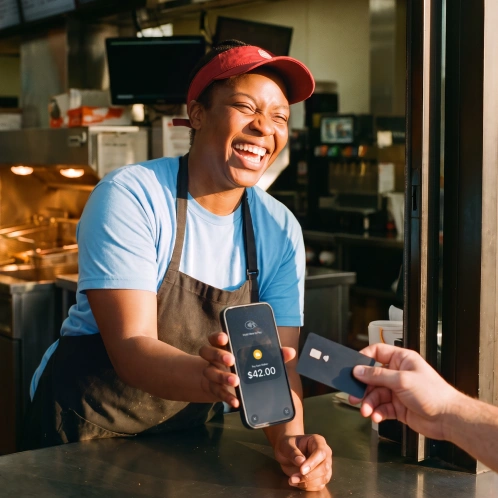
For selling at markets or pop-up shops, you need a way to accept payments on the go. JIM offers a streamlined solution where you can accept debit, credit, and digital wallets directly through your smartphone. Just tap and the sale is done.
The cost is a big factor. JIM charges just 1.99% per transaction with no hidden costs or extra hardware. This is a significant saving compared to other providers whose rates often hover around 2.9%. It is particularly useful for selling at craft fairs or local markets.
- Get Started: Download JIM app for iOS
- Make a Sale: Type the sales amount, hit sell, and ask your customer to tap their card or device on your phone
- Access Funds: Your money is available right on your JIM card as soon as the sale is done - no waiting for bank transfers
Here are 3 immediate steps to take:
- Review the transaction fees for your e-commerce platform's default payment processor.
- Download the JIM app to see how it works on your phone for in-person sales.
- Calculate the potential savings on a $100 sale using JIM's 1.99% rate versus a standard 2.9% rate.
How do you fund your business and manage finances?
A baby clothing brand burns cash before it earns it, so funding and working capital planning determine whether you survive the gap between your first inventory order and your first profitable month. Most new apparel brands use an SBA Microloan. These loans go up to $50,000 and are designed for startups. The SBA reports that microloan interest rates generally range from 8% to 13%. You will need a strong business plan and a good personal credit score to qualify.
A business line of credit is another flexible option. It lets you draw funds as needed for inventory reorders or unexpected marketing costs. This avoids the need to apply for a new loan every time you need cash.
Plan your working capital
Plan for at least six months of operating expenses. Many new owners focus on initial startup costs but forget the cash needed to run the business before sales stabilize. Running out of runway mid-launch stalls more promising brands than any single product failure.
A working capital buffer of $8,000 to $15,000 is a realistic target. This covers ongoing inventory, marketing, and software fees. You might also explore grants like the Amber Grant, but be aware that they are very competitive.
Here are 3 immediate steps to take:
- Calculate your estimated operating costs for the first six months.
- Review the SBA Microloan requirements on the official SBA website.
- Research the application criteria for one small business grant like the Amber Grant.
How do you hire your team and set up operations?
You can run a baby apparel brand solo up to roughly $100,000 in annual revenue, but once order volume passes a weekly threshold, fulfillment speed becomes the bottleneck that either grows or kills the brand. You will likely start as a one-person operation. Your first hire is usually a part-time Fulfillment Associate once you consistently process 50-75 orders per week. This role handles packing, quality control, and inventory counts. Expect to pay between $15 and $20 per hour.
No specific certifications are required for this role. Under-valuing attention to detail here is a costly error. Your packer is your last line of defense against sending out a flawed item, so hire someone meticulous who understands the importance of product safety.
Manage your daily workflow
Your e-commerce platform's built-in order management system is sufficient at first. As you grow, use inventory management software like Katana to track stock across multiple sales channels. If you sell on more than two channels, a system like Katana or Cin7 pays for itself by preventing oversold popular items.
Many solo founders handle up to $100,000 in annual revenue before they hire help. A good sign it is time to hire is when you can no longer ship orders within your stated fulfillment window. Before you bring someone on, document your processes for packing and returns.
Here are 3 immediate steps to take:
- Draft a simple job description for a part-time Fulfillment Associate.
- Write down your step-by-step process for packing an order and handling a return.
- Set a personal weekly order limit that, once reached, will prompt you to start looking for help.
How do you market a baby clothing business?
Baby apparel marketing works best on visual platforms and in parenting communities where trust and recommendations drive purchases, which is why generic e-commerce advice falls flat in this category. Start your marketing on Instagram and Pinterest. These platforms are ideal for showcasing baby apparel. Post high-quality photos of your products in use. Collaborate with micro-influencers (10k-50k followers) in the parenting space for authentic promotion.
Encourage customers to share photos of their babies in your clothes. You can feature this user-generated content (UGC) on your feed. This builds social proof and creates a community around your brand. A simple photo contest can generate a lot of engagement.
Beyond social media, tap baby-specific channels that general e-commerce guides overlook. Apply to the Babylist registry seller program so your products appear on wish lists that expectant parents actively build. Pitch your line to subscription boxes like Bump Boxes for recurring exposure. Partner with local hospitals or birth centers to include a branded onesie in newborn gift bags. These channels reach parents at the exact moment they are shopping for baby clothes.
Use paid ads and track your numbers
Once you have some organic traction, explore Facebook and Instagram ads. Target users based on interests like "new parents" or "baby showers." Boosting posts without a strategy burns cash fast. Instead, create specific ad campaigns with clear goals.
Start with a small budget, perhaps $20 per day, to test what works. Aim for a customer acquisition cost (CAC) below $40. Littledata's benchmark of 2,800 Shopify stores puts the average e-commerce conversion rate at 1.4%, so track your metrics closely to ensure your ad spend is profitable.
Build your email list
From day one, collect email addresses on your website. Offer a 10% discount for signing up. This gives you a direct way to communicate with interested shoppers, announce new collections, and run special promotions without relying on social media algorithms.
Here are 4 immediate steps to take:
- Identify five parenting micro-influencers on Instagram who align with your brand.
- Draft a welcome email that offers a discount to new subscribers.
- Explore the audience targeting options within Facebook Ads Manager for new parents.
- Plan your first three Instagram posts, including product shots and a brand introduction.
How do you price your products for profit?
Pricing determines both your margin and your brand position, so it deserves its own pass after you know your true landed cost. The standard for apparel is keystone pricing, which is a 100% markup (or 2x your cost). If a onesie costs you $10 to land, you sell it for $20. For a healthier margin, use a 2.5x markup, pricing that same onesie at $25.
The number founders forget most often is full landed cost. Your "landed cost" should include the product cost, shipping from the supplier, and any import duties. This ensures your markup covers all your initial expenses before you even account for marketing.
Analyze the market landscape
With your cost in mind, look at what similar brands charge on Etsy or Instagram. Your pricing sends a message. If comparable organic cotton sleepers sell for $30, pricing yours at $15 might make customers question its quality, even if your margin is acceptable.
Create a simple spreadsheet to track 5-10 competitors. Note their prices for key items like bodysuits, leggings, and gift sets. This gives you a realistic price range and helps you position your brand, whether you compete on value or as a premium option.
Here are 4 immediate steps to take:
- Calculate the full landed cost for one of your core products.
- Apply a 2x and 2.5x markup to determine your keystone price range.
- Build a spreadsheet to log the prices of five competitors for a similar item.
- Adjust your price to account for payment processing fees (approx. 3%) and packaging costs.
How do you maintain quality and scale your operations?
Quality control and scaling discipline protect the brand reputation you built, because a single safety defect in baby apparel can trigger a recall and erase a year of progress. Create a quality control checklist for every shipment. Your list should include checks for seam strength, snap security, fabric consistency, and correct labeling. This is your last defense against product issues before they reach a customer.
Aim for a defect rate below 2% on incoming stock. Many new owners trust the manufacturer's QC entirely, which is a mistake. Always spot-check every batch yourself and confirm you have the Children's Product Certificate (CPC) for all items.
Know when to scale
Once you consistently hit 50-75 orders per week, it is time to find part-time help. This frees you to focus on marketing and growth. Do not wait until you are overwhelmed and shipping times suffer.
When you sell on multiple channels like your website and Etsy, use inventory management software. A system like Katana or Cin7 syncs stock levels automatically to prevent you from overselling a popular item.
With your operations running smoothly, you can think about new products. A good benchmark is an 80% sell-through rate on a collection within 90 days. This data shows strong demand and gives you a green light to expand your line.
Here are 4 immediate steps to take:
- Create a quality control checklist for inspecting new inventory.
- Calculate your defect rate from your last inventory batch.
- Set a weekly order volume that will trigger your search for a part-time hire.
- Review the features of an inventory management system like Katana or Cin7.
How much can a baby clothing business make?
Revenue depends on your niche, price point, and channel mix, but realistic first-year benchmarks help you set targets and spot when something is off. A solo baby apparel brand selling private-label basics at a $30 average order value (AOV) can reach $40,000 to $80,000 in gross revenue in year one, assuming a 1.4% conversion rate and steady paid traffic at a $40 CAC.
The table below shows a simplified year-one revenue and break-even snapshot for a private-label baby clothing brand.
| Metric | Conservative case | Growth case |
|---|---|---|
| Average order value | $30 | $45 |
| Monthly sessions | 8,000 | 15,000 |
| Conversion rate | 1.4% | 2.5% |
| Monthly orders | 112 | 375 |
| Monthly revenue | $3,360 | $16,875 |
| Gross margin (after COGS) | 55% | 60% |
| Monthly gross profit | $1,848 | $10,125 |
| Break-even monthly overhead | $2,500 | $5,000 |
Break-even typically lands between month 6 and month 12 for a private-label brand. Brands that start with print-on-demand reach break-even faster but cap out lower, because the 20-35% margins leave little room to fund paid acquisition or inventory expansion. Track your contribution margin per order from day one so you know exactly when each sale starts paying back your fixed costs.
Next steps to launch your baby clothing line
Parents value safety and practicality just as much as style, so your launch plan should lead with CPSC compliance and clear product photography, then layer in marketing once your product is certified and your pricing holds margin. Work through the steps in order: validate your niche, form your LLC, clear your CPC, source samples, set your prices, and then start selling online and in person.
When you sell at local markets and pop-ups, managing payments should be simple. JIM turns your smartphone into a card reader for a flat 1.99% fee, with no extra hardware. Download JIM and make your first sale.
Frequently Asked Questions
How much does it cost to start a baby clothing business?
What licenses do I need to sell baby clothes?
What is a Children's Product Certificate (CPC)?
How profitable is a baby clothing business?
Do I need product liability insurance for baby clothes?



Sell and get paid in seconds with Jim