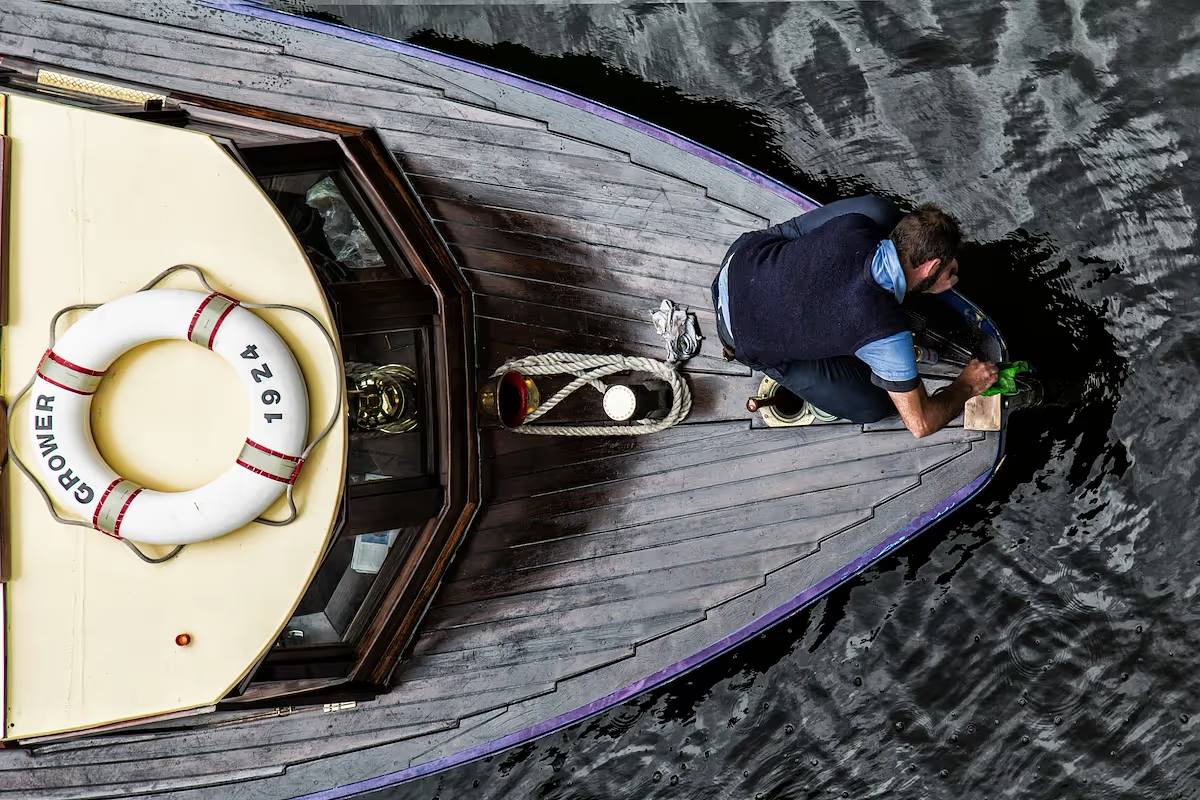
Starting a boat cleaning business is a rewarding venture that combines a passion for marine craft and an eye for detail with smart business sense. The market for boat care is worth billions, with steady demand for detailing and maintenance from private owners, marinas, and charter companies.
This guide will take you through the practical steps of validating your business concept, obtaining necessary licenses, acquiring the right equipment, and marketing your services to help you launch a successful boat cleaning business in the U.S.
Step 1: Research your market and create a budget
First, validate demand in your area. Spend a weekend at local marinas and public boat ramps. Talk to boat owners about their cleaning habits, what they pay, and any frustrations with current services. Also, browse online forums like The Hull Truth to understand common detailing requests.
Next, analyze your competition. Use Google Maps to find detailers in your service area. Study their websites to see their service packages and pricing structures. Reading their customer reviews can reveal service gaps or quality issues you can solve, giving you a competitive edge from day one.
Map out your startup costs
A clear budget prevents surprises. Many new owners misjudge initial expenses, so it helps to break them down. You can expect your total startup investment to fall between $2,000 and $5,000. Here is a typical breakdown of where that money goes.
- Equipment: $800 - $1,500 for a pressure washer, orbital buffer, and wet/dry vacuum.
- Supplies: $500 - $1,000 for an initial stock of marine-grade soaps, waxes, and compounds.
- Business Formation & Insurance: $700 - $2,000 for LLC registration and your first liability policy.
Using cheaper automotive products is a frequent misstep that can damage a boat's gelcoat and your reputation. You should always invest in marine-specific formulas to deliver professional results and protect your clients' assets.
Here are 3 immediate steps to take:
- Visit two local marinas to speak with at least five boat owners about their needs.
- Create a spreadsheet of three local competitors, listing their services and prices.
- Draft a startup budget based on the estimated cost ranges for equipment and supplies.
Step 2: Set up your legal structure and get licensed
You should consider forming a Limited Liability Company (LLC). This structure protects your personal assets from business debts and offers pass-through taxation, which means profits are taxed on your personal return. This avoids the double taxation that corporations face.
Next, get a free Employer Identification Number (EIN) from the IRS website. You will need this nine-digit number to open a business bank account, file taxes, and hire employees. The online application takes about 15 minutes to complete.
State and local requirements
Register your LLC with your state’s Secretary of State. This typically costs between $50 and $500 and can take a few days to several weeks. You will also need a general business license from your city or county, which usually costs under $100.
A frequent oversight is ignoring environmental rules. Boat cleaning runoff is regulated under the Clean Water Act. Check with your local environmental protection agency for specific permits to avoid fines for improper water discharge, a costly mistake for a new business.
Here are 3 immediate steps to take:
- Apply for a free Employer Identification Number (EIN) directly from the IRS website.
- File your LLC formation documents with your state’s Secretary of State.
- Contact your city clerk’s office to ask about a business license and environmental permits.
Step 3: Secure insurance and manage risk
Your next move is to protect your business. Insurance is your safety net. Start with General Liability, which covers property damage and injuries. A $1 million policy is standard and costs between $500 and $1,200 annually. Marinas often require proof of this coverage to work on-site.
Key insurance policies
Beyond general liability, you should also consider other coverages to fully protect your operation. These policies address risks unique to boat detailing, like damage to expensive electronics or equipment theft.
- Professional Liability: Covers claims of faulty workmanship, like accidentally damaging a boat’s gelcoat.
- Inland Marine: Protects your equipment, such as pressure washers and buffers, while in transit or at a job site.
- Commercial Auto: If you use a dedicated work vehicle, this is a legal requirement.
Some new owners try to save money with a generic business policy. This can be a costly error, as these policies often exclude work on watercraft. You might want to connect with an agent who understands the marine industry. Providers like BoatUS or Gowrie Group can help.
Here are 3 immediate steps to take:
- Request quotes from two insurance providers that specialize in marine businesses.
- Ask agents specifically about coverage for faulty workmanship and equipment theft.
- Budget between $700 and $1,500 for your first year of insurance premiums.
Step 4: Select your equipment and supplies
Your primary equipment includes a pressure washer, an orbital buffer, and a wet/dry vacuum. You might want to choose a gas-powered pressure washer around 2,500 PSI ($400-$700). This gives you enough power without relying on a client’s electricity. A variable-speed orbital buffer is also a must-have.
Many new owners buy a single-speed buffer to save money, but this can burn a boat’s gelcoat. A quality variable-speed model costs between $150 and $300 and gives you the control you need for professional results. For your base of operations, a home garage or a 10x10 storage unit is usually sufficient.
Stocking your cleaning arsenal
When it comes to supplies, always use marine-grade products from brands like 3M or Star brite. You will need a heavy-duty rubbing compound, a finishing polish, and a durable marine wax or sealant. Buying these in gallon jugs instead of smaller bottles can cut your costs by up to 40%.
You will also need an assortment of non-abrasive brushes, microfiber towels, and applicators. Plan to spend an initial $500 to $1,000 to get fully stocked. This investment protects your clients' boats and builds your reputation for quality work from day one.
Here are 3 immediate steps to take:
- Price out a gas pressure washer and a variable-speed orbital buffer.
- Create a shopping list of marine-grade compounds, polishes, and waxes in gallon sizes.
- Confirm local rules for operating a mobile business from your home or a storage unit.
Step 5: Set up your payment system
For most jobs, you should require payment upon completion. On larger projects like a full restoration, it is wise to ask for a 50% deposit to cover your initial supply costs. This simple step protects your cash flow and shows the client is serious.
How to get paid
Your clients will expect to pay with cards or digital wallets. Some new owners get stuck with clunky card readers or high fees. You will want a solution with low transaction rates and no extra hardware to carry around the marina.
With that in mind, for a business that accepts payments on-site, JIM offers a streamlined solution. You can accept debit, credit, and digital wallets directly through your smartphone—just tap and done. This is a big saving, as other providers often charge rates approaching 3% plus fees.
At just 1.99% per transaction with no hidden costs, it's particularly useful for collecting final payment right at the dock. Getting started is straightforward.
- Get Started: Download JIM app for iOS
- Make a Sale: Type the sales amount, hit sell, and ask your customer to tap their card or device on your phone
- Access Funds: Your money is available right on your JIM card as soon as the sale is done - no waiting for bank transfers
Here are 3 immediate steps to take:
- Decide on your payment terms, like payment on completion or a 50% deposit for big jobs.
- Compare JIM's 1.99% rate to other mobile payment options.
- Download the JIM app to explore its features before your first client.
Step 6: Fund your business and manage finances
Calculate your working capital
You need a cash cushion for your first six months. This working capital covers fuel, marketing, and supply refills before you have steady income. A frequent misstep is to only budget for startup costs and forget ongoing expenses.
Plan for $3,000 to $6,000 to operate comfortably. This buffer ensures you can run your business without financial stress while you build your client base. It prevents you from dipping into personal savings for business needs.
Explore your funding options
Many owners use personal savings. If you need a loan, an SBA Microloan is a solid option. These loans range from $5,000 to $50,000 and are designed for new small businesses. Interest rates typically fall between 8% and 13%.
You can also search for grants on sites like Grants.gov, but they are highly competitive. For most new boat cleaners, a small loan or personal funds are the most direct paths to get started.
Set up your financial system
Once you have funds, open a dedicated business checking account. Mixing personal and business finances creates tax headaches and makes it hard to track profitability. A separate account keeps your records clean from day one.
Here are 3 immediate steps to take:
- Calculate your 6-month working capital budget, including fuel and supplies.
- Research SBA Microloan lenders in your area through the SBA website.
- Open a separate business checking account to manage your funds.
Step 7: Hire your first crew and set up operations
Defining roles and pay
Your first hire will likely be a Detailing Technician. This person handles the hands-on work like washing, compounding, waxing, and interior cleaning. Look for someone with at least one year of experience specifically with marine gelcoats, not just automotive paint.
A frequent mistake is hiring a car detailer who damages a boat’s finish. You can expect to pay an experienced technician between $18 and $25 per hour. Offering a higher rate for proven marine skills attracts better talent and protects your reputation.
Streamline your daily workflow
Once you have a technician, you need to manage your schedule. You might want to use a field service app like Jobber or Housecall Pro. These platforms help you track appointments, dispatch your crew, and communicate with clients from your phone.
It is important to classify your hire correctly. A W-2 employee is on your payroll, while a 1099 contractor is self-employed. Misclassifying an employee as a contractor can lead to significant IRS penalties, so it is wise to understand the distinction from the start.
As your business grows, a good benchmark is to keep labor costs between 30% and 40% of total revenue. This ratio helps you decide when it is profitable to bring on another crew member.
Here are 3 immediate steps to take:
- Draft a job description for a Detailing Technician that requires marine gelcoat experience.
- Compare the features of scheduling apps like Jobber and Housecall Pro.
- Review IRS guidelines on the difference between a W-2 employee and a 1099 contractor.
Step 8: Market your services and get clients
Start with direct outreach at local marinas. Get permission from the harbormaster to leave professional flyers and business cards. A simple design with your contact info and a list of services is more effective than something flashy. This puts your name directly in front of potential clients.
Build an online portfolio
Your online presence is built on visuals. Create a simple one-page website on a platform like Squarespace to showcase a gallery of your best work. High-quality before-and-after photos are your most powerful sales tool. Many new owners hurt their image with blurry phone pictures, so invest time here.
Use Instagram and Facebook to post your work. You can run targeted ads to boat owners in specific zip codes or near marinas. A small budget of $10-$15 per day can generate your first few leads. Also, consider joining local boating groups on Facebook to answer questions.
Another great strategy is to form referral partnerships. Contact marine mechanics, yacht brokers, and charter companies. Offer them a 10% commission for every client they send your way. This creates a steady stream of qualified leads with no upfront marketing cost.
Here are 4 immediate steps to take:
- Design and print 250 business cards with your phone number and service list.
- Get permission from two local harbormasters to leave marketing materials.
- Create a business Instagram account and post five high-quality before-and-after photos.
- Draft an email to a local boat broker proposing a 10% referral partnership.
Step 9: Price your services and create packages
Most boat detailers charge by the foot. A basic wash and wax might run $15-$25 per foot, while a full compound and wax could be $30-$50 per foot. A frequent misstep is pricing too low to compete. This hurts your profit and makes clients question your quality.
Create service packages
Once you have a baseline rate, you can bundle services into tiered packages. This simplifies choices for clients and encourages upselling. For example, a "Basic Wash" could be $15/ft, while a "Premium Detail" with compounding and interior cleaning could be $40/ft.
For custom jobs or interior-only work, an hourly rate of $50-$75 is standard. Remember to factor in all your costs, including travel time and supplies. You should aim for a 40-60% profit margin on every job after you account for labor and materials.
Here are 3 immediate steps to take:
- Set your per-foot rate for a standard wash and wax based on local competitors.
- Create three service packages with clear descriptions and prices.
- Calculate your target hourly rate for custom jobs, ensuring a 40-60% profit margin.
Step 10: Maintain quality and scale your operations
Establish your quality standards
Your reputation depends on consistent results. You can create a 10-point inspection checklist for every job. This should include checks for swirl-free finishes, streak-free glass, and completely dry interiors. This simple process ensures every boat meets your standard before you leave the dock.
To stand out, you might want to pursue a certification. The International Detailing Association (IDA) offers a Marine Certified designation. This signals a high level of expertise to clients and can help you justify premium pricing for your services.
Know when to grow
Some owners expand too quickly and sacrifice quality. A good benchmark for hiring another technician is when you are consistently booked more than 80% of the time for a month straight. This shows you have sustained demand, not just a temporary spike.
Once you decide to grow, you can use field service apps like Jobber or Housecall Pro to manage multiple crews and complex schedules. A solid plan is to reinvest 20% of your net profit into new equipment or a second work vehicle to fund expansion without taking on debt.
Here are 3 immediate steps to take:
- Draft a 10-point quality inspection checklist for your team to use after each job.
- Research the requirements for the IDA Marine Certified designation on their website.
- Set a hiring trigger, such as being booked 80% for three consecutive weeks.
Conclusion
Starting a boat cleaning business is about more than just hard work; it's about trust. Your reputation for protecting a client's prized possession is your greatest asset. Follow these steps, focus on quality, and you will build a business that stands out at any marina.
And when it comes to getting paid, keep it simple. JIM turns your phone into a card reader, so you can take payments at the dock for a 1.99% rate without extra hardware. Download JIM and be ready for your first client.
.avif)