Starting a boat tour business is a rewarding venture that blends a passion for the water and hospitality with sharp business sense. While the market is accessible, especially if you already own a boat, success depends on more than just a love for the open water.
This guide will take you through the practical steps of validating your business concept, obtaining necessary permits, and acquiring the right equipment to help you launch a successful boat tour business in the U.S.
Step 1: Plan your business and validate your idea
Define your niche and market
Start by identifying a specific tour type. Instead of a generic boat tour, you could offer specialized sunset cruises, historical waterway tours, or family-friendly fishing trips. This focus helps you stand out and attract a dedicated customer base from the beginning.
Next, analyze your local competition. Use Google Maps and TripAdvisor to find other boat tour operators in your area. Study their pricing, tour schedules, and customer reviews. Pay close attention to negative feedback, as it often reveals gaps in the market you can fill.
Estimate your startup costs
Many new owners focus only on the boat's price tag. You should also account for annual costs like insurance, slip fees, and maintenance, which can add up. Getting early quotes for commercial marine insurance is a good idea, as the cost can be higher than you might expect.
Here is a typical breakdown of initial expenses:
- Used Commercial-Ready Boat: $20,000 - $80,000+
- Annual Insurance: $2,500 - $6,000
- Licensing and Permits: $500 - $2,000
- Initial Marketing (website, flyers): $1,000 - $3,500
With these figures in mind, your initial investment could range from $24,000 to over $91,500, largely dependent on the vessel you choose.
Here are 3 immediate steps to take:
- Identify three direct competitors and list what makes their tours unique.
- Contact an insurance agent to get a preliminary quote for commercial marine liability.
- Create a spreadsheet to draft your initial budget based on the cost ranges above.
Step 2: Establish your legal entity and secure licenses
Choose your business structure
You will want to form a Limited Liability Company (LLC). This structure protects your personal assets, like your home and car, if the business faces legal issues. An LLC also offers pass-through taxation, meaning profits are taxed on your personal return, which simplifies paperwork.
Navigate federal and local requirements
The U.S. Coast Guard (USCG) is the primary regulatory body. For most small tours, you need an Operator of Uninspected Passenger Vessels (OUPV) license, or "6-Pack." This license allows you to carry up to six paying passengers. A key requirement is documenting 360 days of sea time.
Many aspiring captains underestimate the sea time documentation. Start compiling your log now. The OUPV course itself costs between $600 and $900. After that, you will need local permits. Contact your city clerk for a business license and the local port authority for waterway usage rules.
Here are 3 immediate steps to take:
- Visit your Secretary of State's website to review the steps for forming an LLC.
- Check the USCG website to confirm the OUPV sea time requirements and find approved courses.
- Call your local county or city clerk’s office to ask about business license fees.
Step 3: Secure insurance and manage risk
Understand your insurance needs
You will need several layers of protection. Commercial General Liability is a start, but marine-specific policies are what truly protect you. This includes Hull Insurance, which covers physical damage to your boat, and Protection & Indemnity (P&I) for liabilities like passenger injuries.
A frequent oversight is underestimating coverage amounts. A $1 million P&I policy is the absolute minimum, but $2 million is safer. Expect annual premiums to range from $3,000 to $7,000 for a comprehensive package, depending on your boat's value and operation size.
Find a specialized marine insurer
You should work with an agent who only handles marine insurance. They understand specific risks like Jones Act claims if you hire crew. A general agent often misses these nuances and may not secure the right coverage for your operation.
Consider reaching out to specialists for quotes. Providers like Gowrie Group, BoatUS, and Pantaenius have deep experience with commercial passenger vessels. They can build a policy that correctly matches your tour type and risk profile.
Here are 3 immediate steps to take:
- Contact three marine insurance specialists for quotes.
- Ask each agent for the price difference between a $1 million and $2 million P&I policy.
- Prepare your vessel information, including its survey value, for an accurate hull insurance quote.
Step 4: Secure your location and buy equipment
Find your home port
Your primary "location" is your dock slip. A spot in a high-traffic marina can cost more but provides a steady stream of walk-up customers. A private dock is cheaper but means you must generate all your own leads through marketing.
When you inquire about slip fees, ask if they offer a discount for paying the annual rate upfront. Many marinas will reduce the total cost by 5-10% for a lump-sum payment, which can save you hundreds of dollars right away.
Outfit your vessel
With a home port chosen, you need to equip your boat for commercial operations. The USCG has strict requirements for safety gear that go beyond what recreational boaters need. A common mistake is buying cheaper Type II or III life vests, you need Type I.
Here is what you should budget for key items:
- USCG-Approved Type I PFDs: $40 - $60 per vest. You need one for each passenger plus crew.
- VHF Marine Radio (Fixed-Mount): $150 - $400.
- Commercial First-Aid Kit: $100 - $250.
- EPIRB (Emergency Beacon): $400 - $800. This is a vital piece of safety equipment.
You can find this gear at marine suppliers like West Marine or Defender Industries. They do not typically have minimum order quantities, so you can buy exactly what you need.
Here are 3 immediate steps to take:
- Call two local marinas to compare commercial slip fees and availability.
- Price out a full set of Type I PFDs for your maximum passenger count.
- Research the cost of a fixed-mount VHF radio versus a high-end handheld model.
Step 5: Set up your payment processing
Handle payments smoothly
You need a flexible way to accept money. Most customers will book online in advance, but you will also get walk-up business at the dock. For private charters, it is standard to require a 25-50% deposit to secure the date.
When you look for a payment solution, focus on low transaction fees. Many new operators get caught by high commission rates, which can be 2.5% to 3.5% plus monthly fees. These costs eat into your profit on every ticket sold.
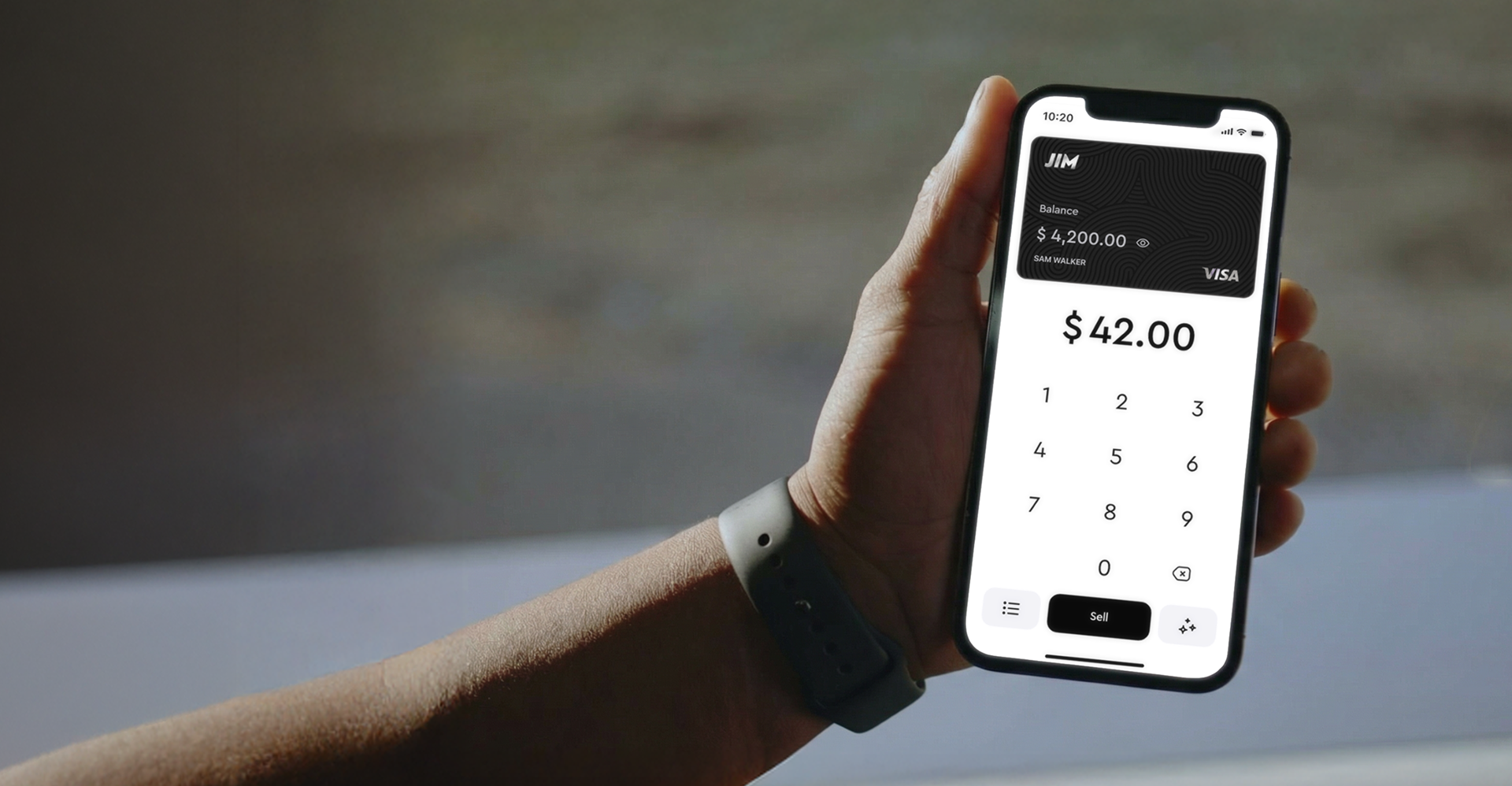
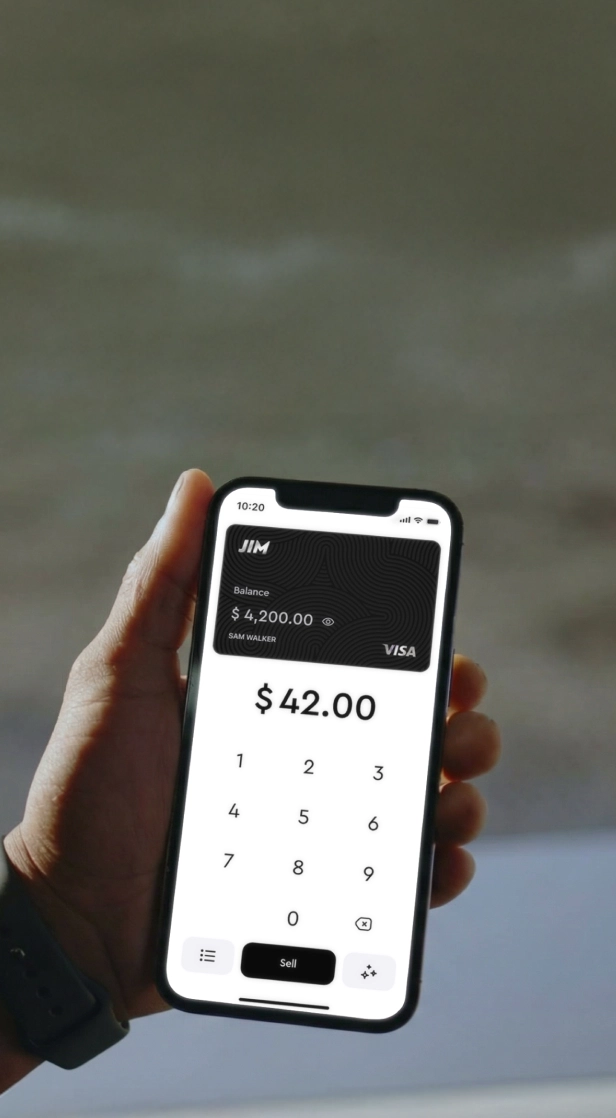
For payments on-site or on-the-go, JIM offers a streamlined solution. With JIM, you can accept debit, credit, and digital wallets directly through your smartphone—just tap and done. No extra hardware is needed.
At just 1.99% per transaction with no hidden costs, it is great for walk-up customers at the dock. This rate is much lower than what other providers offer, saving you money on every sale.
Here is how it works:
- Get Started: Download JIM app for iOS
- Make a Sale: Type the sales amount, hit sell, and ask your customer to tap their card or device on your phone
- Access Funds: Your money is available right on your JIM card as soon as the sale is done - no waiting for bank transfers
Here are 3 immediate steps to take:
- Decide on your deposit policy for private charters and group bookings.
- Compare the total fees of two online booking systems.
- Download the JIM app to explore its features for in-person sales.
Step 6: Fund your business and manage finances
Secure your funding
The SBA 7(a) loan is a popular option. Lenders typically want to see a credit score over 680 and a detailed business plan. For a startup boat tour, loans often range from $25,000 to $100,000 with interest rates around Prime plus 2-5%.
Another path is marine equipment financing. Here, the boat itself acts as collateral. This can be easier to secure than a traditional business loan. Some lenders specialize in commercial vessels, so their requirements are more tailored to the industry.
You might also explore local grants. Contact your area's Small Business Development Center (SBDC). They offer free guidance and can point you toward regional grants for tourism or small business development that you might otherwise miss.
Manage your cash flow
Plan to have at least six months of working capital before launch. This fund covers your fixed costs like insurance, slip fees, and loan payments. A safe figure to aim for is between $15,000 and $25,000, depending on your monthly expenses.
Many new operators forget that revenue is seasonal, but bills are not. Your income might drop in the off-season, but you still have to pay for your slip and insurance. A healthy cash reserve prevents you from scrambling for funds when business slows down.
Here are 3 immediate steps to take:
- Draft a 6-month operating budget to calculate your exact working capital needs.
- Check your credit score and review the SBA 7(a) loan requirements on the SBA website.
- Contact your local Small Business Development Center (SBDC) to ask about regional grants.
Step 7: Hire your crew and set up operations
Build your team
If you are the captain, your first hire will likely be a Deckhand or Tour Guide. This person handles guest needs and provides commentary. Expect to pay between $15 and $25 per hour. If you need to hire a Captain, they must have an OUPV license and will command $25 to $50 per hour.
One thing that trips up new owners is employee classification. Your crew are employees, not independent contractors. This distinction is important for tax withholding and workers' compensation insurance, so get it right from the start to avoid legal trouble.
Streamline your daily operations
To manage bookings, you might want to use a system built for tours. Software like FareHarbor or Peek Pro automates online reservations and scheduling, which frees you up to focus on the tours themselves. Most charge a percentage per booking, typically around 6%.
As for your budget, aim to keep total labor costs between 20-35% of your revenue. Also, establish a clear tip policy before your first tour. Decide if tips are pooled and split or if crew members keep their own. This prevents confusion and keeps your team happy.
Here are 3 immediate steps to take:
- Draft job descriptions for a Captain and Deckhand, including pay rates.
- Review the features and fees for a booking software like FareHarbor.
- Write down your official policy for how the crew will handle and split tips.
Step 8: Market your tours and attract customers
Build your digital footprint
First, create a simple website on a platform like Squarespace. It should be heavy on high-quality photos and have a clear "Book Now" button. Also, claim your free Google Business Profile. This puts you on Google Maps and is often the first place potential customers will find you.
For social media, focus on Instagram and Facebook. Post stunning photos of your tours and happy customers. You can also join local Facebook groups for residents and tourists to share information about your new business. This direct engagement builds community trust.
Forge local partnerships
You should connect with hotel concierges, Airbnb hosts, and local visitor centers. Offer them a 10-15% commission for every customer they send your way. This creates a network of advocates who will sell your tours for you. A simple brochure or card with a unique code for each partner helps track referrals.
Use booking platforms wisely
Online Travel Agencies (OTAs) like Viator and GetYourGuide can fill seats quickly, but they come at a cost. Many new operators are surprised by their commission fees, which can be 20-25% per ticket. Use them to gain initial momentum, but focus on driving direct bookings through your own website to maximize profit.
Here are 3 immediate steps to take:
- Set up your free Google Business Profile with your location and five high-quality photos.
- Draft an email to send to three local hotels offering a 10% referral commission.
- Review the commission structures on Viator to understand the cost per booking.
Step 9: Price your tours and manage bookings
Set your ticket prices
Most tours use a per-person model. For example, you might charge $75 per person for a two-hour sunset cruise. For private events, a flat rate is standard. A four-hour private charter for up to six people could be priced at $900.
To find your price point, look at what similar tours on Viator and Google Maps charge. If the market rate is $80, you could start at $70-$75 to attract your first reviews. Do not just match prices, see what value they offer for that cost.
Aim for a gross profit margin of 40-60% on each tour. After you account for fuel, crew wages, and booking platform fees, this is the profit you should see. A lower margin can make it difficult to cover your fixed annual costs.
A mistake some new owners make is setting a single price. Consider dynamic pricing. You could offer a 15% discount for weekday bookings or during the shoulder season. This helps keep the boat full when demand is naturally lower.
Here are 3 immediate steps to take:
- Analyze the pricing of two local competitors for a similar tour type.
- Calculate your break-even price per passenger based on your tour's direct costs.
- Create a simple rate sheet with prices for per-person, private charter, and off-season tours.
Step 10: Control quality and scale your operations
Your reputation is everything on the water. Aim for a 4.8-star or higher average rating on Google and TripAdvisor. You can also track your repeat customer rate. A rate of 10-15% after your first year shows you are building a loyal following.
To keep quality high, send a simple one-question survey after each tour. Ask how likely customers are to recommend you. This gives you a clear metric to watch as you get busier and helps you spot problems before they show up in public reviews.
Know when to grow
Many owners expand too soon. Wait until you are consistently booked at 80% capacity during your peak season for at least two months. This proves the demand is real. That is your signal to consider adding a second boat or more tour times.
When you start turning down profitable private charters because you are already booked, it is time to hire another captain. As bookings increase, management software like FareHarbor or Peek Pro helps you handle the volume without errors and keeps your schedule organized.
Here are 3 immediate steps to take:
- Set a target star rating of 4.8 on Google and TripAdvisor.
- Define your "fully booked" threshold for considering expansion.
- Create a one-question post-tour feedback survey to send to customers.
Launching your boat tour business is an exciting journey. Remember that your success hinges on the guest experience, from the first booking to the final wave goodbye. With a solid plan, you are well on your way to building a business you love.
As you manage those bookings and walk-up customers, a simple payment process helps. JIM turns your phone into a card reader for a flat 1.99% fee, with no extra hardware. It keeps things smooth so you can focus on your guests. Download JIM to get started.
.avif)