Starting a book business is an exciting venture that combines a passion for literature with business savvy. The book market is a multi-billion dollar industry, with steady demand from casual readers, students, and collectors alike.
This guide will take you through the practical steps of validating your business concept, acquiring inventory, building supplier relationships, and obtaining the right licenses to help you launch a successful book business in the U.S.
Step 1: Validate your book business idea
Before you buy a single book, confirm people want what you plan to sell. Use Nielsen BookData for industry trends. You can also review reports from the American Booksellers Association to understand the national market.
Analyze your competition
Look at who is already successful. For online sellers, study top stores on AbeBooks and Amazon Marketplace. For a physical shop, visit local competitors. Note their inventory, pricing strategy, and how they present their books.
Estimate your startup costs
A frequent mistake is to underestimate initial expenses. A realistic budget prevents surprises. Here is a typical breakdown for an online-first model.
- Initial Inventory: $2,000 - $7,000
- Business Registration & Licenses: $100 - $500
- E-commerce Website (e.g., Shopify): $30 - $100 per month
- Shipping Supplies: $200 - $400
Your total initial investment will likely fall between $2,500 and $8,000. You might want to start with a smaller, curated inventory of 200-300 books to test demand before you scale.
Here are 3 immediate steps to take:
- Identify your top three local or online competitors and list their strengths.
- Draft a startup budget based on the cost estimates above.
- Define a specific niche (e.g., vintage sci-fi, modern first editions) to research.
Step 2: Set up your legal structure and get licensed
Most new booksellers choose a Limited Liability Company (LLC). It protects your personal assets if the business faces debt or lawsuits. A sole proprietorship is simpler but offers no liability protection, mixing your personal and business risks. An LLC is often the safer route.
Next, get an Employer Identification Number (EIN) from the IRS. It’s a federal tax ID for your business. The application is free on the IRS website and takes just a few minutes to complete. You will need it to open a business bank account.
State and local requirements
You will need a seller's permit, also called a resale certificate, from your state's department of revenue. This allows you to collect sales tax. Many new owners forget this step and face penalties later. The cost is usually under $50, and processing takes 1-2 weeks.
Finally, check with your city or county clerk for a general business license. Costs typically range from $50 to $150 annually. This permit confirms you can operate legally within your local area. Processing times vary, so apply at least a month before you launch.
Here are 4 immediate steps to take:
- Decide on a business structure, likely an LLC, for liability protection.
- Apply for a free Employer Identification Number (EIN) on the IRS website.
- Find your state's seller's permit application online.
- Contact your city or county clerk about a local business license.
Step 3: Protect your business with the right insurance
With your legal structure in place, the next step is insurance. Start with General Liability Insurance. This covers claims like a customer injury in your store or property damage from your operations. A $1 million policy typically costs between $400 and $700 annually.
Insuring your inventory and property
For a physical shop, you will also need Commercial Property Insurance. It protects your books and equipment from fire, theft, or water damage. Premiums can run from $500 to $2,000 a year, based on your inventory value and location.
Many new owners don't realize a standard policy may not cover the full market value of rare books. You should get a separate appraisal and rider for any high-value items to avoid a major financial loss if they are damaged.
Additional coverage to consider
If you hire anyone, even part-time, you will need Workers' Compensation insurance. It is required in most states. Also, if you use a vehicle for business pickups or deliveries, a Commercial Auto policy is necessary as personal auto insurance will not cover business use.
You can often find good small business packages from providers like The Hartford, Hiscox, or Next Insurance. They understand retail risks and can bundle policies together, which might save you some money.
Here are 4 immediate steps to take:
- Request a quote for a $1 million general liability policy.
- Get an appraisal for any rare books in your planned inventory.
- Check your state's requirements for Workers' Compensation.
- Contact an agent at The Hartford or Hiscox to discuss a retail package.
Step 4: Secure your location and equipment
Find your physical space
For a small shop, look for spaces between 1,000 and 1,500 square feet. The property must be zoned for commercial retail use. High foot traffic is often more valuable than slightly lower rent, a detail some new owners overlook until it is too late.
When you negotiate a lease, you might want to resist a "percentage rent" clause. This term requires you to pay a percentage of sales on top of base rent, which can strain tight margins. A fixed-rate lease of 3-5 years offers more predictable costs.
Equip your shop
Your main equipment expense is shelving. New commercial-grade shelving can cost $100-$300 per section. You will also need a point-of-sale setup, including a computer, barcode scanner, and receipt printer, which can run from $800 to $1,500 for a basic system.
You can find used shelving from stores that close, but check its condition carefully. Weak shelves are a hazard with heavy books. For new inventory, you will need an account with a major distributor like Ingram or Baker & Taylor, who supply most U.S. bookstores.
Here are 4 immediate steps to take:
- Research commercial properties between 1,000-1,500 sq. ft. in your area.
- Price out the cost of new versus used commercial shelving.
- Ask a potential landlord for a sample lease to review its terms.
- Look up the new account application for a book distributor like Ingram.
Step 5: Set up your payment processing
Now that your business is structured, you need a way to get paid. Most book sales are via credit or debit card, so you will need a payment processor. Many new owners get surprised by high transaction fees, which can eat into profits on books with already thin margins.
Many processors charge between 2.5% and 3.5% plus a fixed fee per transaction. You might want to look for a solution with transparent, low rates. This is especially important for book sales, where every percentage point counts toward your bottom line.
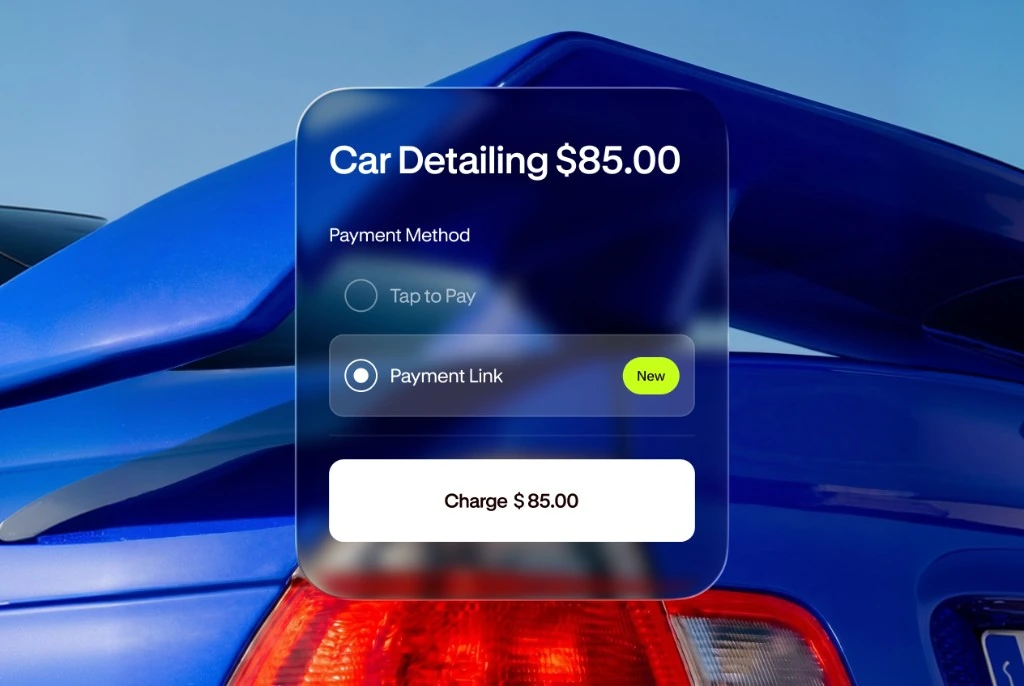
For booksellers who need to accept payments on-site or on-the-go, JIM offers a streamlined solution. With JIM, you can accept debit, credit and digital wallets directly through your smartphone - just tap and done. At just 1.99% per transaction with no hidden costs or extra hardware needed, it's particularly useful for selling at book fairs or pop-up events.
Getting started is straightforward. Here is how it works:
- Get Started: Download JIM app for iOS
- Make a Sale: Type the sales amount, hit sell, and ask your customer to tap their card or device on your phone
- Access Funds: Your money is available right on your JIM card as soon as the sale is done - no waiting for bank transfers
Here are 3 immediate steps to take:
- Compare the transaction fees of two traditional payment processors.
- Calculate your potential monthly savings using a 1.99% flat rate versus a 2.9% + $0.30 rate.
- Decide if you will sell at events like book fairs where a mobile payment option is needed.
Step 6: Fund your business and manage finances
With your business plan ready, you can seek funding. An SBA 7(a) loan is a popular choice for retail startups. Lenders typically want to see a good credit score, around 680 or higher, and a solid business plan. Loan amounts can start around $25,000 with interest rates often near the prime rate plus 2-3%.
Plan your working capital
You will need enough cash to cover your first six months of operation. This includes rent, utilities, and new inventory. A budget of $15,000 to $25,000 is a realistic target for a small shop. Some new owners find their cash is tied up in slow-moving books, so plan for this.
While industry-specific grants for new bookstores are rare, you might find support from your local economic development corporation. These organizations sometimes offer small grants or low-interest loans to new retail businesses that can enrich a community. It is worth a look.
From day one, use accounting software like QuickBooks Online or Xero to track every dollar. This helps you monitor cash flow and profitability by category, which is vital when deciding which books to reorder. It also makes tax time much simpler.
Here are 4 immediate steps to take:
- Draft a 6-month operating budget to estimate your working capital needs.
- Check your credit score to see if you meet typical SBA loan requirements.
- Search for your city’s economic development office to inquire about local grants.
- Compare the small business plans for QuickBooks Online and Xero.
Step 7: Hire your team and set up operations
Define roles and responsibilities
Your first hire will likely be a part-time bookseller. This person handles customer interactions, restocks shelves, and operates your point-of-sale system. Expect to pay an hourly wage between $15 and $20, based on your local market and the candidate's experience.
Formal certifications are not required. However, you might want to find someone with retail experience and a genuine passion for books. Some owners find that hiring people who are not readers can lead to a less authentic customer experience, so screen for enthusiasm.
Select your management systems
To manage staff schedules, you can use software like Homebase or When I Work. These platforms simplify shift planning and communication. For your inventory, a specialized system is a good idea. Look into options like Bookmanager or Lightspeed Retail.
These systems are built to handle ISBNs, track sales by genre, and manage orders from distributors. Trying to manage thousands of unique book titles with a generic spreadsheet is a path to frustration and lost sales.
As a performance benchmark, many independent bookstores aim for $100,000 to $150,000 in annual revenue per full-time employee. This figure can help you balance your staffing levels with your sales projections as you grow.
Here are 4 immediate steps to take:
- Draft a job description for a part-time bookseller, emphasizing customer service.
- Compare the pricing plans for scheduling software like Homebase or When I Work.
- Request a demo for a bookstore inventory system like Bookmanager.
- Calculate your first-year revenue goal per employee.
Step 8: Market your business and find customers
Your marketing should focus on channels where readers gather. You might want to start with Instagram and TikTok. The "BookTok" community on TikTok can drive massive sales for specific titles. Post high-quality photos of your books, share staff picks, and create short videos of your space.
Build your email list and local presence
An email list is a direct line to your best customers. You can use a service like Mailchimp to manage subscribers. Offer a 10% discount for sign-ups. A good open rate for retail emails is between 20% and 25%, so track your performance.
For a physical shop, local events are powerful. Host a book club or an author signing. Partner with a nearby coffee shop for a cross-promotion. These activities build a loyal community around your store with minimal cost.
Some new owners spend money on paid ads too soon. A typical customer acquisition cost for online retail can be $20-$40, which is high for books. You might find more success with organic growth before you explore paid channels.
Here are 4 immediate steps to take:
- Create an Instagram content calendar for your first two weeks.
- Set up a free Mailchimp account and design a sign-up form.
- Brainstorm one in-store event to host in your first quarter.
- Identify two local community groups or libraries for potential partnerships.
Step 9: Set your pricing strategy
Your pricing will look different for new versus used books. For new titles from distributors, your cost is typically the list price minus a 40% discount. A book with a $25 cover price will cost you $15, leaving a $10 gross profit before overhead.
Pricing your used and rare books
Used books offer more flexibility. Your price depends on condition, rarity, and demand. A common paperback you buy for $1 might sell for $5 to $8. A first edition, however, could be worth hundreds. Many new sellers accidentally underprice valuable books.
To avoid this, research prices on sites like AbeBooks or BookFinder.com. You can search by ISBN to see what other sellers ask for the same edition. Pay close attention to condition descriptions, as a "Fine" copy commands a much higher price than a "Good" one.
Set your standard markups
You might want to establish a simple formula for common inventory. For example, you could price all mass-market paperbacks at $4 and all trade paperbacks at $7. This speeds up your process. For anything that seems unusual or old, take the time to research it individually.
Here are 4 immediate steps to take:
- Calculate your cost for five new titles using a 40% publisher discount.
- Use AbeBooks to find the market price for three used books you own.
- Establish a base price for common used paperbacks in good condition.
- Learn to identify a first edition from a major publisher like Knopf or Scribner.
Step 10: Maintain quality and scale your operations
With your pricing set, you need to focus on quality control. For used books, consistency is key. You should adopt standard grading terms like Fine, Near Fine, Very Good, and Good. A customer who buys a "Very Good" book should receive the same quality every time.
Measure your performance and plan for growth
Track your return rate and aim to keep it under 2%. You can also monitor customer reviews on your e-commerce platform. A rating of 4.5 stars or higher is a strong signal that your descriptions and products align with customer expectations.
You might want to hire your first part-time employee when you consistently process over 50 orders a week. When your inventory exceeds 5,000 books and you cannot manage new stock efficiently, it is time to consider a larger space.
As you grow, a robust inventory system like Bookmanager or Lightspeed Retail becomes even more important. These platforms support multiple users and can manage a large, complex catalog, which is something a simple spreadsheet cannot do effectively.
Here are 4 immediate steps to take:
- Create a one-page grading guide for your used books.
- Set a target customer rating of 4.5 stars or higher.
- Define your hiring trigger, such as processing 50 orders per week.
- Review the multi-user features of an inventory system like Bookmanager.
You have the steps to build your book business. The real magic, however, lies in the community you build around your books. Connect with readers, share your passion, and your shop will become more than just a store. You are ready to begin.
And as you connect with customers, getting paid should be simple. JIM turns your smartphone into a card reader to accept payments anywhere for a flat 1.99% fee, with no extra hardware. Download JIM to get started.