Starting a business seminar is a rewarding venture that combines a passion for teaching with sharp business savvy. The barrier to entry can be low, and you can create a business from your own expertise. While the field is accessible, it is also competitive, so a solid plan helps you stand out.
This guide will take you through the practical steps of validating your concept, obtaining licenses, developing curriculum, and marketing your event to help you launch a successful business seminar in the U.S.
Step 1: Plan and validate your business concept
First, survey potential attendees using Google Forms or SurveyMonkey. Ask what topics they would pay for and at what price. A frequent misstep is to create a seminar you think people want. Let survey data guide your topic selection to avoid an empty room.
Find your niche and competitors
Look for other seminars in your target niche on platforms like Eventbrite and Meetup. You can also search LinkedIn Events and industry association websites. This research shows you what topics are popular, how others price their events, and where you can offer something unique.
Estimate your startup costs
Your initial investment will vary, but you can create a budget around these typical ranges for a one-day seminar.
- Venue rental: $200 - $1,000
- Marketing and advertising: $500 - $2,000
- Curriculum materials and printing: $100 - $500
- Business registration and licenses: $50 - $300
This brings your estimated startup total to between $850 and $3,800. A clear budget from the start helps you make informed decisions and manage your funds effectively.
Here are 3 immediate steps to take:
- Draft a five-question survey to validate your seminar topic.
- Identify three to five competing seminars on Eventbrite or Meetup.
- Create a preliminary budget using the cost estimates above.
Step 2: Set up your legal structure and licensing
Your first major decision is the legal structure of your business. An LLC is a popular choice because it protects your personal assets. This means if your business is sued, your personal property like your house or car is not at risk. LLCs also offer pass-through taxation, simplifying tax filing.
Many new owners operate as a sole proprietorship to save on fees. This is a risky move because it offers zero liability protection, leaving your personal finances exposed if something goes wrong.
Secure your licenses and permits
With your structure chosen, you can move on to federal and state paperwork. You will need an Employer Identification Number (EIN) from the IRS if you plan to hire staff or operate as an LLC. You can get one for free on the IRS website in minutes.
At the state level, register your business with the Secretary of State, which can cost between $50 and $500. You will also likely need a general business license from your city or county. This typically costs $50 to $150 per year. The U.S. Small Business Administration (SBA) website is a great resource for local requirements.
Here are 3 immediate steps to take:
- Decide on a business structure like an LLC and file with your state.
- Apply for a free Employer Identification Number (EIN) from the IRS.
- Check your city or county government website for business license requirements.
Step 3: Secure your insurance and manage risk
Choose the right insurance policies
General liability insurance is your first line of defense. It covers bodily injury or property damage, like an attendee tripping over a cable. Expect to pay between $400 and $900 annually for a $1 million policy, which is a standard requirement for most venues.
You should also get professional liability insurance, often called Errors and Omissions (E&O). This protects you if an attendee claims your advice caused them financial harm. A $1 million policy typically runs from $500 to $1,000 per year.
If you hire staff, you will need workers' compensation. For peace of mind, consider event cancellation insurance. It can reimburse your costs if you have to cancel due to circumstances outside your control, like extreme weather.
Find a provider and assess risks
Specialized providers like Hiscox, The Hartford, and Thimble understand event-based businesses. A mistake some organizers make is failing to check their venue contract. Many venues require you to add them as an "additional insured" on your policy, so confirm this before you buy.
Here are 3 immediate steps to take:
- Request quotes for a $1 million general liability policy.
- Review your venue rental agreement for any insurance clauses.
- Compare policies from two providers that specialize in event insurance.
Step 4: Secure your venue and equipment
Find the right venue
Plan for 15-20 square feet per attendee to ensure comfort. Hotel conference rooms and co-working spaces like WeWork are popular choices. They often handle setup and provide amenities. Also, check local libraries or community centers for more budget-friendly options.
When you review the rental agreement, watch for hidden fees. Some venues charge extra for Wi-Fi, parking, or using an outside caterer. A detail many organizers miss is booking enough time for setup and teardown, so confirm that is included in your rental block.
Gather your presentation equipment
You will need a few key items for a smooth presentation. A quality projector can cost between $300 and $700. A portable screen is about $100 to $250, and a wireless microphone with a small PA system runs from $150 to $400. Many venues offer this equipment for a daily rental fee.
For printed materials like workbooks, online services like Vistaprint or a local print shop can help. You can often order small batches of 25-50 units, which keeps your initial costs down. Get quotes early to factor them into your budget.
Here are 3 immediate steps to take:
- Compare rental costs and amenities for three different types of local venues.
- Price out a basic equipment package versus the venue’s daily rental fee.
- Request a sample rental agreement to check for additional fees.
Step 5: Set up your payment processing
Most attendees will pay online during registration through platforms like Eventbrite or a payment gateway on your website. This approach simplifies your accounting and helps secure attendance numbers early.
For one-day seminars, it is standard practice to require full payment at registration. This avoids the hassle of chasing payments. Deposits are uncommon unless you offer a high-priced workshop series, so you can likely keep your terms simple.
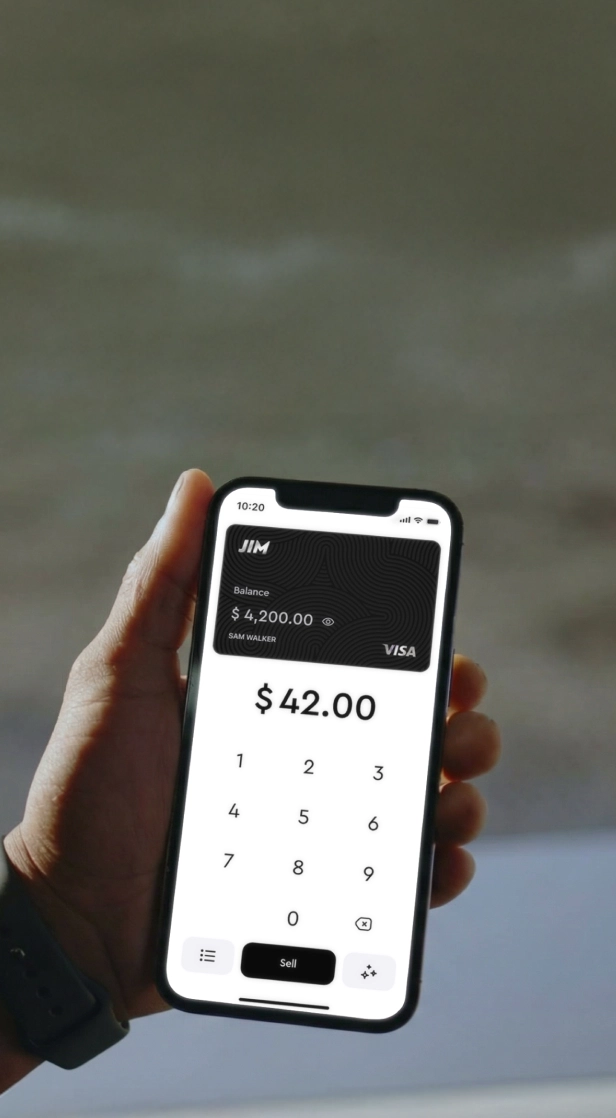
For business seminars that need to accept payments on-site or on-the-go, JIM offers a streamlined solution. With JIM, you can accept debit, credit, and digital wallets directly through your smartphone—just tap and done.
At just 1.99% per transaction with no hidden costs or extra hardware needed, it's particularly useful for selling extra workbooks at the door. This rate is a great value, as other providers often charge between 2.5% and 3.5%.
- Get Started: Download JIM app for iOS
- Make a Sale: Type the sales amount, hit sell, and ask your customer to tap their card or device on your phone
- Access Funds: Your money is available right on your JIM card as soon as the sale is done - no waiting for bank transfers
Here are 3 immediate steps to take:
- Decide on your payment policy, such as payment in full at registration.
- Compare processing fees for two online registration platforms.
- Download the JIM app to explore its features for on-site sales.
Step 6: Fund your business and manage finances
The SBA Microloan program is a strong fit for this business model. These loans go up to $50,000 and are offered through local community lenders. Interest rates typically range from 8% to 13%, and they often have more flexible qualification standards than traditional banks.
A mistake some new organizers make is to budget only for event-day costs. You will need six months of working capital, around $5,000 to $15,000, to cover marketing, venue deposits, and other expenses before ticket revenue starts to flow.
Explore grants and other options
You can also pursue grants, though they are highly competitive. Search on Grants.gov for opportunities related to "workforce development" or "small business education." For faster access to funds, a business credit card can work, but be mindful of higher interest rates, often 18% to 25%.
Here are 3 immediate steps to take:
- Research two local SBA Microloan lenders and their requirements.
- Create a 6-month operating budget to project your working capital needs.
- Search Grants.gov using keywords relevant to your seminar topic.
Step 7: Hire your team and manage operations
Hire your event-day team
You likely will not need full-time employees at first. Instead, hire independent contractors for event day. Key roles include an Event Assistant to manage registration and an A/V Technician to handle sound and visuals. Expect to pay assistants $20-$30 per hour and A/V techs $35-$60 per hour.
A mistake many new organizers make is trying to manage the tech themselves. A dedicated A/V tech prevents glitches that can derail your presentation and damage your credibility. For a 50-person seminar, one assistant and one tech is a good starting point.
Manage your seminar operations
With your team roles defined, you can map out the project. Use a project management platform like Asana or Trello to track every task from marketing outreach to printing workbooks. This creates a clear roadmap for everyone involved.
The most important document for your event is the run-of-show schedule. This is a minute-by-minute plan for the entire day, from the moment you arrive for setup to when you leave. It ensures your team knows exactly what to do and when.
Here are 3 immediate steps to take:
- Draft job descriptions for an Event Assistant and an A/V Technician.
- Create a project timeline for your seminar in a platform like Trello.
- Outline a detailed run-of-show schedule for your event day.
Step 8: Market your seminar and acquire customers
Your first marketing move should be to build an email list before you have tickets for sale. Use a simple landing page from a service like Carrd to collect email addresses. You can offer a free one-page checklist related to your seminar topic as an incentive to sign up.
Launch your marketing campaigns
Once your registration page is live, you can run targeted ads. LinkedIn is particularly effective because you can target by job title and industry. A daily budget of $20-$30 can start to bring in relevant traffic. A mistake many make is to run ads without a clear landing page.
Your ad should click through directly to registration to reduce friction. In addition, you can partner with local business associations or Chambers of Commerce. Offer their members an exclusive 10-15% discount. This strategy lends credibility and expands your reach with minimal cost.
Across all channels, you should track your Customer Acquisition Cost (CAC). A healthy CAC for a seminar is typically under 25% of your ticket price. This ensures your marketing spend remains profitable.
Here are 3 immediate steps to take:
- Outline a one-page PDF to use as a lead magnet for email sign-ups.
- Create a sample audience on LinkedIn Ads Manager for your ideal attendee.
- Draft an email to a local business group proposing a partnership.
Step 9: Set your pricing strategy
Your ticket price communicates value, so it is important to get it right. A straightforward method is cost-plus pricing. Calculate your total event cost and divide it by your target number of attendees to find your break-even point per person.
A standard markup for business seminars is 300-400% over your cost. If your break-even is $75 per person, a ticket price of $225 to $300 ensures a healthy profit. A mistake some organizers make is pricing too low, which can signal a lack of quality.
Consider value-based pricing
You might also use value-based pricing, which ties your fee to the outcome you deliver. If your seminar helps attendees gain a skill worth $2,000, a $499 ticket can feel like a strong return on investment for them.
Look at similar events on Eventbrite to benchmark your price. You can also create urgency with an early-bird discount of 15-20% for the first two weeks of sales. This helps secure initial registrations and builds social proof.
Here are 3 immediate steps to take:
- Calculate your break-even cost per attendee based on your budget.
- Research the prices of three competing seminars in your niche.
- Create a two-tier pricing structure with an early-bird discount.
Step 10: Control quality and scale your business
Measure your seminar's success
After each event, send a survey to measure quality. Use a Net Promoter Score (NPS) question: "How likely are you to recommend this seminar to a friend?" A score of +50 is a strong indicator of success. Many organizers overlook this, but data is your best guide.
You should also track your repeat customer rate. If 15-20% of attendees from one seminar sign up for another, you have built a loyal following. This metric shows the long-term value you provide beyond a single event.
Plan your growth path
Once you consistently sell out or reach 85% capacity for three events in a row, you can explore expansion. A measured approach prevents empty seats. This could mean you book a larger venue or add a second date, rather than take a huge leap.
When administrative work consumes over 10 hours of your week, it is time to hire a virtual assistant. This frees you to focus on curriculum and marketing. To manage attendee relationships as you grow, a CRM like HubSpot or Zoho becomes very useful.
Here are 3 immediate steps to take:
- Create a post-event survey with a Net Promoter Score question.
- Set a capacity benchmark (e.g., 85%) that will trigger your expansion plan.
- Explore the free versions of a CRM like HubSpot or Zoho to manage contacts.
You now have a complete roadmap to launch your business seminar. Remember that you are not just selling information; you are building a community around your expertise. Focus on that connection, and you will create an event people remember. Your journey starts with that first step.
And when it comes to getting paid, keep it simple. JIM turns your smartphone into a card reader to accept payments without extra hardware. At a flat 1.99% per transaction, it is a straightforward way to handle on-site sales. Download JIM and you are ready.
.avif)