Starting a calligraphy business is a rewarding venture that combines artistic talent and a keen eye for detail with business savvy. The market for personalized goods is a multi-billion dollar industry, with consistent demand for custom calligraphy on wedding invitations, event signage, and corporate gifts.
This guide will take you through the practical steps of defining your services, acquiring supplies, handling licenses, and pricing your work to help you launch a successful calligraphy business in the U.S.
Step 1: Plan your business and validate your idea
First, research the market. Spend a few hours on Etsy and Instagram to find the top 10 calligraphy artists. Note their services, styles, and prices. You should also visit local wedding fairs or artisan markets to understand what customers ask for in person.
Analyze your competition
Look at what services local competitors offer on platforms like The Knot and WeddingWire. Do they focus on invitations, event signage, or custom gifts? This research helps you find a gap in the market. A frequent misstep is to copy others instead of finding a unique angle.
Estimate your startup costs
A basic professional setup can cost between $300 and $800. Budget around $150-$300 for initial supplies like nibs, holders, various inks, and quality paper. Business registration and an LLC can range from $50 to $500, which depends on your state. A simple website may add another $100.
Here are 3 immediate steps to take:
- Identify five successful calligraphy shops on Etsy and document their product offerings.
- Find three local competitors and analyze their pricing and service packages.
- Create a detailed startup budget that lists expected costs for supplies and legal formation.
Step 2: Set up your legal and financial foundation
Choose your business structure
You might want to consider forming a Limited Liability Company (LLC). This structure separates your personal assets from business debts. A sole proprietorship is simpler but offers no liability protection. Many new owners forget to open a separate business bank account, which complicates taxes.
With your structure decided, you can register your business. An LLC can cost between $50 and $500 to file, depending on your state. This is a one-time fee, though some states have annual reporting fees. This setup provides protection without a corporation's complexity.
Secure the right licenses and permits
Next, get an Employer Identification Number (EIN) from the IRS. It is free and you will need it to open a business bank account or if you form an LLC. You can apply for an EIN online and receive it immediately.
You will also likely need a seller's permit from your state's department of revenue. This permit allows you to collect sales tax on physical goods. In addition, check with your city or county clerk for a general business license, which can cost $25 to $150 annually.
Here are 4 immediate steps to take:
- Decide between a sole proprietorship and an LLC for your business.
- Apply for a free Employer Identification Number (EIN) on the IRS website.
- Visit your state's department of revenue website to research seller's permit requirements.
- Contact your city or county clerk's office about a general business license.
Step 3: Secure your business insurance
Key insurance policies
First, look into general liability insurance. This protects you if a client is injured at your workspace or if you damage property at an event. A typical policy with $1 million in coverage can range from $300 to $600 per year.
Next, add professional liability insurance, also called Errors and Omissions (E&O). Many new owners overlook this. It covers financial loss from your mistakes, like reprinting an entire wedding suite due to a date error. The cost is often similar to general liability.
Also, consider business property insurance. Your homeowner's policy likely will not cover your expensive paper stock, custom inks, or computer. This coverage protects your physical assets from theft or damage and can often be bundled into a Business Owner's Policy (BOP).
Finding a provider
When you shop for quotes, look at insurers that work with small creative businesses. Companies like Hiscox, The Hartford, and Next Insurance understand the specific risks you face. An agent who specializes in small businesses can be a great asset in this process.
Here are 4 immediate steps to take:
- Get a quote for a Business Owner's Policy (BOP) that combines general liability and property coverage.
- Ask insurers specifically about adding professional liability (E&O) insurance to your quote.
- Compare annual premiums from two or three providers like Hiscox or The Hartford.
- Review your current homeowner's or renter's policy to understand its limitations on business activities.
Step 4: Set up your workspace and buy supplies
Most calligraphy businesses start at home. You should dedicate a space of at least 100 square feet with good lighting. Check your local city ordinances for home-based business regulations, but this type of work rarely faces zoning issues. A quiet corner is all you need.
Stock your studio
You can acquire a solid set of starting supplies for around $200. Many new artists make the mistake of buying cheap paper, which causes ink to bleed and feather. You might want to invest in quality paper like Rhodia or Tomoe River from the start to avoid frustration.
With your space ready, you can purchase your initial inventory. Look at suppliers like John Neal Bookseller or Paper & Ink Arts. They cater to calligraphers and do not require large minimum orders. This lets you test different items without a huge upfront cost.
- Nibs: Start with versatile options like the Nikko G or Brause EF66 ($2-$5 each).
- Ink: Get a bottle of black Sumi ink and a white ink for dark paper ($10-$20 per bottle).
- Paper: A few pads of high-quality practice paper will cost $15-$30.
- Light Pad: A basic A4 light pad for tracing and layout work runs $30-$60.
Here are 4 immediate steps to take:
- Designate a 100-square-foot workspace in your home with adequate lighting.
- Create a shopping list with two types of nibs and inks to test.
- Order paper sample packs from a supplier like Paper & Ink Arts before you buy in bulk.
- Budget for a light pad to help with project consistency and accuracy.
Step 5: Set up your payment processing
For custom work like wedding suites, a standard practice is to require a 50% non-refundable deposit with a signed contract. This protects your time and covers material costs. The final balance is typically due before you deliver the finished products.
Many new artists forget to outline payment terms clearly, which can cause confusion later. Your contract should specify the payment schedule, accepted methods, and your policy on revisions. Now that you have your terms, you need a way to accept payments.
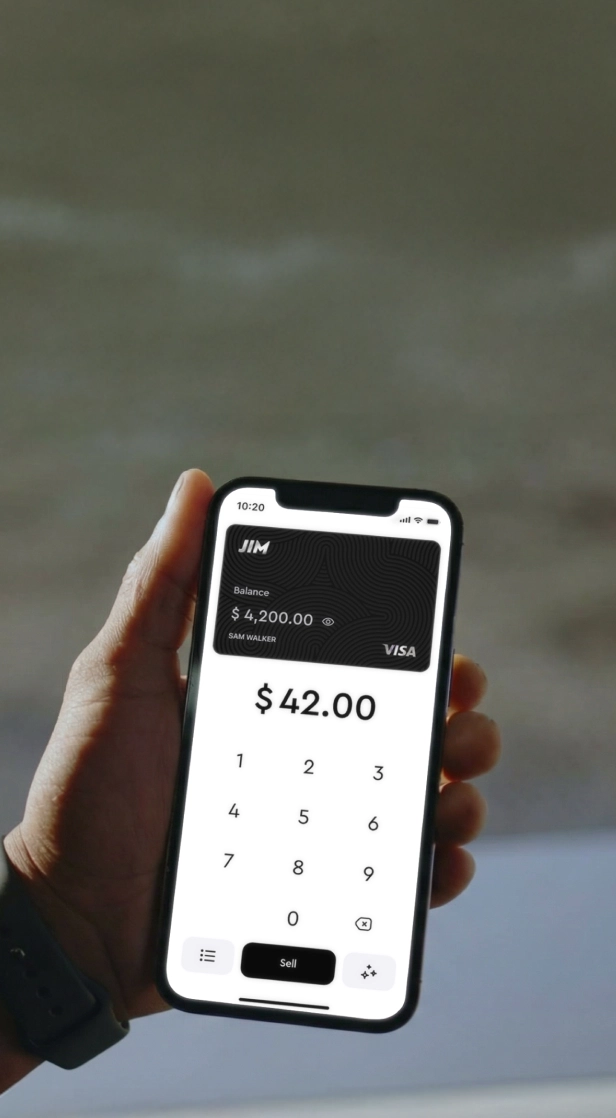
For calligraphers who need to accept payments on-site or on-the-go, JIM offers a streamlined solution. With JIM, you can accept debit, credit, and digital wallets directly through your smartphone. Just tap and you are done. Most payment processors charge between 2.5% and 3.5%.
At just 1.99% per transaction with no hidden costs or extra hardware needed, it is particularly useful for taking deposits at client meetings or selling pieces at artisan markets. Getting started is straightforward.
- Get Started: Download the JIM app for iOS.
- Make a Sale: Type the sales amount, hit sell, and ask your customer to tap their card or device on your phone.
- Access Funds: Your money is available right on your JIM card as soon as the sale is done, with no waiting for bank transfers.
Here are 4 immediate steps to take:
- Draft a simple client contract that outlines your payment terms and deposit policy.
- Decide on your deposit amount for custom orders, such as 50% upfront.
- Research different payment solutions to find one that fits your business model.
- Download the JIM app to explore its features for in-person transactions.
Step 6: Secure your funding and manage finances
You should plan for about $1,500 to $3,000 in working capital for your first six months. This buffer covers ongoing supplies, marketing costs, and slow client periods. Many new artists find themselves short on cash just as their business starts to grow.
Find the right funding
If you need a loan, you might want to look at an SBA Microloan. These loans go up to $50,000 and often have interest rates between 8% and 13%. They are a good fit for new businesses without a long credit history.
In addition to loans, look for arts-specific grants. Your state's arts council or the National Endowment for the Arts sometimes have programs for creative businesses. These are competitive but do not require repayment, which can give you a significant boost.
Set up your financial system
Once you have your funds, open a separate business bank account immediately. This keeps your personal and business finances from getting mixed up. You can also use a program like Wave, which is free, to track every dollar you spend and earn.
Here are 4 immediate steps to take:
- Calculate your working capital needs for the first six months.
- Visit the SBA website to review microloan qualifications.
- Search for your state's arts council to find potential grant programs.
- Open a dedicated business bank account for your calligraphy work.
Step 7: Hire your team and manage operations
Most calligraphers start as a one-person show. You should consider hiring when you spend over 10 hours a week on non-billable tasks like packing orders or answering emails. This is the point where an assistant frees you up to take on more creative work.
Hiring your first team member
Your first hire will likely be a part-time Studio Assistant. Their duties can include prepping materials, managing inventory, and handling shipping. Expect to pay an hourly rate between $18 and $25. A frequent misstep is hiring too quickly without a clear budget.
Formal certifications are not common in this field. Instead, you should ask for a portfolio and give candidates a paid trial task. This lets you see if they can match your specific style. This step is vital for maintaining brand consistency with production work.
Managing your workflow
With a team member on board, you need a system. You might want to use a project management app like Trello to track orders from inquiry to completion. For client-facing tasks like contracts and invoices, platforms like Dubsado or HoneyBook are popular among creatives.
Standardize your processes before you delegate. Create templates for common client emails and checklists for each project type. This ensures nothing gets missed and makes training your new assistant much smoother. It also helps you maintain quality control as you grow.
Here are 4 immediate steps to take:
- Track your non-billable hours for one week to see if you need an assistant.
- Draft a job description for a part-time Studio Assistant.
- Sign up for a free Trello or Asana account to map out your project workflow.
- Create a standardized checklist for your most popular service, like wedding invitations.
Step 8: Market your business and get customers
Your portfolio is your most powerful marketing asset. You should focus your efforts on Instagram and Pinterest, as these are highly visual platforms. Post 3-5 times per week with high-quality photos. Many artists hurt their brand with poorly lit images that fail to show the detail in their work.
In addition to social media, you need a simple portfolio website. Use a platform like Squarespace to create a clean site that shows your work, lists your services, and has a clear contact form. This gives potential clients a direct way to inquire about your services.
Collaborate with local vendors
You can build your client base through referrals. Connect with wedding planners, photographers, and event venues in your area. You might offer a 10% referral fee for any booked clients they send your way. This gives them an incentive to recommend you.
A great way to build these relationships and get professional photos is to participate in a styled shoot. You provide the calligraphy, and in return, you get high-quality images for your portfolio and social media. This is a standard industry practice for new vendors.
Here are 4 immediate steps to take:
- Set up a business profile on Instagram and post five high-quality images of your work.
- Identify three local wedding planners or photographers to connect with this month.
- Draft a simple proposal for a styled shoot collaboration.
- Create a one-page website that shows your portfolio and contact information.
Step 9: Price your services for profitability
You have a few ways to price your work. For repetitive tasks like envelope addressing, a per-piece rate of $3 to $6 is common. For custom design work, an hourly rate between $75 and $150 reflects your creative input and consultation time.
Many clients prefer package pricing for wedding suites. This bundles invitations, RSVP cards, and details cards into one clear cost. A frequent mistake is to only charge for materials. You must also account for your time, from initial sketches to final delivery.
Calculate your costs and markup
To ensure you make a profit, a good starting point is to mark up your material costs by 3x to 4x. This covers your overhead and the value of your skill. After you calculate the marked-up material cost, add your labor fee on top.
With that in mind, look at what others charge. Spend an hour on Etsy or The Knot. Find five calligraphers with a similar style and note their prices for a 100-piece invitation suite. This helps you position yourself competitively in the market.
Here are 4 immediate steps to take:
- Set a per-piece price for envelope addressing and place cards.
- Create a package price for a basic 100-piece wedding suite.
- Calculate your hourly rate for custom design projects.
- Analyze the pricing of three competitors on Etsy or The Knot.
Step 10: Maintain quality and scale your operations
As your business grows, you need a system to keep your work consistent. Many artists find their quality dips when they get busy. You can avoid this by creating a simple style guide that outlines your specific letterforms, spacing, and ink color formulas for reference.
Establish your quality standards
You should implement a two-step proofreading process for every project. First, you review the text against the client's original copy. Then, send a final digital proof for the client to sign off on before you begin the physical work. This prevents costly reprints from a simple typo.
You can also measure quality with client feedback. After a project, send a short survey asking for a rating from 1 to 5. A consistent score below 4.5 might indicate an issue with your process. This data helps you spot problems before they affect your reputation.
Know when to grow
When you spend over 10 hours a week on admin or turn down more than three projects a month, it is time to scale. This could mean hiring a studio assistant or investing in a client management platform like HoneyBook or Dubsado to automate proposals and invoices.
Here are 4 immediate steps to take:
- Create a one-page style guide for your most popular calligraphy script.
- Draft a template for a final proof sign-off email to send to clients.
- Set a benchmark for when to scale, such as turning down three clients in one month.
- Review client management platforms like HoneyBook to see if they fit your needs.
Starting a calligraphy business is about more than just beautiful lettering; it's about building a brand around your unique style. Remember that your artistic voice is what clients will connect with. With a solid plan in place, you are ready to turn your passion into a profession.
And when you make your first sales at a market or client meeting, getting paid should be simple. JIM lets you accept cards right on your phone for a flat 1.99% fee, with no extra hardware needed. Download JIM to get started.
.avif)