How to start a car restoration business from the ground up

Start your car restoration shop with our roadmap. We cover practical steps for funding, licenses, and insurance to help you avoid common mistakes.

2 min read time

Copied
How to start a car restoration business
Main topics

Starting a car restoration business can be a rewarding venture, blending hands-on craftsmanship and mechanical skill with smart business sense. The classic car market is a multi-billion dollar industry, with steady demand from collectors, enthusiasts, and families looking to preserve a piece of history.

This guide will walk you through the practical steps, from securing funding and obtaining licenses to acquiring equipment and selecting a location, to help you launch a successful car restoration business in the U.S.

Step 1: Plan your business and validate your idea

Your first move is to define your niche. Trying to restore every type of car is a common misstep. Instead, focus on a specific area like pre-war hot rods, 1960s muscle cars, or classic European sports cars. Visit local car shows and join online forums to understand what owners want.

Once you have a niche, analyze your competition. Use Google Maps to find nearby restoration shops. Study their websites and customer reviews to see what they specialize in, their pricing structure, and where they might be falling short. This helps you find a gap in the market.

Estimate your startup costs

A clear financial picture is your roadmap. Initial costs can range from $75,000 to over $200,000. This depends on your location and the scale of your operation. Understanding this from the start helps you build a realistic plan for funding.

Major expenses include shop equipment, which can run from $50,000 to $150,000 for items like a car lift, welders, and a paint booth. Your location lease and deposit might add another $10,000 to $30,000. Also, budget $2,000 to $7,000 for business licenses and liability insurance.

Here are 3 immediate steps to take:

  • Define your restoration niche, like 1970s Japanese sports cars or classic American trucks.
  • Map out local competitors and note the services they do and do not offer.
  • Create a detailed startup budget based on the cost ranges for equipment and licensing.

Step 2: Establish your legal structure and get licensed

You will want to register your business as a Limited Liability Company (LLC). This structure protects your personal assets if the business faces debt or lawsuits. It offers pass-through taxation, meaning profits are taxed on your personal return, which simplifies paperwork compared to a corporation.

Once you choose a structure, get a federal Employer Identification Number (EIN) from the IRS. It is free, and you can get it instantly online. You need an EIN to hire employees, open a business bank account, and file your business taxes.

Secure state and local permits

Your state requires a general business license and likely a seller’s permit to buy and sell car parts tax-free. Also, contact your state’s environmental protection agency. Auto body work, especially painting and solvent use, is regulated. A hazardous waste permit can cost $500 to $2,000.

Many new shop owners get delayed by local permits. Your city or county will require a business operating license and zoning approval. Processing can take 30 to 90 days, so apply early. Forgetting a permit for your paint booth, for example, can result in large fines.

Here are 3 immediate steps to take:

  • File for an LLC with your state’s Secretary of State office.
  • Apply for a free Employer Identification Number (EIN) directly from the IRS website.
  • Contact your local planning department to confirm zoning and ask about necessary operating permits.

Step 3: Insure your business and manage risk

You will need several types of insurance to protect your shop. General Liability is standard, but your most important policy is Garagekeepers Liability. This covers damage to a customer’s vehicle while it is in your care, custody, or control. It is a foundational policy.

Choose the right coverage and provider

Expect to pay between $4,000 and $10,000 annually for a comprehensive package. Your Garagekeepers coverage limit should reflect the maximum value of cars in your shop at one time. If you work on high-value classics, your policy must match that risk.

A mistake some new owners make is using a general insurance agent. You should instead contact specialists like Hagerty, Grundy, or Heacock Classic. They understand the unique risks of restoration, from damage during a test drive to fire from welding sparks.

In addition, you will need Commercial Property insurance for your building and equipment. If you have employees, Workers’ Compensation is required by law. This policy handles medical costs and lost wages if an employee gets injured on the job.

Here are 3 immediate steps to take:

  • Request quotes for a Garagekeepers Liability policy that covers the full value of your clients’ cars.
  • Contact an insurance provider that specializes in classic car or garage operations.
  • Ask about bundling General Liability, Property, and Garagekeepers insurance to lower your premium.

Step 4: Secure your location and buy equipment

Find the right shop space

Look for a space between 1,500 and 3,000 square feet. This provides enough room for two car bays, parts storage, and a small office. Your property must be zoned for "light industrial" or "commercial automotive" use. Confirm this with your city before you commit to a lease.

When you negotiate a lease, ask about a Tenant Improvement (TI) allowance to help pay for a paint booth or ventilation system. Also, verify the building has 3-phase power. Heavy equipment like car lifts and welders often requires it.

Purchase your core equipment

With a location secured, you can budget for equipment. A two-post car lift costs between $3,000 and $6,000. A quality MIG welder runs from $1,000 to $2,500, and a sandblasting cabinet can be $500 to $1,500. A professional paint booth is a larger expense, from $15,000 to $40,000 installed.

You can find new and used items from suppliers like Eastwood or Summit Racing Equipment. For make-specific parts, you might use catalogs from Classic Industries or Ames Performance Engineering. These suppliers are familiar with the needs of restoration shops.

Here are 3 immediate steps to take:

  • Confirm the zoning of a potential location with your local planning department before you sign a lease.
  • Get quotes for a two-post lift and a MIG welder to anchor your equipment budget.
  • Ask landlords about a Tenant Improvement allowance to offset the cost of installing a paint booth.

Step 5: Set up your payment processing

For restoration projects, a 50% upfront deposit is standard practice. This covers initial parts and secures the job. You might then bill for progress payments at key milestones, like after bodywork is complete or before the car enters the paint booth.

Your service contract must clearly outline this payment schedule. Some new shop owners run into trouble by not defining these terms in writing, which can lead to payment disputes on long projects. Be specific about what triggers each payment.

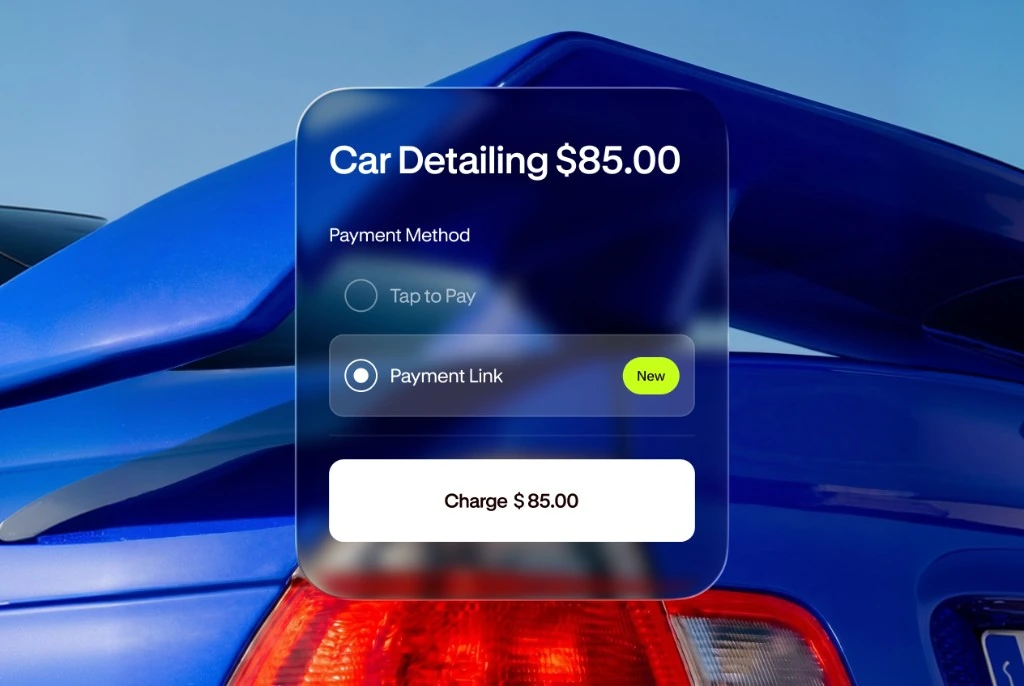
When you accept payments, look for a system with low fees and no surprises. Many providers charge 2.5% to 3.5% plus monthly fees. For a business that needs to accept payments on-site or on-the-go, JIM offers a streamlined solution.

With JIM, you can accept debit, credit, and digital wallets directly through your smartphone. Just tap and you are done. At just 1.99% per transaction with no hidden costs or extra hardware needed, it is useful for collecting deposits at car shows or final payments upon vehicle pickup.

  • Get Started: Download the JIM app for iOS.
  • Make a Sale: Type the sales amount, hit sell, and ask your customer to tap their card or device on your phone.
  • Access Funds: Your money is available right on your JIM card as soon as the sale is done. No waiting for bank transfers.

Here are 3 immediate steps to take:

  • Draft a standard service contract that specifies a 50% deposit and milestone payments.
  • Compare payment processor rates, looking for transaction fees below 2.5% and no monthly charges.
  • Download the JIM app to see how you can accept mobile payments without extra hardware.

Step 6: Fund your business and manage finances

An SBA 7(a) loan is a popular option for startups. Lenders look for a strong business plan and a personal credit score over 680. You might secure $50,000 to $250,000, with interest rates typically between 10% and 13%. Equipment financing is another route, where the loan is secured by the equipment itself.

Some new owners get into trouble by using personal credit cards for business costs. This mixes finances and often comes with high interest rates. Instead, open a dedicated business bank account as soon as your LLC is formed. This simplifies bookkeeping and protects your personal assets.

Calculate your working capital

With funding in mind, you need to calculate your working capital. This is the cash required to cover your first six months of operating expenses before you have steady income. This includes rent, insurance, utilities, and any salaries. A realistic figure is often between $40,000 and $60,000.

For financial tracking, you might use software like QuickBooks Online. It helps you monitor cash flow, manage invoices, and prepare for tax season. You can connect your business bank account directly. This organization helps you make smart financial decisions from day one.

Here are 3 immediate steps to take:

  • Contact your local bank’s SBA specialist to discuss a 7(a) loan application.
  • Calculate your estimated operating costs for six months to determine your working capital target.
  • Open a separate business checking account to keep your finances clean.

Step 7: Hire your team and set up operations

Define roles and compensation

Your first hires will likely be an Auto Body Technician and an Automotive Painter. The body tech will handle metal fabrication and rust repair, while the painter manages surface prep and finishing. You might also need a part-time mechanic for engine and suspension work.

Experienced body technicians often earn between $50,000 and $75,000 annually. A skilled painter can command $55,000 to $80,000. Look for candidates with ASE or I-CAR certifications, as these credentials demonstrate a high level of expertise and professionalism.

A mistake some new owners make is hiring a jack-of-all-trades. For high-quality restoration work, you need specialists. A great painter is rarely a master fabricator, and vice versa. Hire for the specific skills your niche demands.

Streamline your shop management

To keep projects on track, consider shop management software like Shop-Ware or Tekmetric. These platforms help you manage work orders, track labor hours, and order parts efficiently. This organization prevents scope creep and ensures you bill for all your time.

As a general rule, a technician’s labor should generate about double their salary in revenue. For instance, a tech who earns $60,000 a year should aim to produce around $120,000 in annual labor sales. This metric helps you set your shop’s hourly rate.

Here are 3 immediate steps to take:

  • Draft job descriptions for an Auto Body Technician and an Automotive Painter, listing specific skills for your niche.
  • Research local pay scales for ASE-certified technicians to build a competitive compensation package.
  • Request a demo from a shop management software provider like Tekmetric to see how it fits your workflow.

Step 8: Market your business and find customers

Build your online presence

Your website is your digital showroom. It should feature a high-quality photo gallery with detailed before-and-after shots of your projects. Also, create an Instagram and Facebook page to post progress photos and short videos. This builds trust and showcases your craftsmanship to a wider audience.

Some new owners make the mistake of using poor photography. Grainy phone pictures will not attract high-value clients. You might want to invest a few hundred dollars in a professional photographer for your first completed projects. The return on that investment is significant.

Engage with the community

Attend local car shows and "cars and coffee" events. Bring business cards and a portfolio. You can also join online forums specific to your niche, like The H.A.M.B. for traditional hot rods or Bring a Trailer for classic car auctions. Participate authentically before you mention your services.

Track your marketing spend. Your Customer Acquisition Cost (CAC) is a key metric. If you spend $500 on a car show sponsorship and land one project with a $5,000 profit, your CAC is $500. Aim to keep your CAC under 10% of a project's net profit.

Here are 4 immediate steps to take:

  • Build a simple website with a gallery to showcase your work.
  • Set up an Instagram account and post three high-quality "before and after" project photos.
  • Find and register for a local car show to attend in the next 90 days.
  • Join one online forum dedicated to your restoration niche and introduce yourself.

Step 9: Set your pricing and billing structure

You have two main ways to price your work: Time and Materials (T&M) or a Fixed-Price quote. With T&M, you bill for actual hours worked plus parts. This is the safest model for complex restorations. Your hourly rate should fall between $75 and $150, depending on your market.

In addition to labor, you need a clear policy for parts. A standard markup on parts is between 20% and 30% over your cost. This contributes directly to your profit margin and covers your time for sourcing and handling the components.

Where new shops often get into trouble is with fixed-price quotes. It is easy to underestimate the hours needed for hidden rust repair or complex bodywork. You might want to reserve fixed prices for smaller, well-defined jobs until you have more experience estimating.

Define your payment terms

Your service agreement should require a 50% upfront deposit to cover initial parts and secure the project. For long-term restorations, use milestone billing. You could invoice again after disassembly and media blasting, and then once more before the car enters the paint booth.

To prevent disputes over the final bill, document any changes. If a client adds work not in the original scope, create a written change order that they sign. This simple step protects you from "scope creep" and ensures you are paid for all your work.

Here are 3 immediate steps to take:

  • Calculate your shop’s hourly labor rate based on overhead and competitor pricing.
  • Establish a standard parts markup, like 25%, to use in all your estimates.
  • Create a simple change order form to document and get client approval for extra work.

Step 10: Control quality and scale your operation

Your reputation is built on the final product. To maintain standards, create a final inspection checklist with over 50 points. It should cover panel gaps, paint finish, electrical systems, and a 10-mile road test. This ensures every car meets a consistent quality bar before delivery.

A mistake some shops make is letting quality slip as they get busier. You can prevent this by aiming for shop-level certifications like I-CAR Gold Class or ASE Blue Seal of Excellence. These programs require ongoing training and demonstrate a serious commitment to craftsmanship.

Know when to grow

With quality systems in place, you can plan for growth. A good benchmark for hiring another technician is when your current tech consistently bills over 35 hours a week for a full quarter. For expansion, you might want to wait until your shop is booked more than six months out.

Some owners expand too quickly and get caught with high overhead. A safer approach is to have contracts in hand that will fill at least 50% of your new capacity for the first six months. This provides a financial cushion while you ramp up.

Here are 3 immediate steps to take:

  • Develop a final inspection checklist with at least 50 points for every vehicle.
  • Track your lead technician’s weekly billable hours to identify when to hire.
  • Set a goal to have your shop booked three months out before you consider expansion.

A restoration shop does more than fix cars; it revives history. Your reputation will be built on the small details. With a solid plan and a focus on quality craftsmanship, you are ready to turn your passion into a successful business.

And when you get paid, keep things simple. JIM lets you accept card payments directly on your smartphone, with no extra hardware needed, for a flat 1.99% fee. This helps you manage cash flow from day one. Download JIM.

sell and get paid in seconds with jim

Start selling