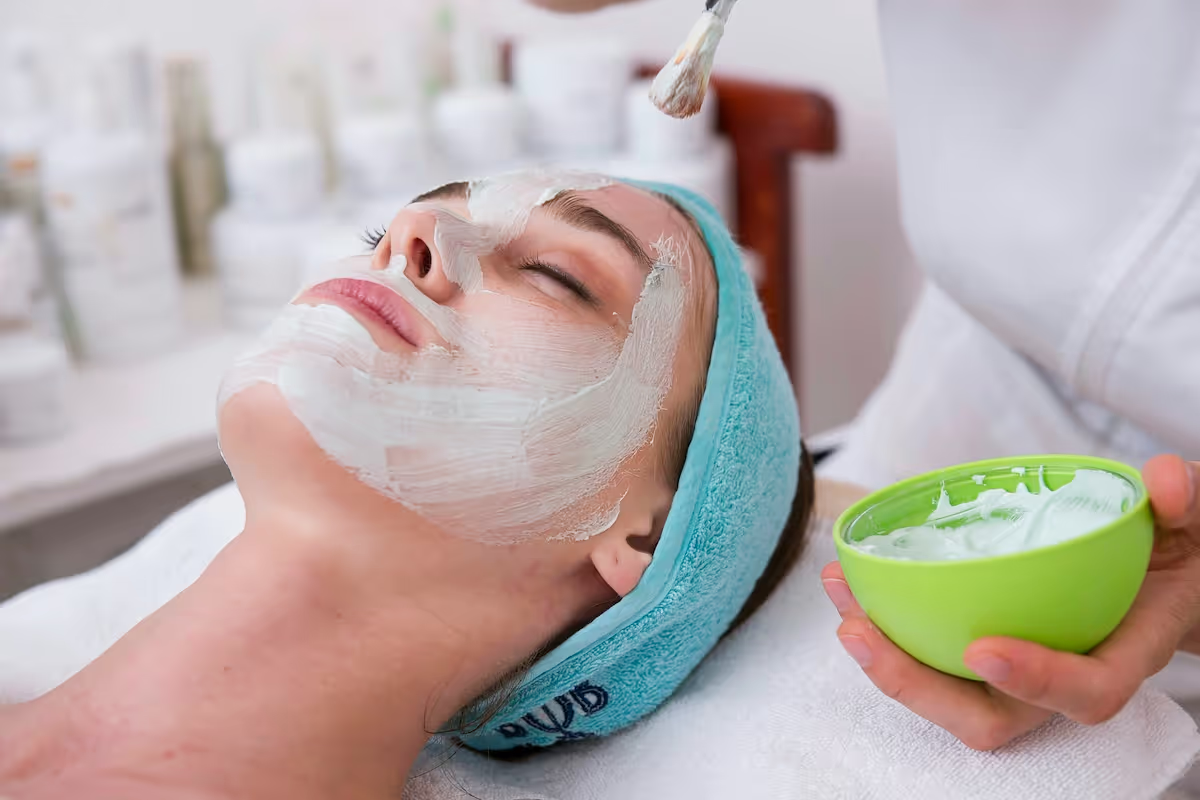
Starting a cosmetology business is a rewarding venture that blends your creative skills and passion for beauty with smart business sense. The beauty industry is a multi-billion dollar market, with steady demand for services that range from hair styling and skincare to nail art and makeup application.
This guide will take you through the practical steps of validating your business concept, securing funding, obtaining necessary licenses, and selecting the right location to help you launch a successful cosmetology business in the U.S.
Step 1: Plan and validate your business idea
Analyze your local market and competition
First, define your ideal client. Are you targeting busy professionals who need quick services or a younger crowd interested in bold trends? Use Google Trends to see what services are popular in your city, and check U.S. Census Bureau data for local demographics.
Once you know who you want to serve, scout the competition. A simple search on Google Maps or Yelp will show you nearby salons. Create a list and visit a few, if possible, to observe their client experience, pricing, and overall atmosphere.
This research helps you find a unique angle. Perhaps there is no one in your area who specializes in curly hair or offers vegan-only products. This is your opportunity.
Calculate your startup costs
With a clearer market picture, you can estimate your costs. A solo booth rental might require $5,000 to $15,000 to start. The cost to open a small, independent salon often ranges from $60,000 to $150,000, sometimes more depending on location.
Many new owners underestimate their budget, so it helps to break it down. Key expenses include:
- Lease & Renovations: $10,000 - $75,000
- Equipment (chairs, stations, dryers): $10,000 - $50,000
- Initial Product Inventory: $5,000 - $20,000
- Licenses, Permits & Insurance: $1,100 - $4,500
Also, remember to budget for at least three to six months of operating expenses. This buffer covers rent and payroll before your business generates consistent income.
Here are 3 immediate steps to take:
- Draft a one-page profile of your ideal customer.
- Create a spreadsheet of five local competitors, noting their prices and unique services.
- Build a preliminary budget with line items for equipment, rent, and initial inventory.
Step 2: Set up your legal structure and get licensed
Most new salon owners form a Limited Liability Company (LLC). This structure protects your personal assets if the business faces debt or lawsuits. You can file the paperwork with your state's Secretary of State, which typically costs between $50 and $500.
With your business legally formed, you can apply for the necessary licenses. This process involves federal, state, and local requirements, so it helps to have a checklist. The main regulatory body you will work with is your state's Board of Cosmetology.
Key licenses and permits
- Salon Establishment License: Your physical location needs its own license from the state board. A common mistake is to assume your personal cosmetology license is sufficient. This separate license can cost $100-$500 and take 4-8 weeks to process.
- Business License: Your city or county requires a general business license to operate legally in the area.
- Seller's Permit: If you plan to sell retail products, you need a seller's permit from your state's tax agency to collect sales tax. This is usually free to obtain.
- Certificate of Occupancy: This document from your local building department confirms your salon meets all zoning and safety codes.
Here are 3 immediate steps to take:
- Decide on your business structure and visit your Secretary of State's website to begin the LLC formation process.
- Find your state's Board of Cosmetology online and download the application for a Salon Establishment License.
- Contact your local city hall to ask about the requirements for a general business license and a Certificate of Occupancy.
Step 3: Secure your insurance and manage risk
Your new business needs protection that goes beyond a general policy. You will want specific coverage for the unique risks in cosmetology, from a client slipping on a wet floor to an unexpected allergic reaction to a product.
General and professional liability are your two main policies. Aim for at least $1 million in coverage for each. Annual premiums for a small salon can range from $500 to $2,500, depending on your services and location.
Here are the main policies to consider:
- General Liability: Covers "slip-and-fall" incidents and other accidents in your salon.
- Professional Liability: Also called malpractice insurance, this protects you if a client claims your service caused them harm, like a chemical burn.
- Commercial Property: Protects your expensive equipment and product inventory from theft, fire, or damage.
- Workers’ Compensation: This is legally required in most states as soon as you hire your first employee.
A mistake some owners make is using a general insurance agent. You might want to get quotes from providers who specialize in the beauty industry, such as Hiscox, The Hartford, or Beauty & Bodywork Insurance. They understand your specific risks better.
Here are 3 immediate steps to take:
- Request quotes for general and professional liability from two specialized insurance providers.
- Create a detailed inventory of your equipment to determine your commercial property coverage needs.
- Check your state's requirements for workers’ compensation if you plan to hire staff.
Step 4: Choose your location and buy equipment
Look for a space between 1,000 and 1,500 square feet for a small salon with 3-4 stations. Before you sign anything, verify with your local planning department that the property is zoned for commercial use. This simple check avoids major headaches later.
Lease negotiation tips
Landlords often prefer 3- to 5-year leases. You can use this to your advantage and ask for a Tenant Improvement (TI) allowance. This is money from the landlord to help pay for build-out costs. Many new owners assume plumbing for shampoo bowls is standard, but it is not. Negotiate this upfront.
Core equipment and suppliers
Once you have a location, you can purchase your main equipment. Suppliers like Minerva Beauty or SalonCentric offer packages for new salons. Your largest equipment expenses will likely be:
- Styling Chairs: $300 - $1,200 each
- Shampoo Stations: $800 - $3,000 each
- Hood Dryers: $400 - $1,500 each
Also, note that professional product lines often require a minimum opening order. This can range from $1,000 to $5,000, so budget for it.
Here are 3 immediate steps to take:
- Identify three potential commercial properties that meet your size and zoning needs.
- Ask a landlord about their Tenant Improvement (TI) allowance policy.
- Get a price quote for a startup equipment package from a salon supplier.
Step 5: Set up your payment processing
Most clients expect to pay with a card, so you need a reliable system. You should also decide if you will require deposits for appointments. This practice can reduce no-shows and secure your income, especially for long services.
When you choose a payment processor, look at transaction fees, hardware costs, and fund access speed. Many processors charge between 2.5% and 3.5% per transaction, and some have monthly fees or require you to buy special card readers.
For cosmetology businesses that need to accept payments on-site or on-the-go, JIM offers a streamlined solution. With JIM, you can accept debit, credit and digital wallets directly through your smartphone - just tap and done.
At just 1.99% per transaction with no hidden costs or extra hardware needed, it's particularly useful for booth renters or mobile stylists. Getting started is straightforward:
- Get Started: Download JIM app for iOS
- Make a Sale: Type the sales amount, hit sell, and ask your customer to tap their card or device on your phone
- Access Funds: Your money is available right on your JIM card as soon as the sale is done - no waiting for bank transfers
Here are 3 immediate steps to take:
- Decide on a deposit policy for new client bookings.
- Compare the total fees of two traditional payment processors.
- Download the JIM app to explore its features on your phone.
Step 6: Fund your business and manage finances
Explore your funding options
The Small Business Administration (SBA) is a solid starting point. You might want to look into their Microloan program, which offers loans up to $50,000. These are great for covering equipment or initial inventory, with interest rates typically between 8% and 13%.
Also, look for industry-specific grants. Organizations like the Professional Beauty Association (PBA) sometimes offer grants for entrepreneurs. While competitive, this is money you do not have to pay back. Equipment financing is another route, where the loan is secured by the chairs or dryers you buy.
Plan your working capital
A mistake some new owners make is to focus only on one-time startup costs. You also need working capital to cover day-to-day operations for the first six months. This is your financial safety net before your appointment book is full.
If your monthly rent, payroll, and utilities add up to $10,000, you should have $30,000 to $60,000 in the bank. This buffer ensures you can pay your bills and staff without stress while you build your client base.
Here are 3 immediate steps to take:
- Review the eligibility criteria for an SBA Microloan on their website.
- Search the Professional Beauty Association (PBA) website for current grant programs.
- Calculate your total operating expenses for six months to determine your working capital goal.
Step 7: Hire your team and set up operations
Build your salon team
Your first hires will likely be a stylist and perhaps a part-time receptionist. All service providers must have a valid state cosmetology license. Look for a personality that fits your salon's atmosphere, as this is just as important as technical skill.
Stylists are often paid on a commission split, which can range from 40% to 60%. A receptionist might earn an hourly wage of $18 to $25. You will want to be clear about your pay structure from day one to avoid confusion.
Some new owners get tripped up on classifying staff. Understand the legal difference between an employee, who you direct, and a booth renter, who runs their own business in your space. Misclassification can lead to tax issues.
Streamline your daily operations
To manage appointments, you will want salon management software. Programs like Vagaro, Square Appointments, and Fresha handle online booking and client history. Many offer free or low-cost plans perfect for a new business.
As you grow, keep an eye on your numbers. A healthy benchmark for salons is to keep total payroll costs between 45% and 55% of revenue. This ratio helps ensure you remain profitable while you pay your team fairly.
Here are 3 immediate steps to take:
- Write a job description for a stylist, outlining the commission structure.
- Look up your state's rules on employee versus independent contractor classification.
- Explore the features of a salon software like Vagaro or Fresha.
Step 8: Market your business and get clients
Your initial marketing should focus on channels with a strong visual appeal. Create a business profile on Instagram and TikTok. Post high-quality before-and-after photos and short video tutorials. Consistency is key, so aim to post at least 3-5 times per week to build an audience.
Focus on local connections
Beyond social media, your local community is a goldmine for new clients. You might want to partner with nearby businesses like bridal shops, boutiques, or even corporate offices. Offer to provide exclusive discounts for their customers or employees in exchange for a mention in their newsletter.
Also, consider a client referral program. A simple "give 20%, get 20%" offer can turn your first happy customers into your best marketers. This approach often has a Customer Acquisition Cost (CAC) near zero, making it highly effective for a new salon on a tight budget.
A mistake some owners make is paying for expensive ads before building a solid reputation. It is often better to focus on free, organic growth first. Once you have a steady stream of clients, you can explore paid ads with a clear understanding of your target audience.
Here are 3 immediate steps to take:
- Create a content calendar with 10 post ideas for your salon's Instagram.
- Draft an email to a local business proposing a cross-promotional partnership.
- Define the terms for a client referral program.
Step 9: Set your prices and create a service menu
Choose your pricing model
A popular approach is tiered pricing. A junior stylist might charge $60 for a cut, while a senior stylist with more experience charges $95. This structure lets you cater to different client budgets. Another option is à la carte pricing, where each add-on has a separate cost.
A trap many new owners fall into is simply copying competitor prices. You must price for profit. Your service prices need to cover product costs, labor, and overhead, with a target profit margin of 15-20% on top of that. For retail products, a 100% markup is standard.
Finalize your service list
With your profit goals in mind, look at the online menus of five local salons. Note their prices for key services like balayage or gel manicures. This research helps you decide where you fit. You can be the premium option or the value-focused choice.
For example, if the average balayage in your area is $250, you could price yours at $275 but include a bond-building treatment. This strategy adds value and justifies the higher cost. Just be sure your menu clearly describes what each service includes.
Here are 3 immediate steps to take:
- Calculate your cost-per-service for three of your main offerings.
- Draft a service menu with prices and clear descriptions.
- Decide if you will use a tiered or à la carte pricing model.
Step 10: Maintain quality and scale your business
Define your quality standards
Once your doors are open, your focus shifts to consistency. Many owners guess at their performance, but concrete data tells the real story. You should track a few key numbers to measure the quality of your services and client experience.
Here are the core metrics to watch:
- Client Retention: Aim for over 60% of clients to rebook within three months.
- Average Review Score: Target a 4.8-star rating or higher on Google and your booking platform.
- Service Redo Rate: Keep requests to fix a service below 3% of total appointments.
Know when to grow
With your quality benchmarks in place, you can make informed decisions about growth. Expanding too early can strain your finances, so it is best to let demand guide your timing. Use these signals to know when the time is right.
- Hire new staff: When your stylists are booked at 80% capacity for three consecutive months.
- Expand your location: When the salon operates near 85% capacity and you have a consistent waitlist.
- Invest in new equipment: When profit margins stay above 20% and you have a healthy cash reserve.
As you grow, basic booking software may not be enough. Systems like Phorest or Zenoti offer advanced analytics and marketing automation to help manage a larger operation.
Here are 3 immediate steps to take:
- Choose one metric, like client retention, and start tracking it this month.
- Calculate your salon's current booking capacity percentage.
- Watch a demo video for an advanced salon software like Phorest or Zenoti.
Your cosmetology business is built on personal connection. Clients return for the way you make them feel, so focus on creating a great experience from day one. You have the passion and the plan, now it is time to bring your vision to life.
As you welcome those first clients, keep your operations smooth. A simple payment solution like JIM lets you accept cards right on your smartphone for a flat 1.99% fee, with no extra hardware needed. Download JIM to get started.
.avif)