Starting a cryotherapy business is a rewarding venture that blends a passion for health and wellness with sharp business savvy. It's a multi-billion dollar market with consistent demand from athletes for recovery, wellness enthusiasts, and people seeking pain relief.
This guide will take you through the practical steps of securing funding, obtaining necessary licenses, selecting the right location, and acquiring equipment to help you launch a successful cryotherapy business in the U.S.
Step 1: Develop your business plan and research the market
First, gauge local demand. You can survey area gyms, chiropractic offices, and wellness spas to see if their clients would use cryotherapy. Use Google Trends to check search volume for "cryotherapy" in your city to confirm interest.
Next, analyze your direct competitors. Use Google Maps to find other cryotherapy centers nearby. Note their services, pricing, and customer reviews. A mistake many make is competing only on price instead of offering a better experience or specialized services.
Estimate your startup costs
Your cryotherapy chamber will be the largest single purchase, typically from $30,000 to $60,000. Beyond the chamber, you should budget for a liquid nitrogen system, which can add another $5,000 to $10,000. Many new owners overlook the recurring cost of nitrogen itself.
Other initial expenses include your lease deposit ($3,000-$8,000), business licenses ($500-$2,000), and liability insurance ($2,000-$5,000). This brings your initial investment to a range of $40,500 to $85,000 before you even open your doors.
Here are 4 immediate steps to take:
- Draft a one-page business plan outlining your target customer and services.
- Research three local competitors and document their pricing structures.
- Get quotes from at least two cryotherapy equipment suppliers.
- Check your city’s business licensing portal for specific permit requirements.
Step 2: Establish your legal structure and secure licenses
Most new cryotherapy businesses register as a Limited Liability Company (LLC). This structure protects your personal assets if the business is sued and offers simple pass-through taxation. An S Corp is another option that may offer tax savings, but it has more complex requirements.
Once you decide on a structure, get your Employer Identification Number (EIN) from the IRS website. It is free and acts as a Social Security number for your business. You will need it to open a business bank account and hire employees.
State and local requirements
Cryotherapy regulation varies widely by state, so check with your state’s Department of Health for specific rules. The FDA regulates the cryotherapy chambers themselves, but your state governs the business operation. You will also need a general business license from your Secretary of State, which costs $50-$400 annually.
Your city will require a Certificate of Occupancy (CO) to ensure your location is safe and up to code. This can cost $100-$500 and take 2-4 weeks, so apply as soon as you sign a lease to avoid delays with your opening.
Here are 4 immediate steps to take:
- File for an LLC with your state’s Secretary of State office.
- Apply for a free EIN directly on the IRS website.
- Contact your local health department to ask about cryotherapy-specific permits.
- Check your city’s building department portal for Certificate of Occupancy forms.
Step 3: Secure insurance and manage risk
Your next move is to protect your business with the right insurance. A general agent might not grasp the specific risks of cryotherapy, so seek out a specialist. This ensures your policy covers unique situations like client injury from cold exposure or equipment malfunction.
Key insurance policies for your business
You will need several types of coverage. General Liability protects against claims like slips and falls, with policies typically offering $1 million in coverage for $2,000-$4,000 annually. Professional Liability is separate and covers claims related to the service itself.
In addition, secure Property Insurance for your expensive cryo chamber and other assets. If you have staff, Workers' Compensation is legally required in most states. You might want to consider providers like NEXT Insurance, Hiscox, or Philadelphia Insurance Companies, as they specialize in wellness businesses.
Here are 3 immediate steps to take:
- Get quotes from at least two insurance providers that specialize in wellness.
- Ask for a policy with a minimum of $1 million in professional liability coverage.
- Confirm your state’s requirements for Workers' Compensation insurance.
Step 4: Choose your location and equipment
Find the right space
Look for a commercial space between 1,000 and 1,500 square feet. This gives you room for a reception area, one or two treatment rooms, and a small office. Check local zoning laws to confirm your chosen spot allows for a "personal service" or "health and wellness" business.
When you negotiate your lease, discuss ventilation needs upfront. Cryotherapy chambers require specific venting for nitrogen gas. Some new owners sign a lease before confirming the building's HVAC system can support the equipment, which can lead to expensive retrofitting later.
Select your core equipment
Your cryotherapy chamber is the main investment. Expect to pay between $30,000 and $60,000 for a quality unit from suppliers like Cryo Innovations or Impact Cryotherapy. You will also need a liquid nitrogen storage system, which adds another $5,000 to $10,000 to your budget.
Don't forget safety and comfort items. Budget for robes, slippers, gloves, and socks for your clients. You will also need a reliable system to manage appointments and payments. Planning for these smaller costs upfront helps create a more accurate financial forecast.
Here are 4 immediate steps to take:
- Identify three potential locations zoned for commercial use.
- Ask landlords about HVAC capacity and electrical hookups during tours.
- Get formal quotes from two cryotherapy equipment suppliers.
- Create a detailed equipment list with costs for smaller items like robes and safety gear.
Step 5: Set up your payment and booking systems
Set up your payment systems
Most of your revenue will come from single sessions and multi-session packages. You need a system that can handle both simple one-time payments and recurring memberships. A mistake some new owners make is choosing a processor with high monthly fees or complicated hardware.
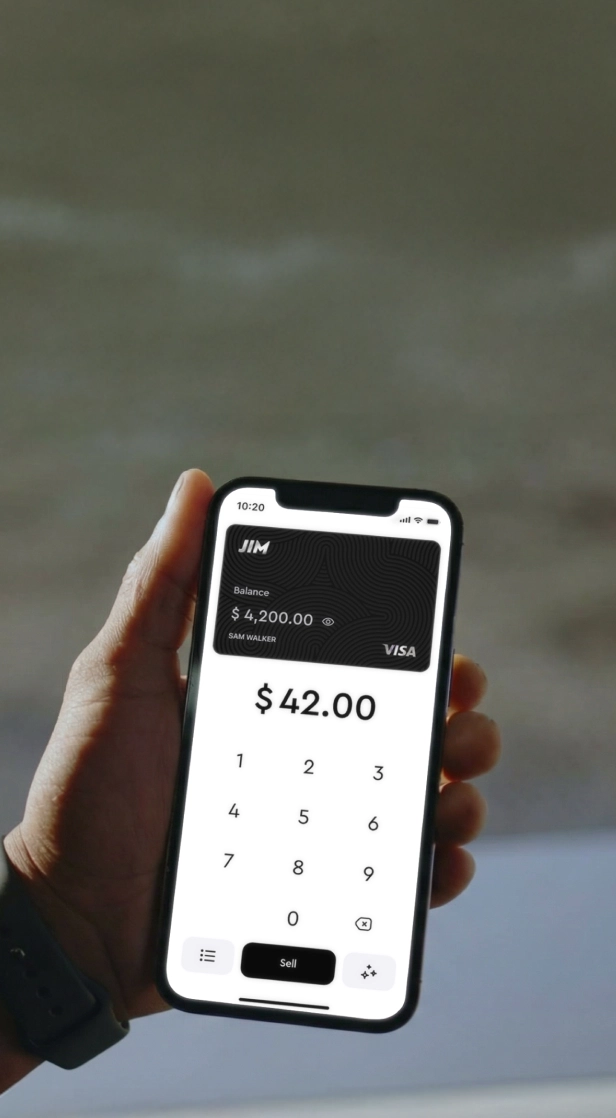
For cryotherapy businesses that need to accept payments on-site or on-the-go, JIM offers a streamlined solution. With JIM, you can accept debit, credit and digital wallets directly through your smartphone - just tap and done. Other processors often charge 2.5% to 3.5% plus monthly fees.
At just 1.99% per transaction with no hidden costs or extra hardware needed, it's particularly useful for selling single sessions or package upgrades in the moment. Here is how it works:
- Get Started: Download the JIM app for iOS.
- Make a Sale: Type the sales amount, hit sell, and ask your customer to tap their card or device on your phone.
- Access Funds: Your money is available right on your JIM card as soon as the sale is done - no waiting for bank transfers.
Here are 3 immediate steps to take:
- Map out your prices for single sessions, 5-packs, and monthly memberships.
- Compare two booking systems that integrate with payment processors.
- Download the JIM app to see how it works on your phone.
Step 6: Secure your funding and manage finances
Explore your funding options
An SBA 7(a) loan is a popular route for wellness startups. Lenders typically look for a credit score of 680+ and a solid business plan. You might secure between $50,000 and $150,000, with interest rates often ranging from 8% to 13%.
You could also consider equipment financing directly from your cryo chamber supplier. This separates the largest purchase into its own loan, which can simplify your primary business loan application. It ties the debt directly to the asset, sometimes with more flexible terms.
Plan for your operating costs
With funding in mind, you need to calculate your working capital for the first six months. This should cover rent, insurance, marketing, and salaries. A safe estimate is between $30,000 and $60,000, depending on your location and staff size.
Some new owners focus so much on the chamber cost that they overlook recurring expenses. The monthly bill for liquid nitrogen alone can be $1,000 to $2,000. Factoring this into your working capital from day one prevents cash flow problems down the road.
Here are 4 immediate steps to take:
- Check your credit score to see if you meet the 680+ minimum for SBA loans.
- Ask your equipment supplier if they offer in-house financing options.
- Calculate your estimated working capital for the first six months of operation.
- Research the SBA 7(a) loan application process on the official SBA website.
Step 7: Hire your team and set up operations
You will likely need two key roles: a Cryotherapy Technician and a Front Desk associate. Technicians operate the chamber and guide clients, typically earning $18-$25 per hour. Front desk staff manage bookings and payments, with wages around $15-$20 per hour.
Staff training and certification
Most equipment suppliers provide operator certification with your purchase. This training is vital for safety and liability. Some new owners make the mistake of skipping this formal training to save time, which puts clients and the business at serious risk.
For daily operations, you need reliable scheduling software. Systems like Mindbody or Vagaro handle client bookings, manage packages, and track client history. They help you run the front end of your business smoothly and avoid scheduling conflicts.
As you plan your budget, aim for your total payroll to be 30-35% of your gross revenue. This is a healthy benchmark for wellness businesses. It ensures you are staffed for peak times, like evenings and weekends, without overspending on labor costs.
Here are 4 immediate steps to take:
- Draft job descriptions for a Cryotherapy Technician and a Front Desk associate.
- Confirm that your equipment supplier includes operator certification and training.
- Request demos from two scheduling software providers like Mindbody or Vagaro.
- Create a sample weekly schedule to estimate your initial payroll costs.
Step 8: Market your business and acquire customers
Start with local partnerships. You can contact nearby gyms, yoga studios, and chiropractic offices to propose a referral program. Offer their staff a free session so they can experience it firsthand, or provide a 10% commission for every client they send your way.
Use digital marketing effectively
Targeted ads on platforms like Instagram and Facebook work well. Focus your ads on users interested in fitness, wellness, and pain relief within a 10-mile radius of your business. Visuals that show the clean, modern environment of your studio perform best.
A mistake some owners make is offering a vague or steep discount. Instead of "50% off," create a specific, low-risk introductory offer like "$25 for your first session." This attracts serious clients rather than one-time bargain hunters. Track your Customer Acquisition Cost (CAC), which should ideally be under $100.
Here are 4 immediate steps to take:
- Draft a referral offer for two local gyms or wellness centers.
- Outline your introductory offer, such as a "$25 first session" deal.
- Brainstorm three Instagram post ideas that show the client experience.
- Set up a simple spreadsheet to track your monthly marketing spend and new clients.
Step 9: Set your pricing and packages
Structure your service menu
A good starting point is a three-tier structure. Offer single sessions for $50-$75, 5-session packs for around $225, and unlimited monthly memberships for $300-$500. This model caters to first-timers, occasional users, and loyal clients.
Many new owners make the mistake of only offering single sessions. This creates unpredictable revenue. Packages and memberships are your key to consistent cash flow and building a loyal customer base. They encourage repeat business from the start.
Know your numbers
Your main variable cost is liquid nitrogen, which runs about $5-$10 per session. With a $60 session price, your gross profit margin is high. You should also research competitors on Google Maps and their websites to see how your prices compare.
Avoid the temptation to compete solely on price. Instead, justify your rates with a superior client experience, better equipment, or a more convenient location. A low-price strategy often attracts one-time customers, not long-term clients.
Here are 4 immediate steps to take:
- Set prices for a single session, a 5-session pack, and a monthly membership.
- Calculate your cost per session, including nitrogen and disposable supplies.
- Research the pricing of two local competitors by checking their websites.
- Decide on an introductory offer to attract new clients.
Step 10: Maintain quality and plan for growth
Your main quality standard is the operator certification provided by your equipment manufacturer. Beyond that, you can track client satisfaction with a simple 1-5 rating survey sent after each session. Aim for an average score of 4.5 or higher.
Track your key metrics
Consistent data helps you make smart growth decisions. You should track your client retention rate, aiming for at least 40% of new clients to purchase a package or membership. Also, monitor your chamber’s utilization rate through your booking software.
Some owners expand too fast. A good rule of thumb is to wait until your chamber is booked over 70% of the time during peak hours for two consecutive months. This confirms you have consistent demand before you invest in a second unit.
When you regularly service more than 15 clients per day, it is a good time to hire another technician. This prevents staff burnout and ensures service quality does not drop. Your scheduling software, like Mindbody or Vagaro, can generate reports to track these numbers.
Here are 4 immediate steps to take:
- Set up a simple post-session survey to track client satisfaction.
- Calculate your client retention rate from the last 30 days.
- Check your booking software for chamber utilization during peak hours.
- Define a monthly revenue goal that would trigger your expansion plan.
You now have the steps to open your cryotherapy studio. Remember, your biggest asset is the trust you build with clients, not just the chamber. Put their experience and safety first. With this plan, you are ready to take the first step.
To keep operations simple, consider your payments. JIM turns your phone into a card reader for a flat 1.99% fee, which lets you skip extra hardware and hidden costs. Download JIM and you are ready to accept payments.
.avif)