Starting a decal business is a rewarding venture that blends creative design with smart business sense. The custom sticker market is a multi-billion dollar industry, with steady demand for decals on everything from company vehicles and storefronts to laptops and product packaging.
This guide will take you through the practical steps of validating your business concept, acquiring the right equipment, obtaining necessary licenses, and building supplier relationships to help you launch a successful decal business in the U.S.
Step 1: Plan your business and validate your idea
First, gauge market demand. Use Google Trends to compare search interest for niches like "custom car decals" versus "laptop stickers." You can also browse platforms like Etsy and Pinterest to identify popular styles and underserved themes. This research helps you find a profitable focus.
Next, analyze your competition. For online rivals, use a keyword research platform like Ahrefs or SEMrush to see what terms they rank for. For local competitors, a simple search on Google Maps for "sign and decal shops" will show you who is nearby and what customers say about them.
Estimate your startup costs
Your initial investment will likely range from $700 to $1,500. The main expense is a quality vinyl cutter, such as a Silhouette Cameo or Cricut Maker, which costs between $300 and $500. Avoid the common mistake of buying too much vinyl inventory upfront; a starter pack with basic colors is enough.
Other costs include design software like Adobe Illustrator (around $21 per month) or free alternatives like Inkscape. You will also need about $100-$200 for initial supplies like vinyl rolls, transfer tape, and weeding tools. Finally, budget for business registration, which can be $50-$500 for an LLC depending on your state.
Here are 3 immediate steps to take:
- Research three potential decal niches on Etsy and Google Trends.
- Price out a vinyl cutter and a starter bundle of vinyl and tools.
- Check your state's Secretary of State website for LLC formation fees.
Step 2: Form your legal entity and secure licenses
You might want to consider forming a Limited Liability Company (LLC). This structure protects your personal assets, like your home and car, from business debts. It also offers pass-through taxation, meaning profits pass to your personal tax return, which avoids double taxation found in corporations.
File for an LLC through your state's Secretary of State website. Once it is official, open a separate business bank account immediately. A frequent misstep is to mix personal and business finances, which can remove the legal protection your LLC provides and create accounting headaches.
Get the right permits and tax numbers
You will need an Employer Identification Number (EIN) from the IRS if you plan to hire employees. Even as a single-member LLC, an EIN is useful for opening a bank account and looks more professional. You can apply for one online for free, and it is issued instantly.
Next, apply for a seller's permit from your state's department of revenue. This allows you to buy vinyl tax-free and collect sales tax on your decal sales. The permit is often free or has a small fee, around $50, and can take two to three weeks to process.
Finally, check with your city or county clerk for a local business license. If you operate from home, you may also need a Home-Based Business Permit. These typically cost between $50 and $100 annually and ensure you comply with local zoning laws.
Here are 4 immediate steps to take:
- File LLC formation documents with your Secretary of State.
- Apply for a free Employer Identification Number (EIN) on the IRS website.
- Research your state's seller's permit application process.
- Open a dedicated business bank account once your LLC is approved.
Step 3: Protect your business with insurance
Core insurance policies
Start with General Liability Insurance. This policy covers property damage or bodily injury your business might cause, like scratching a car's paint during an installation. A $1 million policy typically costs between $400 and $700 annually for a small operation.
Many new owners assume their homeowner's policy protects their business gear, but it usually does not. You will need Commercial Property Insurance to cover your vinyl cutter, computer, and inventory against theft or damage. This adds peace of mind for your most valuable assets.
If you provide design services, also consider Professional Liability Insurance. It protects you if a client claims your design work led to a financial loss. This coverage, also known as E&O, might add another $300 to $600 per year to your premium.
Additional coverage and providers
Once you have your core policies, think about future needs. If you use a vehicle for business purposes, like client visits or installations, a personal auto policy will not cover you. You need a Commercial Auto Insurance policy for that protection.
When you hire your first employee, you must get Workers' Compensation insurance. It is required in most states and covers medical expenses and lost wages if an employee gets hurt on the job. You can get quotes from providers like Hiscox, The Hartford, or Next Insurance.
Here are 4 immediate steps to take:
- Get a quote for a $1 million general liability policy.
- Ask an agent about bundling general liability and commercial property insurance.
- Review your personal auto policy's terms regarding business use.
- Contact a provider like Hiscox or The Hartford for a small business quote.
Step 4: Set up your location and buy equipment
Find your workspace
You can start with a 100-200 square foot space in your home. Check your city's zoning rules for a "home occupation" permit to ensure you operate legally. A spare room or a clean garage section works well.
If you lease a commercial spot, look for a short 1-2 year term. Ask the landlord for a Tenant Improvement (TI) allowance. This can help pay for better lighting or ventilation, which you will need for detailed work.
Purchase your core equipment
Your main purchase is a vinyl cutter. A Cricut Maker 3 or Silhouette Cameo 4 costs between $300 and $400 and offers good precision. A frequent misstep is to choose a cheaper, off-brand machine that produces low-quality cuts.
You will also need a computer with design software like Adobe Illustrator. If you plan to make apparel decals, a 15x15 inch heat press runs about $200-$400. A starter kit with weeding tools and squeegees is around $50.
Source your materials
Look to brands like Oracal and Siser for quality vinyl. You can buy from distributors like UScutter or Grimco. Buying vinyl by the 10-yard roll is more cost-effective than by the foot. Many new owners overbuy trendy colors that sit unused, so stick to basics first.
Here are 4 immediate steps to take:
- Check your city's website for "home occupation" permit rules.
- Compare prices for a Cricut Maker 3 and a Silhouette Cameo 4.
- Create an account on UScutter to browse vinyl roll prices.
- Price a 15x15 inch heat press if you plan to offer apparel decals.
Step 5: Set up your finances and payment processing
For custom jobs, you might want to require a 50% deposit upfront. This covers your material costs and confirms the client is committed. The final balance can then be collected when you deliver the finished decals.
Now, you need a way to get paid. While cash works, accepting card payments looks more professional. When you choose a payment solution, look for low transaction fees and quick access to your money. Some owners get surprised by high hidden fees later on.
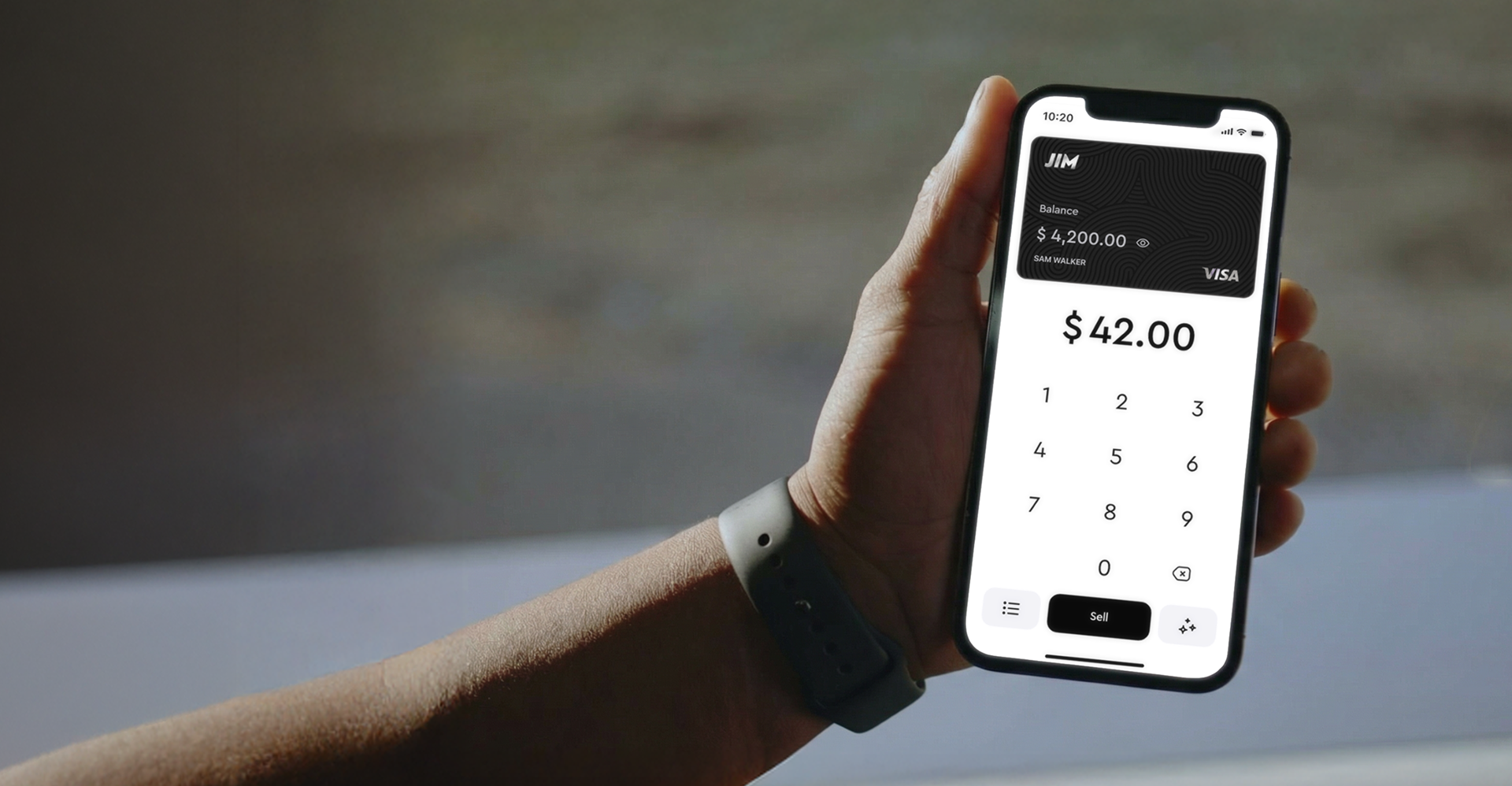
For a decal business that takes payments on-site, JIM offers a simple way to handle transactions. You can accept debit, credit, and digital wallets right on your smartphone. Your customer just taps their card or device, and it is done.
The rate is just 1.99% per transaction with no extra hardware or hidden costs. This is especially useful for mobile installations or selling at craft fairs. This rate is often lower than the 2.5% to 3.5% that other payment providers charge.
Here is how you can get started:
- Get Started: Download the JIM app for iOS.
- Make a Sale: Type the sales amount, hit sell, and ask your customer to tap their card or device on your phone.
- Access Funds: Your money is available on your JIM card as soon as the sale is done. You do not have to wait for bank transfers.
Here are 3 immediate steps to take:
- Decide on your payment terms, such as a 50% deposit for custom work.
- Compare JIM's 1.99% transaction fee against other mobile payment options.
- Download the JIM app to see how it works for yourself.
Step 6: Fund your business and manage finances
For your initial equipment, an SBA Microloan is a solid option. These loans range from $500 to $50,000, with interest rates typically between 8% and 13%. They are designed for new businesses and can cover your vinyl cutter and initial inventory purchase.
You might also consider a business credit card with a 0% introductory APR. This can function as an interest-free loan for 12-18 months, which is perfect for smaller, recurring purchases like software subscriptions or vinyl supplies. Just be sure to pay it off before the promotional period ends.
Manage your cash flow
Plan to have $2,000 to $4,000 in working capital for your first six months. This buffer covers your operating costs like materials, marketing, and utilities before sales become consistent. It ensures you can fulfill orders without waiting for client payments to clear.
A frequent misstep is failing to track material costs accurately. Use a simple spreadsheet to log every foot of vinyl and transfer tape used for each job. This practice prevents you from underpricing your work and helps you know exactly when to reorder supplies.
Here are 4 immediate steps to take:
- Look up SBA Microloan lenders in your state.
- Compare business credit cards with 0% introductory APR offers.
- Create a 6-month budget to estimate your working capital needs.
- Set up a simple spreadsheet to track your material costs per job.
Step 7: Hire your team and set up operations
Build your team
Start with freelancers to keep costs low. A freelance Graphic Designer on a platform like Upwork might charge $25-$50 per hour. This avoids a full-time salary until you have consistent orders. A frequent misstep is hiring too soon, so wait until you cannot handle the order volume yourself.
When you are ready for your first hire, look for a part-time Production Assistant. This role handles vinyl cutting, weeding, and application, with pay between $15 and $20 per hour. As a rule of thumb, aim to keep total labor costs under 30% of your gross revenue.
Streamline your workflow
To manage your orders, you can use a project management app like Trello or Asana. Create boards for "New Orders," "In Production," and "Completed" for a clear visual of your workload. This helps you stay organized without a complex system.
For advanced services like vehicle wraps, you might consider certifications for your team. Programs like the 3M Preferred Graphics Installer certification build client trust, but you can pursue these once your business is more established.
Here are 4 immediate steps to take:
- Draft a job description for a freelance Graphic Designer.
- Calculate your maximum hourly wage for a part-time assistant based on 30% of projected revenue.
- Set up a free Trello board to track your first ten orders.
- Research the cost of a 3M graphics installer course for future planning.
Step 8: Market your business and get customers
Start by targeting local businesses. Car dealerships, contractors, and cafes are great prospects for vehicle lettering and window decals. Create a small portfolio with 5-7 high-quality photos of your work to show them what you can do.
Approach them with a direct offer. For example, you could propose a 10% discount on their first order. This simple incentive can be enough to win their business over a more established competitor.
Build your online presence
Use visual platforms like Instagram and Pinterest. Post short videos of the decal application process, time-lapses of weeding vinyl, and high-quality photos of finished projects. Use local hashtags like #[YourCity]CustomDecals to attract nearby customers.
Many new owners forget about local search. Set up a free Google Business Profile and fill it out completely. Add your service area, hours, and lots of photos. This is how you show up when someone searches for "decal shop near me."
Keep an eye on your marketing costs. If you run paid ads, a good starting goal is to keep your Customer Acquisition Cost (CAC) below $50. Simply ask new clients, "How did you hear about us?" to learn which channels work best.
Here are 4 immediate steps to take:
- Create a list of 10 local businesses to contact for decal services.
- Set up an Instagram account and post three examples of your work.
- Create and fully populate your Google Business Profile.
- Build a simple digital portfolio with 5-7 of your best project photos.
Step 9: Price your decals for profit
To price your decals, start with a cost-plus model. Calculate your material cost per job and add a markup of 300-400%. For example, if the vinyl for a decal costs you $2, you should charge $6 to $8 for the material alone. This covers waste and inventory costs.
Many new owners forget to factor in their time. Your labor is valuable. Add an hourly rate for design and production, typically $25 to $60 per hour, depending on complexity. A simple job might take 15 minutes, so you would add $6.25 to $15 for labor.
Choose a pricing structure
A common method is to charge per square inch, usually between $0.10 and $0.25 for standard vinyl. For a 5x5 inch decal (25 sq. in.), that would be $2.50 to $6.25, plus your labor and design fee. This makes quoting simple and consistent for customers.
For complex, multi-color, or highly custom designs, you might use value-based pricing. Instead of a strict formula, you price based on the perceived value to the client. A unique logo for a business vehicle is worth more than a simple stock graphic.
Before you finalize your prices, look at what others charge. Check Etsy for similar decals and call a few local sign shops for a quote on a basic decal. This helps you see if your prices are competitive but not so low that you devalue your work.
Here are 4 immediate steps to take:
- Calculate the cost-per-square-foot of your three most-used vinyl colors.
- Set your hourly rate for design and production work.
- Create a simple price chart for standard sizes (e.g., 3x3, 6x6, 12x12 inches).
- Research the prices of five competing decal listings on Etsy.
Step 10: Maintain quality and scale your operations
Establish your quality standards
Aim for a defect rate below 2%. This means fewer than two decals per 100 have issues like bubbles or poor cuts. Create a simple quality checklist for every order. It should confirm the correct vinyl was used, the weeding is clean, and the transfer tape is applied smoothly.
A frequent mistake is to skip a final inspection to save time. This often leads to negative reviews and costly remakes. A quick two-minute check before you package an order can prevent most customer complaints and protect your reputation.
Know when to grow
Once you spend over 15-20 hours a week just on production, it is time to consider a part-time hire. This frees you to focus on design and sales. When you consistently process 50-75 orders per month, you might want to invest in a faster cutter like a Graphtec or Roland.
As your business grows, a simple spreadsheet will not be enough. You can look at industry-specific software like ShopVOX or Printavo. These platforms help you manage quotes, track orders, and organize your production workflow all in one place.
Here are 4 immediate steps to take:
- Create a quality control checklist for your orders.
- Set a goal to keep your defect rate under 2%.
- Research the cost of a faster vinyl cutter like a Graphtec or Roland.
- Watch a demo for ShopVOX or Printavo to see how they work.
You now have the roadmap to launch your decal business. Your unique designs will attract customers, but it is the quality of your work that will earn their loyalty. Take your time on each order and let your reputation grow. The path is clear, so begin your venture.
And when those first orders come in, getting paid should be simple. JIM lets you accept card payments right on your smartphone for a 1.99% transaction rate, no extra devices needed. It makes mobile sales easy. Download JIM and be ready for your first customer.
.avif)