Starting a deli is a rewarding venture that blends a passion for great food with sharp business savvy. It's a multi-billion dollar industry, driven by steady demand for quality sandwiches and salads from office workers, busy families, and neighborhood regulars.
This guide will walk you through the practical steps of validating your concept, securing funding, selecting the right location, and getting the necessary permits to help you launch a successful deli business in the U.S.
Step 1: Plan your business and validate your concept
Start by analyzing your local area. Use the U.S. Census Bureau's data to understand neighborhood demographics. You should also spend a few days observing foot traffic at potential locations during different times, especially lunch hours.
Next, map out your competition. Use Google Maps to find every deli within a five-mile radius. Visit the top three to discreetly analyze their menu, pricing, and customer flow. Many local libraries offer free access to business databases like Data Axle for deeper competitor research.
Estimate your startup costs
A detailed budget is your roadmap. Initial costs for a small to mid-size deli typically range from $75,000 to over $200,000. This covers major expenses before you even open your doors.
Here is a sample breakdown:
- Kitchen Equipment: $50,000 - $150,000
- Lease & Renovations: $10,000 - $40,000
- Licenses & Permits: $1,000 - $5,000
- Initial Inventory: $5,000 - $10,000
A frequent oversight is underbudgeting for high-quality slicers and refrigeration. Investing in reliable equipment from the start prevents costly repairs. This is a significant upfront investment, so thoughtful planning is key.
Here are 3 immediate steps to take:
- Use the U.S. Census Bureau website to pull a demographic report for your target zip code.
- Visit three local competitors during their lunch rush to observe their operations.
- Create a spreadsheet to draft your initial startup budget based on the estimates above.
Step 2: Set up your legal structure and get licensed
You should consider forming a Limited Liability Company (LLC). This structure protects your personal assets from business debts and is filed through your state's Secretary of State. It offers a good balance of protection and simplicity for a new deli owner.
Once your LLC is approved, get a free Employer Identification Number (EIN) from the IRS website. You will need this number to hire employees and file federal taxes. The online application takes only a few minutes to complete.
Secure your food and business permits
A mistake some new owners make is signing a lease before confirming zoning. First, call your local planning department to ensure your chosen location is approved for a food business. This simple check avoids a very expensive problem.
With the location confirmed, you can focus on permits. Your local health department is the main agency you will deal with. Here are the key permits you'll need:
- Food Service License: This comes from the health department after an inspection. Plan for a cost of $100 to $1,000 and a processing time of 30-60 days.
- Business License: Your city or county clerk issues this general license. Fees are typically a few hundred dollars per year.
- Food Handler's Permits: Every employee needs one. These are inexpensive, usually around $15 per person, and the certification can often be done online.
Here are 4 immediate steps to take:
- File for an LLC with your state's Secretary of State.
- Apply for a free Employer Identification Number (EIN) on the IRS website.
- Download the food service license application from your local health department.
- Verify the zoning for your top location choice with the city planning department.
Step 3: Secure your insurance and manage risk
Protecting your deli requires several types of insurance. Most new owners start with a Business Owner's Policy (BOP), which bundles general liability and commercial property coverage. This is often the most cost-effective approach.
Your policy should include these core coverages:
- General Liability: Covers customer slip-and-falls. A $1 million per-occurrence limit is standard, with annual premiums from $500 to $1,200.
- Commercial Property: Protects your building and equipment. Ensure it includes equipment breakdown coverage for slicers and refrigerators.
- Workers' Compensation: This is legally required once you hire your first employee. Rates vary by state and payroll size.
A frequent mistake is to overlook spoilage coverage. If a walk-in freezer fails overnight, this policy feature can save you thousands in lost inventory. You might want to get quotes from providers like The Hartford, Nationwide, or the Food Liability Insurance Program (FLIP), who specialize in restaurants.
Here are 3 immediate steps to take:
- Request a quote for a Business Owner's Policy (BOP) that includes equipment breakdown coverage.
- Compare quotes from at least two providers that specialize in food service insurance.
- If you plan to hire staff, get a quote for workers' compensation insurance.
Step 4: Find your location and buy equipment
Look for a space between 1,000 and 1,500 square feet. This provides enough room for a kitchen, service counter, and some seating. Before you proceed, confirm the property is zoned for "retail food service" with the city. This avoids any costly surprises later.
When you negotiate your lease, ask for a Tenant Improvement (TI) allowance. This is money from the landlord to help pay for your build-out, like adding sinks or a vent hood. Also, try to get a few months of free rent during your construction phase.
Purchase your core equipment
Your equipment is a major investment. A mistake some new owners make is buying residential appliances to save money, but they will not withstand commercial use. Focus your budget on reliable, commercial-grade pieces from suppliers like WebstaurantStore or a local restaurant depot.
- Commercial Meat Slicer: $2,000 - $8,000
- Sandwich Prep Table: $2,500 - $6,000
- Reach-In Refrigerator: $3,000 - $7,000
These suppliers do not usually have minimum orders for equipment, but buying a package can sometimes get you a discount. Ensure your choices meet local health code specifications before you buy.
Here are 4 immediate steps to take:
- Identify three potential locations between 1,000 and 1,500 square feet.
- Ask the landlord's agent about a Tenant Improvement (TI) allowance for each location.
- Get price quotes for a commercial slicer and a sandwich prep table.
- Check your local health code for specific ventilation or sink requirements.
Step 5: Set up your payment system
Most of your sales will come from credit, debit, and digital wallets. A reliable payment system is a day-one requirement. Some new owners get caught by high fees, as many processors charge between 2.5% and 3.5% per transaction plus hardware costs.
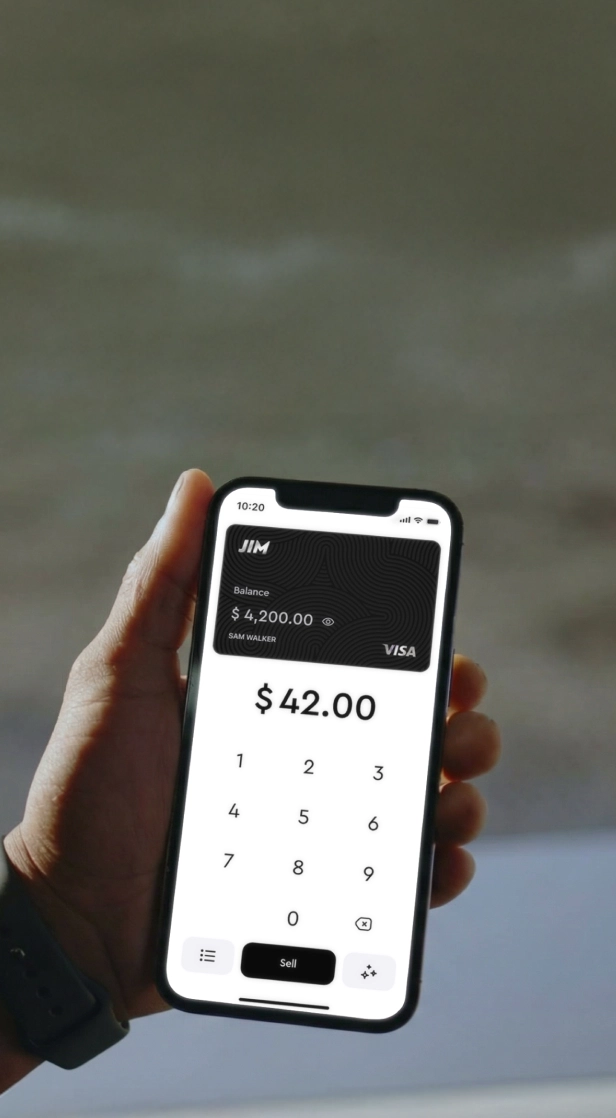
For delis that need to accept payments on-site or on-the-go, JIM offers a streamlined solution. With JIM, you can accept debit, credit and digital wallets directly through your smartphone - just tap and done.
At just 1.99% per transaction with no hidden costs or extra hardware needed, it's particularly useful for handling the lunch rush quickly or for off-site catering jobs. Getting started is straightforward.
- Get Started: Download JIM app for iOS
- Make a Sale: Type the sales amount, hit sell, and ask your customer to tap their card or device on your phone
- Access Funds: Your money is available right on your JIM card as soon as the sale is done - no waiting for bank transfers
Here are 3 immediate steps to take:
- Compare the transaction fees of two different payment systems.
- Download the JIM app to explore its features on your phone.
- List any off-site events like catering where you will need mobile payments.
Step 6: Secure funding and manage your finances
The SBA 7(a) loan is a popular choice for new delis. These loans can fund equipment, working capital, and real estate. Lenders typically offer amounts from $100,000 to $350,000 for a startup deli, with interest rates often set at the Prime Rate plus 2-3%.
To qualify, you will need a strong business plan and a personal credit score of at least 680. A mistake some applicants make is not having enough personal investment. Most banks expect you to contribute 10-20% of the total project cost from your own funds.
Calculate your working capital
Your loan should include enough working capital to cover your first six months of operations. This is the cash needed for rent, payroll, and inventory before your deli becomes profitable. For a small deli, a good target for working capital is between $25,000 and $50,000.
In addition to loans, you might look into a business line of credit for managing cash flow fluctuations. Also, check with your city's economic development office for any local grants aimed at new small businesses, though these are highly competitive and less common than loans.
Here are 4 immediate steps to take:
- Check your personal credit score to see if you meet the 680+ minimum.
- Contact your local Small Business Development Center (SBDC) for free help preparing your loan application.
- Calculate your estimated operating expenses for six months to determine your working capital needs.
- Research two local banks that are designated SBA lenders.
Step 7: Hire your staff and set up operations
Build your core team
For a small deli, you will likely need two key roles to start. A Deli Clerk handles sandwich making and customer service, typically earning $15-$20 per hour. A Prep Cook manages inventory and prepares ingredients, often at a similar pay rate.
A mistake some new owners make is not cross-training staff. Teaching your clerk basic prep tasks and your cook how to work the register provides flexibility. This simple step helps you manage unexpected rushes or staff absences without a drop in service.
All employees who handle food must have a Food Handler's Permit. This certification is usually inexpensive and can be completed online. Make this a condition of employment before their first shift to stay compliant with health department rules.
Streamline your scheduling
Manual scheduling can become a headache. You might want to use a scheduling software like Homebase or 7shifts from day one. These platforms help you build schedules, manage time-off requests, and communicate with your team through a simple app.
As a benchmark, aim to keep your total labor costs between 25% and 35% of your gross revenue. This is a standard target in the food service industry. Tracking this metric helps you make smart staffing decisions as your business grows.
Here are 4 immediate steps to take:
- Draft job descriptions for a Deli Clerk and a Prep Cook.
- Check local job boards to confirm competitive pay rates in your area.
- Sign up for a free trial of a scheduling software like Homebase.
- Calculate your target weekly labor budget based on your sales projections.
Step 8: Market your deli and acquire customers
Establish your digital storefront
Start with a free Google Business Profile. Fill out every section with your hours, menu, and address. Add at least ten high-quality photos of your signature sandwiches and your deli's interior. This is how most new customers will find you on Google Maps.
A mistake some new owners make is ignoring online reviews. You should respond to every review on Google and Yelp within 24 hours. A quick, professional reply to a negative comment shows you value customer feedback and can often win back a customer.
Engage the local community
Once your digital presence is set, focus on your neighborhood. Partner with nearby offices to offer a 10% discount for their employees. This can create a steady stream of lunch regulars. You could also try direct mail with a compelling offer.
A postcard campaign to 5,000 local homes with a "Buy One, Get One Free" sandwich deal can yield a 1-2% response rate. That translates to 50-100 new customers walking through your door. Here are a few other proven tactics:
- A grand opening special to create initial buzz.
- A simple loyalty program, like a "buy nine, get one free" punch card.
- Catering menus for local businesses and events.
Track your Customer Acquisition Cost (CAC). If that $500 postcard campaign brings in 50 customers, your CAC is $10. A good target for a new deli is a CAC under $15.
Here are 4 immediate steps to take:
- Create and fully complete your Google Business Profile with photos.
- Design a simple punch card for a loyalty program.
- Identify three large offices nearby to contact for a partnership.
- Get a price quote for a 5,000-piece postcard mailer to your primary zip code.
Step 9: Price your menu for profitability
Calculate your food cost per item
Your menu prices directly drive your profit. A good rule of thumb is to keep your food cost between 28% and 35% of the menu price. This means if a sandwich costs you $3.00 in ingredients, you should price it between $8.50 and $10.70.
To find your cost, add up every single component. Some owners make the mistake of only counting the meat and cheese. You must also include the bread, condiments, and even the paper wrap and pickle spear. These small costs add up quickly.
Analyze your competitors' pricing
With your cost-based prices calculated, check them against the competition. Look up the menus of three similar delis in your area on their websites or on apps like DoorDash. You do not need to match their prices, but you should know where you stand.
If your signature pastrami sandwich is priced $3 higher than everyone else's, you need a good reason. This could be premium ingredients, a larger portion size, or a unique side. Make sure the value is clear to your customers.
Here are 4 immediate steps to take:
- Calculate the exact ingredient cost for your top three signature sandwiches.
- Set your target food cost percentage, aiming for the 28-35% range.
- Research the menu prices of three direct competitors online.
- Draft a menu with initial prices based on your cost calculations and competitor research.
Step 10: Maintain quality and scale your operations
Set your quality standards
Your goal should be to get every order out in under five minutes during the lunch rush. Use your payment system to track average ticket times. If they start to creep up, it is a sign your team needs more support.
Keep a close eye on your food cost percentage, holding it between 28% and 35%. Also, implement daily temperature logs for all refrigeration. This is not just for the health inspector, it ensures your ingredients are always fresh.
For a higher level of expertise, you might want to get the ServSafe Food Protection Manager Certification. It goes deeper than the basic food handler's permit and shows a serious commitment to safety.
Know when to grow
When your labor cost consistently dips below 25% of revenue, it is a good signal that you can afford to hire another employee. This can reduce wait times and improve the customer experience.
Some owners expand too quickly. Wait until you have at least 12 months of solid profits. If your deli is packed every day and you cannot serve customers any faster, it might be time to plan for a second location.
As you grow, manual inventory tracking becomes difficult. You could look at software like MarketMan or xtraCHEF to automate food cost tracking and ordering. This helps maintain profitability as your volume increases.
Here are 4 immediate steps to take:
- Start tracking your average order ticket time during lunch.
- Create a daily temperature log sheet for your refrigerators and freezers.
- Look up the schedule for the ServSafe Food Protection Manager exam in your area.
- Calculate your current labor cost as a percentage of your weekly revenue.
Opening a deli is about more than just good recipes. The real secret is consistency in every sandwich you serve. You have the roadmap to get started. Now, go build a place the neighborhood will love.
As you prepare to open, a simple payment setup helps. JIM lets you take cards right on your phone, with no extra hardware and a flat 1.99% fee. Download JIM and you are ready for your first sale.
.avif)