Starting a drone delivery business is a rewarding venture that blends piloting skills and tech know-how with sharp business savvy. The market is projected to grow into a multi-billion dollar industry, driven by demand for delivering everything from medical supplies and restaurant meals to retail packages.
This guide will take you through the practical steps of validating your business concept, securing funding, obtaining the necessary licenses, and acquiring equipment to help you launch a successful drone delivery business in the U.S.
Step 1: Validate your business idea and plan the budget
Begin by researching your local market. Review FAA air traffic data for your area and survey potential clients like restaurants or medical clinics. Ask them about their current delivery costs and if they would consider a drone service. This gives you real-world demand data.
Analyze the competition
Identify competitors by searching databases like IBISWorld for market reports and checking local business registries. Don't just look for other drone companies; traditional courier services are also your competition. Understanding their pricing and service speed sets your benchmark.
Estimate your startup costs
A clear budget is vital. Many new operators miscalculate by choosing consumer-grade drones, which lack the payload capacity and fail-safes for commercial work. Investing in proper equipment from the start prevents costly issues later. Initial costs typically include:
- Commercial Drones: $3,000 - $20,000+ each. A reliable starting drone often costs around $5,000.
- FAA Part 107 Certificate: The exam fee is approximately $175 per pilot.
- Business & Insurance: Expect to pay $500 - $3,000 for an LLC setup and initial annual liability insurance.
- Software: Flight management and logistics software can run from $100 to $500 monthly.
Here are 3 immediate steps to take:
- Survey at least 10 local businesses to gauge interest and potential pricing.
- Draft a preliminary budget using the cost estimates for equipment and licensing.
- Review the FAA's requirements for the Part 107 commercial drone license.
Step 2: Set up your legal structure and get licensed
Choose your business structure
You might want to form a Limited Liability Company (LLC). It protects your personal assets if the business faces legal issues. An LLC costs between $50 and $500 to file, depending on your state. It also offers pass-through taxation, which simplifies your tax returns.
As your business grows, you can elect for your LLC to be taxed as an S-Corp. This can reduce your self-employment tax burden, but it adds payroll complexity. It is a good option to discuss with an accountant once you are consistently profitable.
Navigate federal and local regulations
The Federal Aviation Administration (FAA) governs all commercial drone use. While you have the Part 107 license on your radar, true package delivery for compensation often requires a Part 135 Air Carrier Certificate. Many new owners do not realize this distinction early enough.
Securing a Part 135 certificate is a complex process that can take 6-12 months and cost thousands in consultation and documentation fees. Start by reviewing the FAA's certification process outline to understand the full scope of what is required for your specific operation.
In addition to the FAA, check with your state's Department of Transportation and your city or county clerk's office. They may have separate business license requirements or specific no-fly zones. Ignoring local ordinances can result in steep fines and operational shutdowns.
Here are 3 immediate steps to take:
- Decide on an LLC for your business and check your state's filing fees and process.
- Review the FAA's Part 135 certification requirements to see if they apply to your business model.
- Contact your local city clerk to ask about permits or restrictions for commercial drone operations.
Step 3: Secure your insurance and manage risk
Understand your coverage needs
Standard business insurance will not cover drone operations. Many new owners make the mistake of buying a general liability policy, only to discover aircraft are explicitly excluded. You need aviation-specific coverage to protect your business from the unique risks of drone delivery.
Your core insurance package should include these policies:
- Aviation Liability: This covers third-party injury or property damage. You should plan for at least $1 million in coverage, with annual premiums often ranging from $750 to $2,500.
- Hull Insurance: This covers physical damage to your drone. The cost is typically 5-10% of the drone's insured value per year.
- Workers' Compensation: If you hire pilots, this is a legal requirement in most states to cover on-the-job injuries.
Find a specialized provider
Work with an insurance broker who specializes in aviation. They understand the risks, from signal interference and flyaways to privacy complaints. General agents often miss these nuances. You might want to consider providers like SkyWatch.AI, BWI Fly, or Avion Insurance for quotes.
Here are 3 immediate steps to take:
- Request quotes from at least two specialized drone insurance providers.
- Calculate the total value of your drone fleet to get an accurate hull insurance estimate.
- Review your state's workers' compensation laws to confirm requirements for your hiring plans.
Step 4: Select your location and purchase equipment
Your physical location is your base of operations. You might want to look for a 500 to 1,000 square foot space in an area zoned for commercial or light industrial use. Many new operators forget to check for radio frequency interference, so avoid areas with dense cell towers.
When you negotiate a lease, make sure it explicitly allows for drone takeoffs and landings. A ground-floor unit with direct access to an open, secure launch area is ideal. Roof access can also work, but it adds complexity to your daily workflow and safety checks.
Choose your drone and support gear
Your drone is the centerpiece, but support gear is just as important. A common mistake is to budget for the drone alone, without factoring in the accessories that make operations possible. Your initial fleet package should include:
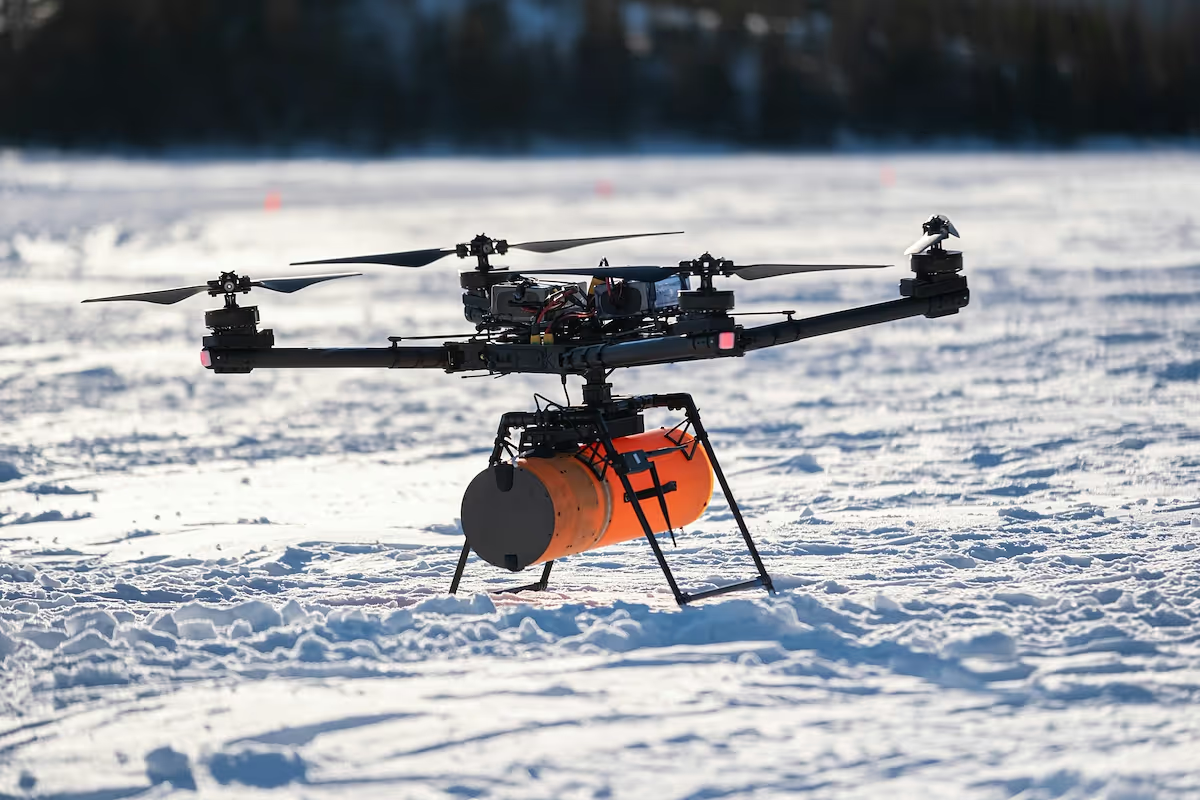
- Delivery Drone: $5,000 - $20,000. Models from DJI Enterprise or Freefly Systems are common starting points.
- High-Capacity Batteries: $300 - $800 each. You need at least 4-6 batteries per drone to maintain continuous operation.
- Multi-Battery Charging Station: $500 - $1,500. This lets you recharge multiple batteries at once.
- Ground Control Station: This is often a ruggedized tablet or dedicated controller, sometimes included with the drone.
You can purchase this equipment directly from manufacturers or authorized dealers like Advexure or DSLRPros. They do not typically have minimum order quantities for this type of hardware.
Here are 3 immediate steps to take:
- Research commercial zoning codes in your target operational area.
- Draft a lease clause that permits drone launch and recovery for your lawyer to review.
- Price out a full equipment package, including a drone, six batteries, and a charging station.
Step 5: Set up your payment processing
For contract clients like medical labs, you might want to set payment terms like Net 15 or Net 30. For on-demand retail or food deliveries, you will need to collect payment upfront. Your service agreements should clearly define these terms, including any deposits for large projects.
Choose your payment solution
When you select a payment solution, focus on low transaction fees and mobile capability. Some new operators get caught by processors that charge nearly 3% plus monthly fees, which eats into the profit on every single delivery flight you make.
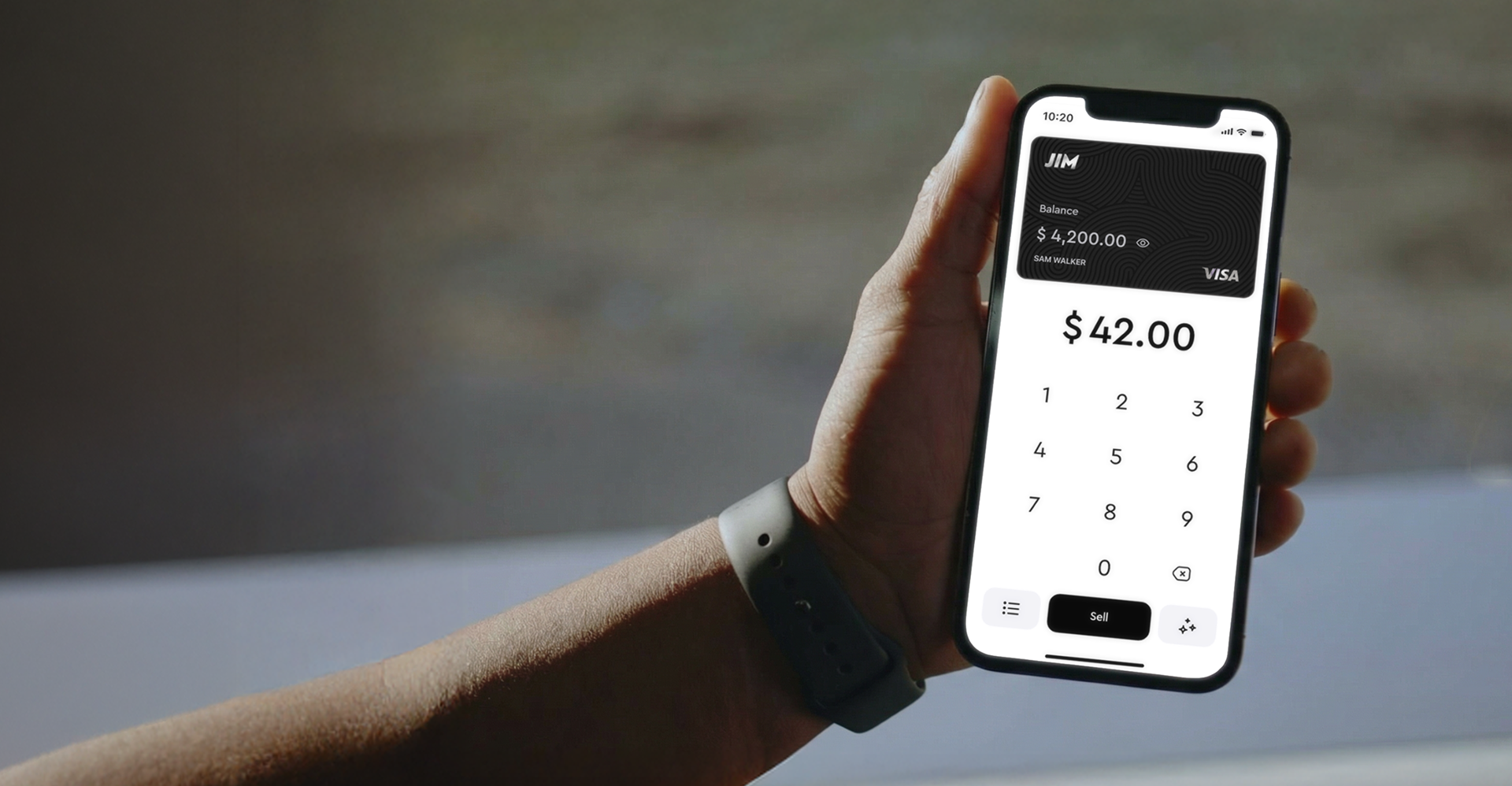
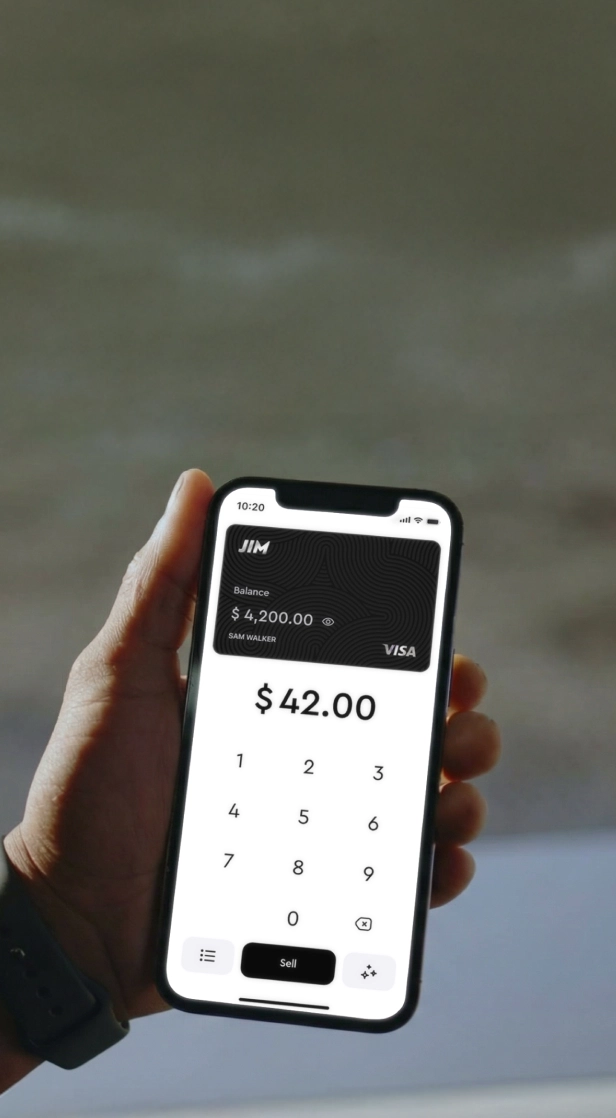
For a drone delivery business that needs to accept payments on-site or on-the-go, JIM offers a streamlined solution. With JIM, you can accept debit, credit and digital wallets directly through your smartphone - just tap and done.
At just 1.99% per transaction with no hidden costs or extra hardware needed, it's particularly useful for taking payment after a successful delivery confirmation. This rate is competitive compared to the average commission rates other payment solution providers offer.
- Get Started: Download JIM app for iOS.
- Make a Sale: Type the sales amount, hit sell, and ask your customer to tap their card or device on your phone.
- Access Funds: Your money is available right on your JIM card as soon as the sale is done - no waiting for bank transfers.
Here are 3 immediate steps to take:
- Draft your standard payment terms for both contract and on-demand clients.
- Create a service agreement template that clearly states your payment and deposit policies.
- Download the JIM app to explore its interface and features for your business.
Step 6: Secure funding and manage your finances
Find the right funding sources
Instead of a traditional bank loan, you might want to consider equipment financing. Lenders like Ascentium Capital or Taycor Financial understand tech hardware. They often approve loans from $10,000 to $50,000 with interest rates between 6% and 15%, depending on your credit score.
A mistake some owners make is accepting the first loan offer they get. You should always get quotes from at least three lenders. This simple comparison can save you a significant amount of money over the life of the loan.
Also, look into Small Business Administration (SBA) programs. The SBA Microloan program provides up to $50,000 for startup costs. Check your state's economic development agency website for technology or innovation grants that might apply to drone businesses.
Calculate your working capital
Plan to have at least six months of operating cash on hand. For a small operation, this usually means $15,000 to $30,000. This fund covers insurance, software subscriptions, marketing, and unexpected repairs while you build your client list.
Here are 3 immediate steps to take:
- Research two equipment financing lenders and review their pre-qualification terms.
- Visit the SBA website to check your eligibility for the Microloan program.
- Calculate your estimated six-month operating expenses to set a working capital goal.
Step 7: Hire your team and set up operations
Build your flight crew
Your first hire will likely be a Drone Pilot. Look for candidates who hold a current FAA Part 107 certificate. A common mistake is to hire pilots with only hobbyist experience. You should prioritize applicants with logged commercial flight hours, as they understand operational pressures.
Expect to offer a salary between $55,000 and $75,000, based on experience. If your business model requires a Part 135 certificate, you will also need a designated Chief Pilot to oversee compliance and safety protocols. This role typically commands a salary of $70,000 to $90,000.
Streamline your daily workflow
To manage your flights, maintenance schedules, and compliance logs, you will need operations software. You might want to explore platforms like Aloft or FlytBase. They help automate flight logging and ensure your team operates within approved airspace, which simplifies FAA reporting.
With this in mind, you can plan your team's growth. A lean crew, often just two pilots and one operations manager, can typically service contracts that generate up to $300,000 in annual revenue. This gives you a solid benchmark for scaling your staff as your client base expands.
Here are 3 immediate steps to take:
- Draft a job description for a Drone Pilot that specifies a Part 107 certificate and commercial flight experience.
- Schedule demos with two drone operations software providers like Aloft or FlytBase.
- Outline the responsibilities for a Chief Pilot role to prepare for future Part 135 compliance.
Step 8: Market your service and acquire customers
Target your first clients
Focus your initial marketing on businesses that need recurring deliveries. You might want to target medical labs, construction sites, or local e-commerce businesses. These clients provide stable revenue and predictable flight schedules, which are ideal for a new operation.
Many new operators make the mistake of chasing one-off consumer deliveries. This approach is often expensive and has a low conversion rate. Securing a few B2B contracts first builds a solid financial foundation for your business before you expand into broader markets.
Develop your outreach and sales materials
Use LinkedIn to find logistics managers or operations directors at your target companies. A direct approach works best. Your message should highlight a specific benefit, like cutting transit times, and propose a brief 15-minute call to discuss their needs.
Your website must feature high-quality video of your drones in flight. This visual proof is more powerful than text. You should also create a one-page PDF sales sheet that details your services, pricing, and operational range to send to potential clients.
A good customer acquisition cost (CAC) for a B2B contract in this industry can range from $500 to $2,000. With this in mind, a targeted email campaign might see a 1-2% meeting booking rate, so consistent follow-up is important for success.
Here are 3 immediate steps to take:
- Identify 20 potential B2B clients in your area using Google Maps and LinkedIn.
- Create a one-page sales sheet that outlines your delivery services and key benefits.
- Record a 60-second video of a successful test flight for your website and outreach efforts.
Step 9: Set your pricing and profit margins
Choose your pricing model
Your pricing strategy directly impacts your profitability. You might want to offer a per-delivery fee, which often ranges from $15 to $40 for local flights under five miles. This model works well for on-demand services like restaurant or retail delivery.
For B2B clients with regular needs, consider a monthly retainer. A contract for daily sample deliveries between two medical clinics could be priced at $1,500 to $3,000 per month. This provides you with predictable revenue.
Some operators get into trouble by only pricing based on flight time. You should also factor in payload weight and complexity. A heavier or more sensitive package justifies a higher price, perhaps a 20-30% surcharge.
Calculate your profit margins
Aim for a gross profit margin of 40-60% on each flight. To calculate this, you first need your cost-per-flight-hour. Add up your hourly pilot wage, battery depreciation, insurance, and maintenance costs. A typical cost-per-hour might be $75 to $125.
With this in mind, if a delivery takes 15 minutes of flight time, your direct cost is around $19 to $31. To hit a 50% margin, you would need to charge the client between $38 and $62 for that single delivery.
Here are 3 immediate steps to take:
- Calculate your drone's cost-per-flight-hour, including pilot wages and maintenance.
- Call two local courier services to get quotes for a 5-mile urgent package delivery.
- Draft a sample pricing sheet with options for per-delivery fees and a monthly retainer.
Step 10: Implement quality control and scale your operations
Establish your quality standards
Your reputation depends on reliability. You should track key performance indicators (KPIs) like on-time delivery rate, aiming for 98% or higher. Also, monitor successful delivery rates, which means the package arrives without damage. A target of 99.5% is a good benchmark.
Some new owners focus too much on flight efficiency and neglect the customer experience. A single damaged package can cost you a valuable B2B contract. Use simple post-delivery surveys to track client satisfaction and gather feedback for improvement.
Know when to scale
Growth should be data-driven. You might want to hire a new pilot when your current team reaches 80% utilization or logs over 30 flight hours per week. This prevents burnout and service degradation. A new drone purchase makes sense when fleet usage consistently exceeds 75%.
Software like Aloft or FlytBase becomes even more important as you grow. These platforms help manage multi-pilot schedules, track fleet-wide maintenance, and ensure all operations remain compliant. This is how you scale without letting quality slip.
Here are 3 immediate steps to take:
- Define three service KPIs, including on-time delivery and successful delivery rates.
- Set a pilot utilization threshold, like 80%, to signal when to start hiring.
- Review the fleet management features in a platform like Aloft to plan for multi-pilot operations.
You have a solid roadmap to launch your drone delivery business. Remember that success in this field is not just about flight; it is about reliability. Consistently safe and on-time deliveries will build the trust you need to grow. You have the plan, now go execute it.
As you secure clients, you will need a simple way to get paid. JIM turns your phone into a card reader for a flat 1.99% fee, with no extra hardware. It makes payments easy so you can focus on your flights. Download JIM to get started.
.avif)