Starting a drop servicing business is a rewarding venture that combines project management and marketing skills with sharp business savvy. The market for digital services is worth hundreds of billions, with steady demand from small businesses, startups, and e-commerce brands.
This guide will take you through the practical steps of validating your concept, building supplier relationships, and obtaining necessary licenses to help you launch a successful drop servicing business in the U.S.
Step 1: Plan your business and validate your idea
Find your profitable niche
Start by exploring freelance marketplaces like Upwork and Fiverr. Look for services with high demand and average project values over $500. This helps you find a profitable niche instead of competing on price for low-value tasks, a frequent misstep for new owners.
Once you have a niche, analyze your future competitors. Use tools like Semrush or Ahrefs to see what keywords they rank for and where their traffic comes from. A simple Google search for your target service also reveals the top players in the space.
Estimate your startup costs
Your initial investment will likely range from $500 to $1,500. This covers key areas. Planning for these expenses upfront provides a clear financial runway for your first few months of operation.
- Website and Hosting: $150–$300 annually for platforms like Squarespace.
- Business Formation (LLC): $50–$500, a one-time state filing fee.
- Initial Marketing: Budget $200–$500 for ads or content promotion.
- Software: Around $50–$150 monthly for project management.
Here are 4 immediate steps to take:
- Identify three high-demand services on Upwork or Fiverr.
- Analyze the top three competitors for your chosen service using Semrush.
- Draft a startup budget that covers your website, legal fees, and marketing.
- Research LLC formation costs in your specific state.
Step 2: Establish your legal structure and licensing
Forming a Limited Liability Company (LLC) is a sound choice. It separates your personal assets from business debts, a protection you do not get as a sole proprietor. An LLC also offers pass-through taxation, so you avoid the double taxation common with corporations.
Federal, state, and local requirements
First, get an Employer Identification Number (EIN) from the IRS. It’s free, takes minutes to get online, and is your business's federal tax ID. You will need it to open a business bank account. Most drop servicing businesses do not need federal licenses.
At the state level, you will file your LLC with the Secretary of State. If you operate under a name different from your LLC, you may also need a "Doing Business As" (DBA) registration. Finally, check with your city or county clerk for a general business operating license, which can cost $50 to $400 annually.
Here are 3 immediate steps to take:
- Apply for a free EIN on the IRS website.
- Research your state’s LLC formation fees and processing times.
- Contact your local city or county clerk’s office about business license requirements.
Step 3: Secure your insurance and manage risk
Key insurance policies
Your primary shield is Professional Liability insurance, also known as Errors and Omissions (E&O). It protects your business if a client sues over a freelancer’s mistake or missed deadline. A frequent error is to assume your freelancer’s policy covers you, but it does not.
You should also consider General Liability insurance. This policy handles broader claims like slander or copyright infringement. For a drop servicing business, a $1 million E&O policy is a solid starting point. This coverage typically costs between $500 and $1,500 annually.
When you look for a policy, get quotes from providers that work with small digital businesses. Companies like Hiscox, The Hartford, and Next Insurance are good places to start. You can also use a marketplace like CoverWallet to compare multiple offers at once.
Here are 4 immediate steps to take:
- Request a quote for a $1 million Professional Liability (E&O) policy.
- Compare offers from at least two providers, such as Hiscox and The Hartford.
- Confirm with potential insurers that their policy covers work performed by subcontractors.
- Review your client agreement to ensure it clearly outlines project scope and deliverables.
Step 4: Set up your digital workspace
A drop servicing business does not require a physical office or specific zoning. You can run it entirely from a home office. This approach saves you thousands in monthly rent and eliminates a commute, letting you focus capital on growth.
Your digital toolkit
Your main hardware is a reliable computer and fast internet. A capable laptop costs between $800 and $2,000. For internet, a plan with at least 100 Mbps download speed supports clear client video calls and fast file transfers.
For software, project management platforms like Asana or Trello help you track tasks. Many offer free plans that are sufficient when you start. Communication tools like Slack and Zoom are also standard for team and client updates.
Build your supplier network
Your "suppliers" are skilled freelancers or white-label agencies, not parts manufacturers. You find them on platforms like Upwork Pro or Toptal. A frequent misstep is to hire the cheapest provider, which can compromise quality and hurt your reputation.
Instead, vet freelancers carefully. Review their portfolios, check client feedback, and conduct a short paid test project. This small upfront investment confirms their skills and reliability before you commit to a large client project.
Here are 4 immediate steps to take:
- Set up a dedicated, quiet workspace in your home.
- Confirm your internet plan offers at least 100 Mbps speed.
- Create a free account on a project management platform like Trello or Asana.
- Shortlist five potential freelancers on Upwork Pro based on their portfolios.
Step 5: Set up your finances and payment processing
A frequent misstep is starting work without a deposit. You should require 50% upfront to cover your freelancer costs. This secures client commitment and protects your cash flow before the project begins.
For online payments, Stripe and PayPal are industry standards that integrate easily with most websites. When you choose a provider, look for transparent fees and reliable support to avoid surprises on your statements.
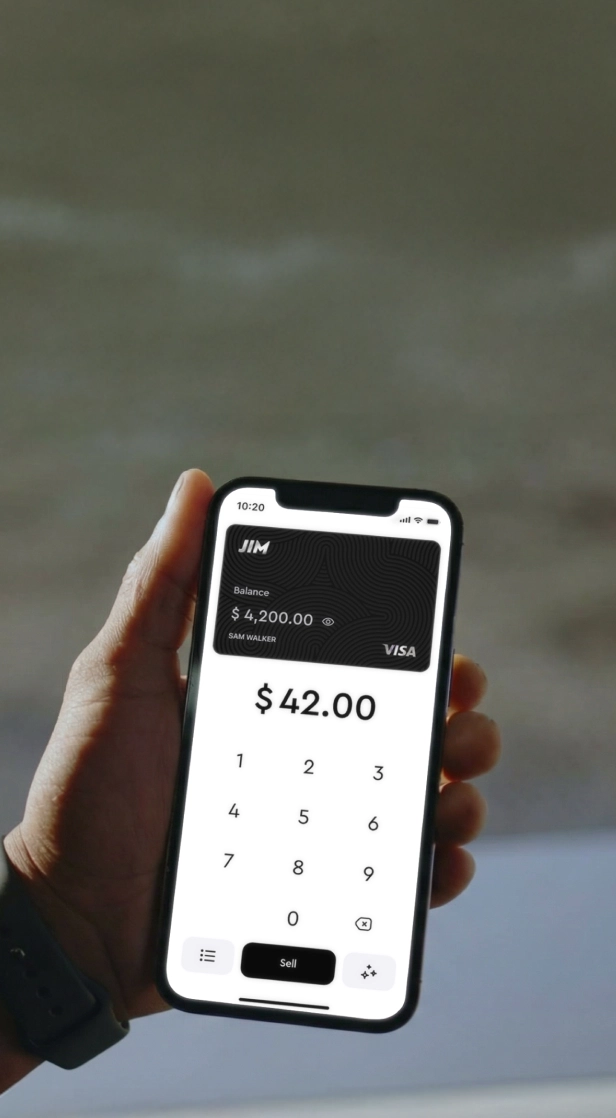
For a drop servicing business that needs to accept payments on-site or on-the-go, JIM offers a streamlined solution. With JIM, you can accept debit, credit, and digital wallets directly through your smartphone—just tap and done.
At just 1.99% per transaction with no hidden costs or extra hardware needed, it is particularly useful for securing project deposits during face-to-face client meetings. Other payment solutions often have average commission rates between 2.5% and 3.5% plus additional fees.
- Get Started: Download the JIM app for iOS.
- Make a Sale: Type the sales amount, hit sell, and ask your customer to tap their card or device on your phone.
- Access Funds: Your money is available right on your JIM card as soon as the sale is done—no waiting for bank transfers.
Here are 4 immediate steps to take:
- Draft your standard payment terms, including a 50% upfront deposit.
- Set up an account with an online payment processor like Stripe or PayPal.
- Compare the transaction fees of two different payment solutions.
- Download the JIM app to prepare for in-person payment needs.
Step 6: Fund your business and manage finances
Secure your initial funding
Since drop servicing has low startup costs, you have flexible funding options. SBA Microloans are a good fit, with lenders offering $500 to $50,000. Interest rates usually fall between 8% and 13%, and a strong business plan often matters more than collateral.
A business credit card with a 0% introductory APR is another smart move. It can cover initial software and marketing costs without interest. A frequent mistake is to mix personal and business funds, which creates accounting headaches. A separate business card avoids this issue.
Plan your working capital
You should plan for six months of working capital. For most, this means having $3,000 to $5,000 set aside. This buffer covers freelancer payments before your client pays you, which ensures your projects run smoothly without cash flow gaps.
To track everything, you might want to use accounting software from day one. Platforms like Wave offer a free version, while QuickBooks Online is a popular paid option. This practice makes monitoring your income and expenses much simpler, especially during tax season.
Here are 4 immediate steps to take:
- Research SBA Microloan lenders in your state.
- Compare business credit cards with 0% introductory APR offers.
- Calculate your estimated working capital for the first six months.
- Create a free account on an accounting platform like Wave.
Step 7: Staff and operate your business
Build your core team
Your first hire will likely be a part-time Virtual Assistant (VA). A VA can manage administrative tasks and client communication for $15 to $30 per hour. This frees you to focus on sales and strategy. No specific certifications are needed, experience is what counts.
Once you handle five or more projects consistently, consider a dedicated Project Manager (PM). A PM oversees project delivery and freelancer quality. A full-time role typically pays between $50,000 and $70,000 annually, but you can start with a per-project contractor.
Manage your operations
Many new owners hire full-time staff too quickly, which strains cash flow. A better approach is to use contractors first. You get help without the commitment of a salary until revenue is stable. Aim to keep total operational costs under 40% of gross revenue for healthy margins.
You can manage your team with platforms like Asana or Trello. As you grow, a dedicated client portal like Portal.io can professionalize your client experience and reduce back-and-forth emails. It centralizes all communication and file sharing in one place.
Here are 4 immediate steps to take:
- Draft a job description for a part-time Virtual Assistant.
- Research current VA rates on Upwork to set a realistic budget.
- Set a revenue milestone for when you will hire a full-time Project Manager.
- Compare the features of two client portal software options.
Step 8: Market your business and acquire customers
Choose your marketing channels
Focus on one or two channels to start. For B2B services, LinkedIn is effective. You can connect with 15-20 ideal clients daily. Share case studies or helpful industry insights, not just sales pitches. This builds trust before you ask for a meeting.
Content marketing is another strong option. Write blog posts that answer specific questions your target clients have. For example, an article titled "5 SEO Mistakes E-commerce Stores Make" positions you as an expert and attracts qualified leads through search engines.
Measure your performance
You need to track your results. A key metric is Customer Acquisition Cost (CAC). For digital services, a CAC between $100 and $400 is common. If you spend $500 on ads and get two clients, your CAC is $250, which is a healthy figure.
Many new owners make the mistake of not tracking their efforts or spreading their budget too thin. Master one channel, like LinkedIn outreach or Google Ads, before you add another. Aim for a website conversion rate of 2-3% from your marketing traffic.
Here are 4 immediate steps to take:
- Identify 50 potential clients on LinkedIn to connect with.
- Outline one blog post that solves a specific problem for your target audience.
- Set a realistic monthly marketing budget, even if it is just $200.
- Choose one primary marketing channel to master for the next 90 days.
Step 9: Price your services and set profit margins
Choose your pricing model
The most straightforward approach is cost-plus pricing. You determine your freelancer's cost for a project and then add your desired profit margin on top. This model ensures you cover your expenses and secure a profit on every project you manage.
For example, if a freelancer quotes you $800 for SEO services, a healthy markup is between 50% and 100%. This means you would charge the client $1,200 to $1,600. Your gross profit on that project would be $400 to $800.
Many new owners underprice their services to win business. This often attracts difficult clients and can signal low quality. Instead, research what your top competitors charge. Use their pricing as a benchmark, but do not copy it directly. Your price should reflect your value.
Once you have a strong portfolio, you might consider value-based pricing. This model ties your fee to the results you deliver for the client, not just your costs. It allows for much higher profit margins but requires you to prove your impact with data.
Here are 4 immediate steps to take:
- Get quotes from three freelancers for your primary service offering.
- Calculate a target client price using a 75% markup on the average freelancer cost.
- Review the pricing pages of three competitors to benchmark your rates.
- Create a simple pricing sheet for your top one to three services.
Step 10: Control quality and scale your operations
Establish your quality control process
To maintain service quality, create a detailed Quality Assurance (QA) checklist for each deliverable. This document should confirm that the freelancer’s work meets all client requirements, from project scope to brand voice. A frequent error is to trust the freelancer’s QA process without your own review.
With that checklist, you can measure performance. Track your revision request rate and aim to keep it below 10%. You can also send a simple one-question survey after each project to get a Client Satisfaction (CSAT) score. This data shows you where your process is strong or weak.
Know when to grow
You should use clear benchmarks to guide your expansion. When you spend over 10 hours a week on administrative tasks, it is time for a virtual assistant. Once you reach $10,000 in monthly recurring revenue or juggle 10+ projects, you might want to hire a dedicated project manager.
As your client list expands, a spreadsheet will not be enough. You can upgrade your operations with a Customer Relationship Management (CRM) platform like HubSpot. For project management, a system like ClickUp offers more advanced features than the free tools you started with.
Here are 4 immediate steps to take:
- Draft a quality assurance (QA) checklist for your primary service.
- Create a simple post-project survey to measure client satisfaction.
- Set a revenue goal that will trigger hiring a project manager.
- Sign up for a free CRM account to organize client data.
You now have a roadmap to launch your drop servicing business. Remember, your success depends on the quality of your freelancers as much as your clients. Vet them well. With a solid plan, you are ready to take the first step on this rewarding path.
As you secure those first clients, make payments simple. JIM turns your phone into a card reader for a flat 1.99% fee, with no extra hardware. It is a straightforward way to accept deposits on the spot. Download JIM to get started.
.avif)