Starting a feminine hygiene business is a rewarding venture that blends a passion for women's health with sharp business savvy. The market is worth billions of dollars, driven by steady demand for products from young adults, health-conscious consumers, and everyone in between.
This guide will take you through the practical steps of validating your business concept, building supplier relationships, developing your brand, and navigating regulations to help you launch a successful feminine hygiene business in the U.S.
Step 1: Validate your business plan
Start by researching your target audience. Use a platform like SurveyMonkey to ask potential customers about their preferences. Do they want organic cotton tampons, subscription boxes, or something else? This direct feedback is invaluable.
You can also look at broader market trends. Reports from firms like Mintel show where the industry is headed. This data helps you position your brand effectively from day one.
Analyze your competition
Look beyond the big names on store shelves. A frequent misstep is to ignore smaller, direct-to-consumer brands. These are often your real competitors. Study their websites, pricing, and social media engagement to find your opening.
Estimate your startup costs
A clear financial picture is next. Initial costs can range from $11,000 to over $34,000. This figure might seem large, but breaking it down makes it manageable. A solid budget prepares you for a strong launch.
Here is a typical breakdown:
- Initial Inventory: $5,000 - $15,000
- Branding and Packaging: $2,000 - $7,000
- E-commerce Website: $1,500 - $5,000
- Business Registration and Legal: $500 - $2,000
- Initial Marketing Budget: $2,000 - $5,000
Here are 3 immediate steps to take:
- Draft a survey for 50-100 potential customers about their product needs.
- Analyze three direct competitors' websites and social media accounts.
- Create a preliminary budget spreadsheet using the cost categories above.
Step 2: Establish your legal foundation
For most new founders, an LLC offers a good balance. It protects your personal assets from business debts and allows profits to pass through to your personal taxes. This structure helps you avoid the double taxation common with C-Corps.
Navigating FDA requirements
The U.S. Food and Drug Administration (FDA) is the main regulatory body for this industry. Many new brands misstep here by not understanding product classifications. Tampons and menstrual cups, for example, are considered Class II medical devices.
This classification means your manufacturing facility must register with the FDA, and you must list your products. The annual establishment registration fee is a key investment in your compliance. For fiscal year 2024, this fee is $7,653, so budget for it early.
Once you have federal compliance sorted, handle state and local paperwork. You will need a seller's permit from your state's tax agency to collect sales tax. Also, check with your city or county for a general business license, which can cost between $50 and $400.
Here are 3 immediate steps to take:
- Decide between an LLC and a C-Corp for your business structure.
- Review the FDA's "How to Register and List" guide for medical device establishments.
- Contact your state's department of revenue to apply for a seller's permit.
Step 3: Secure your insurance and manage risk
Product liability insurance is your first priority. It protects your business if a customer claims your product caused harm, such as an allergic reaction or infection. This is a specific risk for feminine hygiene products, so a general policy will not suffice.
Many new founders mistakenly believe a general liability policy is enough. You must confirm your policy explicitly covers health and wellness products, or even Class II medical devices. Without this, you are financially exposed to product-related lawsuits.
Key insurance policies and costs
You will want to budget for a few different policies to build a strong financial safety net. Coverage amounts and premiums vary, but you can expect these typical ranges.
- Product Liability: Plan for at least $1 million in coverage. Annual premiums often start around $2,500 and increase with your sales volume.
- General Liability: This covers broader business risks. A $1 million policy might cost between $400 and $900 annually.
- Property Insurance: This protects your inventory from fire or theft. The cost depends directly on the value of your stock.
When you look for providers, consider companies like The Hartford, Hiscox, or Next Insurance. They have experience with e-commerce businesses and understand product-based risks. An agent who specializes in this area can find you the right coverage.
Here are 3 immediate steps to take:
- Request quotes for a product liability policy with at least $1 million in coverage.
- Ask potential insurers if their policy specifically covers feminine care products.
- Calculate the total value of your inventory to get an accurate property insurance quote.
Step 4: Find your space and source equipment
Secure your storage and workspace
You can start from a home office, but you will need a dedicated space for inventory. A 100-200 square foot climate-controlled storage unit works well initially. Check local zoning ordinances for any restrictions on storing commercial goods, even if they are pre-packaged.
When you look for a small warehouse space, negotiate for a short-term lease of 6-12 months. This gives you flexibility as your sales grow. Landlords are often more open to this if you can pay a few months upfront.
Source your equipment and suppliers
Your main operational costs will be for storage and fulfillment. You do not need much. Industrial shelving and a packing station are your first purchases. A thermal label printer like a Rollo or Zebra is also a good investment.
- Industrial Shelving: $100 - $300 per unit
- Thermal Label Printer: $150 - $400
- Packing Supplies (Boxes, Mailers): Varies with volume
Finding a reliable manufacturer is next. A frequent oversight is placing a large order without first testing product quality. Always request samples from multiple suppliers before you commit to a production run. Expect Minimum Order Quantities (MOQs) of 5,000 to 10,000 units per product.
Here are 3 immediate steps to take:
- Research local climate-controlled storage units around 150 square feet.
- Request product samples and pricing from three potential manufacturers.
- Create a budget for shelving, a thermal printer, and initial packing supplies.
Step 5: Set up your payment systems
Your e-commerce platform will need a payment processor. Solutions like Shopify Payments or Stripe are common and integrate directly. Expect transaction fees around 2.9% plus 30 cents. If you plan to offer subscription boxes, confirm your processor supports recurring billing from the start.
Accepting payments in person
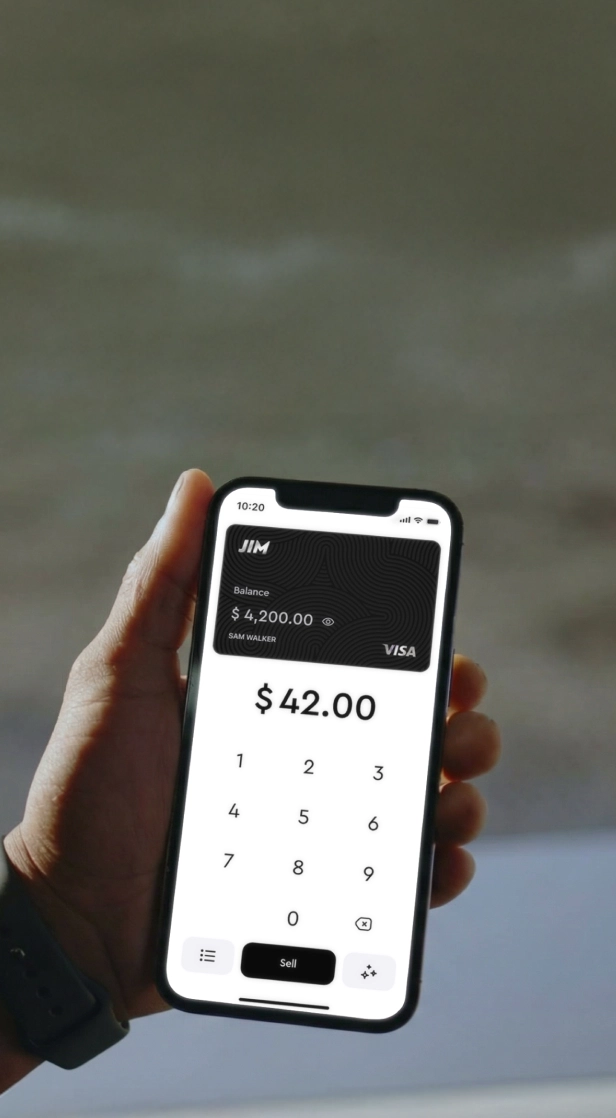
For pop-up shops or local markets, you need a way to handle sales on the go. For feminine hygiene businesses that need to accept payments on-site, JIM offers a streamlined solution. With JIM, you can accept debit, credit, and digital wallets directly through your smartphone.
The process is simple, just tap and done. At just 1.99% per transaction with no hidden costs or extra hardware needed, it is a strong option. Many other providers charge nearly 3% plus a fixed fee, so this rate protects your margins, especially at health fairs or community events.
- Get Started: Download the JIM app for iOS.
- Make a Sale: Type the sales amount, hit sell, and ask your customer to tap their card or device on your phone.
- Access Funds: Your money is available right on your JIM card as soon as the sale is done, with no wait for bank transfers.
Here are 3 immediate steps to take:
- Compare transaction fees for two major online payment gateways.
- Decide if you will offer a subscription and confirm your processor supports it.
- Download the JIM app to see if it fits your needs for in-person sales.
Step 6: Secure funding and manage your finances
SBA Microloans are a strong starting point for funding. These loans go up to $50,000 and are designed for new businesses. Lenders typically look for a solid business plan and a fair credit score, with interest rates often falling between 8% and 13%.
Beyond loans, you might want to explore grants that support women entrepreneurs. The Amber Grant awards $10,000 each month. Also, programs like the Cartier Women's Initiative provide significant funding and coaching for businesses that make a social impact, a category your brand could fit into.
Plan your working capital
Many new founders find they need more cash on hand than first projected. For the first six months, you should plan for $15,000 to $25,000 in working capital. This buffer covers inventory reorders, marketing campaigns, and other operational costs before your revenue stream becomes consistent.
Here are 3 immediate steps to take:
- Review the SBA Microloan requirements to see if you qualify.
- Research the application deadline for a relevant program like the Amber Grant.
- Calculate your six-month working capital needs based on your budget.
Step 7: Build your team and streamline operations
Your first hire
You will likely handle fulfillment yourself at first. Your first hire will probably be a part-time Fulfillment Associate to pack and ship orders. This frees you up to focus on marketing and growth. A frequent mistake is waiting too long to hire, which can cause shipping delays and burnout.
You can budget around $15-$20 per hour for this role. No special certifications are needed, but strong attention to detail is a must. When you write the job description, emphasize accuracy in picking and packing orders.
Operational systems
For managing inventory, your e-commerce platform's built-in system, like Shopify Inventory, is often enough to start. It tracks stock levels automatically as you make sales. This avoids selling products you do not have.
Once you have an employee, you might want to use scheduling software. Apps like Homebase or When I Work help manage shifts and hours. Many offer free plans for single-location businesses with just a few employees.
As you grow, a good benchmark is to have one full-time employee for every $250,000 to $500,000 in annual revenue. This ratio helps you scale your team in line with your sales without over-hiring.
Here are 3 immediate steps to take:
- Draft a job description for a part-time Fulfillment Associate.
- Review the features of a free plan on Homebase or When I Work.
- Set a revenue milestone for when you will make your first hire.
Step 8: Market your brand and acquire customers
Start with content marketing. Write blog posts on topics your audience searches for, like menstrual health or sustainable products. You can use a free keyword research tool like Ubersuggest to find terms people are actually typing into Google.
For social media, focus on Instagram and TikTok. Brands like August built strong communities with educational and authentic content. Many new founders just post product photos, but you should share user stories and health tips to build trust.
Paid ads and key metrics
Once you have some content, you can test paid advertising. You might want to start with a small Meta ads budget of $20-$30 per day. Target users with interests in "wellness" or "organic living" to find your first customers.
Keep a close watch on your Customer Acquisition Cost (CAC). For a new e-commerce brand, a CAC under $50 is a solid goal. Your website's conversion rate should ideally land between 1% and 2%, which shows your marketing spend is effective.
Here are 3 immediate steps to take:
- Identify five blog topics using a keyword research tool.
- Outline a one-month content plan for your primary social media channel.
- Set a test budget for a Meta ad campaign targeting a specific audience.
Step 9: Set your pricing strategy
A good starting point is cost-plus pricing. Calculate your Cost of Goods Sold (COGS) per unit, which includes manufacturing, packaging, and shipping. Then, apply a markup of 50% to 100%. If your product costs $4 to make, a retail price between $6 and $8 is reasonable.
You can also offer subscription boxes. This model builds predictable revenue. For example, you could price a monthly box at $20, which might be a 10-15% discount compared to buying the items separately. This gives customers value and you get loyalty in return.
Analyze competitor pricing
Look at what similar brands charge. Create a simple spreadsheet and list the prices of 3-5 direct competitors for comparable products. You can find this information directly on their websites or by searching on Google Shopping. This helps you position your brand in the market.
Some founders fall into the trap of pricing too low just to win sales. This can hurt your brand's perceived value and leave no profit for marketing. Instead, price based on the quality of your ingredients and your brand story. Customers will pay for value.
Here are 3 immediate steps to take:
- Calculate the total COGS for one of your main products.
- Create a spreadsheet to compare the prices of three direct competitors.
- Draft two pricing models: one for single purchases and one for a monthly subscription.
Step 10: Maintain quality and scale your operations
Implement quality control systems
Since tampons and cups are medical devices, your manufacturer should ideally be ISO 13485 certified. If you sell organic products, look for Global Organic Textile Standard (GOTS) certification in your supply chain. These confirm your commitment to safety and quality.
You should track your product complaint rate, with a goal to keep it below 1%. Also monitor your return rate for quality-related issues. This data gives you an early warning if a production batch has problems. Many founders assume their manufacturer handles all quality checks.
You can request batch testing reports for every production run. For a small fee, you might also hire a third-party inspection service like QIMA to verify quality before the shipment leaves the factory. This step protects your brand reputation.
Plan your growth milestones
Once you consistently process 50-100 orders per day, packing them yourself becomes unsustainable. This is a good time to evaluate a third-party logistics (3PL) provider. It frees you to focus on brand growth instead of operations.
As your product line expands, basic inventory systems fall short. You might want to look at inventory management software like Cin7. When revenue approaches the $1 million mark, a more robust system like NetSuite can manage your entire business.
Here are 3 immediate steps to take:
- Ask your manufacturer for their ISO 13485 certification documents.
- Set up a spreadsheet to track customer complaints and return reasons.
- Research pricing for a 3PL provider to understand future costs.
Launching your feminine hygiene brand is a journey of trust. Your customers look for authenticity and safety, so make that your foundation. With this guide, you have a clear roadmap to build a business with purpose.
And when you make those first sales at markets or pop-ups, keep your payments simple. JIM lets you accept cards on your phone for just 1.99% per sale, no hardware needed. Download JIM and you are set.
.avif)