Starting a funnel cake business is a rewarding venture that blends the art of making delicious treats with smart business sense. The market is quite accessible due to low initial costs and high profit margins, but that accessibility doesn't mean success comes easy.
This guide will take you through the practical steps of obtaining permits, selecting a location, acquiring equipment, and building supplier relationships to help you launch a successful funnel cake business in the U.S.
Step 1: Plan your business and validate your idea
Start by scouting your local scene. Visit farmers' markets, street fairs, and food truck rallies. Note which vendors draw crowds and what they charge. This firsthand look at your potential market is invaluable for pricing and menu development.
Use Google Maps and Yelp to find other dessert vendors. You might want to create a simple spreadsheet to track their menus, prices, and locations. This helps you find a unique spot in the market and decide where to operate.
Startup costs
Your initial investment will vary, but a realistic budget is key. A frequent misstep is to buy the cheapest food cart, only to face expensive repairs later. A reliable cart is a better long-term investment, even if the upfront cost is higher.
Expect to spend between $4,000 and $13,000. A food cart or trailer can run from $3,000 to $10,000. A commercial funnel cake fryer costs about $400 to $1,500, with initial supplies and permits adding another $300 to $1,400.
Here are 3 immediate steps to take:
- Visit two local events to observe customer traffic and competitor pricing.
- Create a spreadsheet listing at least three potential competitors in your area.
- Draft a startup budget with estimated costs for a cart, fryer, and permits.
Step 2: Set up your legal and licensing framework
Your choice of business structure protects your personal assets. An LLC is often the best fit for a new funnel cake business because it separates your personal finances from your business debts without complex paperwork.
Next, get an Employer Identification Number (EIN) from the IRS website. It’s free and you will need it for bank accounts and permits, even if you do not plan to hire employees.
Permits and licenses
Your local health department is your most important contact. They issue the Health Department Permit for your cart, which can cost between $100 and $500. The process involves an inspection and can take four to eight weeks.
A frequent delay comes from not starting this process early enough. Contact them for their mobile food vendor requirements before you even buy your cart. This ensures your setup will pass inspection the first time.
You will also need a general Business License from your city or county and a Food Handler's Permit for yourself. Some events require a separate Temporary Food Facility Permit, so always check with organizers.
Here are 4 immediate steps to take:
- Register your business as an LLC with your state.
- Apply for a free EIN on the IRS website.
- Download the mobile food vendor application from your local health department's website.
- Enroll in a state-approved food handler's certification course.
Step 3: Secure your insurance and manage risk
Your most important policy is General Liability Insurance, which covers customer injuries. A $1 million policy is standard for most events. This protects you if a customer gets burned by hot oil, a major risk unique to making funnel cakes in crowded spaces.
You will also need Commercial Property Insurance for your cart and fryer. If you tow your cart, add Commercial Auto Insurance. Annual premiums for a comprehensive policy typically range from $500 to $1,500. This is a necessary protection for your business investment.
A frequent misstep is to get a generic policy that lacks specific food vendor coverage. You should work with an insurer who understands your business to avoid gaps in protection for things like food contamination claims.
Recommended insurance providers
You might want to consider providers like the Food Liability Insurance Program (FLIP), Insureon, or Next Insurance. They specialize in the food industry and can help you meet event-specific insurance requirements, which can vary significantly from one venue to another.
Here are 4 immediate steps to take:
- Request a quote from a specialized provider like FLIP.
- Review insurance requirements from two potential event organizers.
- Ask insurers specifically about coverage for hot oil accidents.
- Budget for an annual premium between $500 and $1,500.
Step 4: Select your setup and source supplies
Location and cart
Your primary "location" is your food cart. A standard 8x5 foot cart is a good starting point. Many health departments require you to operate from a commissary kitchen for storage and cleaning. Contact your local health department for a list of approved facilities in your area.
A frequent mistake is to purchase a cart before you check the local health code. Always get the specific requirements for sinks, water tanks, and surface materials from the health department first. This avoids a costly failed inspection.
Equipment and suppliers
With your cart specifications in hand, you can buy your equipment. A commercial deep fryer will cost between $400 and $1,500. You will also need funnel cake pitchers ($20-$40), large mixing bowls, and tongs. Look for these items at a restaurant supply store.
For ingredients, consider suppliers like WebstaurantStore or a local cash-and-carry. Buying a 50-pound bag of flour and a 35-pound jug of cooking oil is far more economical than supermarket sizes. Check their minimum order quantities before you commit.
Here are 4 immediate steps to take:
- Request a list of approved commissary kitchens from your health department.
- Price a commercial deep fryer from two different restaurant supply stores.
- Compare the cost of a 50-pound bag of flour from a bulk supplier to your local grocery store.
- Contact one event organizer and ask about their vendor fee structure and space requirements.
Step 5: Set up payment processing
Most customers expect to pay with a card, so you need a reliable way to accept payments. Many new vendors get locked into contracts with monthly fees or buy clunky card readers. You can avoid this by choosing a system with low, transparent transaction fees and no extra hardware.
Payment solutions
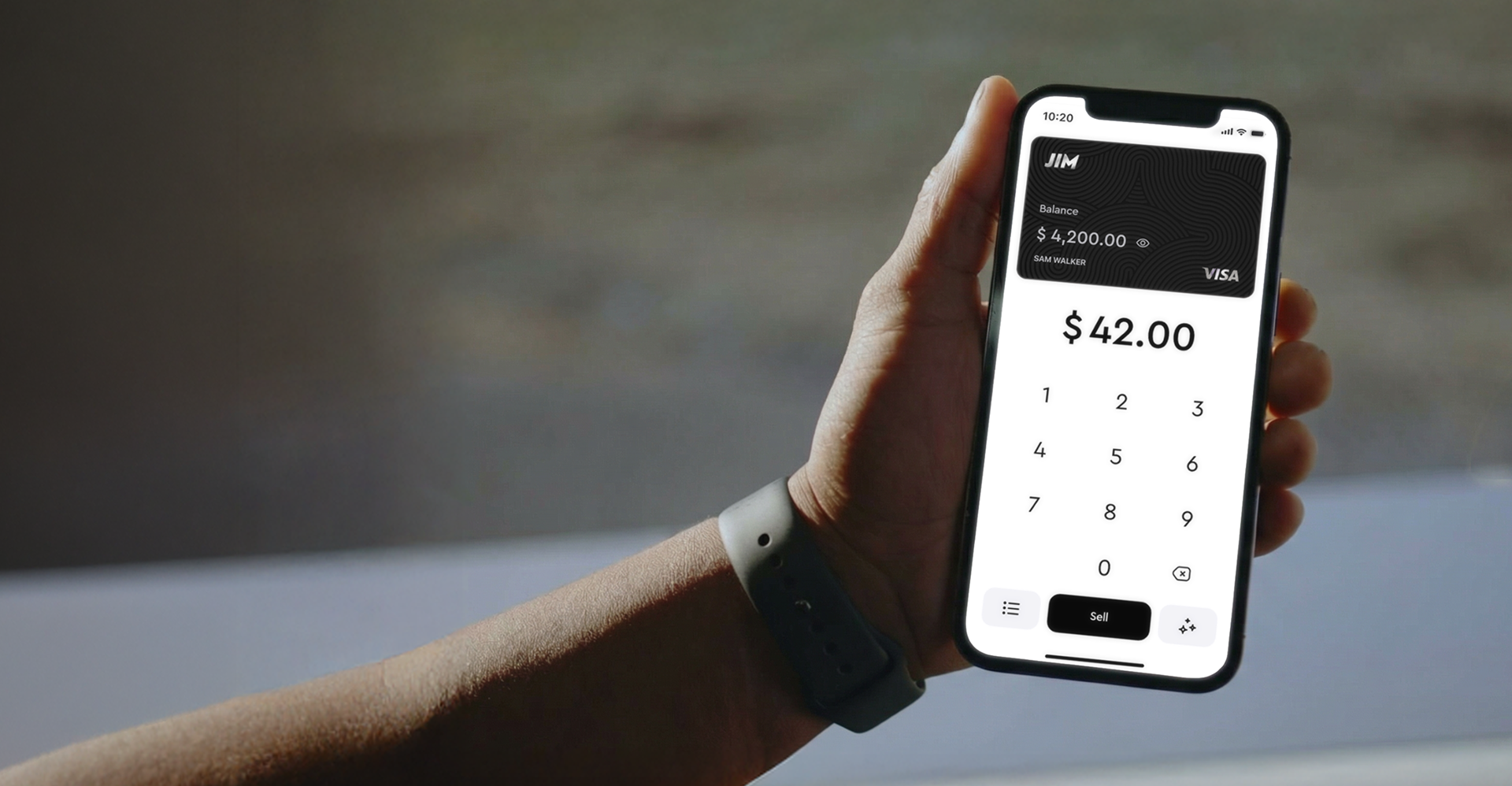
For a funnel cake business that needs to accept payments on the go, JIM offers a streamlined solution. With JIM, you can accept debit, credit, and digital wallets directly through your smartphone. Just tap and you are done.
Other providers often charge between 2.5% and 3.5% per transaction. At just 1.99% with no hidden costs, JIM is particularly useful for managing long lines at busy festivals without extra hardware. Here is how it works:
- Get Started: Download the JIM app for iOS.
- Make a Sale: Type the sales amount, hit sell, and ask your customer to tap their card or device on your phone.
- Access Funds: Your money is available on your JIM card as soon as the sale is done, with no waiting for bank transfers.
Here are 3 immediate steps to take:
- Compare JIM's 1.99% fee to two other mobile payment processors.
- Download the JIM app to explore its interface.
- Calculate your potential daily transaction fees based on a projected 100 sales at $8 each.
Step 6: Fund your business and manage finances
Funding sources
For initial funding, you might want to look at an SBA Microloan. These loans go up to $50,000 and are designed for small startups. Interest rates typically fall between 8% and 13%. A personal credit score above 680 will significantly improve your chances of approval.
Many new owners get tripped up because they underestimate their total need. They secure just enough for the cart but forget about operating cash. Be sure your loan request covers at least three months of expenses. Also, check for local business grants through your city’s economic development office.
Working capital
Plan to have at least $3,000 to $5,000 in working capital for your first six months. This covers recurring costs like ingredients, event fees ($50-$300 per event), insurance premiums, and fuel. This buffer ensures you can operate smoothly before sales become consistent.
Here are 4 immediate steps to take:
- Check your personal credit score through a free service.
- Research one SBA-approved microlender in your state.
- Draft a six-month operating budget that includes ingredients, fees, and insurance.
- Search your city’s website for small business development grants.
Step 7: Hire your team and streamline operations
Hiring your first team members
You will likely need two roles to start: a Funnel Cake Maker and a Cashier. The maker handles batter and frying, while the cashier takes orders and payments. Expect to pay between $15 and $20 per hour, depending on your location and the event.
A frequent oversight is skipping formal safety training. Your team must know how to handle hot oil safely to prevent accidents. In addition, every employee who handles food or money must have a state-approved Food Handler's Permit before their first shift.
Managing daily operations
Once you have a team, you need an efficient way to manage schedules. You might want to look into apps like 7shifts or When I Work. They help you build schedules and communicate with your staff directly from your phone, which avoids confusion during busy event seasons.
For most events, a two-person team works best. With one person dedicated to frying and another managing orders, you can handle between $200 and $300 in sales per hour. This setup keeps the line moving and customers happy.
Here are 4 immediate steps to take:
- Draft job descriptions for a Funnel Cake Maker and a Cashier.
- Confirm that all new hires must have a valid Food Handler's Permit.
- Create a one-page safety guide for handling hot oil.
- Explore scheduling apps like 7shifts to see how they fit your needs.
Step 8: Market your business and find customers
Build your online presence
Create an Instagram and Facebook page dedicated to your business. Post high-quality photos of your funnel cakes and your event schedule. Announce where you will be at least a week in advance. This gives followers time to plan a visit.
Many new owners forget to post their exact location on the day of an event. A simple post with a map pin can drive significant foot traffic from people already at the venue. Keep your posts consistent to build a following.
On-site marketing and promotions
Your cart's appearance is your best marketing asset. Invest in a large, easy-to-read menu and a professional banner. Customers should be able to see your prices from 10 feet away. A cluttered menu will just confuse people and slow down the line.
You might want to run a simple promotion to attract customers. Consider a "buy one, get one half off" deal during slower hours. For multi-day festivals, a punch card that offers a free topping after three purchases can encourage repeat business.
Here are 4 immediate steps to take:
- Create an Instagram page and post five high-quality photos of your funnel cakes.
- Design a simple, large-print menu with clear pricing.
- Draft a social media post announcing your location for a future event.
- Brainstorm one simple promotion, like a punch card or a discount.
Step 9: Develop your pricing strategy
Your ingredient cost for one funnel cake should be around $1.50. This includes flour, oil, and powdered sugar. With a typical sale price of $8 to $12, your profit margins can easily exceed 80%. Many new owners forget to factor in overhead like event fees and insurance into their cost per unit.
Before you set prices, revisit the competitor spreadsheet you made earlier. Check the menus of other dessert vendors at local fairs or on their social media pages. Note what they charge for similar items. This helps you price competitively without starting a race to the bottom.
Pricing models and examples
A tiered pricing model works well. You can offer a plain funnel cake for a base price, like $8. Then, you can add toppings for an extra charge. For example, you might charge $1 for whipped cream and $2 for fresh strawberries. This increases your average sale value.
You could also create combo deals. A funnel cake and a bottled water for $10 can be an easy upsell. This strategy simplifies choices for customers and can speed up your line during peak hours at a busy festival.
Here are 4 immediate steps to take:
- Calculate your cost per funnel cake, including ingredients and a portion of your overhead.
- Research the prices of three dessert vendors at your next local event.
- Create a tiered menu with a base price and at least two topping add-ons.
- Set a final price for a plain funnel cake that ensures an 80% or higher profit margin.
Step 10: Maintain quality and scale your operations
Establish your quality standards
Your batter should pour like thick pancake batter. Keep your oil at a steady 375°F with a digital thermometer. A frequent mistake is to reuse oil for too long, which makes the funnel cakes taste stale. You should change your oil after every 8 to 10 hours of use.
Know when to grow
Once you see consistent sell-outs or lines longer than 10 people for over an hour, it is time to expand. Your first move might be to add a second fryer, which can double your output for around $1,000. This is a smaller step than buying a whole new cart.
When you regularly book more than two events on the same weekend, you should hire another two-person team. Use the sales data from your payment processor to track your busiest hours and confirm these trends. This information will guide your expansion decisions.
Here are 4 immediate steps to take:
- Create a one-page quality checklist for batter consistency and oil temperature.
- Set a rule to change fryer oil after every 8 hours of use.
- Define your growth trigger, such as lines consistently longer than 10 people.
- Price out a second commercial deep fryer to prepare for expansion.
You now have a clear roadmap. Remember that in the world of funnel cakes, consistency is just as important as taste. A perfect cake every time builds trust and keeps customers coming back. Go on and build your sweet success.
As you serve those happy customers, a simple payment solution helps. JIM lets you accept cards right on your phone for a flat 1.99% fee, no extra hardware needed. It keeps the line moving. Download JIM and get ready for your first sale.
.avif)