Starting a label printing business is a rewarding venture that blends creative design skills with sharp business savvy. The global label market is a multi-billion dollar industry, with consistent demand for custom labels across sectors like food and beverage, health and beauty, and e-commerce shipping.
This guide will take you through the practical steps of validating your business idea, acquiring the right equipment, securing funding, and building supplier relationships to help you launch a successful label printing business in the U.S.
Step 1: Create your business plan and validate the market
Define your niche
Start by researching a specific market segment. You could focus on labels for craft breweries, cosmetic products, or e-commerce packaging. Visit local stores and trade shows to see what labels successful brands in your chosen niche use. This helps you understand material and design trends.
A frequent misstep is trying to serve everyone. Without a clear niche, your marketing becomes generic and your equipment needs are unclear. Specializing allows you to become the go-to expert for a specific type of customer, which simplifies your business.
Estimate your startup costs
Your initial investment will vary, but a solid budget is necessary. Expect startup costs to range from $20,000 to $40,000 for a small-scale operation. This covers your equipment, initial supplies, and business setup fees. Securing funding requires a detailed breakdown.
The largest expense is the printer itself. An entry-level digital label press can cost between $15,000 and $30,000. You will want to purchase a printer that matches your niche. For example, food-safe labels require different technology than durable outdoor decals.
Also, budget around $2,000 to $5,000 for initial inventory like label stock, inks, and laminates. Add another $1,000 to $3,000 for design software like Adobe Creative Cloud, business registration, and a basic website.
Here are 3 immediate steps to take:
- Research a specific label niche like wine bottles or candle warnings.
- List five local and online competitors and analyze their offerings.
- Create a preliminary budget that outlines equipment, supplies, and software costs.
Step 2: Set up your legal structure and get licensed
Your first big decision is your business structure. Most new label businesses choose a Limited Liability Company (LLC). It separates your personal and business finances and allows profits to pass directly to you, which simplifies tax season.
An S Corp is another option with similar tax benefits. A C Corp is more suited for businesses that plan to seek major outside investment. For most startups, the LLC provides the right balance of protection and simplicity.
Handle your federal, state, and local requirements
With your structure decided, you can get your paperwork in order. Start by getting a free Employer Identification Number (EIN) from the IRS website. You will need this for taxes and to open a business bank account.
Next, register your business with your state. This usually involves filing for a seller's permit, which allows you to collect sales tax. Expect this to cost between $50 and $150 and take a few weeks to process.
Don't forget local permits. Your city or county may require a general business license, which often costs less than $100. If you print labels for food or children's products, you must also follow FDA and CPSC labeling regulations.
One thing that trips people up is overlooking local zoning laws for a home-based operation. A quick call to your city's planning department can confirm if your location is approved for this type of business activity.
Here are 4 immediate steps to take:
- Choose your business structure, likely an LLC, and file the paperwork.
- Apply for a free Employer Identification Number (EIN) online.
- Contact your state's tax agency about getting a seller's permit.
- Call your local city planning department to verify zoning compliance.
Step 3: Secure your business insurance
Protecting your investment is your next move. Insurance shields you from accidents and errors that could otherwise shut you down. For a label printing business, you will want to look at a few specific types of coverage.
Understand your coverage and costs
Start with General Liability insurance. It covers claims of bodily injury or property damage. A $1 million policy is standard and typically costs between $400 and $700 per year. This protects you if a client slips in your workshop or if you damage a customer's property during a delivery.
Also, consider Professional Liability, or Errors & Omissions (E&O) insurance. This covers financial losses from mistakes in your work, like a costly typo on a 10,000-label run. Expect to pay $500 to $1,000 annually for this peace of mind.
If you own expensive equipment, Commercial Property insurance is a must. A frequent mistake is insuring your printer for its purchase price instead of its higher replacement cost. This policy can be bundled with general liability in a Business Owner's Policy (BOP) to save money.
You can get quotes from providers like The Hartford, Hiscox, and Next Insurance. They specialize in small business policies and understand the risks of a printing operation. If you hire employees, you will also need Workers' Compensation insurance, as required by your state.
Here are 4 immediate steps to take:
- Request quotes for a $1 million general liability policy.
- Ask about adding professional liability (E&O) coverage to your plan.
- Calculate the full replacement cost of your printing and finishing equipment.
- Contact an agent from a provider like The Hartford or Hiscox to discuss a Business Owner's Policy.
Step 4: Set up your workspace and buy equipment
Find a space between 500 and 1,000 square feet zoned for light industrial use. This classification usually permits the noise and ventilation needs of printing equipment. When you negotiate a lease, ask the landlord for a tenant improvement allowance to help cover electrical upgrades for your press.
Select your printing and finishing gear
Your main purchase is a digital label press, which can range from $15,000 to $30,000. You will also need a separate finishing machine for laminating and die-cutting, which costs another $5,000 to $15,000. A mistake some people make is overlooking the finisher; ensure its web width matches your printer.
With your equipment chosen, you can find suppliers for your materials. Companies like Uline and OnlineLabels.com offer a wide variety of label stock. Start by ordering sample packs to test different adhesives and face stocks before you commit to a bulk order, which often has a minimum quantity.
Here are 4 immediate steps to take:
- Search for a 500-1,000 sq. ft. light industrial commercial space.
- Ask potential landlords about a tenant improvement allowance for electrical work.
- Get quotes for a digital label press and a compatible finisher.
- Order sample packs from suppliers like Uline to test materials.
Step 5: Set up your payment processing
You should require a 50% deposit on all new orders to cover your material costs. This protects your cash flow. For repeat clients with a good payment history, you can offer Net 30 terms. Make these terms clear on every invoice.
Many payment processors charge transaction fees between 2.5% and 3.5%. When you compare solutions, look for low fees and fast access to your funds. People often overlook these fees, which can eat into your profit margins over time.
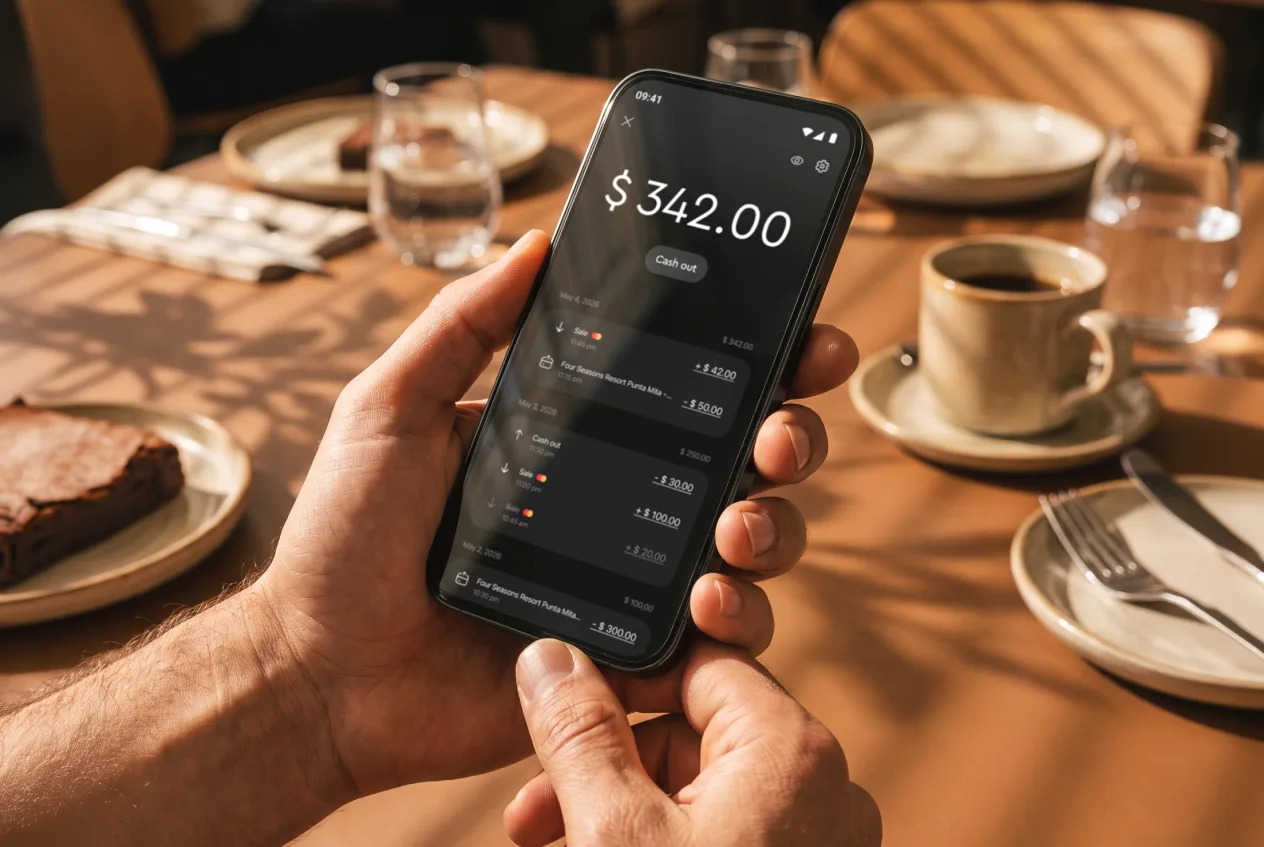
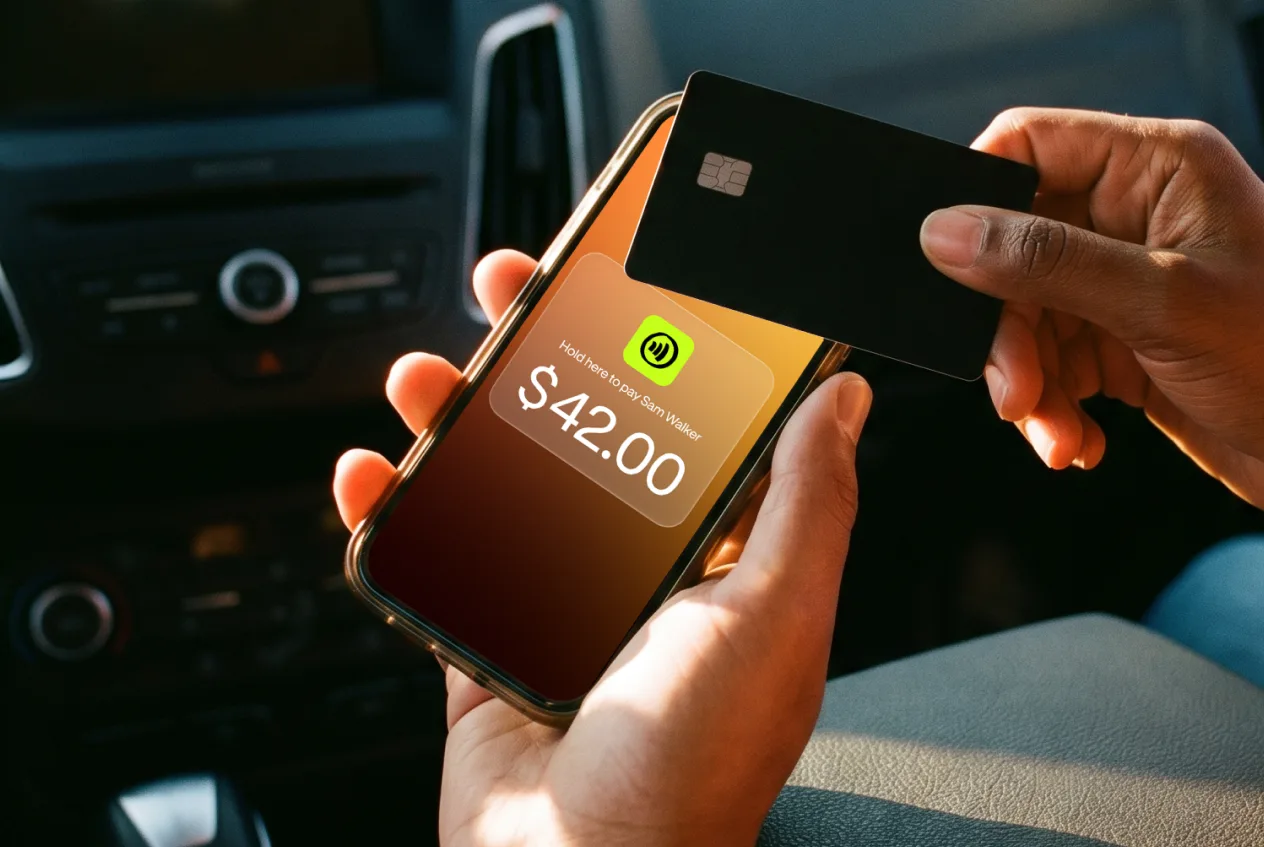
For payments on-the-go, like at a trade show or client meeting, a mobile solution is valuable. For this, JIM offers a streamlined option. With JIM, you can accept debit, credit, and digital wallets directly through your smartphone—just tap and you are done.
At just 1.99% per transaction with no hidden costs or extra hardware, it is useful when you take deposits on-site. Getting started is straightforward:
- Get Started: Download JIM app for iOS
- Make a Sale: Type the sales amount, hit sell, and ask your customer to tap their card or device on your phone
- Access Funds: Your money is available right on your JIM card as soon as the sale is done - no waiting for bank transfers
Here are 3 immediate steps to take:
- Establish your payment terms, including a 50% deposit policy for new clients.
- Compare transaction fees from different payment processors.
- Download the JIM app to explore its features for mobile payments.
Step 6: Fund your business and manage finances
With your business plan ready, you can pursue funding. An SBA 7(a) loan is a solid option for equipment financing, often covering up to 90% of your costs. You will likely need a credit score over 680 and a detailed plan to secure rates between 8% and 12%.
Another route is direct equipment financing from a lender that specializes in printing machinery. These loans may have higher interest rates, around 10% to 20%, but the approval process can be faster. Some people make the mistake of only applying to one lender instead of comparing offers.
Manage your working capital
Beyond your equipment, you need cash for day-to-day operations. Plan to have at least six months of working capital set aside. This should cover rent, utilities, marketing, and initial inventory. For most small shops, this amounts to between $15,000 and $25,000.
Once you secure funding, open a dedicated business bank account immediately. Mixing personal and business funds creates accounting headaches and can put your personal assets at risk if your business is an LLC. This simple step makes tax time much easier to handle.
Here are 4 immediate steps to take:
- Finalize your business plan to prepare for a loan application.
- Get quotes from an SBA-approved bank and an equipment financing company.
- Calculate your working capital needs for the first six months of operation.
- Open a separate business checking account to manage your funds.
Step 7: Hire your team and set up operations
Define your key roles
You likely cannot handle every task alone. Your first hire should be a Press Operator to run and maintain the equipment. This person needs solid mechanical skills. Plan for a salary between $20 and $28 per hour, based on experience.
A Prepress Technician or Graphic Designer is another key position. They prepare customer art files for printing. People often underestimate this step, which can create major production delays. This role typically earns between $22 and $30 per hour.
Streamline your workflow
A clear process prevents chaos. Map out every step from when an order arrives to when it ships. You can manage this with software like Printavo or Trello. As you grow, a good target to aim for is $100,000 to $150,000 in revenue per employee.
For training, look into certification courses from your press manufacturer. While not always mandatory, this training gets a new operator productive faster and reduces costly errors. Your own on-the-job training will cover the rest of your specific processes.
Here are 4 immediate steps to take:
- Draft job descriptions for a Press Operator and a Prepress Technician.
- Research local salary ranges for these positions on Glassdoor or Indeed.
- Map out your production workflow from order intake to final shipping.
- Explore print management software like Printavo to organize jobs.
Step 8: Market your business and get customers
Build your online presence
Your website is your digital storefront. Create a simple portfolio that showcases high-quality photos of your best label work. If you specialize in wine labels, show them on actual bottles. This visual proof is more powerful than any sales pitch.
Next, consider paid ads. With Google Ads, you can target specific phrases like "custom beer can labels" or "short-run cosmetic labels." A monthly budget of $500 can start to bring in qualified leads. A frequent misstep is not using negative keywords, which stops you from paying for irrelevant clicks.
Use direct outreach and networking
Identify 20 potential local clients in your niche. You can find them through a simple Google search or on LinkedIn. Send a personalized email with a link to your portfolio and offer a free sample pack. This direct approach often yields quick results.
Also, attend trade shows for your target industry, not just printing expos. If you make food labels, go to a specialty food conference. The goal is to build relationships. Expect a customer acquisition cost (CAC) of $300 to $500 per client initially, which you can lower over time.
Here are 4 immediate steps to take:
- Create a simple portfolio website with high-quality photos of your work.
- Brainstorm 10 long-tail keywords to target with Google Ads.
- List 20 local businesses in your niche to contact directly.
- Find one industry-specific trade show to attend in the next year.
Step 9: Develop your pricing strategy
Set your pricing model
Most label printers use a cost-plus pricing model. You calculate your total cost for a job—materials, labor, and overhead—and then add a markup. A good starting point for your markup is between 50% and 100%, which should result in a healthy profit margin.
For example, if a job costs you $100 in total, you would charge the client between $150 and $200. This ensures all your expenses are covered and builds profit into every order. It is a straightforward way to maintain profitability from day one.
Analyze competitor pricing
Before you finalize your prices, see what others charge. You might want to request quotes from three to five competitors for a standard order, like 1,000 3x3-inch vinyl labels. This gives you a benchmark for your market. You do not need to be the cheapest.
A mistake some new owners make is pricing too low, which can signal poor quality and attract difficult clients. Many businesses will pay more for superior quality or faster turnaround times. Position your business based on value, not just price.
Factor in all your costs
To price right, you must cost jobs accurately. People often forget to include setup time, proofing, and material waste in their calculations. These small oversights can quickly erode your profit margins. Track every sheet of label stock and minute of labor for each job.
For a sample job of 5,000 labels, your cost might be $150 for materials and $25 for labor. Add $10 for overhead. Your total cost is $185. A 75% markup ($138.75) brings the client price to $323.75, yielding a 43% gross margin.
Here are 4 immediate steps to take:
- Create a spreadsheet to calculate your cost-per-job, including materials, labor, and overhead.
- Request quotes from three competitors for a common label size and quantity.
- Decide on a standard markup percentage, aiming for 50% to 100%.
- Price a sample job using your cost-plus formula to test your final numbers.
Step 10: Implement quality control and scale your operations
Establish your quality standards
Your reputation depends on consistent quality. For color accuracy, use the Pantone Matching System (PMS) as your standard. A color difference of Delta-E 2.0 or less is a good target. Also, perform adhesion tests on new label stock to ensure it performs as expected for your clients.
A mistake some new shops make is relying only on visual checks. You should track your reprint rate and aim to keep it below 2%. This metric gives you a clear number to measure your production quality over time. For formal processes, you can look into ISO 12647 standards.
Know when to grow
Growth should be data-driven. When your press utilization consistently exceeds 80% for a full quarter, it is time to consider a second machine. This prevents you from turning down work or missing deadlines. Another key benchmark is revenue per employee, which should be between $100,000 and $150,000.
Once you add staff or equipment, your workflow needs to keep up. Use your management software, like Printavo, to identify bottlenecks before they slow you down. If order entry becomes a problem, that might signal the need for a dedicated customer service role instead of another press operator.
Here are 4 immediate steps to take:
- Define your target reprint rate and start tracking it monthly.
- Purchase a Pantone formula guide to standardize color matching.
- Calculate your current press utilization rate for the last month.
- Review your production workflow to identify one area for improvement.
You have the steps to launch your label printing business. Remember, your best work comes from focusing on a niche you understand well. This focus helps you build a strong reputation. With a solid plan, you are ready to start your venture.
As you make those first sales, you will need a simple way to get paid. JIM turns your phone into a card reader for a flat 1.99% fee, with no extra hardware. Your money is available right away, so you can keep business moving. Download JIM.