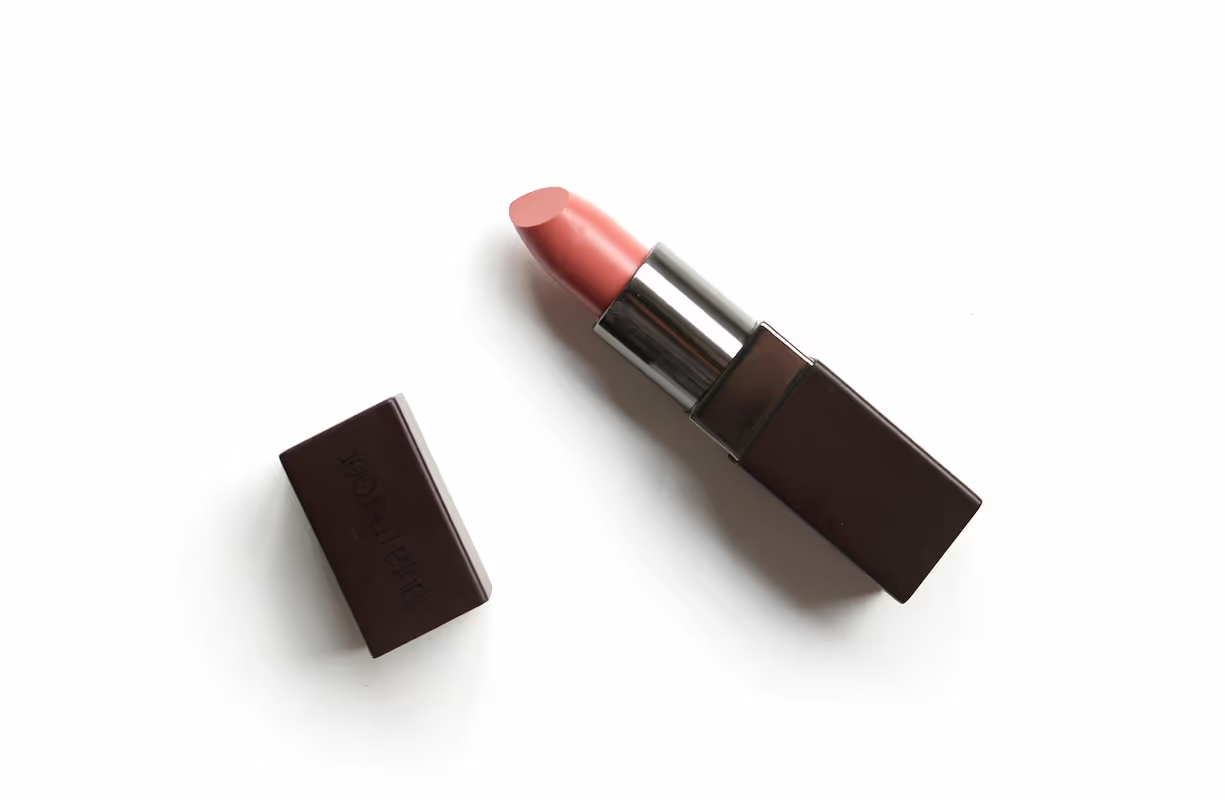
Launching a lipstick line is an exciting venture where your creative flair for color and formulation meets sharp business acumen. The lipstick market is a multi-billion dollar industry, fueled by consistent demand for everything from daily shades and professional wear to bold looks for special events.
This guide will take you through the practical steps of validating your business concept, building supplier relationships, and navigating permits to help you launch a successful lipstick business in the U.S.
Step 1: Plan your business and validate your concept
Find your market niche
Start by identifying a gap in the market. Use Google Trends to compare search interest for terms like "vegan lipstick" versus "long-wear lipstick." Also, analyze TikTok and Instagram to see which shades, finishes, and brand stories get the most engagement from your target audience.
A frequent misstep is to develop products based only on personal preference. To avoid this, create a simple survey on a platform like SurveyMonkey and ask at least 50 potential customers what they look for in a lipstick. This data is invaluable.
Analyze the competition
Once you have a niche, study your future rivals. Look beyond the major players and analyze successful indie brands on retail sites like Sephora and Ulta. Market reports from Mintel can also provide broad industry insights, though they often come with a cost.
Estimate your startup costs
Your initial investment will likely fall between $10,000 and $35,000. A small initial production run of 500-1,000 units per shade can cost $5,000 to $15,000. Custom packaging and branding may add another $2,000 to $7,000 to your budget.
Remember to account for other expenses. Business formation (LLC) and permits typically run $500 to $2,000. A professional e-commerce website can range from $1,000 to $5,000, and an initial marketing push will require at least $1,000.
Here are 3 immediate steps to take:
- Survey at least 50 potential customers on their lipstick preferences.
- Identify and analyze three direct indie competitors and one major brand.
- Draft a preliminary budget that includes formulation, packaging, and legal fees.
Step 2: Set up your legal structure and get licensed
Choose your business structure
You might want to consider forming a Limited Liability Company (LLC). This structure protects your personal assets from business debts and allows profits to pass directly to you without corporate taxes. Filing costs range from $50 to $500, depending on your state.
A C Corporation is another option if you plan to seek venture capital, but it involves more complex tax filings and regulations. For most new lipstick brands, an LLC provides the right balance of protection and simplicity.
Navigate cosmetic regulations
The U.S. Food and Drug Administration (FDA) governs cosmetics under the Federal Food, Drug, and Cosmetic Act. The FDA does not pre-approve lipstick, but it does regulate ingredients and labeling. Your products must be safe for consumers and properly branded.
Many new brands stumble with labeling. The Fair Packaging and Labeling Act requires you to list all ingredients, the net quantity of contents, and the distributor's name and address on your packaging. Get this right to avoid legal issues.
You will also need a general business license from your city or county. In addition, apply for a seller's permit from your state's department of revenue. This permit is usually free and allows you to collect sales tax.
Here are 3 immediate steps to take:
- File for an LLC with your state's Secretary of State office.
- Apply for a seller's permit through your state's department of revenue.
- Review the FDA's Cosmetic Labeling Guide to ensure your packaging is compliant.
Step 3: Secure insurance and manage risk
Key insurance policies for your brand
You will want to secure a few key policies. General liability insurance covers common business risks like property damage. More importantly, product liability insurance protects you if a customer has an adverse reaction to your lipstick. This is a frequent oversight for new cosmetic brands.
Typical coverage for a small brand starts at $1 million. With this in mind, consider providers like Hiscox, The Hartford, or NEXT Insurance, as they specialize in small business needs. Annual premiums for a combined general and product liability policy often range from $500 to $2,500.
If you operate from a commercial space, you will also need commercial property insurance. Once you hire employees, you must have workers' compensation insurance. This covers medical costs and lost wages if an employee gets injured on the job.
Here are 3 immediate steps to take:
- Get quotes for a $1 million product liability policy.
- Compare premium costs from at least two specialist insurers like Hiscox or The Hartford.
- Review policy exclusions to ensure claims related to allergic reactions are covered.
Step 4: Secure your space and equipment
Choose your production space
You can start production from home in a dedicated clean room of at least 100 square feet. A frequent misstep is to overlook contamination risks. To avoid this, follow Good Manufacturing Practices (GMP) guidelines even in a home lab.
If you opt for a commercial space, look for properties zoned for "light industrial" use. When you negotiate a lease, you might want to ask for a shorter initial term of one to two years. This gives you flexibility as your business grows.
Source your equipment and supplies
Your initial lab setup includes a digital scale ($50-$200), a hot plate with a magnetic stirrer ($150-$400), and professional lipstick molds ($100-$500). A homogenizer improves texture, but at $1,000+, it can be a later investment.
For raw ingredients, suppliers like TKB Trading or MakingCosmetics offer low or no minimum order quantities. For packaging, expect suppliers like U-Packaging to require minimum orders of 500 to 1,000 units per component.
Here are 3 immediate steps to take:
- Research your city’s zoning laws for home-based cosmetic manufacturing.
- Price out a starter equipment kit with a scale, hot plate, and molds.
- Request ingredient samples from a supplier like TKB Trading.
Step 5: Set up your payment processing
Choose your payment solution
Your e-commerce platform, like Shopify, will have a built-in payment processor. For in-person sales at pop-up shops or local markets, you need a way to accept payments on the go. Many new owners get tripped up by high transaction fees that eat into their margins.
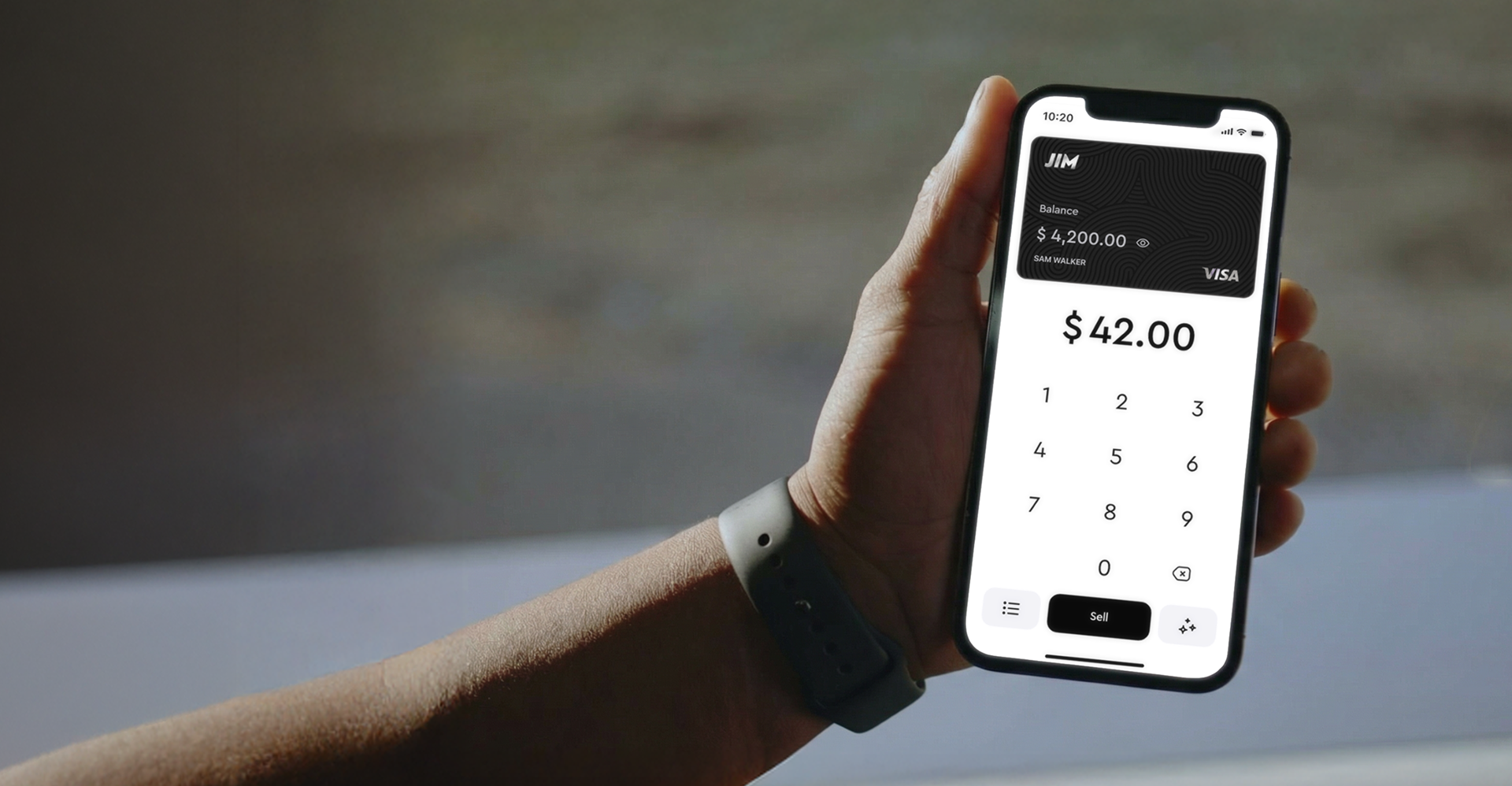
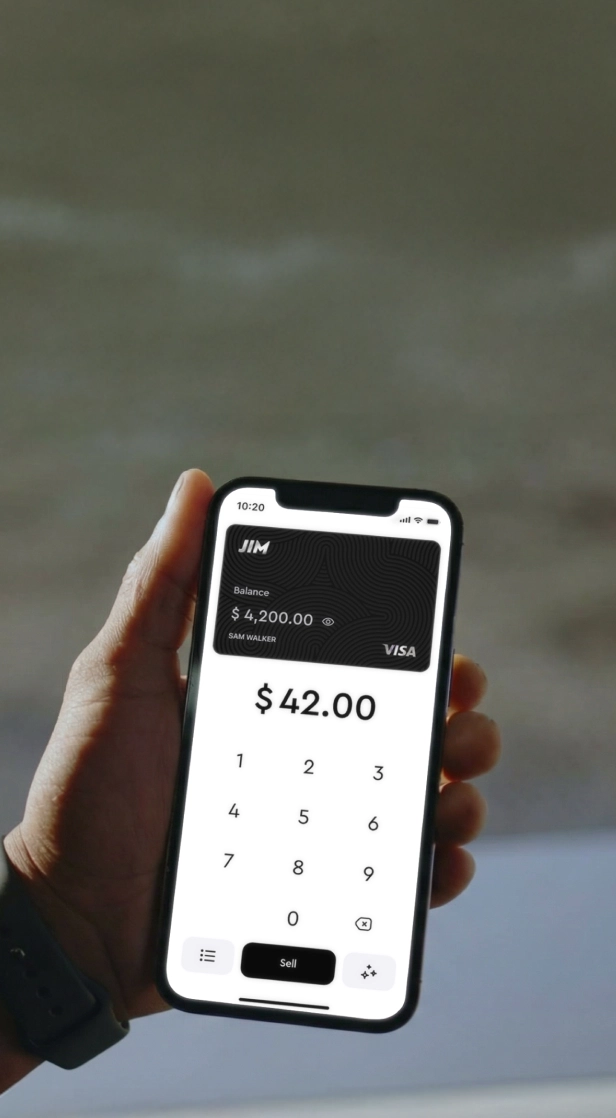
For lipstick brands that need to accept payments on-site, JIM offers a streamlined solution. With JIM, you can accept debit, credit, and digital wallets directly through your smartphone. Just tap and you are done. Other providers often charge 2.5% to 3.5% plus monthly fees.
At just 1.99% per transaction with no hidden costs or extra hardware needed, it is particularly useful for market stalls and pop-up events. You can get started right away.
- Get Started: Download the JIM app for iOS.
- Make a Sale: Type the sales amount, hit sell, and ask your customer to tap their card or device on your phone.
- Access Funds: Your money is available on your JIM card as soon as the sale is done, with no wait for bank transfers.
Here are 3 immediate steps to take:
- Compare the transaction fees of your e-commerce platform's native payment processor.
- Download the JIM app to see how it works for in-person sales.
- Calculate the potential payment processing costs for your first 100 sales to factor into your budget.
Step 6: Fund your launch and manage your money
Estimate your working capital
You will need a cash reserve to cover operations for the first six months. Plan for $15,000 to $25,000. This buffer pays for inventory reorders, ongoing marketing, and unexpected costs while you build sales momentum.
Explore your funding options
Many founders start with personal savings or a loan from family. If you seek external funds, an SBA Microloan is a solid option. These government-backed loans offer up to $50,000, with interest rates typically between 8% and 13%.
To qualify, you need a detailed business plan and a personal credit score above 680. A frequent misstep is to only budget for the initial launch. To avoid a cash crunch, secure enough capital to cover at least three months of operating expenses from day one.
You might also pursue grants. They are competitive but provide non-repayable funds. Look into programs like the Amber Grant for Women or the Cartier Women's Initiative. Each has specific criteria, so review their guidelines carefully.
Here are 3 immediate steps to take:
- Calculate your working capital needs for the first six months.
- Review the eligibility requirements for an SBA Microloan.
- Research the application deadlines for the Amber Grant for Women.
Step 7: Hire your team and set up operations
Your first hires
You will likely be the sole operator at first, but you might want to hire part-time help as orders increase. A Lab Assistant can handle formulation, pouring, and packaging for $15 to $25 per hour. No specific certification is required, but experience in a clean lab environment is a major plus.
Consider a freelance Social Media Manager to handle content and community engagement. This role can cost between $500 and $1,500 per month on retainer. It frees you to focus on product development and business strategy, which is a better use of your time.
Streamline your daily operations
Many new owners get bogged down with manual inventory tracking. Spreadsheets work for a short time but quickly lead to errors. You might want to use inventory management software like Katana or Cin7 Core to track raw materials and finished goods from day one.
As you grow, a good benchmark is to add one part-time employee for every $50,000 to $75,000 in annual revenue. This helps you scale production without hurting your profit margins. Keeping the team lean is a smart move in the early stages.
Here are 3 immediate steps to take:
- Draft a job description for a part-time lab assistant.
- Compare the features of inventory software like Katana and Cin7 Core.
- Outline a monthly content plan to hand off to a freelance social media manager.
Step 8: Market your brand and acquire customers
Build your online presence
Focus your marketing on visual platforms like Instagram and TikTok. You might want to partner with micro-influencers (10k-50k followers), who often have higher engagement rates of 3-6% because their audience trusts their recommendations.
A frequent mistake is to send free products without a clear agreement. Instead, use a simple contract that specifies deliverables, like one Reel and three Stories, to ensure you get the promotion you paid for.
You can also start a blog on your e-commerce site. Write helpful articles like "How to Find Your Perfect Red Lip." This builds authority and improves your search engine ranking over time, which brings in organic traffic.
Use paid ads and email marketing
Once you have some content, run targeted Facebook and Instagram ads. You can start with a small budget of $10-$20 per day. A good customer acquisition cost (CAC) to aim for is between $25 and $40.
Set up an email list from day one with a platform like Klaviyo. You could offer a 10% discount for new subscribers through a website pop-up. This lets you build a direct relationship with potential customers.
Here are 3 immediate steps to take:
- Identify 10 micro-influencers in your niche to contact for collaboration.
- Set up an email capture pop-up on your website that offers a 10% discount.
- Draft three blog post topics that solve common customer problems.
Step 9: Develop your pricing strategy
Determine your cost and markup
First, calculate your cost of goods sold (COGS) for each lipstick. This includes raw materials, packaging, and direct labor. A typical COGS for a new brand is often between $3 and $5 per unit.
With your COGS figured out, you can set your price. A 4x to 6x markup is a solid benchmark for direct-to-consumer sales. If your lipstick costs $4 to produce, a retail price between $16 and $24 is a competitive starting point.
Analyze the market landscape
Many new founders make the mistake of pricing too low. To avoid this, research what your direct competitors charge on their websites and on retail platforms like Sephora. Your price sends a message about your brand's quality and value.
Consider a value-based approach. If your lipstick uses premium organic ingredients or offers a unique long-wear formula, you can justify a price at the higher end of your competitor range. Your price should reflect your unique selling proposition.
Plan for wholesale
You might also want to plan for future wholesale opportunities. Wholesale pricing is typically 50% of the manufacturer's suggested retail price (MSRP). That $20 lipstick would sell to a retailer for $10, which is why a strong initial markup is so important for your margins.
Here are 3 immediate steps to take:
- Calculate the final COGS for one unit of your lipstick.
- Research the retail prices of three direct indie competitors.
- Set a preliminary retail price using a 5x markup on your COGS.
Step 10: Implement quality control and scale production
Establish your quality standards
Consistency is what builds brand trust. For every batch, you must check for color accuracy against a master sample. You should also perform stability tests. Expose a few units to 40-45°C for four to eight weeks to ensure the formula does not separate or change.
While not required, you might want to follow Good Manufacturing Practices (GMP). The international standard for this is ISO 22716. Adherence to these guidelines shows a commitment to safety and quality, which can be a strong selling point for your brand.
Plan your growth path
Many new brands wait until they are overwhelmed to scale. A better approach is to create a growth plan once you hit 100 monthly orders. This is your signal to map out the next steps for expansion before production bottlenecks slow you down.
Once you consistently handle over 500 orders a month, it is time to invest. Consider an automated filling machine, which can cost over $5,000, to speed up production. This is also the point where you might want to move from a home lab to a small commercial space.
Here are 3 immediate steps to take:
- Create a physical master sample for each lipstick shade to use for batch comparisons.
- Research third-party labs that offer cosmetic stability testing and get a price quote.
- Outline a growth plan that details needs for new hires and equipment when you reach 100 monthly orders.
Launching your lipstick line is a journey of creativity and business sense. Remember that your brand's story is just as important as the formula inside the tube. Connect with your audience on a personal level. You have the roadmap, now go build your brand.
As you make your first sales at markets or pop-ups, a simple payment solution helps. JIM turns your phone into a card reader for a flat 1.99% fee, with no extra hardware. Get paid easily from day one. Download JIM.
.avif)