How to start a luxury picnic business: a founder's guide

See article summary
- Plan to invest $2,000 to $7,000 in startup costs for equipment, licensing, insurance, and marketing.
- Register an LLC through your Secretary of State to protect personal assets from business liability.
- Secure general liability insurance with at least $1 million in coverage before your first booking.
- Book clients with a 50% non-refundable deposit and collect the balance 72 hours before the event.
- Use Instagram and Pinterest as your primary portfolio and reinvest 10% of revenue into targeted ads.
A luxury picnic business pairs curated outdoor setups with event-level service, and demand has grown as clients look for shareable, low-stress celebrations. The category is accessible, with startup costs between $2,000 and $7,000, but that low barrier means you compete on aesthetic, reliability, and pricing discipline from day one.
How do you validate a luxury picnic business idea?
Validate by mapping your local market before you spend on inventory. Search Instagram and Facebook for hashtags like #[YourCity]Picnic or #LuxuryPicnic[YourState] to see active competitors, their aesthetic, and what clients in your area book.
Analyze your local competition
Use Google Maps to find event planners and picnic companies nearby. Review their websites and social media to understand their packages, pricing, and booking process. Underpricing is the most common first-year mistake, so calculate your costs first and set a price that reflects your value.
Estimate your startup costs
A lean launch runs between $2,000 and $7,000, based on the equipment, licensing, insurance, and marketing figures below. Start with two or three distinct themes for two to four guests each, so you can test the market before a larger investment.
- Equipment: $1,500 - $4,000 for tables, pillows, blankets, decor, and place settings.
- Business Formation & Licensing: $100 - $700 for LLC registration and local permits.
- Insurance: $400 - $700 for your first year of general liability insurance.
- Basic Marketing: $200 - $1,000 for a simple website and initial social media promotion.
Here are 4 immediate steps to take:
- Create a spreadsheet to compare the packages and prices of three local competitors.
- Draft a preliminary budget that lists your estimated equipment and administrative costs.
- Decide on two initial picnic themes to guide your first inventory purchases.
- Search your city or county clerk's website for business license application forms.
How do you set up the legal structure for a picnic business?
Register a Limited Liability Company (LLC) to separate your personal assets from business debts or lawsuits. An LLC also offers tax flexibility, because profits pass through to your personal income without a separate corporate tax. Source: IRS, Limited Liability Company (LLC).
First, get a free Employer Identification Number (EIN) from the IRS website; you will need this for taxes and banking. Then, register your LLC with your state's Secretary of State. Filing fees vary by state, and in most cases the total cost to register your business is less than $300, though some states charge more. Source: SBA, Launch your business.
Navigate local permits
Check park rules before you book any public space. Contact your city or county's Parks and Recreation department for a commercial use or special event permit. Costs can range from $25 per event to a few hundred dollars for an annual pass.
If you plan to serve any food, even pre-packaged items, your county health department will likely require a food handler's permit. Requirements and costs vary by county, so check their specific rules to stay compliant and avoid fines.
Here are 4 immediate steps to take:
- Apply for your free EIN on the IRS website.
- Visit your Secretary of State's website to review the LLC formation process.
- Find the contact information for your local Parks and Recreation department.
- Check your county health department's website for food handler's permit rules.
What insurance does a luxury picnic business need?
General liability insurance is your first policy. It protects you if a guest gets hurt or you damage property at a venue. Aim for at least $1 million in coverage, which typically costs between $400 and $700 per year for a low-risk event business. Source: Insureon, How much does $1 million liability insurance cost.
Business property insurance covers your tables, pillows, and decor against theft or damage, whether in storage or transit. This is a separate policy from general liability, so list your equipment explicitly.
Additional coverage to consider
As you grow, you may need more protection. If you hire anyone, even part-time, you will need workers' compensation insurance. Your personal car insurance likely will not cover accidents during a delivery, so look into a commercial auto policy.
For coverage tailored to event businesses, request quotes from providers like Thimble, NEXT Insurance, or Hiscox. Compare them on per-occurrence limits, deductible, and whether property coverage extends to items in transit.
<w-table>| Coverage type | What it protects | Typical annual cost | Best for ||---|---|---|---|| General liability ($1M) | Guest injury, property damage | $400 - $700 | Every operator, from day one || Business property | Tables, decor, gear in transit | $200 - $500 | Operators with $2,000+ in inventory || Workers' compensation | Staff injuries during setup | Varies by state | Once you hire your first assistant || Commercial auto | Delivery and transport accidents | $600 - $1,200 | If you transport gear in a vehicle |
Here are 4 immediate steps to take:
- Request a quote for a $1 million general liability policy.
- Ask potential insurers if their property insurance covers items in transit.
- Review your state's requirements for workers' compensation.
- Contact your current auto insurer to ask about business use coverage.
Where do you source equipment and find storage?
You need a dedicated storage space, not a commercial storefront. A 10x10 foot area in a garage or a small storage unit works well. Plan for shelving from the start, because loose inventory slows down packing and leads to missing pieces.
Build your picnic inventory
Start with enough equipment for two distinct themes that can each serve two to four guests. This approach lets you test the market before you commit to more inventory. You can find great starting pieces at stores like HomeGoods, World Market, and even Facebook Marketplace.
Here is a look at some average costs for your initial setup:
- Low-profile tables: $100 - $250 each.
- Pillows and cushions: $15 - $40 each.
- Rugs and blankets: $50 - $150 each.
- Place settings: $20 - $50 per guest for plates, cutlery, and glassware.
Once you have steady bookings, look at wholesale suppliers like WebstaurantStore for tableware. For decor, Alibaba can be an option, but be mindful of minimum order quantities and long shipping times.
Here are 4 immediate steps to take:
- Measure your garage or spare room to confirm you have a 10x10 foot space.
- Create a shopping list for two complete four-person picnic themes.
- Price compare your shopping list items at two retail stores and one online marketplace.
- Research monthly rates for a 10x10 climate-controlled storage unit near you.
How do you set up payment and booking systems?
Your booking process should be simple for clients. Start with a basic contact form on your website or direct messages on Instagram, and respond quickly to secure the booking.
Handle your payment processing
Most picnic businesses require a 50% non-refundable deposit to secure a date, with the remaining balance due 72 hours before the event. This policy protects you from last-minute cancellations and covers initial costs.
You need a system that sends invoices and accepts partial payments. Compare options to find one with clear, low rates, because transaction fees eat into your profit on every sale.
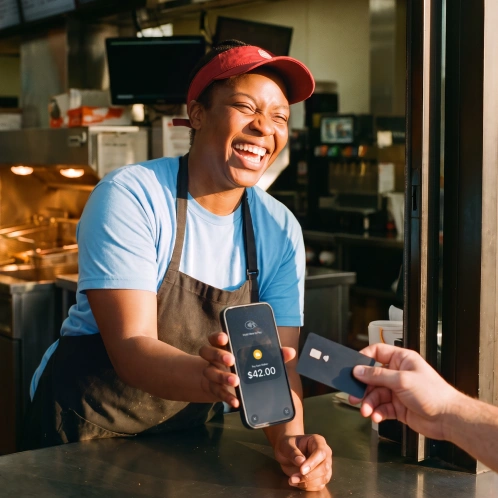
For luxury picnic businesses that need to accept payments on-site or on-the-go, JIM offers a streamlined solution. With JIM, you can accept debit, credit and digital wallets directly through your smartphone, so you can collect the final balance the moment setup is complete.
At just 1.99% per transaction with no hidden costs or extra hardware needed, JIM is particularly useful for on-the-spot upgrades and add-ons. This rate is competitive, as many other providers charge between 2.5% and 3.5% per transaction. For more detail on how flat-rate processing compares to interchange-plus pricing, see best credit card processing for small business.
- Get Started: Download the JIM app for iOS.
- Make a Sale: Type the sales amount, hit sell, and ask your customer to tap their card or device on your phone.
- Access Funds: Your money is available right on your JIM card as soon as the sale is done, with no waiting for bank transfers.
Here are 4 immediate steps to take:
- Create a simple booking form for your website or social media page.
- Draft your payment policy, including a 50% deposit and final payment deadline.
- Research two payment processors, comparing their transaction fees for online invoices.
- Download the JIM app to see how it works for in-person payments.
How do you fund a luxury picnic business?
Plan to have $3,000 to $5,000 in working capital for your first six months. This fund covers ongoing costs like marketing, permit renewals, and replacing damaged inventory. Budgeting only for startup costs leaves you short on cash for daily operations.
Explore your funding options
SBA Microloans are a strong choice for this type of business. These loans go up to $50,000, with interest rates generally between 8% and 13% and a maximum repayment term of seven years. Source: SBA, Microloans.
You might also look for grants that do not require repayment. Check for local small business grants through your city's economic development office. Also, consider national programs like the Amber Grant for Women, which awards funds to female entrepreneurs each month.
Here are 4 immediate steps to take:
- Calculate your estimated working capital needs for the first six months.
- Check your credit score to see if you meet microloan requirements.
- Visit the SBA website to find a local microloan intermediary lender.
- Research the Amber Grant and one local business grant in your area.
How do you build a team and streamline operations?
Build your event team
When you handle more than two events per weekend, consider hiring a part-time Picnic Assistant. This role covers setup, client greetings, and teardown. Pay typically ranges from $18 to $25 per hour, depending on your market.
Classify anyone who helps you correctly under the IRS common-law test: a worker is an employee if you control what will be done and how it will be done, and an independent contractor if they control their own methods. Classification depends on the facts of each relationship, not on what you call the arrangement, so review the rules before your first hire. Source: IRS, Independent contractor (self-employed) or employee?. If your packages include food, your staff will also need a food handler's permit from the local health department.
Set up your operational workflow
To manage schedules, use apps like Homebase or When I Work. For client management, platforms like HoneyBook or Dubsado help you track inquiries, send contracts, and manage payments all in one place.
Create a detailed checklist for setup and teardown. A standard process ensures every picnic meets your brand's quality standard, no matter who sets it up.
Here are 4 immediate steps to take:
- Draft a job description for a part-time Picnic Assistant.
- Research employee classification rules on your state's labor department website.
- Compare the features of HoneyBook and Dubsado for client management.
- Create a photo-based setup checklist for one of your picnic themes.
How do you market a luxury picnic business?
Build your visual portfolio online
Focus your efforts on Instagram and Pinterest, because these platforms are your portfolio. Post high-quality photos of your setups on a consistent schedule, using a mix of local hashtags like #AtlantaPicnic and broader ones like #PicnicGoals. Aim for three to four posts per week rather than daily posting, because consistent quality outperforms volume in a visual niche. Your feed should tell a visual story that a potential client can imagine themselves in.
Blurry or inconsistent photos are the top reason new owners see flat engagement. Treat every post as a sales tool: a clear, well-lit image of a beautiful setup does more work than any caption.
Collaborate with local partners
Partner with local photographers, florists, or bakeries. Offer them a free picnic setup for their own content in exchange for photo credits and social media tags. This strategy expands your reach to their established audiences quickly.
Once you have a few collaborations done, run a giveaway with another local business. A "Perfect Proposal" package with a photographer, for example, is a fast way to gain followers who are your ideal clients.
Use targeted advertising
When you have steady bookings, reinvest about 10% of your revenue into targeted Facebook and Instagram ads. You can target users based on life events like "Anniversary within 30 days" or "Newly Engaged." This puts your service in front of people who need it right now.
Here are 4 immediate steps to take:
- Create a list of 20 local and niche hashtags for your Instagram posts.
- Identify five local photographers or florists to contact for a collaboration.
- Draft a giveaway concept for a "Date Night" or "Proposal" package.
- Outline an audience for your first paid ad on Facebook, focusing on demographics and interests.
How do you price luxury picnic services for profit?
Most luxury picnic businesses use package-based pricing. For example, offer a "Date Night" for two at $275 or a "Birthday Bash" for six at $600. This approach makes it easy for clients to understand what they get.
An alternative is a base setup fee plus a per-person charge. Set a $200 fee for the core setup and add $50 per guest. This model offers flexibility for larger or more customized events.
Calculate your costs and margins
Calculate your cost of goods sold (COGS) for each package instead of copying competitor pricing. COGS includes any single-use items, travel, and a portion of your labor. Aim for a gross profit margin of 60% to 70%: if you price a picnic at $400, your direct costs should not exceed $120 to $160. This benchmark comes from standard event-industry margin practice and ensures you cover overhead and profit.
Boost your revenue with high-margin add-ons. A professional photographer at $150, a bouquet from a local florist at $75, or a charcuterie board at $60 can lift your average order value. Based on typical operator patterns, roughly 25% to 35% of clients add at least one upgrade, so price add-ons to protect margin even when bundled.
Here are 4 immediate steps to take:
- Draft two pricing packages with specific inclusions and prices.
- Calculate the cost of goods sold for one of your standard packages.
- Create a list of three potential add-on services and set their prices.
- Analyze the pricing of two local competitors to position your packages.
How do you maintain quality and scale operations?
As your bookings increase, it is easy to let small details slide. Create a brand standards checklist that defines everything from the exact fold of a napkin to the minimum distance between pillows, so every event stays consistent.
Measure your service quality
After each picnic, send clients a simple feedback form asking them to rate cleanliness, setup accuracy, and communication on a 1 to 5 scale. Use the Scale Readiness checklist: maintain an average score of 4.8 or higher, and treat anything below that as a signal to fix your process before you book more dates. This data shows you exactly where to improve.
Get into the habit of taking a final, high-quality photo of the setup before you leave. This serves as your own quality control check and confirms the setup matches your portfolio images. It also gives you more content for social media.
Know when to grow
Growth should be data-driven. The Scale Readiness checklist uses two thresholds: once you consistently handle more than three picnics per weekend, it is time to hire your first part-time assistant. If you turn down two or more clients a week due to low inventory, it is time to buy a new theme.
To manage the increased workload, client management systems like HoneyBook or Dubsado become very helpful. They automate inquiries and payments, which frees you up to focus on delivering a high-quality experience instead of getting stuck in administrative tasks.
Here are 4 immediate steps to take:
- Create a brand standards checklist with photo examples for your setups.
- Draft a short, post-event client feedback survey with a 1 to 5 rating scale.
- Set a benchmark for hiring, such as booking four or more picnics in one weekend.
- Decide on a percentage of monthly profit (such as 20%) to reinvest in new inventory.
Consistency in every detail, from napkin folds to client communication, is what separates a weekend hobby from a business that scales. For broader guidance on getting the fundamentals right, see how to start a small business.
Disclosure: This article is published by JIM, a payment platform for small businesses. The payment tool mentioned in Step 5 is a JIM product.
When you start to book clients, a simple payment process helps. JIM turns your phone into a card reader for a flat 1.99% fee, no hardware needed. It makes getting paid on the spot easy. To compare it with other small business payment options before you decide, see payment methods for small businesses. Download JIM to get started.
Frequently Asked Questions
Is a luxury picnic business profitable?
How much can you make with a luxury picnic business?
Do I need a license to run a luxury picnic business?
What happens if it rains on the day of a picnic?
How do I accept payments for a luxury picnic business?



Sell and get paid in seconds with Jim