Starting a mobile teeth whitening business is a rewarding venture that combines an eye for detail and strong people skills with smart business sense. The market for a brighter smile is a multi-billion dollar industry, with steady demand from clients preparing for weddings, special events, and professional appearances.
This guide will take you through the practical steps of validating your business concept, securing funding, obtaining necessary licenses, and acquiring the right equipment to help you launch a successful mobile teeth whitening business in the U.S.
Step 1: Plan your business and validate the market
Start by defining your service area. Use the U.S. Census Bureau website to look at income levels and age demographics in your target zip codes. Also, search social media for local hashtags like #bridetobe or #[YourCity]events to gauge potential client interest.
Analyze your local competition
Use Google Maps to find every business that offers teeth whitening in your area. Look at mobile services, but do not forget dental offices and beauty salons. Many new owners make the mistake of only watching other mobile operators, ignoring their biggest competitors.
Review their websites and social media. Note their service packages, prices, and booking availability. This research gives you a baseline for your own pricing and service structure.
Estimate your startup costs
With a clearer picture of the market, you can map out your initial investment. Budgeting for these expenses upfront helps prevent surprises. Your primary costs will fall into a few main categories.
- Training and Certification: $500 - $2,500
- Professional LED Lamp: $300 - $2,000
- Initial Supply Kit: $400 - $1,000 (includes gels, trays, and safety gear)
- Business Insurance and Licensing: $300 - $800
- Portable Client Chair: $150 - $400
Your total startup investment will likely land between $1,650 and $6,700. This range depends on the quality of equipment and the comprehensiveness of the training you choose.
Here are 3 immediate steps to take:
- Research the demographics for three target zip codes you plan to serve.
- Create a list of 5-10 local competitors with their starting prices.
- Draft a preliminary budget based on the cost estimates provided.
Step 2: Establish your legal structure and get licensed
Choose your business structure
An LLC (Limited Liability Company) is a popular choice. It separates your personal assets from business debts and lawsuits. This structure provides protection without the complex requirements of a corporation, which is often overkill for a solo operator.
For taxes, an LLC offers pass-through taxation. This means business profits and losses pass through to your personal tax return. You avoid the double taxation that corporations can face. Setting up an LLC costs between $50 and $500 depending on your state.
Navigate licensing and regulations
Once your LLC is formed, get a free Employer Identification Number (EIN) from the IRS website. You will need this for taxes and business banking. Think of it as a Social Security number for your business.
Now for the tricky part: state rules. Teeth whitening regulations vary dramatically. Many new owners make the mistake of assuming it is unregulated in their area. This can lead to fines or being shut down by the State Board of Dentistry.
You must contact your state’s Board of Dentistry directly to understand the specific laws. Some states classify this service as dentistry, while others place it under cosmetology or have no specific rules. This single phone call or website visit is non-negotiable.
You will also need a general business license from your city or county. These typically cost $50 to $100 per year. Processing times are usually just a few business days, so you can get this sorted out quickly.
Here are 4 immediate steps to take:
- Decide on an LLC for liability protection and file with your state.
- Apply for a free EIN on the official IRS website.
- Check your state’s Board of Dentistry website for teeth whitening laws.
- Contact your city hall for a local business license application.
Step 3: Secure your business insurance
Protect your new venture with the right insurance. You will need two primary policies. General liability covers accidents, like a client who trips over your equipment. Professional liability protects you if a client has a bad reaction to the whitening gel or is unhappy with the results.
A good starting point is $1 million in coverage for each policy. Many insurers bundle these together. Annual premiums for a combined general and professional liability policy typically range from $400 to $900.
Find the right provider
Work with insurers who understand the beauty industry. You might want to get quotes from providers like Hiscox, Insureon, or Beauty & Bodywork Insurance (BBI). They offer policies tailored to services like teeth whitening, which a general agent may not understand.
A frequent oversight is vehicle insurance. Your personal auto policy likely does not cover business use. You must add a commercial rider or get a separate commercial auto policy to be fully protected while you drive to clients. Also, consider inland marine insurance to cover your equipment against theft or damage.
Here are 4 immediate steps to take:
- Request quotes for a combined liability policy from two specialized insurers.
- Confirm your policy includes at least $1 million in professional liability coverage.
- Ask your auto insurer about adding a commercial rider to your personal policy.
- Inquire about inland marine insurance to cover your equipment on the go.
Step 4: Select your equipment and supplies
As a mobile business, you do not need a commercial location. This saves you from dealing with zoning laws or lease negotiations. A clean, climate-controlled area in your home is perfect for storing your supplies and equipment securely.
Invest in quality core equipment
Your LED lamp is the centerpiece of your service. You might want to budget between $300 and $2,000 for a professional-grade floor model. Many new technicians buy cheap lamps, which can cause uneven whitening. A good lamp ensures consistent, professional results for your clients.
A portable client chair is another key purchase. Look for one that is lightweight, easy to clean, and comfortable. Expect to spend $150 to $400. A chair that weighs under 30 pounds will make your mobile setup much easier to handle.
Source your consumable supplies
Your whitening kits will be a recurring expense. These include whitening gel, cheek retractors, and vitamin E swabs. Reputable U.S. suppliers like WSD Labs or Beaming White offer starter packages. Kits typically cost $15 to $30 per client.
A frequent mistake is ordering cheap gels from overseas marketplaces to save money. These products are often unregulated and can cause severe tooth sensitivity, which can damage your reputation before you even get started. Stick with established suppliers who provide product liability insurance.
Here are 4 immediate steps to take:
- Compare professional LED lamps from two different suppliers.
- Select a lightweight, portable client chair that weighs under 30 lbs.
- Request starter kit pricing from a U.S.-based supplier like WSD Labs.
- Designate a clean, climate-controlled space in your home for storage.
Step 5: Set up your payment system
You will need a reliable way to accept payments on the spot. Most clients expect to pay with a credit card or digital wallet. A frequent mistake is to rely only on cash or bank transfers, which can seem unprofessional and limit your client base.
Handle deposits to secure bookings
You might want to require a 50% non-refundable deposit to secure an appointment. This simple step protects your schedule from last-minute cancellations and no-shows. You can collect this deposit through a payment link sent via email or text after booking.
Choose a mobile-friendly payment processor
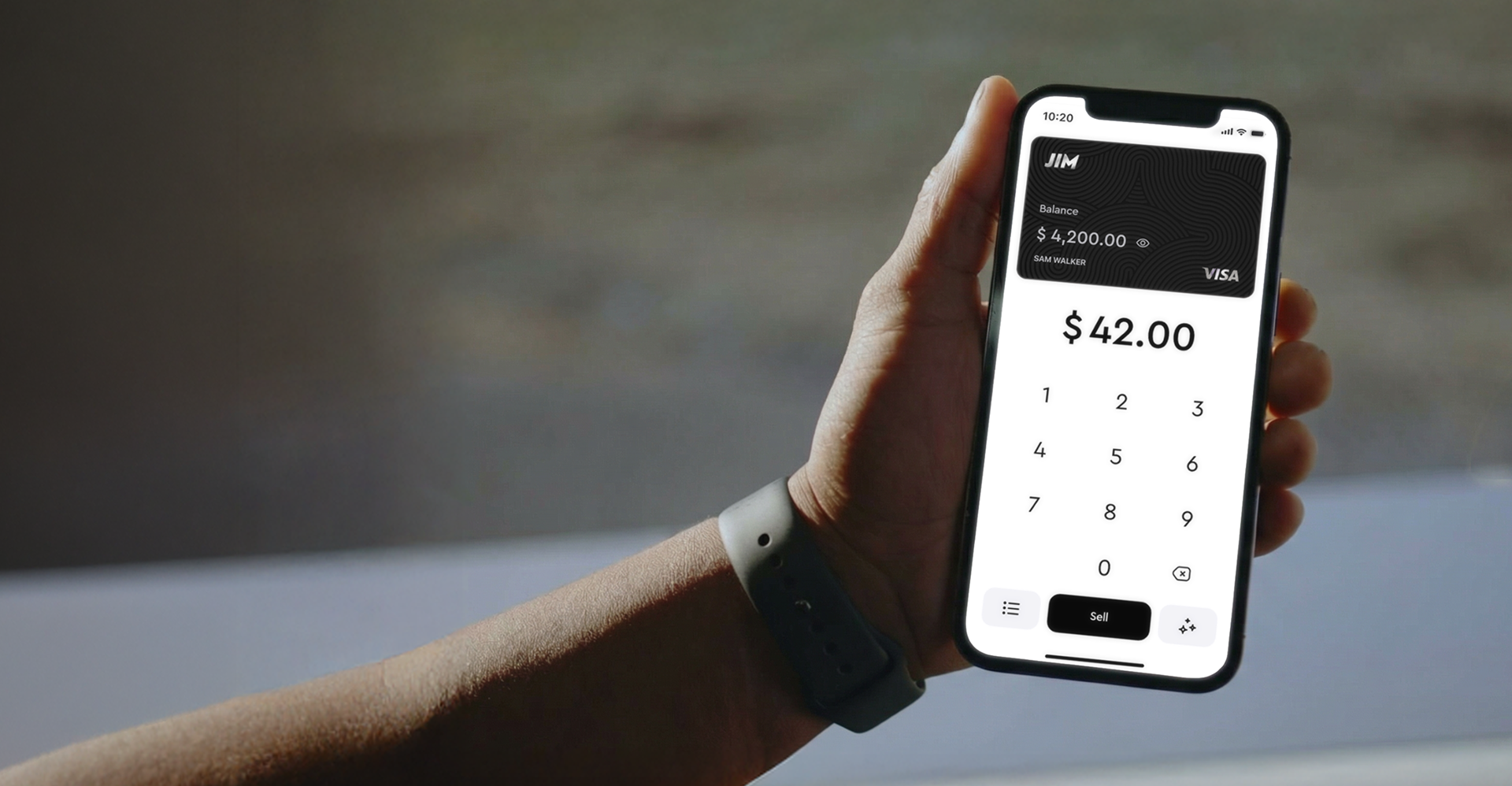
Look for a payment solution with low transaction fees and no monthly charges. Many providers charge between 2.5% and 3.5% per transaction, which adds up. For a mobile business that needs to accept payments on-site, JIM offers a streamlined solution.
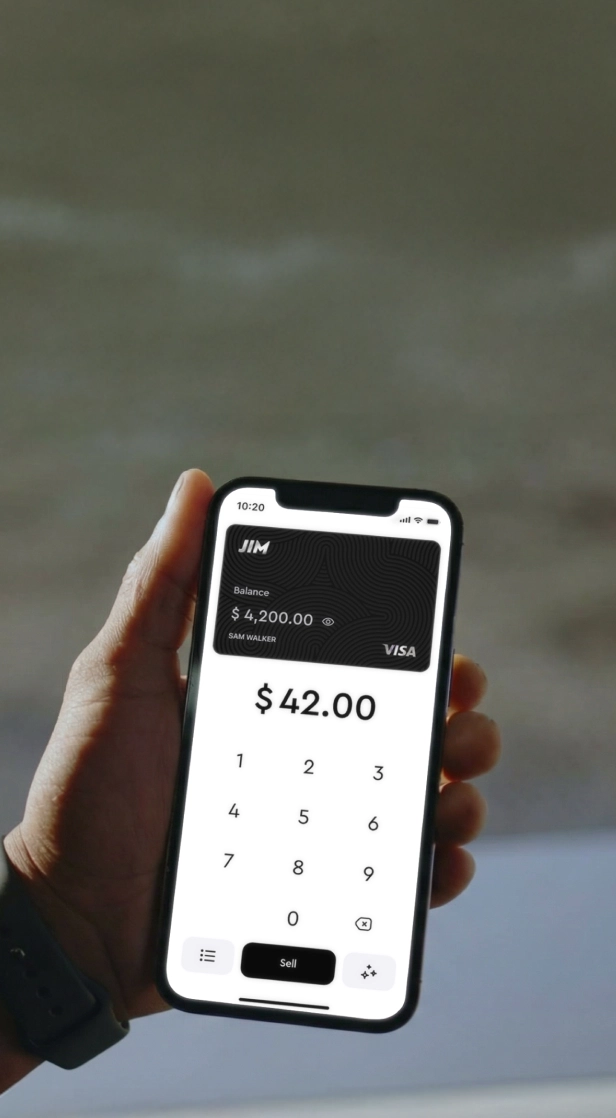
With JIM, you can accept debit, credit, and digital wallets directly through your smartphone. At just 1.99% per transaction with no hidden costs or extra hardware needed, it's particularly useful for taking final payments chair-side without extra equipment.
Getting started is straightforward:
- Get Started: Download the JIM app for iOS.
- Make a Sale: Type the sales amount, hit sell, and ask your customer to tap their card or device on your phone.
- Access Funds: Your money is available right on your JIM card as soon as the sale is done, with no waiting for bank transfers.
Here are 3 immediate steps to take:
- Decide on your deposit policy, such as a 50% non-refundable fee.
- Compare payment processor fees, looking for rates under 2%.
- Download the JIM app to explore its features on your phone.
Step 6: Fund your business and manage finances
Since startup costs are relatively low, you might use personal savings. Another option is a business credit card with a 0% introductory APR. This can help you purchase equipment and supplies without accruing interest for 12 to 18 months, giving you time to build cash flow.
Explore small business loans
For a more structured loan, the SBA Microloan program is a great fit. These loans go up to $50,000, but a new mobile business typically needs between $5,000 and $10,000. Interest rates usually fall between 8% and 13%. Lenders like Accion Opportunity Fund specialize in these smaller loans.
Calculate your working capital
You need cash for daily operations for the first six months. Many new owners focus only on initial equipment costs and then run out of money for marketing or supply refills. This can stop your business before it gains momentum. Your working capital should cover:
- Monthly supply costs (gels, kits)
- Insurance premiums
- Fuel and software fees
- Marketing expenses
If your monthly operating costs are $800, you should have about $4,800 set aside. Keep these funds in a dedicated business bank account to make tax time much simpler.
Here are 4 immediate steps to take:
- Open a dedicated business checking account to keep finances separate.
- Research business credit cards with 0% introductory APR offers.
- Calculate your estimated working capital for the first six months.
- Look up one SBA microloan intermediary that serves your state.
Step 7: Build your team and streamline operations
You will likely start as a solo operator. This is a smart move. It allows you to master every part of the business, from client interaction to the whitening process itself, before you take on the responsibility of managing staff.
Hiring your first technician
Once you have more bookings than you can handle, it is time to hire. Look for a "Teeth Whitening Technician." This role involves client consultations, performing treatments, and maintaining sterile equipment. Expect to pay between $22 and $35 per hour, plus tips.
A common mistake is to hire based on a certificate alone. While you should require proof of training, you also need to see their skills in action. Ask candidates to perform a mock service to assess their technique and client-side manner.
Choosing your scheduling software
To manage appointments, you might want to use a dedicated scheduling platform. Systems like Acuity Scheduling or Square Appointments let clients book online, pay deposits, and receive automated reminders. This reduces no-shows and administrative work, freeing you up to focus on clients.
As a benchmark, a full-time technician should generate service revenue equal to at least three times their hourly wage. This ratio helps you decide when it is financially sound to expand your team and take on more appointments.
Here are 4 immediate steps to take:
- Map out your first six months of business as a solo operator.
- Research local pay rates for technicians on job sites like Indeed.
- Create a free trial account with Square Appointments to test its features.
- Draft a job description for a future Teeth Whitening Technician role.
Step 8: Market your business and get clients
Build your brand on social media
Focus your efforts on Instagram and Facebook. These visual platforms are perfect for showcasing your work. Post high-quality before-and-after photos of your clients. A common mistake is to use poor lighting, which makes results look less impressive. Use natural light whenever you can.
You might want to collaborate with local micro-influencers, like wedding photographers or event planners. Offer them a complimentary session in exchange for a post. This can get your service in front of hundreds of potential clients in your target demographic.
Create local partnerships
Reach out to businesses that serve your ideal client. Bridal shops, hair salons, and boutique fitness studios are great places to start. You could offer a 10% referral fee for every client they send your way. This creates a low-cost marketing channel with warm leads.
When you run paid ads, expect a customer acquisition cost (CAC) between $50 and $150. Start with a small budget of $100 on Facebook, targeting users with interests like "engaged" or "upcoming event." Track your results to see what works before you spend more.
Here are 4 immediate steps to take:
- Set up a business Instagram account and post five high-quality before-and-after photos.
- Identify three local salons or bridal shops to approach for a partnership.
- Draft a simple referral offer, such as a 10% commission for booked clients.
- Budget $100 for a Facebook ad campaign targeting engaged couples in your service area.
Step 9: Set your pricing and packages
Structure your service offerings
Most mobile technicians offer a 60-minute session as their core service. You might want to price this between $149 and $299, depending on your market. Also, consider an express 30-minute touch-up for returning clients, priced around $99.
Group packages for bridal parties or corporate events are another great option. For example, you could offer a 15% discount for groups of three or more. This encourages referrals and fills your schedule with multiple clients at one location, which saves you travel time.
Calculate your profit margins
Your cost per treatment is your supply kit cost, which is typically $15 to $30. If you charge $199 for a session that costs you $25 in supplies, your gross profit is $174. You should aim for a gross margin of 70-80% on each service to stay profitable.
A mistake many new owners make is forgetting to account for travel. This can quickly reduce your actual earnings. You might want to add a travel fee, perhaps $25, for any client located more than 15 miles from your home base.
Here are 4 immediate steps to take:
- Price a standard 60-minute session based on your competitor research.
- Create a group package with a 15% discount for three or more clients.
- Calculate your cost per treatment using your chosen supplier’s price list.
- Establish a travel fee policy for clients outside a 15-mile radius.
Step 10: Maintain quality and scale your operations
Define your quality standards
You need a consistent way to measure results. Use a dental shade guide to record the client’s tooth color before and after every session. This objective data proves your service works and helps you refine your technique over time.
You might also send a simple follow-up text asking clients to rate their experience from 1 to 5. This gives you immediate feedback. A rating below 4 is a chance to understand what went wrong and improve your process before a negative review appears online.
Know when to grow
When you consistently book 10-15 appointments per week, it is a strong signal to consider hiring. A good benchmark is that a technician’s service revenue should be at least three times their hourly wage. This ensures new hires are profitable.
Many owners make the mistake of hiring before their systems are ready. Before you post a job, confirm your scheduling software, like Square Appointments, can manage multiple staff calendars. This prevents double-bookings and administrative headaches as you expand.
Here are 4 immediate steps to take:
- Create a standard for taking before-and-after photos with a shade guide.
- Draft a one-question client feedback survey to send after appointments.
- Set a weekly booking goal, like 10 appointments, as your trigger to start the hiring process.
- Check if your scheduling software supports multiple staff members.
You now have a clear path to start your mobile teeth whitening service. Your success will depend on the client experience you create, not just the treatment itself. With this plan, you are ready to build your business one bright smile at a time.
As you get paid, keep your process simple. JIM turns your phone into a card reader to accept payments anywhere, with no extra hardware. The flat 1.99% fee keeps costs predictable. Download JIM to complete your setup.
.avif)