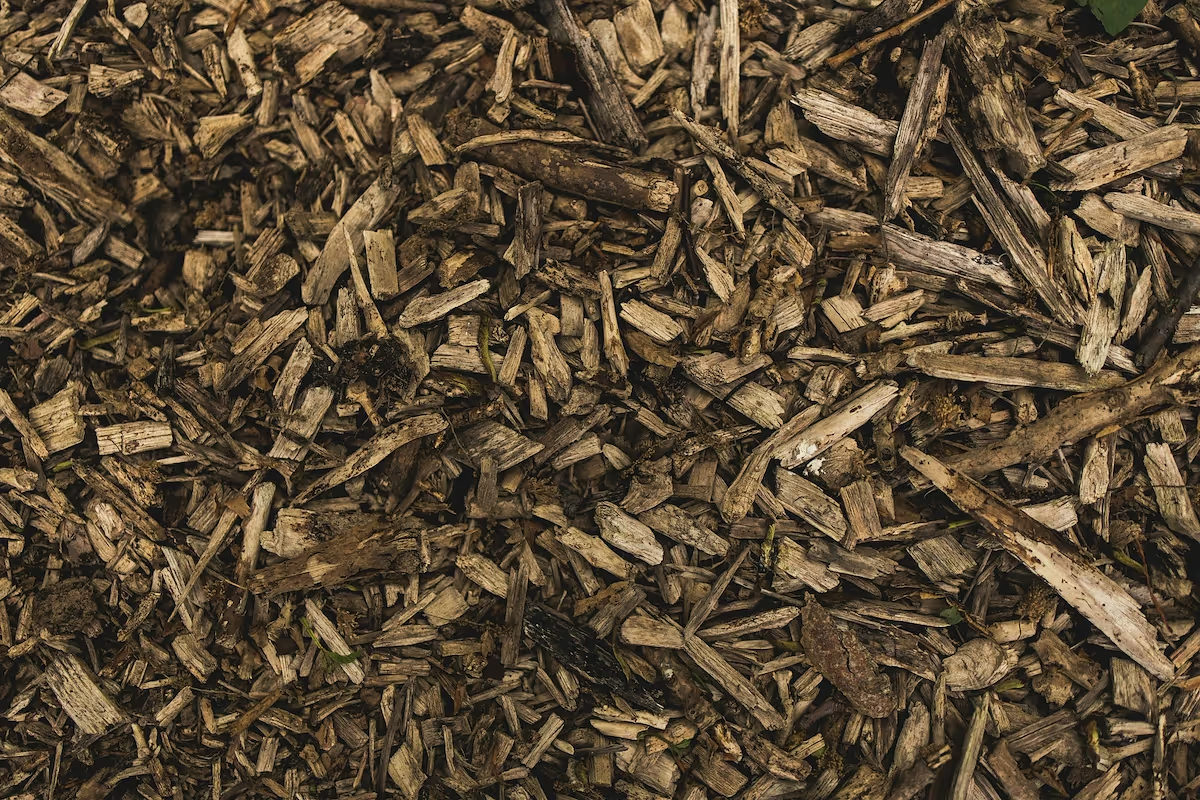
Starting a mulch business is a rewarding venture that combines a love for landscaping with sharp business acumen. The industry is worth billions, driven by steady demand from residential gardens, commercial landscapers, and public parks.
This guide will take you through the practical steps of securing funding, obtaining necessary permits, acquiring equipment, and building supplier relationships to help you launch a successful mulch business in the U.S.
Step 1: Create your business plan and validate the market
Start by talking to potential customers. Contact local landscaping companies, garden centers, and property management firms. Ask them about their current mulch suppliers, pricing, and what they look for in a product. This direct feedback provides invaluable market intelligence.
Analyze your competition
Use Google Maps to find all mulch suppliers in your target service area. Review their websites for product types, prices per cubic yard, and delivery fees. A frequent oversight is to ignore smaller, part-time operators who can be significant local competitors.
Estimate your startup costs
Your initial investment will be substantial, primarily for equipment. When you budget for a grinder or delivery truck, remember to include funds for ongoing maintenance and fuel. These operational costs can catch new owners by surprise if not planned for.
- Equipment (Grinder, Loader, Truck): $90,000 - $210,000
- Initial Raw Materials (Wood, Bark): $5,000 - $15,000
- Permits and Insurance: $3,500 - $9,000
- Total Estimated Startup Costs: $98,500 - $234,000
With these figures, you can approach funding conversations with a clear financial picture. This detailed budget shows you have done your homework and understand the capital needed to launch and operate successfully.
Here are 3 immediate steps to take:
- Draft a list of 10 local landscapers and garden centers to interview about their needs.
- Create a spreadsheet comparing the pricing and services of at least three local competitors.
- Build a preliminary budget that includes equipment purchase prices and estimated monthly maintenance costs.
Step 2: Set up your legal structure and get licensed
Choose your business structure
You should consider forming a Limited Liability Company (LLC). This structure protects your personal assets if the business faces debt or lawsuits. It also offers pass-through taxation, which avoids the double taxation that corporations often face.
Once you decide on a structure, get a free Employer Identification Number (EIN) from the IRS website. You will need this number for tax purposes and to open a business bank account. The process is online and takes just a few minutes.
Secure state and local permits
Next, register your business with your state's Secretary of State. You will also need a general business license from your city or county. These requirements vary, so check their official websites for forms and fees, which typically range from $50 to $200.
Mulch production often requires environmental permits. Contact your state's Department of Environmental Quality about air quality permits for dust control and solid waste permits. A frequent oversight is ignoring these rules, which can lead to fines. Expect costs of $500-$2,000 and 4-8 week processing times.
Here are 3 immediate steps to take:
- File for an LLC with your state's Secretary of State.
- Apply for a free Employer Identification Number (EIN) directly from the IRS.
- Contact your local planning department and state environmental agency to list all required permits.
Step 3: Secure insurance and manage risk
Choose your insurance policies
To protect your business, you need a few key insurance policies. General Liability is a must, with coverage of $1 million to $2 million. This protects you if a customer is injured on your property. Expect annual premiums of $700 to $1,800.
You will also need Commercial Auto insurance for your delivery truck. This can range from $4,000 to $8,000 per vehicle annually. If you hire employees, Workers' Compensation is legally required. Its cost is a percentage of your payroll.
Protect your assets and plan for risks
Do not overlook Inland Marine insurance. This policy covers your grinder and loader against theft or damage, even when they are at a job site. Many new owners skip this, which exposes their most valuable assets to significant financial loss.
Mulch businesses have unique risks, such as the potential for spontaneous combustion in large, decomposing mulch piles. Your insurance plan should account for fire risk and property damage. Dust control is another area that requires attention for health and safety compliance.
With this in mind, seek out insurers who understand the landscaping supply industry. You might want to consider providers like Acuity Insurance, Federated Insurance, or The Hartford. An agent familiar with your operations can find better coverage and rates.
Here are 3 immediate steps to take:
- Request quotes for a $1 million General Liability policy from at least two providers.
- Ask an insurance agent specifically about an Inland Marine policy to cover your equipment.
- Contact an insurer like Acuity or Federated Insurance to discuss a comprehensive business owner's policy.
Step 4: Secure your location and buy equipment
Find your operational site
You will need a site of at least one to two acres. This space accommodates raw material piles, finished mulch, and equipment. Look for properties zoned for industrial or heavy commercial use to comply with local ordinances regarding noise and dust.
When you negotiate a lease, aim for a 3-5 year term to lock in your rate. A frequent mistake is to overlook site access. Confirm that large delivery trucks can enter and exit easily without issue.
Purchase your core machinery
Your main machinery includes a grinder, a loader, and a delivery truck. A used horizontal grinder from a brand like Vermeer or Morbark can cost $50,000 to $150,000. A reliable front-end loader will run $30,000 to $60,000.
Some new owners buy underpowered grinders to save money, only to find production cannot keep up with demand. It is better to invest in a machine rated for your target output. For colorants, suppliers like Colorbiotics often sell by the pallet.
Here are 3 immediate steps to take:
- Identify three potential sites zoned for industrial use in your area.
- Get quotes for a used horizontal grinder and a front-end loader from equipment dealers.
- Contact two local tree service companies to discuss sourcing raw wood materials.
Step 5: Set up your payment systems
For commercial clients like landscapers, Net 30 payment terms are standard. Residential customers, however, usually pay upon delivery. You should be ready to accept cash, checks, and credit cards. Not taking cards can cost you sales, especially with homeowners who expect that convenience.
Choose your payment processor
For a mulch business that needs to accept payments on-site, JIM offers a streamlined solution. With JIM, you can accept debit, credit, and digital wallets directly through your smartphone. Just tap and you are done. Many processors charge 2.5% to 3.5%, but JIM is just 1.99% per transaction with no hidden costs.
This is particularly useful when you make a delivery and need to collect payment on the spot. There is no extra hardware needed. Getting started is straightforward:
- Get Started: Download the JIM app for iOS.
- Make a Sale: Type the sales amount, hit sell, and ask your customer to tap their card or device on your phone.
- Access Funds: Your money is available on your JIM card as soon as the sale is done, with no wait for bank transfers.
Here are 3 immediate steps to take:
- Draft your payment terms for both residential and commercial customers.
- Download the JIM app to see how it works for on-site payments.
- Create a simple invoice template that clearly states your payment terms.
Step 6: Secure funding and manage your finances
With your business plan ready, you can pursue funding. Lenders favor asset-heavy businesses like mulch production. You might explore an SBA 7(a) loan or a specific equipment financing loan, which uses the machinery itself as collateral.
For an SBA loan up to $250,000, expect interest rates around the Prime Rate plus 3-5%. Lenders will look for a credit score above 680 and a down payment of 10-20%. A frequent oversight is not having this personal capital ready, which can stall an application.
Calculate your working capital
Your loan should cover more than just equipment. You need working capital for the first six months to pay for fuel, insurance, and raw materials before revenue becomes consistent. Budget for at least $50,000 to $80,000 to cover these operational expenses without stress.
Also, look into programs like the USDA Rural Business Development Grant if your site is in an eligible area. These grants do not require repayment and can provide a significant financial cushion. Check the USDA's eligibility maps online to see if you qualify.
Here are 3 immediate steps to take:
- Contact your local Small Business Development Center (SBDC) for free help with your SBA loan application.
- Create a detailed 6-month operating budget to determine your exact working capital needs.
- Research two lenders that offer specific equipment financing for heavy machinery.
Step 7: Hire your team and set up operations
You will likely need two key employees to start: an Equipment Operator and a Delivery Driver. These roles handle the core production and delivery tasks, which frees you up to manage sales and business growth.
Define roles and compensation
Your Equipment Operator will run the grinder and loader. They are responsible for production and site safety. Expect to pay $20-$25 per hour. Your Delivery Driver handles customer drop-offs. This person is the face of your company, so good communication skills are a plus.
For drivers, a Commercial Driver's License (CDL) may be required depending on your truck's weight. A frequent misstep is not verifying a driver's record. Always check their driving history to keep your insurance rates manageable. A driver's salary typically falls between $45,000 and $60,000 annually.
Streamline your daily workflow
To manage your crew, you might use scheduling software like Homebase. It helps track hours and simplifies payroll. As you grow, aim to keep your total payroll costs between 25% and 35% of your gross revenue. This ratio is a healthy benchmark for the industry.
Here are 3 immediate steps to take:
- Draft job descriptions for an Equipment Operator and a Delivery Driver.
- Check your state's DMV for CDL requirements based on your truck's weight.
- Explore scheduling software like Homebase to see how it can simplify payroll.
Step 8: Market your business and get customers
Focus first on commercial landscapers, as they provide consistent, high-volume orders. A single landscaping company can generate $5,000 to $10,000 in annual revenue. You might offer a 15% discount on their first bulk order to persuade them to switch from their current supplier.
Establish your digital footprint
Your first marketing action should be to set up a free Google Business Profile. This gets your business on Google Maps. Upload high-quality photos of your mulch piles and delivery truck. Ask your initial customers for reviews, as this builds trust with prospects.
You do not need a complicated website to start. A simple one-page site built with Squarespace or Wix is sufficient. Clearly display your products, price per cubic yard, and delivery area. Make sure your phone number is easy to find.
Use direct outreach and local ads
A frequent mistake is to wait for the phone to ring. You should actively pursue leads. Print professional flyers with your pricing and visit active landscaping job sites. Handing your information directly to a crew foreman is far more effective than a cold email.
You can also run targeted Facebook ads aimed at users interested in "landscaping" or "gardening" within a 20-mile radius of your site. A budget of $10-$15 per day can build local brand awareness and generate residential leads.
Here are 3 immediate steps to take:
- Create your Google Business Profile and upload at least five photos of your products.
- Design a one-page flyer with your product list, pricing, and a new customer discount.
- Identify three large landscaping companies in your area to approach with a direct offer.
Step 9: Set your pricing and profit margins
Establish your pricing model
First, calculate your cost per cubic yard. This includes raw wood, colorant, fuel for the grinder, and labor. A clear understanding of your costs prevents you from underpricing your product. Many new owners forget to factor in equipment maintenance, which can quickly eat into profits.
Aim for a gross profit margin of 40-60%. For example, if your cost to produce one yard is $15, your price should be between $25 and $37.50. This buffer covers your overhead and ensures a healthy business.
You might want to set up a tiered system. Offer a standard retail price for homeowners and a discounted wholesale price for landscapers who buy in bulk. This encourages repeat business from high-volume clients. Also, price delivery separately, often as a flat fee around $50-$100 within a set radius.
Analyze competitor pricing
With your costs figured out, research the local market. Call at least three competitors to ask for their prices per yard for different mulch types. A frequent oversight is to forget to ask about delivery fees, which are a key part of the customer's total cost.
Some new owners make the mistake of trying to be the cheapest option. This often leads to a price war you cannot win. Instead, you can compete on product quality, color consistency, or faster delivery times. Let your service justify your price.
Here are 3 immediate steps to take:
- Calculate your total cost to produce one cubic yard of your main mulch product.
- Research the retail price and delivery fees for three local competitors.
- Draft a price sheet that lists separate rates for retail customers and wholesale clients.
Step 10: Maintain quality and scale your operations
Implement quality control standards
To stand out, you might pursue certification from the Mulch & Soil Council (MSC). This shows customers your product is free of contaminants and accurately labeled. It is a strong selling point against less professional competitors.
Create a daily checklist for your operator. It should include checks for color consistency, moisture levels, and the absence of foreign materials like plastic. Some owners get lax on screening raw materials, which can quickly damage a hard-won reputation.
Plan your growth strategy
You should hire another driver when you find yourself spending more than 15 hours a week on deliveries instead of sales. Consider a second grinder or loader when your current equipment operates at 80% capacity for a month straight.
Once you have two or more delivery trucks, fleet management software like Samsara can help track vehicles and optimize routes. This reduces fuel costs and improves delivery times, which keeps customers happy and your operation efficient.
Here are 3 immediate steps to take:
- Review the certification requirements on the Mulch & Soil Council website.
- Create a daily quality control checklist for your equipment operator.
- Set a revenue or production trigger for when you will hire your next employee.
You have a clear path to launch your mulch business. Remember, your product's consistency is your best marketing, so pay close attention to screening and colorant ratios. With careful planning and execution, you are well-equipped to turn piles of wood into a profitable enterprise.
And when you make those first sales, getting paid should be easy. JIM lets you take card payments right on your smartphone for a simple 1.99% fee, with no extra hardware needed. Download JIM and you are ready for business.
.avif)