Starting a mural painting business is a rewarding venture that combines artistic talent with business savvy. The demand for unique, large-scale art is steady, with opportunities from local businesses, public art programs, and even residential clients.
This guide will take you through the practical steps of validating your business concept, obtaining necessary licenses, acquiring the right equipment, and building supplier relationships to help you launch a successful mural painting business in the U.S.
Step 1: Plan your business and validate your idea
Scout your local area first. Walk through commercial districts and note businesses like cafes, gyms, or retail shops that have large, blank walls. Also, check your city's official website for public art programs or "Requests for Proposals" (RFPs).
Next, see who your competition is. Use Google Maps to search for "mural artists near me." You should also browse Instagram using hashtags like #[YourCity]Murals to analyze their styles, typical clients, and how they present their work.
Estimate your startup costs
Your initial investment will vary. A frequent misstep is underestimating material needs for large projects. A single mural can require a surprising amount of paint, so it's wise to factor a 15-20% buffer into your quotes. Here is a typical breakdown.
- Supplies: Expect to spend $500 to $2,000 on quality paints, brushes, and drop cloths.
- Equipment: A good projector costs $300-$600. Scaffolding or lift rentals can add $200-$500 per day to a project's cost.
- Business Formation: Set aside $300 to $800 for your business license and general liability insurance.
Here are 3 immediate steps to take:
- Identify 10 potential local businesses that could be your first clients.
- Create a spreadsheet to track at least 5 local muralists, noting their style and niche.
- Draft an initial budget that lists all potential startup costs from supplies to insurance.
Step 2: Set up your legal structure and get licensed
You might want to consider forming a Limited Liability Company (LLC). This structure protects your personal assets if your business is sued. You can file the "Articles of Organization" with your Secretary of State, which typically costs between $50 and $200.
Federal and state registration
Once your LLC is approved, get an Employer Identification Number (EIN) from the IRS website. It is free and you will need it for taxes and banking. You will also likely need a state-level business license, often from your state's Department of Revenue.
Local permits and regulations
This is where things get specific. Most cities require permits for murals on exterior walls. You may need a Public Art Permit from a local Arts Commission or a sign permit from the Planning Department. These can cost $50 to $500 and take 4-8 weeks to process.
A mistake some artists make is to rely only on the building owner's approval. Always check with your city's permitting office yourself. Proceeding without the right permit can lead to fines or an order to paint over your work, which is a costly error.
Here are 3 immediate steps to take:
- Decide on a business structure and visit your Secretary of State's website to review the LLC filing process.
- Apply for a free Employer Identification Number (EIN) directly from the IRS.
- Find your city's Planning Department or Arts Commission website to read their specific mural permit guidelines.
Step 3: Secure your insurance and manage risk
Your first policy should be General Liability insurance. This covers property damage, like paint overspray on a car, and third-party injuries. Most commercial clients will require you to have it before you can start work.
Typical coverage is $1 million per occurrence, with annual premiums from $400 to $1,200. Some clients may require higher limits, so you might want to ask for their vendor insurance requirements before you sign a contract.
Key insurance types
- General Liability: Covers property damage and third-party injuries. A must-have for client work.
- Professional Liability: For claims of negligence or dissatisfaction with your artistic work.
- Commercial Property: Protects your equipment and supplies from theft or damage.
- Workers’ Compensation: Required if you hire employees or some subcontractors.
Many artists get tripped up by thinking general liability covers artistic mistakes. It does not. That is what Professional Liability is for. This distinction is important when you deal with high-value commercial projects.
When you look for quotes, consider providers like Hiscox, The Hartford, or Next Insurance. They specialize in policies for small businesses and contractors, so they understand the specific risks of working on-site.
Here are 3 immediate steps to take:
- Request quotes from at least two providers that specialize in contractor insurance.
- Ask a prospective client for their vendor insurance requirements.
- Review the difference between General Liability and Professional Liability coverage to understand what each policy protects.
Step 4: Equip your business and set up a workspace
You do not need a commercial storefront to start. A 150-300 square foot space in a garage or spare room is enough for storage and prep work. Check your local city ordinances for home-based business rules, as some have limits on storing large quantities of paint.
If you decide to rent a dedicated studio, try to negotiate a 1-year lease with an option to renew. This gives you more flexibility than a standard 3-5 year commercial lease, which can be a burden for a new business.
Gather your primary equipment
Your equipment is a direct investment in your efficiency and quality. Many new artists buy cheap brushes that shed bristles, which means they spend unpaid time fixing the work. It pays to get quality gear from the start. Here is what you will need.
- Digital Projector: A bright projector (3000+ lumens) is key for transferring designs. Models from Epson or ViewSonic cost between $300 and $600.
- Ladders and Scaffolding: Start with a versatile 12-foot A-frame ladder ($150-$300). For larger jobs, rent scaffolding for about $75 per day.
- Airless Paint Sprayer: This can save you dozens of hours on large background fills. A reliable Graco or Titan sprayer costs $300 to $500.
For supplies, open a contractor account at a paint store like Sherwin-Williams or Benjamin Moore. This gives you access to discounts of 20-40% with no minimum order quantity. For fine art supplies, Blick Art Materials is a standard resource.
Here are 3 immediate steps to take:
- Inquire about opening a contractor account at your local paint store to secure discounts.
- Research digital projectors with at least 3000 lumens for clear image transfer in daylight.
- Review your local municipality’s rules on home-based businesses and chemical storage.
Step 5: Set up your finances and payment processing
You might want to adopt a 50% upfront deposit structure. This covers your initial material costs. The remaining 50% can be due upon completion. For longer projects, some artists prefer a 50-25-25 split with a milestone payment in the middle.
A frequent misstep is starting work without a signed contract and deposit. Always secure both before you purchase supplies. This protects you if a client changes their mind. Your contract should clearly state the payment schedule and project scope.
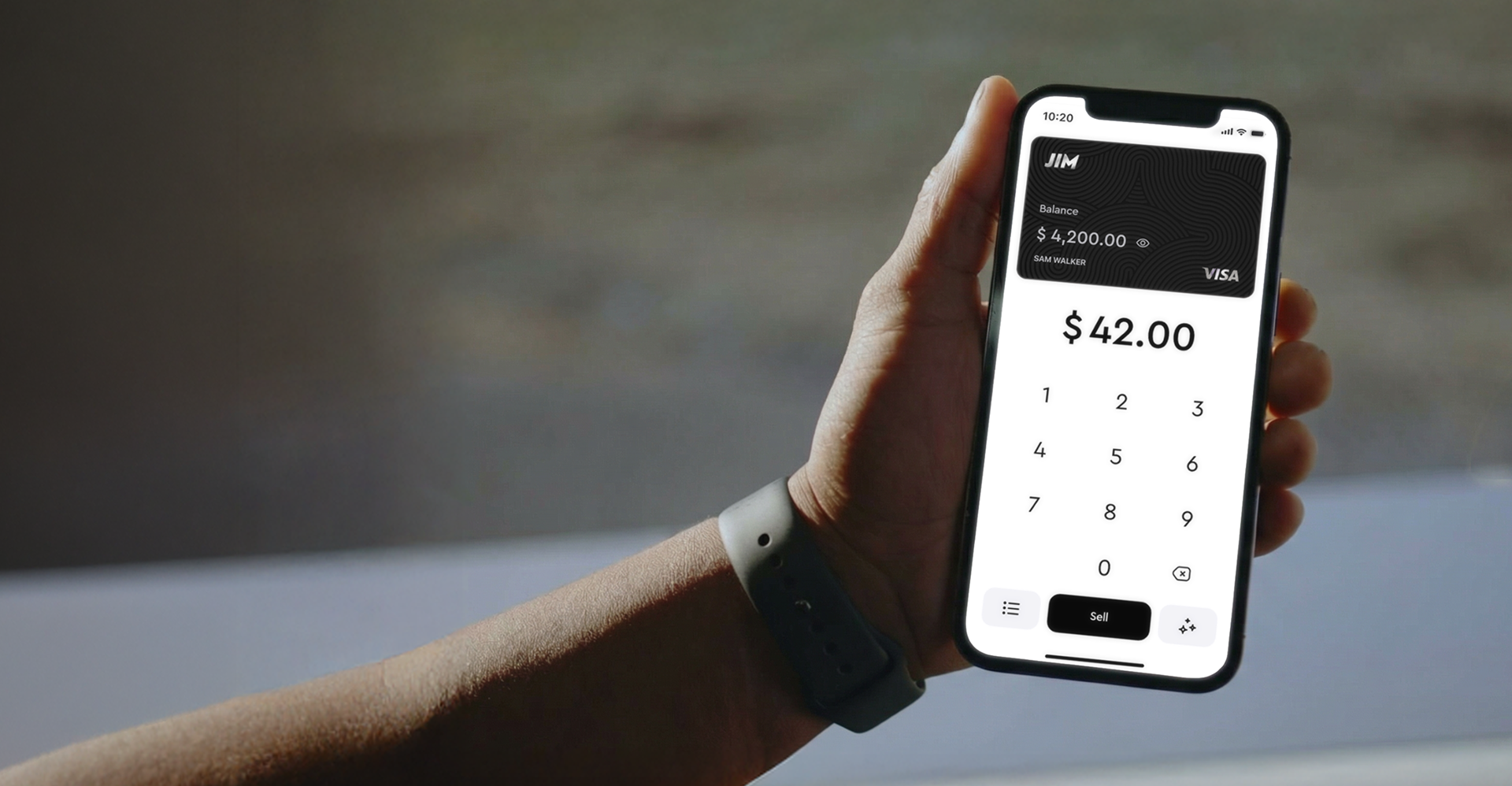
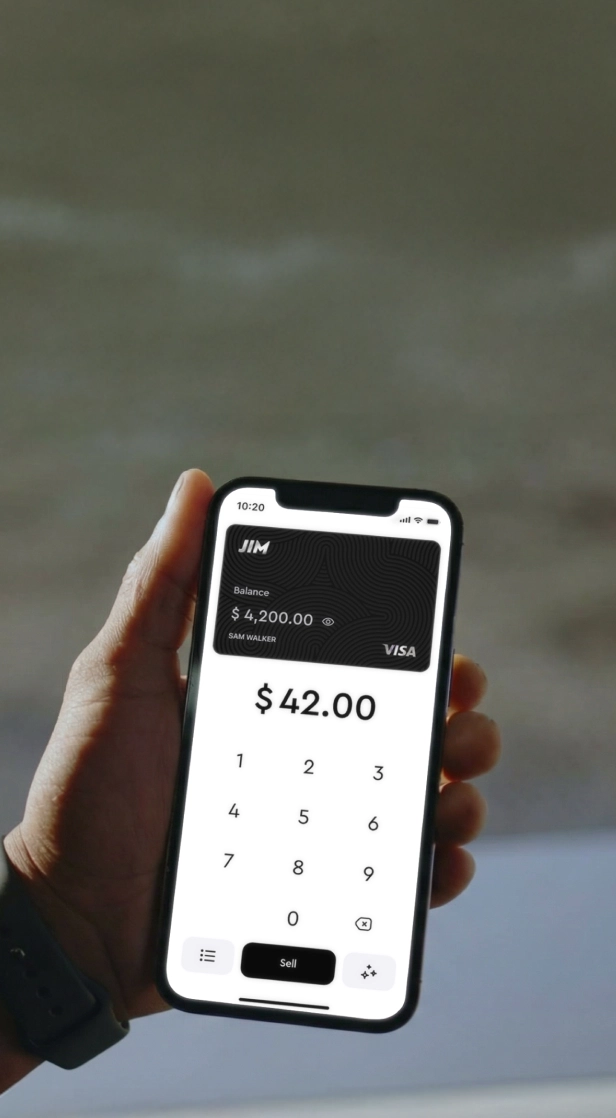
For muralists who need to accept payments on-site, JIM offers a streamlined solution. With JIM, you can accept debit, credit, and digital wallets directly through your smartphone. Just tap and done. Other providers often charge 2.5% to 3.5% per transaction.
At just 1.99% per transaction with no hidden costs or extra hardware needed, it's particularly useful for collecting deposits on the spot or final payments right after the client walkthrough. Here is how it works.
- Get Started: Download the JIM app for iOS.
- Make a Sale: Type the sales amount, hit sell, and ask your customer to tap their card or device on your phone.
- Access Funds: Your money is available right on your JIM card as soon as the sale is done. No waiting for bank transfers.
Here are 3 immediate steps to take:
- Draft a standard payment schedule to include in your client contracts.
- Compare JIM's 1.99% transaction rate with other mobile payment options.
- Download the JIM app to explore its interface for on-site payments.
Step 6: Fund your business and manage finances
Secure your startup capital
For loans, an SBA Microloan is a good starting point. These loans range up to $50,000, but new businesses often qualify for $5,000 to $15,000. Expect interest rates between 8% and 13%. A personal credit score above 640 will improve your chances of approval.
You can also pursue grants. Look for opportunities from your state or city arts council. National organizations like the National Endowment for the Arts (NEA) also offer funding, though these are highly competitive and have long application cycles. Set calendar reminders for deadlines.
Calculate your working capital
Once you have funding, you need to manage it. Calculate enough cash to cover expenses for the first 3-6 months, as client payments can be slow. A mistake some artists make is to forget to pay themselves. Your budget must include a personal salary to avoid financial pressure.
A six-month budget might look like this:
- Operating Costs: $2,000 (insurance, marketing, software)
- Project Supplies: $1,500 (initial paint and material stock)
- Personal Salary: $9,000 ($1,500 per month)
- Contingency Fund: $1,500 (for unexpected costs)
This brings your initial cash need to around $14,000. Adjust these numbers based on your local costs and personal financial needs.
Here are 3 immediate steps to take:
- Research SBA Microloan lenders in your state through the SBA's website.
- Find your local arts council and subscribe to its newsletter for grant announcements.
- Create a six-month working capital budget that includes a personal salary.
Step 7: Hire your team and streamline operations
Build your crew
As you book larger jobs, you will need help. A Mural Assistant is your first hire. They handle prep, fill in large color blocks, and manage cleanup. This frees you up for the detailed artistic work.
Plan to pay assistants $20-$30 per hour. Most artists hire them as independent contractors. This means the assistant is responsible for their own taxes, and you issue a 1099-NEC form for payments over $600 per year.
One thing to watch out for is safety training. If your projects involve lifts or scaffolding, you might want your assistants to complete an OSHA 10-hour construction course. This minimizes your liability and promotes a safe worksite.
Streamline your workflow
To manage projects, you can use a platform like Trello. Create boards for each mural with columns for "To-Do," "In Progress," and "Done." This helps you track tasks for yourself and your team.
For finances, software like Wave or QuickBooks Self-Employed helps you send invoices and track expenses. As a general guide, aim to keep your total labor costs, including your own pay, at or below 40% of the total project price.
Here are 3 immediate steps to take:
- Draft a simple Independent Contractor Agreement to have on hand for your first assistant.
- Create a free Trello account and build a template board for a typical mural project.
- Research OSHA 10-hour training courses online to understand the time and cost involved.
Step 8: Market your business and get clients
Your portfolio is your most powerful marketing asset. Create a professional website and an Instagram account dedicated to your mural work. High-quality photos and videos are non-negotiable. Time-lapse videos of your process are particularly effective for social media engagement.
Connect with your community
Go beyond social media. Reach out to your local Chamber of Commerce or Business Improvement District (BID). They often know which new businesses are opening. Also, connect with interior designers and architects, as they frequently specify murals for commercial and residential projects.
A mistake many new artists make is waiting for clients to find them. You should actively pursue leads. When you see a business with a great blank wall, find the owner's contact information and send a brief, personalized email with a link to your portfolio.
When a lead does come in, be ready to respond within 24 hours. Having a proposal template ready with your process, payment terms, and a sample timeline shows professionalism and helps you close the deal faster. Track where your leads come from to see what works.
Here are 3 immediate steps to take:
- Set up an Instagram business account and post at least five high-quality images of your work or concepts.
- Identify three local interior designers and send them a short introductory email with a link to your portfolio.
- Create a proposal template you can quickly customize for new client inquiries.
Step 9: Price your work and create proposals
Establish your pricing model
Your pricing directly communicates your value. Most muralists use one of three models. A per-square-foot rate, from $25 to $150, works for simple designs. A day rate, typically $500 to $1,000 plus materials, is better for complex or evolving projects.
A flat project fee is often preferred by clients. To calculate it, estimate your total days and multiply by your day rate. Then, add the cost of materials with a 1.5x markup, a separate design fee ($500-$2,000), and a 10% contingency buffer.
A mistake many artists make is not charging for design mockups. Your initial proposal should include one concept. Charge an hourly rate, perhaps $75-$150 per hour, for any additional revisions beyond what is stated in your contract. This protects your creative time.
Create a professional proposal
Your proposal is a sales document. It should clearly outline the project scope, a visual mockup, the total cost, and a payment schedule. Even with a flat fee, itemize the costs for materials, labor, and design to demonstrate the value you provide.
Here are 3 immediate steps to take:
- Calculate your base day rate by adding your desired salary, overhead, and profit.
- Create a proposal template that includes sections for project scope, timeline, and cost breakdown.
- Research the pricing of three other muralists in a comparable city to benchmark your rates.
Step 10: Maintain quality and scale your business
Establish your quality standards
Your reputation is built on consistency. Create a non-negotiable quality checklist for every project. This should include using UV-resistant acrylics and applying at least two coats of anti-graffiti or UV-blocking varnish. This final step is one some artists skip to cut costs, but it protects your work and your name.
You can measure quality by tracking client feedback. Aim for a 95% satisfaction rate on post-project surveys. Another good metric is the number of revision requests after the final design is approved. Your goal should be zero.
Know when to grow
Growth should be a deliberate decision. A clear sign it is time to hire an assistant is when you consistently turn down more than 20% of qualified leads per month. Another benchmark is when your project workload regularly exceeds 50 hours per week.
As you scale, your project management needs will change. You might want to move from a simple board like Trello to a client management platform like HoneyBook or Dubsado. These help you manage inquiries, contracts, and invoices in one system, which is useful when you have multiple projects at once.
Here are 3 immediate steps to take:
- Create a final project checklist that includes surface prep, paint application, and varnish layers.
- Set a personal benchmark for hiring, such as turning down three qualified projects in one month.
- Explore a client management platform like HoneyBook or Dubsado to see how it could streamline your workflow.
You have the steps to turn your art into a business. Remember that your professionalism, from the first proposal to the final varnish coat, is just as important as your brushstrokes. You have the talent and the plan. Now, go bring some color to your community.
And when it comes to getting paid, keep it simple. JIM turns your smartphone into a card reader, so you can accept payments on-site for a flat 1.99% fee. No extra hardware is needed. Download JIM to get set up.
.avif)