Starting a notebook business is an exciting venture that combines creativity with business savvy. The market is worth billions of dollars, with steady demand for notebooks from students, professionals, and writers alike.
This guide will take you through the practical steps of validating your business concept, building supplier relationships, and acquiring inventory to help you launch a successful notebook business in the U.S.
Step 1: Plan your business and validate your idea
Define your niche and research the market
First, decide who you will serve. Are you targeting artists with thick paper or professionals with minimalist designs? Use Google Trends to check search volumes for terms like "vegan leather journal" or "refillable notebook" to gauge demand and find your audience.
Next, analyze your competition. Spend time on Etsy and Amazon to find top sellers in your chosen niche. Note their pricing, cover designs, and paper quality. This research helps you find a gap in the market. A frequent misstep is creating a product that is too similar to what already exists.
Estimate your startup costs
Your initial investment will vary. A small, initial run of 250-500 custom notebooks from a manufacturer could cost between $1,500 and $4,000. You might want to add another $500 to $2,000 for branding, which includes your logo and packaging design.
Also, account for business formation fees, like setting up an LLC, which typically run from $100 to $500. An e-commerce site on a platform like Shopify starts around $39 per month. Your total initial outlay could be between $2,100 and $6,500+.
Here are 3 immediate steps to take:
- Research five successful notebook brands on Etsy and identify their unique selling points.
- Use Google Trends to compare the popularity of two different notebook styles you are considering.
- Draft a startup budget that includes a 250-unit inventory run, branding, and LLC formation costs.
Step 2: Set up your legal structure and get licensed
For most new notebook businesses, an LLC is a smart choice. It protects your personal assets, like your home and car, if the business faces debt or legal issues. This structure offers a good balance of protection and simplicity.
To form an LLC, you file Articles of Organization with your state's Secretary of State. Fees typically range from $50 to $500. Approval can take a few days to a couple of weeks, so plan for that timeline.
Secure your tax IDs and permits
Once your business is registered, get a free Employer Identification Number (EIN) from the IRS website. You need an EIN to open a business bank account and to hire employees if you decide to expand your team later.
Next, you will need a seller's permit from your state's department of revenue. This permit allows you to collect sales tax from customers. Most states offer this for free or for a small fee under $50.
Finally, check with your city or county clerk for a local business operating license. Many new owners overlook this step and face penalties. A quick search on your local government's website will show you what is required.
Here are 3 immediate steps to take:
- File your Articles of Organization with your state's Secretary of State to form an LLC.
- Apply for a free EIN on the IRS website once your business is registered.
- Find your state's seller's permit application on its department of revenue website.
Step 3: Protect your business with the right insurance
Key insurance policies for notebook sellers
General liability insurance is your first line of defense. It covers claims like property damage or injury. For a notebook business, this includes product liability, which protects you if your product, say a notebook with a faulty binding, causes harm or damage.
A policy with $1 million in coverage is standard. Expect annual premiums to range from $400 to $900 for a small online store. You might also consider commercial property insurance to protect your inventory from fire, theft, or water damage.
A frequent mistake is to assume a homeowner's policy covers business inventory. Most policies exclude business-related assets, so a separate commercial property policy is a good idea to cover your stock.
When you look for providers, consider companies that specialize in e-commerce and small businesses. Firms like Hiscox, The Hartford, and Next Insurance understand the risks of online retail and can offer tailored quotes quickly.
Here are 3 immediate steps to take:
- Get online quotes for general liability insurance from two different providers.
- Confirm that any policy you consider includes product liability coverage.
- Ask about adding commercial property insurance to protect your notebook inventory.
Step 4: Find suppliers and set up your workspace
Find your notebook manufacturer
Start by searching for manufacturers on a platform like Alibaba. Look for suppliers with good ratings and several years of experience. Many new owners make the mistake of choosing the cheapest option without vetting quality, which often backfires.
Request samples from at least three different suppliers before you commit to a large order. This lets you test paper weight, cover material, and binding durability. Minimum order quantities (MOQs) typically start around 250 to 500 units per design.
Set up your workspace and equipment
You can likely run your business from home at first. Designate a space of about 100-150 square feet for inventory storage and packing orders. Check your local zoning regulations for home-based businesses, though this is rarely an issue for simple e-commerce operations.
Speaking of fulfillment, you will want a shipping scale ($20-$50) and a thermal label printer ($100-$200). The printer saves money on ink. If you expand to a commercial space later, try to negotiate a shorter 1-2 year lease to maintain flexibility.
Here are 3 immediate steps to take:
- Request samples from at least three potential notebook manufacturers on Alibaba.
- Designate a 100-square-foot area in your home for inventory and shipping.
- Price out a thermal label printer and a shipping scale on Amazon.
Step 5: Set up payment processing
Most of your sales will likely be online. You will want a payment processor that integrates with your e-commerce platform. Solutions like Shopify Payments or Stripe are built-in options that accept all major credit cards and digital wallets from day one.
Many new owners are surprised by transaction fees. Expect to pay around 2.9% + $0.30 for every online sale. This is a standard cost of doing business online, so remember to factor it into your pricing.
Accepting in-person payments
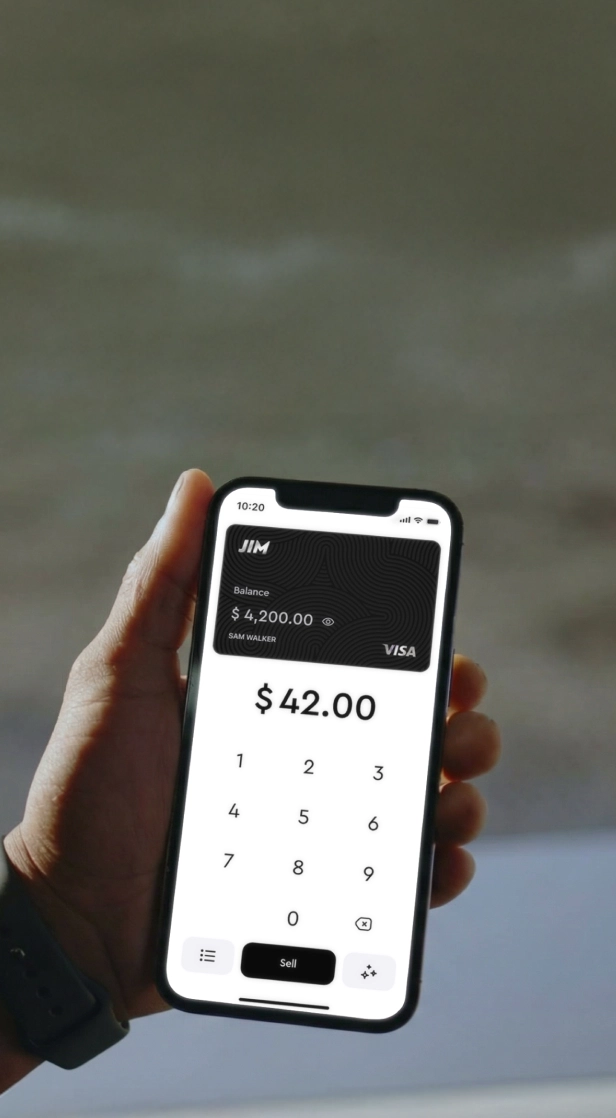
For selling at markets or pop-up events, you need a way to take payments on the go. For notebook businesses that need to accept payments on-site, JIM offers a streamlined solution. With JIM, you can accept debit, credit and digital wallets directly through your smartphone - just tap and done.
At just 1.99% per transaction with no hidden costs or extra hardware needed, it's particularly useful for selling at craft fairs. This rate is lower than the average commission from other providers, which helps you keep more of your revenue.
- Get Started: Download the JIM app for iOS.
- Make a Sale: Type the sales amount, hit sell, and ask your customer to tap their card or device on your phone.
- Access Funds: Your money is available right on your JIM card as soon as the sale is done - no waiting for bank transfers.
Here are 3 immediate steps to take:
- Compare the current transaction fees for Shopify Payments and Stripe.
- Identify two local markets or craft fairs where you could sell notebooks in person.
- Download the JIM app to explore its interface for on-the-go sales.
Step 6: Fund your business and manage finances
Secure your startup capital
For initial funding, an SBA Microloan is a great option. These loans range from $500 to $50,000, with interest rates typically between 8% and 13%. They are designed for new businesses and often have more flexible qualification standards than traditional bank loans.
You will also need working capital to cover your first six months. Plan for $3,000 to $7,000 to handle inventory reorders, marketing, and platform fees. A frequent oversight is under-budgeting for marketing; set aside 10-15% of your projected revenue for ads and promotion.
In addition to loans, look into grants. Programs like the Amber Grant award funds to women-owned businesses. Grants are highly competitive and require a strong business plan, but they provide capital you do not have to repay.
Set up your financial systems
Once you have funding, open a dedicated business bank account. This step keeps your personal and business finances separate, which simplifies tax filing and makes your business look more professional. Most national and local banks offer free business checking accounts for small businesses.
From day one, track every dollar with bookkeeping software. A free platform like Wave is perfect for getting started. It helps you monitor cash flow, categorize expenses, and prepare for quarterly tax payments without the cost of more complex systems.
Here are 4 immediate steps to take:
- Research SBA Microloan requirements on the SBA website.
- Calculate your working capital needs for the first six months.
- Open a separate business bank account for your notebook company.
- Sign up for a bookkeeping platform like Wave to track your finances.
Step 7: Hire your team and streamline operations
Decide when and who to hire
In the beginning, you will likely be the sole employee. Once you consistently process 15-20 orders a day, you might want to consider hiring part-time help to avoid burnout and maintain quick shipping times.
Your first hire is often an Order Fulfillment Associate. This person handles packing orders, managing inventory levels, and printing shipping labels. Expect to pay between $15 and $20 per hour for this role. No special certifications are needed, but look for someone with great attention to detail.
Streamline your daily operations
A smooth workflow is your best friend. Create a standard operating procedure for fulfillment. This ensures every package has the same quality and unboxing experience. Your e-commerce platform, like Shopify, has built-in tools to track inventory and manage orders.
As you grow, you might also hire a freelance Social Media Coordinator for 5-10 hours a week. They can manage your posts and engage with customers. To make this efficient, use a scheduling platform like Buffer or Later to plan content weeks in advance.
Here are 3 immediate steps to take:
- Draft a job description for a part-time Order Fulfillment Associate.
- Map out your packing process from the moment an order arrives to when it ships.
- Compare the free plans for social media schedulers like Buffer and Later.
Step 8: Market your business and get customers
Build your online presence
Your notebooks are visual, so platforms like Instagram and Pinterest are your best bet. Create high-quality photos and short videos. Think flat lays with coffee mugs or videos that show the paper quality with different pens. Consistency is key to building an audience.
Once you have organic traction, you can test paid ads. A good starting point is a Facebook ad campaign that targets users interested in journaling or stationery. Aim for a Customer Acquisition Cost (CAC) under $30 for a typical notebook purchase.
Many new owners expect immediate sales from ads. A standard e-commerce conversion rate is 1-2%, meaning one or two sales for every 100 visitors. Use this benchmark to set realistic goals for your ad spend and avoid disappointment.
Work with creators and influencers
You can also collaborate with micro-influencers in the "studygram" or bullet journal community. These creators have highly engaged audiences. Offer them free products in exchange for an honest review and a post. This approach often yields a better return than ads when you first start.
Here are 3 immediate steps to take:
- Identify five micro-influencers on Instagram in the stationery niche.
- Create a content plan for your first two weeks on Instagram.
- Set a test budget of $100 for your first Facebook ad campaign.
Step 9: Price your notebooks for profit
Start with a cost-plus pricing model. Add up all your costs per notebook—manufacturing, shipping to you, and packaging. A good starting point is to apply a 100% to 200% markup. For example, if your total cost per unit is $6, your retail price would be between $12 and $18.
Once you have a number, check it against the market. Look at top sellers in your niche on Etsy and Amazon. Note their prices, but also what they offer. A notebook with 200 GSM paper will command a higher price than one with 80 GSM paper.
Many new sellers underprice to attract initial sales. This can signal low quality and make it difficult to cover costs like marketing and transaction fees, which eat about 3% of each sale. Your price should reflect your brand's quality from day one.
As you gain traction, you might explore value-based pricing. If you offer unique features like custom embossing or a refillable binding system, you can set a price based on the higher perceived value to the customer, not just your costs.
Here are 3 immediate steps to take:
- Calculate the total cost per unit for your primary notebook design.
- Analyze the pricing of three direct competitors on Etsy or Amazon.
- Determine a starting retail price for your notebook using a 150% markup.
Step 10: Maintain quality and scale your operations
Establish your quality standards
With every new inventory shipment, you must perform a quality check. Create a checklist to inspect for cover scratches, binding defects, and correct page count. Test a few pages from random notebooks with different pens to check for paper bleed-through. Aim for a defect rate below 2%.
Many new owners only inspect the top layer of boxes. This is a mistake. Pull units from the middle and bottom of the shipment to get a true sample. If you find a high defect rate, you can use this data to negotiate a partial refund from your manufacturer.
Know when to scale
Once you consistently hit 30-40 orders per day, packing them yourself becomes a bottleneck. This is the time to consider a third-party logistics (3PL) provider like ShipBob or ShipMonk. They handle storage, packing, and shipping, which frees you to focus on marketing and product development.
As your product line grows beyond five unique designs (SKUs), Shopify's basic inventory tools may not be enough. You might want to explore dedicated inventory management software like Katana or Cin7. These platforms help you track stock levels and forecast reorder points more accurately.
Here are 3 immediate steps to take:
- Create a quality control checklist for inspecting new notebook shipments.
- Research pricing for a 3PL service like ShipBob for when you reach 30 daily orders.
- Compare the features of inventory management platforms like Katana and Cin7.
Conclusion
You now have a clear path to launch your notebook business. Remember, success here is in the details—the paper feel and the story you build around your brand. Trust your taste and take that first step.
When you are ready to sell, keep payments simple. JIM turns your smartphone into a card reader for a flat 1.99% fee, with no extra hardware. This lets you focus on your customers, not your equipment. Download JIM to be prepared.
.avif)