Starting a nutrition drink business is a rewarding venture that combines a passion for health and wellness with business savvy. The market is a multi-billion dollar industry, with steady demand from athletes, busy professionals, and health-conscious individuals.
This guide will take you through the practical steps of validating your business concept, securing funding, obtaining necessary permits, and building supplier relationships to help you launch a successful nutrition drink business in the U.S.
Step 1: Validate your business plan
First, confirm people want your product. You can run local taste tests or use SurveyMonkey to poll at least 50-100 potential customers on flavor preferences and price points. For broader market data, reports from Mintel or NielsenIQ show current industry trends.
Next, analyze your competition. Identify three direct competitors, both local and online. Study their product lines, pricing, and customer reviews. This shows you where gaps in the market exist and what customers value.
Understand your startup costs
With your market research done, it is time to budget. A frequent misstep is to underestimate packaging costs. Your bottles and labels are a significant part of your brand identity and initial outlay, so plan for them carefully.
- Commercial Kitchen Rental: $25-$75 per hour
- Licenses & Permits: $500-$1,500 (one-time)
- Initial Ingredients: $3,000-$7,000
- Equipment (Blenders, Juicers): $2,000-$5,000
- Branding & Packaging: $2,000-$6,000
Your initial investment will likely be between $8,000 and $20,000. This figure gives you a solid foundation before you account for marketing.
Here are 3 immediate steps to take:
- Survey at least 50 potential customers about their flavor preferences.
- List the products and prices of three key competitors.
- Create a draft budget that uses the cost estimates above.
Step 2: Establish your legal and licensing framework
First, choose a business structure. An LLC is a strong choice for beginners. It protects your personal assets from business debts and offers pass-through taxation, which simplifies your tax filings. You can file for an LLC through your state's Secretary of State website for $50-$500.
Once your LLC is formed, get an Employer Identification Number (EIN) from the IRS website. It is free and you will need it for taxes and banking. The Food and Drug Administration (FDA) also requires you to register your commercial kitchen as a food facility.
Secure your permits and licenses
You will need several permits. A state business license is standard. You must also get a food handler’s permit for yourself and any employees. Your local health department will issue a health permit after inspecting your kitchen, which can cost $100-$1,000 and take 2-4 weeks.
Many new owners stumble by trying to use a home kitchen. Health departments require you to operate from a certified commercial kitchen. Securing this space and passing the inspection is a non-negotiable step before you can sell a single bottle.
Here are 4 immediate steps to take:
- File for an LLC with your state’s Secretary of State.
- Apply for a free EIN on the IRS website.
- Register your food facility with the FDA.
- Contact your local health department about a kitchen inspection.
Step 3: Protect your business with the right insurance
Start with General Liability insurance. This policy protects you from third-party claims like property damage or injury. For a food business, you must ensure it includes Product Liability coverage. This specifically covers claims related to your drinks, such as illness or allergic reactions.
Aim for at least $1 million in coverage. Your annual premium for a combined General and Product Liability policy will likely range from $500 to $1,200. Many new owners overlook the Product Liability part, which leaves them exposed to significant risk.
Additional coverage to consider
If you have employees, Workers’ Compensation is mandatory in most states. It covers medical costs and lost wages if a team member is injured on the job. Also, if you use a vehicle for deliveries or errands, you need a Commercial Auto policy. Your personal auto insurance will not cover business use.
You can get quotes from providers that understand the food and beverage industry. Look into The Hartford, Hiscox, or NEXT Insurance. They are familiar with the specific risks of a nutrition drink business, like spoilage and allergen contamination, and can build a suitable policy.
Here are 4 immediate steps to take:
- Request a quote for a $1 million General Liability policy that includes Product Liability.
- Confirm if you need Commercial Auto insurance for your business vehicle.
- Research your state’s Workers’ Compensation laws if you plan to hire.
- Contact an insurance provider that specializes in the food industry.
Step 4: Secure your location and equipment
Find your commercial kitchen
You will need a 200-500 square foot space in an area zoned for commercial use, often labeled "C-1" or "C-2". Check your city’s planning department website for local zoning maps. This ensures your business operates legally from day one.
When you find a spot, negotiate a 1-2 year lease with an option to renew. Many new owners sign long leases too soon. A shorter term gives you flexibility. Also confirm the space has a three-compartment sink and 220-volt outlets for heavy-duty equipment.
Purchase your core equipment
With your space secured, it is time to outfit your kitchen. You do not need everything at once. Focus on the items that directly impact your product quality and production speed. Expect to spend between $3,800 and $10,300 on your initial setup.
- NSF-Certified Commercial Blender: $500-$1,500
- Commercial Juicer: $1,000-$3,000
- Reach-In Refrigerator: $2,000-$5,000
- Three-Compartment Sink: $300-$800
For suppliers, look at WebstaurantStore for equipment and Uline for packaging. A common mistake is to over-order packaging. Bottle suppliers may have a minimum order quantity (MOQ) of 1,000+ units, so ask for smaller sample quantities before you commit to a full pallet.
Here are 4 immediate steps to take:
- Check your city’s zoning map for "C-1" or "C-2" areas.
- Ask a potential landlord for a 1-2 year lease term.
- Price out one commercial blender and one refrigerator.
- Request packaging samples from a supplier like Uline.
Step 5: Set up your payment system
Most of your sales will be direct-to-consumer, so you need a simple way to accept credit cards and digital wallets. Look for a payment processor with low transaction fees and no monthly charges, as this keeps your overhead down while you grow your customer base.
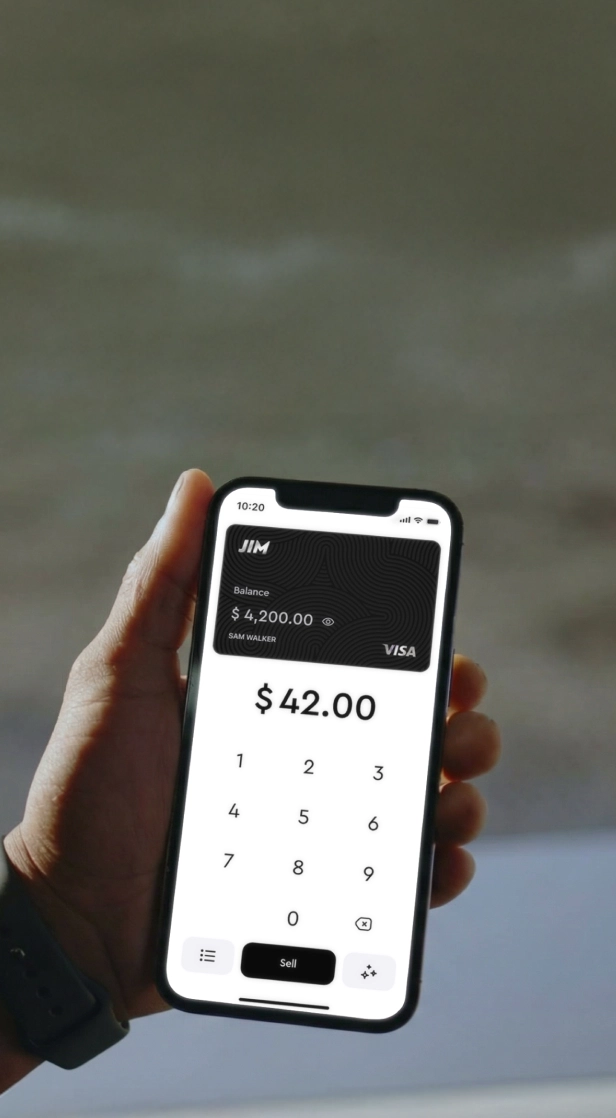
For nutrition drink businesses that need to accept payments on-site or on-the-go, JIM offers a streamlined solution. With JIM, you can accept debit, credit and digital wallets directly through your smartphone - just tap and done.
At just 1.99% per transaction with no hidden costs or extra hardware needed, it's particularly useful for sales at farmers' markets or pop-up events. Average commission rates from other providers are often 2.5% to 3.5%, which can quickly reduce your profit margins.
- Get Started: Download JIM app for iOS
- Make a Sale: Type the sales amount, hit sell, and ask your customer to tap their card or device on your phone
- Access Funds: Your money is available right on your JIM card as soon as the sale is done - no waiting for bank transfers
Here are 3 immediate steps to take:
- Compare the transaction fees of two to three payment processors.
- Download the JIM app to see how it works on your phone.
- List your primary sales locations to confirm you need a mobile payment solution.
Step 6: Secure your funding and manage finances
An SBA 7(a) loan or Microloan is a solid option for initial funding. Lenders typically look for a credit score of 680+ and a detailed business plan. Microloans can provide up to $50,000, with interest rates often between 8-13%.
In addition to loans, you might want to look for grants. Programs like the USDA’s Value-Added Producer Grant specifically support food businesses. While competitive, these grants offer funds you do not have to repay.
Plan your first six months of cash flow
You will need working capital to cover daily operations. For the first six months, budget for $15,000 to $25,000. This covers rent, payroll, and ingredient restocking before your revenue becomes consistent.
A frequent miscalculation is to focus only on startup equipment and forget this operational cash. Without a buffer, an unexpected expense or slow initial sales can put you in a tough spot before you gain momentum.
Here are 3 immediate steps to take:
- Check your credit score to see if you meet the 680+ threshold for an SBA loan.
- Research the application deadline for the USDA’s Value-Added Producer Grant.
- Create a six-month budget to estimate your working capital needs.
Step 7: Hire your team and set up operations
You will likely start with one or two part-time roles. A Kitchen Production Assistant can handle ingredient prep, blending, and bottling for $15-$20 per hour. A Sales & Delivery Driver can manage market sales and local drops for a similar wage.
Build your initial team
Every employee who handles your product must have a Food Handler’s Permit. The process is a simple online course that costs about $10-$15. As you grow, aim to keep your total labor costs between 25-35% of your revenue. This is a healthy benchmark for a food business.
Many owners try to do everything themselves at first. This approach often leads to burnout and limits your growth. Bringing on even one part-time helper for 10-15 hours a week can free you up to focus on sales and marketing.
Streamline your daily workflow
Once you have a team member, use a scheduling app like Homebase or When I Work. Their free plans are perfect for managing a small team’s shifts and hours. This avoids the confusion of text message threads and spreadsheets as you get busier.
Here are 4 immediate steps to take:
- Draft a job description for a part-time Kitchen Production Assistant.
- Check your state’s requirements for the Food Handler’s Permit.
- Calculate your target labor cost based on 30% of your revenue forecast.
- Sign up for a free plan on Homebase or When I Work to see the features.
Step 8: Market your drinks and find customers
Start with direct, in-person sales. Farmers' markets, local gyms, and corporate wellness events are your best bet. Your main goal is to get people to taste the product, so free samples are your most powerful tool. This direct feedback is invaluable.
Develop your digital storefront
Use Instagram and TikTok to show your process. People connect with stories, so post videos of you sourcing ingredients or blending a new recipe. This builds trust before they even make a purchase. It shows the care you put into your drinks.
Many new owners pour money into social media ads right away, but that can drain your budget quickly. Instead, focus on organic growth and collaborations with local fitness influencers. Once you do run ads, a reasonable customer acquisition cost (CAC) to aim for is $15-$25.
For your launch, you might want to create a simple promotion. A "First-Timer's Bundle" with three popular drinks at a 15% discount can attract initial buyers. As you sell online, a conversion rate of 1-2% is a solid benchmark for a new food brand.
Here are 4 immediate steps to take:
- Identify two local farmers' markets or gyms to partner with.
- Outline a content plan for one week on Instagram or TikTok.
- Draft a launch promotion, like a "First-Timer's Bundle."
- Research one local fitness influencer for a potential collaboration.
Step 9: Set your pricing strategy
Start with cost-plus pricing. First, calculate your Cost of Goods Sold (COGS) for each bottle. This number must include all direct costs—ingredients, the bottle, the cap, and the label. This gives you a clear baseline for each unit you produce.
Once you have your COGS, apply a markup. A 100-200% markup is standard in this industry. For example, if your COGS is $3.50 per bottle, a retail price between $7.00 and $10.50 is a solid target. This aims for a gross profit margin of 50-67%.
Check your competition and perceived value
With your baseline set, see what others charge. Visit local juice bars and check online competitors. Note their prices, bottle sizes, and ingredient quality. Your price should fit within this market landscape while reflecting your product's unique value.
Many new owners think they must have the lowest price to win customers. This can backfire, as a low price might signal lower quality. Confidently price your drinks based on the value and premium ingredients you provide.
Here are 4 immediate steps to take:
- Calculate the exact COGS for your most popular drink.
- Research the prices of three direct competitors.
- Set a launch price using a 100-200% markup.
- Create a "3-pack" bundle with a 10% discount.
Step 10: Maintain quality and scale your operations
As your sales grow, consistency is your top priority. Use a pH meter to test each batch, aiming for a consistent level below 4.6 to ensure safety and stability. You can also use a refractometer to measure Brix (sugar content) for consistent flavor.
Establish your quality standards
Create a simple Standard Operating Procedure (SOP) for each recipe. This document ensures anyone can replicate your drinks perfectly. Many owners find quality slips when they hire help, and an SOP is the best way to prevent this. It should list exact ingredient weights and blend times.
For long-term growth, you might want to pursue USDA Organic certification. This process can take over a year and involves detailed record-keeping, but it allows you to command a premium price and builds significant brand trust.
Know when to scale
Once your kitchen operates at 80% capacity for two consecutive months, it is time to expand. This could mean adding another production day or finding a larger space. Another key signal is when you consistently sell over 500 bottles per week.
As you grow, manual inventory tracking becomes difficult. A system like inFlow Inventory helps you manage ingredients and finished products. This prevents stockouts of key ingredients and gives you a clear view of your costs.
Here are 4 immediate steps to take:
- Create a quality checklist for each batch, noting pH and taste.
- Draft a Standard Operating Procedure (SOP) for your top-selling drink.
- Calculate your current weekly production capacity in bottles.
- Research the basic requirements for USDA Organic certification.
Starting your nutrition drink business is a journey of passion. Remember that your connection with customers is built on the quality and story in every bottle. You have the steps, now it's time to share your vision with the world.
As you make your first sales, a simple payment process helps. JIM turns your phone into a card reader, so you can accept payments for a flat 1.99% fee with no extra hardware. Download JIM to get started.
.avif)