How to start a plastic recycling business and profit
See article summary
- A small-scale plastic recycling plant needs $150,000 to $300,000 in startup capital.
- Secure a Solid Waste Facility Permit from your state DEQ, which takes 6 to 12 months.
- Buy a granulator, wash line, and baler, and verify 3-phase power before signing a lease.
- Pre-sell to manufacturers 90 days before production to avoid cash flow gaps.
- Keep $50,000 to $100,000 in working capital to cover the Net 30 or Net 60 payment delay.
A small-scale plastic recycling operation in the U.S. typically needs $150,000 to $300,000 in startup capital, 6 to 12 months for permitting, and at least $50,000 in working capital to survive the gap between your first shipment and your first payment. Demand for post-consumer resin (PCR) keeps rising as manufacturers face sustainability mandates, but the businesses that fail are the ones that skip local validation, sign a lease before checking zoning, or start selling after production instead of before.
How do you validate a plastic recycling business idea?
Validate your concept by pulling municipal waste-stream data and mapping every existing recycler within a 150-mile radius. Contact your municipal waste management department for reports on the types and volumes of plastic they collect. This data prevents the most common rookie error: buying equipment for PET when your local stream is mostly HDPE.
With that data, research competitors. Use the Thomasnet supplier directory to find materials recovery facilities (MRFs) and independent recyclers in your region. Note the plastics they process and their scale. This helps you identify a niche, like focusing on a polymer type others ignore.
Estimate your startup costs
The initial investment requires careful planning. A small-scale operation often needs between $150,000 and $300,000.
Also, budget for a warehouse lease deposit, permits which can be $2,000 to $10,000, and at least $50,000 in operating capital to cover costs before you generate revenue.
Here are 3 immediate steps to take:
- Request plastic collection reports from your city's waste management office.
- List all plastic recyclers within a 150-mile radius using an online directory.
- Create a spreadsheet with estimated costs for a granulator, wash line, and initial lease payment.
How do you set up your legal structure and get licensed?
Form a Limited Liability Company (LLC) to separate your personal assets from business debts, then obtain a free Employer Identification Number (EIN) from the IRS. The LLC structure protects your personal assets from business liabilities and profits pass through to your personal taxes, which simplifies accounting compared to a C-Corporation. For a broader walkthrough of entity formation and what it means for your liability, see our guide on how to start a business. You can file for an LLC through your state's Secretary of State website.
Navigate federal, state, and local permits
At the federal level, the Environmental Protection Agency (EPA) sets the main regulations. While most plastics are non-hazardous, you should confirm your state's rules. Your state's Department of Environmental Quality (DEQ) is your next stop for a Solid Waste Facility Permit. This permit process can take 6 to 12 months and cost between $5,000 and $15,000, with timelines and fees set by your state environmental agency. Check your state DEQ's solid waste permitting page for the fee schedule that applies to your jurisdiction.
One zoning error can stall your launch. Before you sign a lease, confirm with your city's planning department that the property is zoned for industrial use or recycling operations.
Here are 4 immediate steps to take:
- File for an LLC with your Secretary of State.
- Apply for a free Employer Identification Number (EIN) on the IRS website.
- Check your state's DEQ website for Solid Waste Facility Permit applications.
- Contact your local planning department to verify industrial zoning for potential locations.
How do you secure insurance and manage risk for a recycling plant?
A recycling plant needs General Liability, Commercial Property, Workers' Compensation, Commercial Auto, and a separate Pollution Liability policy. A standard liability policy excludes pollution-related incidents, so Pollution Liability is the one policy specific to this industry that you cannot skip.
Protect your assets and people
You will need several insurance policies. General Liability coverage of $1 million to $2 million is standard, with annual premiums from $5,000 to $15,000. Premiums vary widely by state, coverage limits, and operation size, so request quotes from multiple brokers. Commercial Property insurance protects your building and expensive machinery from events like fire or theft.
If you have employees, Workers' Compensation is legally required. In addition, secure Commercial Auto insurance for any trucks you use to transport materials.
Plan for environmental risks
A standard liability policy often excludes pollution-related incidents, so you should get a separate Pollution Liability policy. This covers cleanup costs from spills or contamination, which can be a major financial risk. Expect to pay $10,000 to $30,000 annually for $1 million in coverage. Premiums for environmental insurance are set by underwriters based on your throughput, material types, and site history, so get quotes from brokers who specialize in the waste and recycling industry rather than a general agent.
Work with brokers who understand environmental risks. Providers like Chubb or Great American Insurance Group specialize in the waste and recycling industry.
Here are 3 immediate steps to take:
- Request quotes for a $1 million General Liability policy.
- Ask potential insurers specifically about their Pollution Liability coverage options.
- Contact a broker who specializes in insurance for recycling businesses.
How do you find a facility and buy equipment for plastic recycling?
Find a warehouse between 5,000 and 10,000 square feet with M-1 or M-2 industrial zoning, then verify floor load capacity and 3-phase power before signing the lease. This classification is designed for operations like yours and is a non-negotiable requirement for your permits.
When you talk to landlords, be upfront about your machinery. Some owners are hesitant about the floor load and electrical needs. You can build trust by presenting your business plan and proof of pollution liability insurance. Negotiate lease terms that allow for facility modifications.
Select your processing machinery
Your main purchases are a granulator ($20,000 to $100,000) and a wash line ($50,000 to $250,000). You will also need a baler to compact processed plastic for shipment. These can run from $15,000 to $50,000. Suppliers like Vecoplan or Genox are common sources for this equipment.
Leasing a space before confirming it can support the machinery is a costly mistake. Always verify floor load capacity and available 3-phase power before you sign anything. An unexpected electrical upgrade or concrete reinforcement can add tens of thousands to your budget.
Here are 4 immediate steps to take:
- Search commercial real estate sites for warehouses zoned M-1 or M-2.
- Ask a potential landlord about their requirements for heavy machinery.
- Request quotes for a granulator and wash line from two different suppliers.
- Consult an engineer to confirm the floor load capacity of a potential site.
How do you set up payment processing for a recycling business?
Your manufacturer buyers will pay on Net 30 or Net 60 terms via bank transfer or ACH, so your payment system needs to handle both large invoiced transactions and small on-site sales.
Failing to enforce these payment policies can halt your operations. For these large B2B transactions, you will typically receive payment via bank transfer or ACH. Always have a signed agreement before you ship material.
Handle on-site and on-the-go payments
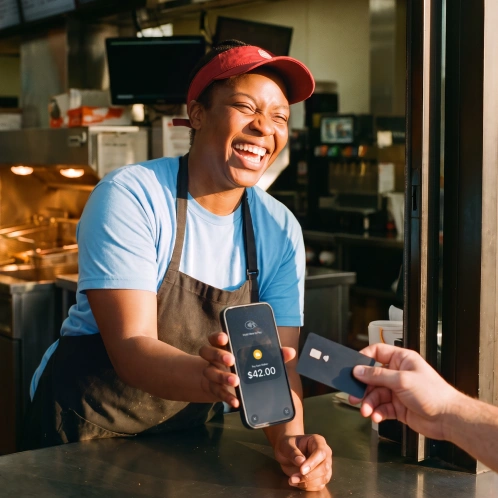
You might also have opportunities for smaller, on-site sales to local businesses or artisans. For these situations, you need a way to accept immediate payment without buying a separate card reader. JIM turns your smartphone into a card reader using Tap to Pay, so you can accept debit, credit, and digital wallets on the spot.
At 1.99% per transaction with no hidden costs or extra hardware, JIM's rate is lower than the 2.5% to 3.5% many other providers charge. It is particularly useful for selling small batches from your facility.
- Get Started: Download JIM app for iOS
- Make a Sale: Type the sales amount, hit sell, and ask your customer to tap their card or device on your phone
- Access Funds: Your money is available right on your JIM card as soon as the sale is done, no waiting for bank transfers
Here are 3 immediate steps to take:
- Draft standard Net 30 and Net 60 payment terms for your sales contracts.
- Research the typical payment cycles of manufacturers who buy recycled plastic.
- Download the JIM app to prepare for on-the-spot sales opportunities.
How do you secure funding for a plastic recycling business?
Start with the Small Business Administration (SBA) 7(a) loan program, which covers up to $5 million for equipment and working capital. Their 7(a) and 504 loan programs are designed for businesses with heavy equipment needs. Lenders will want to see a detailed business plan and a personal credit score above 680 to consider loans from $350,000 to $5 million.
Explore industry-specific grants
In addition to loans, look for grants that support recycling initiatives. The EPA's Solid Waste Infrastructure for Recycling (SWIFR) grant program is a major source of funding, authorized by the Save Our Seas 2.0 Act and funded through the Infrastructure Investment and Jobs Act. These grants are competitive, so your application must clearly show your project's environmental impact and financial viability.
Underestimating working capital is a frequent cause of early failure. You need cash for the first six months before your Net 30 or Net 60 payments arrive. Plan for at least $50,000 to $100,000 to cover rent, payroll, and utilities.
Here are 3 immediate steps to take:
- Review the eligibility requirements for an SBA 7(a) loan on their website.
- Check the EPA's site for the next SWIFR grant application window.
- Calculate six months of operating expenses to set your working capital goal.
How do you hire your team and set up recycling operations?
Your initial team will be small, likely 3 to 5 people: a Plant Operator, one or two Material Sorters, and yourself handling sales. Wage benchmarks from the Bureau of Labor Statistics help you set competitive pay without overstaffing.
You will need a Plant Operator to run the granulator and wash line. Expect to pay a skilled operator between $45,000 and $60,000 annually. You will also need one or two Material Sorters, an hourly role. According to the Bureau of Labor Statistics, the median wage for refuse and recyclable material collectors was $22.00 per hour as of May 2023, so plan your hourly rate around that baseline to stay competitive. Source: BLS Occupational Employment and Wages, Refuse and Recyclable Material Collectors.
Prioritize safety and training
Before anyone starts work, they need safety training. All employees should complete an OSHA 10-hour General Industry course. Anyone who will operate a forklift must have a current forklift operator certification. Delaying this training is a false economy, since an accident or an OSHA fine will cost you far more than the training.
As you grow, you might want to hire a Plant Supervisor to manage daily workflow and scheduling. For a small team, you can manage shifts with software like Homebase or When I Work. Based on operational patterns across small manufacturing operations, plan for roughly one employee per $200,000 in annual revenue as a staffing baseline.
Here are 4 immediate steps to take:
- Draft job descriptions for a Plant Operator and a Material Sorter.
- Research local providers for OSHA 10-hour General Industry training.
- Get a quote for on-site forklift operator certification for your team.
- Compare the features of scheduling software like Homebase and When I Work.
How do you market recycled plastic and acquire customers?
Your primary customers are manufacturers who use recycled plastic, so create a one-page specification sheet for each polymer type and start direct outreach 90 days before your first batch is ready. Your spec sheet should detail the polymer type (e.g., HDPE, PET), form (flake or pellet), color, and purity level, which should be above 99%.
Find your buyers
You can find potential buyers through the Institute of Scrap Recycling Industries (ISRI) member directory or by searching for plastics manufacturers on Thomasnet.com. Focus on companies within a 200-mile radius to keep shipping costs competitive. Direct outreach is your main strategy here.
A simple website and a professional LinkedIn page are your digital handshake. Your site should clearly show your processing capabilities and contact information. Use LinkedIn to identify and connect with purchasing managers at your target companies.
Waiting until your warehouse is full before looking for buyers is a recipe for a cash flow crunch. Start your sales outreach at least 90 days before your first batch of processed material is ready. A B2B sales cycle can take 3 to 6 months to secure a contract.
Here are 4 immediate steps to take:
- Create a spec sheet for each type of plastic you plan to sell.
- Build a list of 25 potential buyers using the ISRI directory.
- Set up a LinkedIn company page that details your processing capabilities.
- Draft an outreach email template to send to purchasing managers.
How do you develop a pricing strategy for recycled plastic?
Your sale price for processed plastic is tied directly to commodity markets, so track resin spot prices daily and set your price based on your all-in cost per pound plus a target margin. Prices fluctuate daily based on oil prices and manufacturer demand. You can track these rates through industry reports from services like Platts or ICIS.
Calculate your cost per pound
Before you can set a price, you must know your cost of production. Add up your monthly expenses: rent, labor, utilities, and maintenance. Divide that total by the pounds of plastic you process each month. This gives you your all-in cost per pound.
For example, if your monthly operating costs are $30,000 and you process 100,000 pounds of PET, your cost is $0.30 per pound. Miscalculating this is a common trap. Forgetting to include equipment depreciation or insurance leads to unprofitable sales.
Set your sale price and terms
With your cost basis known, you can set a sale price. If the market rate for PET flake is $0.45 per pound, your gross margin is $0.15 per pound. Your goal for common plastics like PET or HDPE should be a gross margin between 20% and 40%.
Always confirm pricing with a signed purchase order before you ship. Commodity prices are volatile. A verbal agreement can leave you exposed if the market drops. Also, your contract should clearly state who pays for freight, as shipping can easily erase your profit margin.
Here are 4 immediate steps to take:
- Calculate your estimated all-in processing cost per pound.
- Research subscription options for a plastics pricing index like Platts or ICIS.
- Call three scrap brokers to ask for current spot prices on PET and HDPE flake.
- Draft a sample purchase order that includes price, payment terms, and freight responsibility.
How do you implement quality control and scale recycling operations?
Align your output with ISRI specifications, test samples at a third-party lab, and plan expansion once you hit 80 to 85% of facility capacity. Your buyers expect consistent quality, so align your output with the Institute of Scrap Recycling Industries (ISRI) specifications. The ISRI Scrap Specifications Circular sets the commercial guidelines for traded plastic scrap, including allowable contamination levels and prohibited materials. For most grades, your final product must meet strict purity levels, often above 99.5%, with minimal contamination from other plastics or materials.
Skipping lab tests to save money can backfire if a buyer rejects a shipment due to contamination. You should periodically send samples to a third-party lab to verify metrics like melt flow index (MFI), color consistency, and flake size uniformity.
Plan your growth strategy
Once you consistently operate at 80 to 85% of your current capacity, it is time to plan for expansion. This could mean adding a second shift or investing in higher-throughput machinery. For hiring, stick to the baseline of one employee for every $200,000 in annual revenue.
As you grow, managing inventory and sales on spreadsheets becomes difficult. You might want to look at an enterprise resource planning (ERP) system built for the recycling industry. Software like ScrapRight or the AMCS Platform helps you track materials, manage contracts, and streamline logistics.
Here are 4 immediate steps to take:
- Download the ISRI specifications for the types of plastic you process.
- Request quotes from a third-party lab for MFI and purity testing.
- Calculate your current production as a percentage of your facility's maximum capacity.
- Schedule a demo for an industry-specific ERP like ScrapRight or AMCS Platform.
Read more:
Your buyers will always prioritize consistency, so make quality control your focus from the start. For those smaller, on-the-spot sales, JIM lets you accept card payments at 1.99% per Tap to Pay transaction with no extra hardware. Download JIM to be ready from day one.
Frequently Asked Questions
Is a plastic recycling business profitable?
How much does it cost to start a plastic recycling business?
How long until a recycling plant breaks even?
Which plastics are most profitable to recycle?
What permits do I need to recycle plastic?




Sell and get paid in seconds with Jim