Starting a postcard business is a rewarding venture that combines creative design with business savvy. The field is accessible thanks to low startup costs and the ability to serve niche markets, but that accessibility means you'll need a solid plan to stand out.
This guide will take you through the practical steps of validating your business concept, obtaining necessary licenses, acquiring inventory, and building supplier relationships to help you launch a successful postcard business in the U.S.
Step 1: Create your business plan and validate your concept
Define your niche
First, decide who you want to sell to. Explore platforms like Etsy and the wholesale marketplace Faire to see what's popular. Use Google Trends to check interest in themes like "minimalist postcards" or "cityscape illustrations" to find an underserved audience.
A common misstep is to create designs without knowing the competition. You can use platforms like eRank or Marmalead to analyze top-selling postcard shops on Etsy. Note their pricing, photo styles, and what makes their designs unique. This isn't about copying, it's about finding your own space.
Budget for your launch
Speaking of costs, let's outline your initial investment. Expect to spend between $200 and $1,500. This covers design software like Canva, business registration which can range from $50 to $500 depending on your state, and platform fees for sites like Shopify.
Your biggest variable is printing. A frequent mistake is ordering too many cards at once. Start with a small test run of 50-100 cards from a printer like Moo or Vistaprint. This might cost $50 to $100 but saves you from unsold inventory.
Here are 3 immediate steps to take:
- Research three potential postcard niches on Etsy and Faire.
- Analyze five competing shops to understand their pricing and style.
- Draft a startup budget that includes a small, initial print run of one design.
Step 2: Set up your legal structure and get licensed
Choose your business structure
For most new postcard businesses, a sole proprietorship is the simplest start. You might consider forming a Limited Liability Company (LLC) instead. An LLC separates your personal assets from business debts, which offers peace of mind. Filing fees range from $50 to $500 depending on your state.
A frequent oversight is assuming you need a complex corporation. An LLC provides liability protection with simpler taxes, as profits pass through to your personal tax return. This avoids the double taxation that corporations can face. You can file through your Secretary of State website.
Secure your licenses and permits
With your structure decided, it's time for paperwork. You will need a seller's permit, sometimes called a resale certificate, from your state's department of revenue. This permit allows you to collect sales tax and is often free to obtain online.
Also, check with your city or county clerk for a general business license, which typically costs $50 to $100 annually. If you plan to hire employees, you'll need a free Employer Identification Number (EIN) from the IRS website.
Here are 3 immediate steps to take:
- Decide between a sole proprietorship and an LLC for your business.
- Apply for a seller's permit from your state's department of revenue.
- Check your city or county clerk's office for local business license requirements.
Step 3: Insure your business and manage risk
Protect your business with the right insurance
General liability insurance is your first line of defense. It covers claims like copyright infringement if a design is too similar to another's work. For an online store, a policy with $1 million in coverage is a standard starting point.
You can often bundle this with property insurance in a Business Owner's Policy (BOP). Annual premiums for a home-based postcard business typically range from $300 to $700. You might want to get quotes from providers like Hiscox, The Hartford, or Next Insurance.
A frequent oversight is to rely on homeowner's insurance for your inventory. These policies usually cap business property coverage at around $2,500. A BOP ensures your stock of cards is properly protected from theft, fire, or water damage.
If you hire anyone, you will also need workers' compensation insurance. This is required by the state and covers medical expenses and lost wages if an employee is injured while working for you.
Manage creative risks
Beyond insurance, your biggest risk is copyright violation. Always confirm you have the commercial rights for any fonts or graphics you did not create yourself. Keep a simple spreadsheet that links each design to its asset licenses for easy reference.
Here are 3 immediate steps to take:
- Request quotes for a Business Owner's Policy from two different providers.
- Check the business property coverage limit on your current homeowner's policy.
- Create a spreadsheet to track the licenses for all your design assets.
Step 4: Set up your workspace and source materials
Find your workspace
You do not need a commercial space. A dedicated corner in your home, around 50-100 square feet, is plenty of room for a desk and inventory storage. Before you start, check your local city's website for rules on home-based businesses, though most simple e-commerce operations face few restrictions.
Gather your equipment
Your computer and design software are the core. You will also want a good quality inkjet printer ($150-$300) to proof designs, not for final production. A guillotine paper cutter ($30-$60) provides clean, straight edges if you need to trim cards yourself.
To ship your orders, a small digital scale ($20) and a thermal label printer ($100+) will save you countless trips to the post office. You can find rigid mailers and protective sleeves on sites like Uline or Amazon.
Source your materials
The quality of your paper makes a huge difference. Look for professional printers that offer 16-18 pt cardstock with a matte or uncoated finish. Many new sellers make the mistake of using their home printer for final products, which results in a lower quality feel.
For larger print runs of 250 or more, you might explore printers like GotPrint or 48HourPrint.com. Before you place a big order, always get a paper sample kit. Colors on screen rarely match the final printed product, and a sample kit helps you avoid a costly surprise.
Here are 3 immediate steps to take:
- Designate a 50-square-foot area in your home for your business.
- Order paper sample kits from two online printers like GotPrint and Moo.
- Price out a guillotine paper cutter and a digital shipping scale.
Step 5: Set up your payment processing
Your online store needs a way to accept money. Platforms like Shopify and Etsy have built-in payment systems that connect to processors like Stripe or PayPal, making it simple to accept credit cards and other digital payments from day one.
For most postcard sales, you will collect payment upfront. If you expand into wholesale, you might offer "Net 30" terms to established retailers, which means they have 30 days to pay. For direct-to-consumer sales, always get paid before you ship.
Many new sellers forget to factor in transaction fees, which can eat into profits. Most platforms charge around 2.9% plus $0.30 per sale. This fee structure is common, so build it into your pricing from the start to protect your margins.
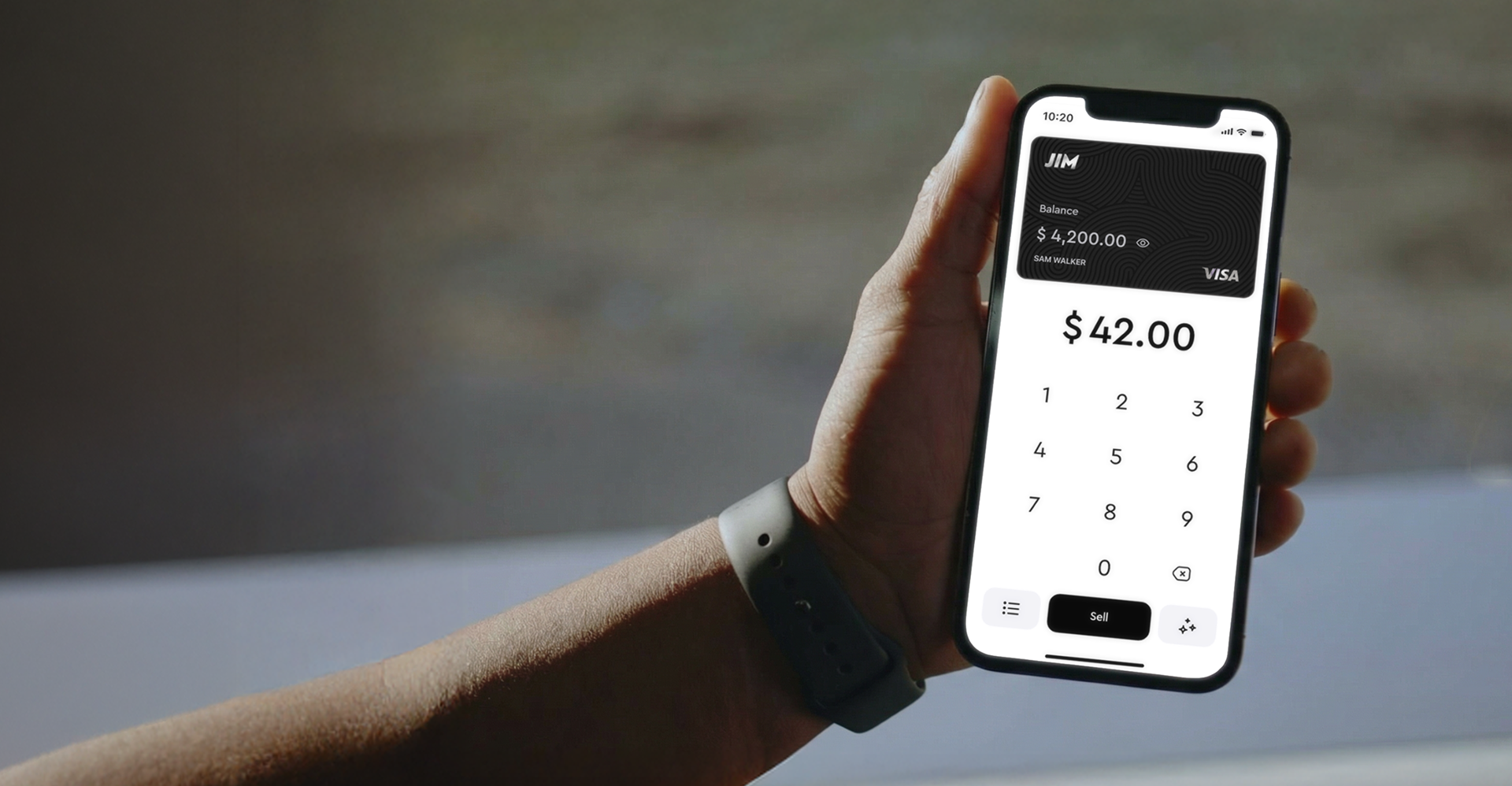
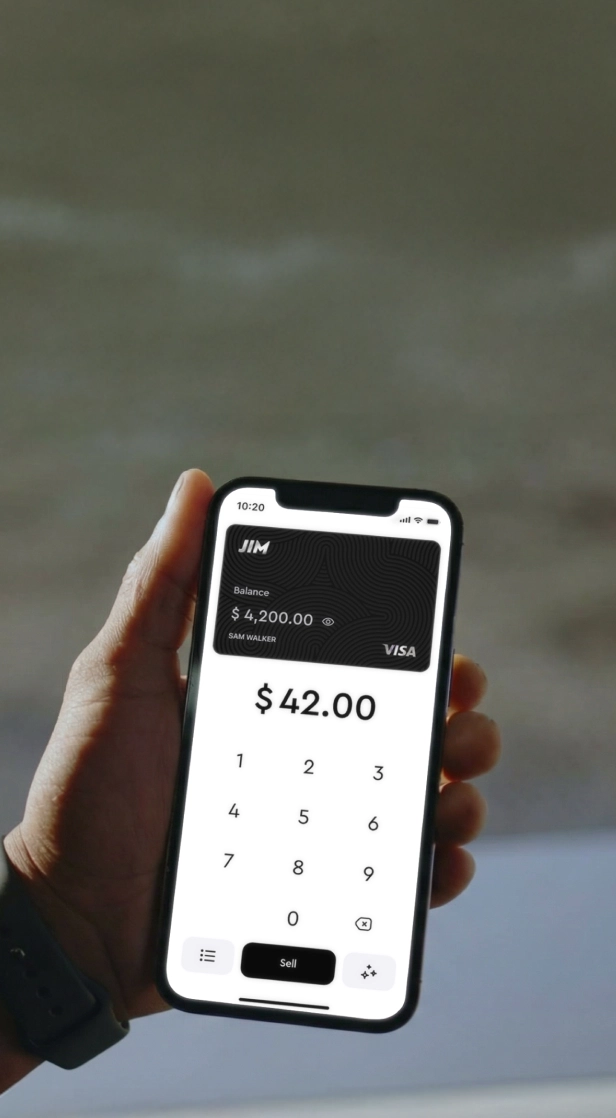
For selling at art fairs or local markets, you need a way to accept payments on-site. JIM offers a streamlined solution. With JIM, you can accept debit, credit, and digital wallets directly through your smartphone—just tap and done.
At just 1.99% per transaction with no hidden costs or extra hardware needed, its rate is lower than the average commission from other providers. It is particularly useful for quick sales at a busy market stall where you do not want to manage extra equipment.
- Get Started: Download the JIM app for iOS.
- Make a Sale: Type the sales amount, hit sell, and ask your customer to tap their card or device on your phone.
- Access Funds: Your money is available right on your JIM card as soon as the sale is done—no waiting for bank transfers.
Here are 3 immediate steps to take:
- Connect your e-commerce store to a payment processor like Stripe or PayPal.
- Calculate the transaction fees for your average postcard price to finalize your retail cost.
- Download the JIM app to prepare for in-person sales.
Step 6: Fund your business and manage finances
Secure your startup funding
Most postcard businesses start with personal savings. If you need outside capital, an SBA Microloan is a strong option. These loans range from $500 to $50,000 with interest rates between 8-13%. They are great for buying initial inventory and equipment.
You might also look into grants. While competitive, programs like the Amber Grant for Women or local arts council grants can provide funds you do not have to repay. Check your city's economic development website for opportunities specific to your area.
Plan your working capital
For your first six months, you will need about $1,500 to $3,000 in working capital. This covers more than just printing. It includes reordering popular designs, shipping supplies, marketing costs, and monthly e-commerce platform fees like Shopify's subscription.
A frequent misstep is to ignore marketing costs. To get your first sales, you need to be visible. You should plan to allocate at least 10-15% of your budget, or around $150-$450, for initial ads on platforms like Etsy or Instagram.
Here are 3 immediate steps to take:
- Draft a six-month operating budget that includes inventory, marketing, and fees.
- Research the SBA Microloan program and find a local intermediary lender.
- Identify one local arts grant or small business grant to apply for.
Step 7: Hire your team and set up operations
When to hire your first helper
You will likely handle everything yourself at first. Once you consistently process over 15-20 orders a day, you might consider a part-time Order Fulfillment Assistant for 5-10 hours a week to pack and ship. This role typically pays $15-$20 per hour.
For design work, a Freelance Graphic Designer is a better fit than a full-time employee. You can find talent on platforms like Upwork or Dribbble. Expect to pay $25-$75 per hour or a flat fee per design. No special certifications are needed for these roles.
Manage your daily workflow
To keep design projects on track with a freelancer, use a project management platform like Trello or Asana. You can create boards for new ideas, work-in-progress, and completed designs. This keeps communication clear and organized, which is vital when you work with remote talent.
A frequent mistake is to give a designer a vague brief. Be specific about your vision, color palette, and target audience. Provide examples of styles you like and dislike. This clarity saves you from costly revisions and ensures you get a design you love.
Here are 3 immediate steps to take:
- Outline the daily tasks you would delegate to a fulfillment assistant.
- Create a detailed design brief for one new postcard concept.
- Set up a free project board on Trello to organize your design ideas.
Step 8: Market your postcards and find customers
Build your online presence
Focus your efforts on visual platforms like Instagram and Pinterest. Post high-quality photos of your postcards. You might want to show them styled on a desk or alongside other stationery to help customers envision using them. Use specific hashtags like #PostcardSwap or #StationeryAddict to reach interested buyers.
Many new sellers only post simple product shots. A better approach is to create a lifestyle around your brand. Share behind-the-scenes content of your design process or pack orders with a personal touch. This builds a connection that static product photos cannot.
Use paid advertising strategically
Once you have some great photos, you can run targeted ads. With a small budget of $5-$10 per day on Etsy Ads or Instagram, you can promote your best-selling designs. Aim for a customer acquisition cost (CAC) that is less than your average order value.
A frequent mistake is to boost posts without a clear audience. Use the niche research from your business plan to target users interested in specific themes like "vintage travel" or "botanical art." A typical e-commerce conversion rate is 1-2%, so patience is key.
Collaborate for wider reach
You can also partner with stationery bloggers or subscription box companies. Offer them free products in exchange for a feature. This puts your postcards in front of an established audience that already loves paper goods. Look for partners whose aesthetic matches your brand.
Here are 3 immediate steps to take:
- Set up a business profile on Instagram and post five high-quality lifestyle photos.
- Allocate a $5 daily budget for a one-week ad campaign on Etsy or Instagram.
- Identify three stationery bloggers or subscription boxes for a potential collaboration.
Step 9: Price your postcards for profit
To set your price, first calculate your cost of goods sold (COGS). This includes the print cost per card, packaging like a rigid mailer, and a portion of platform fees. For example, if printing is $0.50 and packaging is $0.20, your base COGS is $0.70.
A standard markup for postcards is 3x to 5x your COGS. With a $0.70 cost, this puts your retail price between $2.10 and $3.50. Most sellers round up, so you might price the card at $2.50 or $3.00 to keep it simple for customers.
Next, look at competitors on Etsy. An easy trap is to price too low just to compete. Instead, analyze their quality and positioning. If your designs are more unique or your paper is thicker, you can justify a higher price point, like $4.00 per card.
You can also increase your average order value with bundles. Offer a pack of five cards for $18 instead of $20. For wholesale, the standard is 50% of retail. Your $4 card would be $2 wholesale, so confirm your COGS allows for profit.
Here are 3 immediate steps to take:
- Calculate your total cost of goods for one postcard design.
- Research five competing postcard shops and note their single card and bundle prices.
- Set a retail price for a single card and a 5-card bundle based on a 4x markup.
Step 10: Control quality and scale your operations
Maintain quality control
Your reputation depends on quality. Before you ship, inspect 5-10% of every print batch. Check for consistent color, sharp 300 DPI resolution, and no smudges or bent corners. Your cardstock should feel substantial, typically 16-18 pt.
A frequent mistake is to trust the printer blindly and ship orders without a quick review. A single bad batch can lead to negative reviews that are hard to overcome. Create a simple checklist to ensure every card meets your standard before it reaches a customer.
Know when to scale
Once a design sells more than 50 units in a month, you can confidently order a larger print run of 500 or more to lower your cost per card. When you consistently pack over 15-20 orders a day, it is time to hire a part-time fulfillment assistant.
As you grow to multiple sales channels like Etsy and your own Shopify store, inventory management becomes complex. You might want to use an app like Sellbrite or Trunk to sync stock levels automatically and prevent overselling popular designs.
Here are 3 immediate steps to take:
- Create a quality checklist for inspecting new print orders.
- Set a sales goal for one design to justify a larger print run.
- Research an inventory management app like Sellbrite to sync stock.
Your postcard business is a chance to share your unique perspective. Remember, consistency in your style is what builds a loyal following. You have the steps laid out, so trust your plan and get your first designs out there. You are ready for this.
When you make those first in-person sales, a simple payment solution helps. JIM turns your phone into a card reader for a flat 1.99% fee, with no extra hardware. Download JIM so you are ready for your first market day.
.avif)