Starting a printables business is an exciting venture that blends creative design with business savvy. It's a market worth billions, fueled by consistent demand for everything from home organization labels and educational materials to custom event invitations.
This guide will walk you through the practical steps, from validating your business concept and obtaining necessary licenses to acquiring the right software, to help you launch a successful printables business in the U.S.
Step 1: Plan your business and validate your idea
Market and competitor research
Begin your research on platforms like Etsy and Pinterest. Search for specific terms such as "printable budget planner" or "bachelorette party games" to gauge demand. Use a research application like eRank or Marmalead to analyze top-selling shops and their product listings.
Pay attention to their design aesthetic, pricing strategy, and how they bundle products. A frequent misstep is trying to copy a successful shop exactly. Instead, identify a gap in the market or a unique style that you can own.
Estimate your startup costs
Your main initial expense will be design software. Canva Pro costs about $15 per month, while the more powerful Adobe Illustrator is part of the Creative Cloud subscription at around $55 per month. Both are solid choices for professional design work.
Also, budget for platform fees, like Etsy's $0.20 listing fee and 6.5% transaction fee. You might also want to purchase commercial-use fonts or graphics from a marketplace like Creative Market. Expect total startup costs to range from $100 to $400.
Here are 3 immediate steps to take:
- Identify three potential printable niches by researching popular keywords on Etsy.
- Analyze two top competitors in your preferred niche using a tool like eRank.
- Create a startup budget that lists your chosen software and a small fund for design assets.
Step 2: Establish your legal structure and obtain licenses
Choose your business structure
You have two practical options: a Sole Proprietorship or a Limited Liability Company (LLC). A Sole Proprietorship is the simplest path as it requires no formal setup, but it leaves your personal assets, like your home or car, unprotected from business debts.
For better protection, you might consider an LLC. This structure creates a legal wall between your personal and business finances. You form one by filing "Articles of Organization" with your state's Secretary of State, which costs between $50 and $500. An LLC also offers flexible tax options.
Secure the necessary permits and tax IDs
Once your structure is set, get a free Employer Identification Number (EIN) from the IRS website; it's like a Social Security number for your business. You will need it for an LLC or if you hire employees. Online applications are processed instantly.
Next, visit your state's Department of Revenue site to register for a sales tax permit. This is a must-have to legally collect sales tax from customers in your state. A frequent oversight is forgetting local rules, so check with your city clerk about a home-based business permit, which often costs under $100.
Here are 3 immediate steps to take:
- Decide between a Sole Proprietorship and an LLC based on your need for liability protection.
- Apply for a free Employer Identification Number (EIN) on the official IRS website.
- Check your state and city government websites for sales tax and home-based business permit rules.
Step 3: Protect your business with insurance
Find the right coverage
You will want two main types of coverage. General Liability Insurance protects against third-party claims like copyright infringement, a real risk with digital designs. A standard $1 million policy often costs between $300 and $600 per year.
Also consider Professional Liability Insurance, or E&O. This covers you if a customer claims your product caused a financial loss, such as an error in a printable business planner. It provides a vital layer of security for your work.
A frequent oversight is to assume your homeowner's policy protects your business assets. You should confirm this with your agent. You may need a separate rider for expensive equipment like high-end printers or computers.
When you shop for policies, look at providers familiar with small online businesses. You might want to get quotes from companies like Hiscox, Next Insurance, or The Hartford to compare your options.
Here are 3 immediate steps to take:
- Request quotes for general and professional liability insurance from two different providers.
- Review your homeowner's or renter's insurance policy to see what it covers for business equipment.
- Ask potential insurers specifically about coverage for copyright and trademark infringement claims.
Step 4: Set up your workspace and get your gear
A printables business does not require a commercial space or special zoning. Your workspace can be a simple desk in your home. You should confirm your lease or HOA agreement allows for a home-based business, which is rarely an issue for a purely digital operation.
Your design toolkit
You will need a reliable computer and design software. As covered before, Canva Pro is great for beginners at about $15 per month. For more complex work, you might consider Adobe Illustrator, which runs about $55 per month as part of the Creative Cloud suite.
Many new sellers think they need a commercial-grade printer, but your customers do the printing. A simple color inkjet printer, which you can find for $100 to $200, is perfect for test prints to check colors and layout before you list the product.
To make your products stand out, you will likely use pre-made fonts and graphics. Marketplaces like Creative Market offer individual assets, while a subscription to Envato Elements gives unlimited downloads. Always verify you are purchasing a commercial-use license to avoid legal issues.
Here are 3 immediate steps to take:
- Choose your design software: Canva Pro for ease of use or Adobe Illustrator for advanced features.
- Budget for a basic color inkjet printer for test prints, keeping costs under $200.
- Browse a digital marketplace like Creative Market to find fonts or graphics that fit your brand.
Step 5: Set up your payment processing
Online and in-person sales
For online sales, your chosen platform like Etsy or Shopify will have its own payment system. These typically charge a transaction fee between 2.5% and 3.5% plus a small fixed fee. Your main job is to connect your bank account for payouts, which can take 3-5 business days.
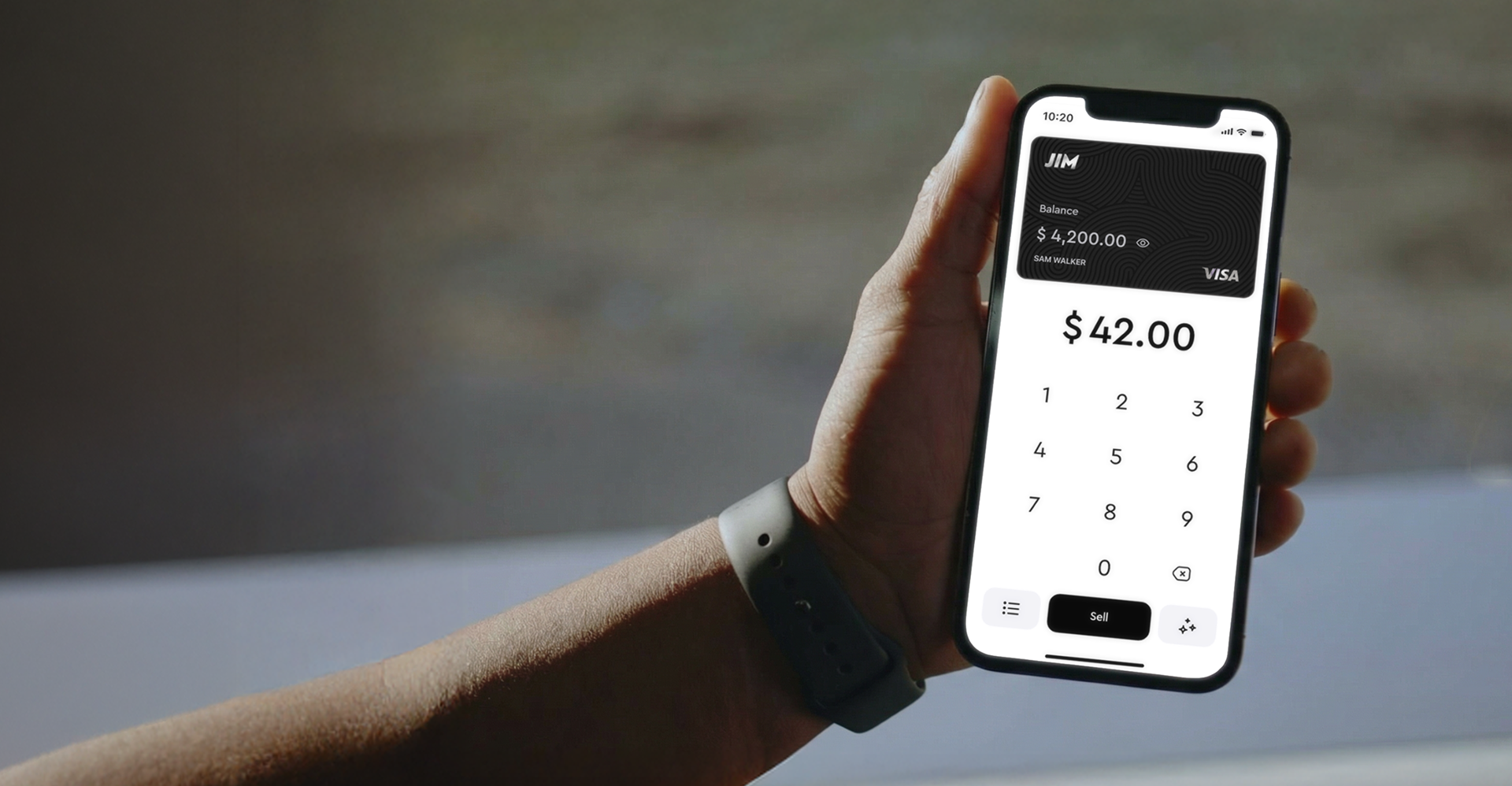
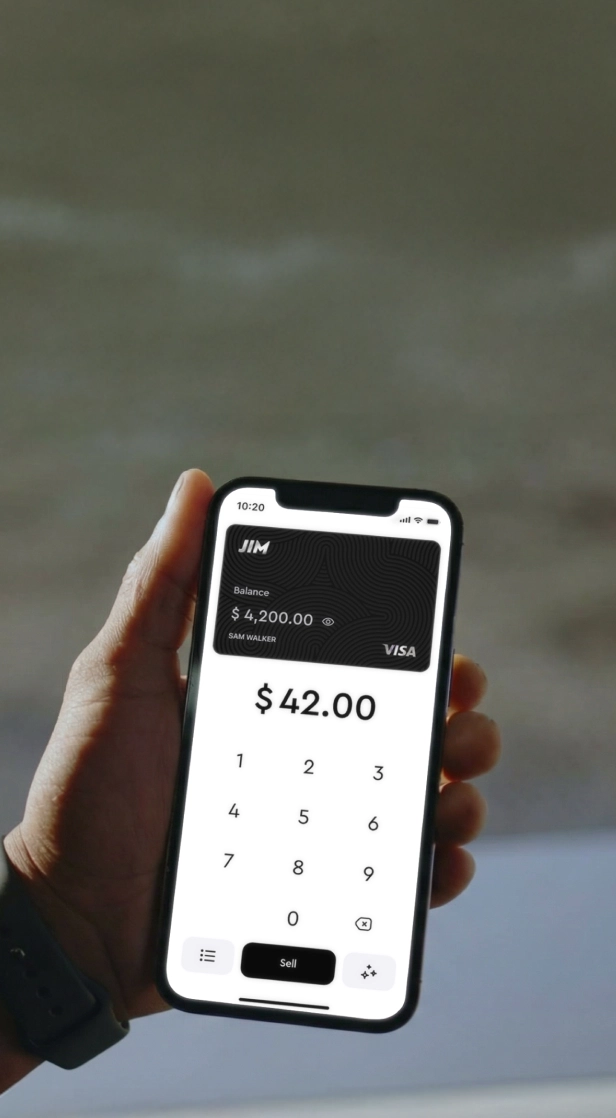
Some sellers miss out on in-person sales at markets or local events. For these situations, you need a way to accept payments on the go. For printables businesses that need to accept payments on-site or on-the-go, JIM offers a streamlined solution.
With JIM, you can accept debit, credit and digital wallets directly through your smartphone—just tap and done. At just 1.99% per transaction with no hidden costs or extra hardware needed, it's particularly useful for selling at craft fairs or pop-up shops.
Getting started is simple. Here is how it works:
- Get Started: Download the JIM app for iOS.
- Make a Sale: Type the sales amount, hit sell, and ask your customer to tap their card or device on your phone.
- Access Funds: Your money is available right on your JIM card as soon as the sale is done—no waiting for bank transfers.
Here are 3 immediate steps to take:
- Review the transaction fees and payout schedule for your primary online sales platform.
- Consider if you will sell in-person and explore a mobile payment solution like JIM.
- Set up your bank account with your chosen payment processor to receive your earnings.
Step 6: Fund your business and manage your finances
Funding your printables business
Since startup costs are low, most sellers self-fund with personal savings. If you need a small boost, a credit card with a 0% introductory APR can provide a few thousand dollars without immediate interest.
For a more formal route, you might look into an SBA Microloan. These loans, which go up to $50,000, are geared toward new businesses. Expect interest rates between 8% and 13%.
Managing your finances
With funding sorted, let's talk about day-to-day money management. Plan for $500 to $1,000 in working capital for your first six months. This buffer covers platform fees, marketing, and new design assets before sales ramp up.
A frequent oversight is mixing personal and business funds. Open a separate business checking account. Then, connect it to accounting software like Wave (free) or QuickBooks Self-Employed (about $15/month) to track every dollar.
Here are 3 immediate steps to take:
- Calculate your 6-month working capital needs, including fees and marketing.
- Research SBA Microloan requirements on the official SBA website.
- Open a separate business bank account for your printable shop.
Step 7: Staff your business and set up operations
When to hire your first help
Most printables businesses start as a one-person operation. Once your shop consistently generates over $1,000 in monthly revenue, you might consider outsourcing tasks. This frees you to focus on design and business growth instead of administrative work.
Your first hire will likely be a freelancer. A Virtual Assistant (VA) can handle customer service and product listings for $15-$30 per hour. A freelance Graphic Designer might charge $25-$75 per hour to help create new product lines.
Finding and managing freelancers
Platforms like Upwork and Fiverr are good places to find talent. For these roles, a strong portfolio is more valuable than formal certifications. A frequent mistake is to hire someone without a clear contract. Always have a simple agreement that outlines deliverables, deadlines, and payment terms.
To keep projects organized, especially with a freelancer, use a system like Trello or Asana. Both offer free plans that are perfect for tracking design ideas, marketing tasks, and customer orders in one place. This ensures everyone is on the same page.
Here are 3 immediate steps to take:
- Identify one repetitive task you could outsource, such as creating marketing graphics.
- Set up a free project board on Trello or Asana to map out your next three product ideas.
- Browse Upwork for freelance Virtual Assistants to understand typical rates and skills.
Step 8: Market your business and acquire customers
Optimize your online storefront
Your primary marketing happens on your sales platform. On Etsy, use all 13 available tags for each listing and write long-tail keyword titles like "minimalist weekly meal planner printable." A frequent oversight is to set up a listing and then forget it. You should regularly update keywords based on performance.
A good conversion rate on Etsy is between 1% and 3%. This means for every 100 people who view your product, you can expect one to three sales. If your numbers are lower, your photos or description may need work.
Promote with visual social media
Pinterest is your best friend. Create five to ten unique pins for each printable, linking directly to the product page. Use video pins to show a mockup of the printable in use. Instagram Reels can also work well for this.
You can run targeted campaigns around events. For example, create a "Holiday Gift Planner" bundle and promote it heavily from October to December. This creates urgency and boosts sales.
For a small push, consider Etsy Ads. You might start with a $1-$2 daily budget on your best-selling product. Only run ads on listings that already have a solid conversion rate to avoid a wasted spend.
Here are 3 immediate steps to take:
- Optimize the titles and tags of three product listings using a keyword research application.
- Create five different Pinterest pins for your best-selling printable.
- Set a $1 daily budget on Etsy Ads for one week to test a popular product.
Step 9: Set your pricing strategy
Start by analyzing the top 10 search results on Etsy for your main product keyword. Note the price range. For a "printable wedding invitation," you might see prices from $5 to $15. This gives you a baseline for what customers expect to pay.
Pricing models and bundles
You can price items individually or in bundles. A single planner page might sell for $2.99. A bundle of 10 related pages could be priced at $9.99, which offers a better value and encourages larger purchases. This strategy can increase your average order value.
Many new sellers make the mistake of pricing too low, thinking it will attract more buyers. However, a price of $0.99 can signal low quality. A price between $2.50 and $5.00 for a single, well-designed printable often converts better.
With digital products, your profit margins are high. After Etsy's 6.5% transaction fee and $0.20 listing fee, a $3.00 sale nets you about $2.60. Your main cost is your time, so price your work based on its value, not just to beat competitors.
Here are 3 immediate steps to take:
- Analyze the price points of the top five competitors for your primary product idea.
- Create a pricing structure for a single item and a three-item bundle.
- Calculate your potential net profit on a $4 product after deducting platform fees.
Step 10: Control quality and scale your business
Maintain high quality standards
Your quality control starts with your files. Ensure every printable is saved as a 300 DPI PDF for crisp printing. Before you list a product, do a test print to check colors and alignment. A frequent slip-up is forgetting to proofread, which can quickly lead to bad reviews.
Use your shop's data as a quality report. If a product's conversion rate on Etsy falls below 1%, it may signal an issue with your mockups or the design itself. Monitor customer reviews and messages for direct feedback on any problems they encounter.
Plan your growth
With quality in check, you can plan for expansion. Once your shop consistently brings in $1,000 in monthly revenue, you might consider outsourcing administrative tasks. When you have over 50 listings, a free Trello board can help you manage your production schedule.
Reinvesting profits fuels growth. A good benchmark is to put 15-20% of your earnings back into the business. You can use this capital to buy new design assets from a marketplace like Creative Market or to experiment with a small advertising budget.
Here are 3 immediate steps to take:
- Create a quality checklist that includes a 300 DPI check and a final proofread for every new design.
- Review the conversion rates of your top five products to identify any that need improvement.
- Calculate 15% of your last month's profit to set your reinvestment budget.
You now have a clear path to launch your printables shop. The key is to keep your designs fresh and listen to customer feedback. Your unique creative voice is what will set you apart. Now, go build something great.
And when you make those first sales, especially at local markets, JIM makes payments simple. It turns your phone into a card reader for a flat 1.99% fee, with no extra hardware. Download JIM to be ready for any opportunity.
.avif)