Starting a sales business is a rewarding venture that combines strong communication skills with business savvy. The market for mobile payment solutions is a multi-billion dollar industry, with steady demand from small businesses, pop-up shops, and service professionals who need to process transactions on the go.
This guide will take you through the practical steps of validating your business concept, securing funding, obtaining necessary licenses, and building supplier relationships to help you launch a successful sales business in the U.S.
Step 1: Plan your business and validate your idea
First, define your target customer. Will you focus on food trucks, retail boutiques, or service providers? You can survey local businesses to understand their frustrations with current payment systems. Many new owners skip this step, target everyone, and appeal to no one.
With that research in hand, analyze your competitors. Use databases like Crunchbase to see who is funded and growing. Look at the product offerings of major players like Square and Clover to understand market standards for features and pricing. This shows you what customers expect.
Estimate your startup costs
Your initial budget will have a few key line items. Business formation can range from $100 to $800 depending on your state and structure. A simple website and initial marketing materials might add another $500 to $3,000.
The largest variable is your initial hardware inventory. A common misstep is to over-invest in one type of device. You might want to start with a small, diverse stock of 10-20 units, which could represent an investment of $1,000 to $3,000. This approach allows for flexibility.
Here are 3 immediate steps to take:
- Survey at least 10 local businesses about their payment processing needs.
- Use a database like Crunchbase to research two direct competitors.
- Create a startup budget that includes business registration, marketing, and initial inventory.
Step 2: Establish your legal structure and obtain licenses
You should form a Limited Liability Company (LLC). This structure protects your personal assets, unlike a sole proprietorship. File the paperwork with your state's Secretary of State, which typically costs between $50 and $500. Many new owners skip this and regret it when legal issues arise.
With your business legally formed, get an Employer Identification Number (EIN) from the IRS. It’s a federal tax ID for your business. You can apply for an EIN online for free, and the process usually takes just a few minutes to complete.
Secure your state and local permits
Next, you will need a seller's permit, sometimes called a resale certificate. This permit from your state's tax agency allows you to purchase hardware inventory from suppliers without paying sales tax. It is a detail that, if missed, can unnecessarily increase your startup costs.
Finally, check with your city or county clerk for a local business operating license. These licenses often have an annual fee of $50 to $150. Processing times can vary from a day to several weeks, so it is a good idea to start this early.
Here are 4 immediate steps to take:
- File for an LLC with your state's Secretary of State.
- Apply for a free Employer Identification Number (EIN) online with the IRS.
- Register for a seller's permit through your state's department of revenue.
- Research your city or county's requirements for a general business license.
Step 3: Secure your business insurance
Start with general liability insurance. This policy covers third-party bodily injury or property damage. A typical policy with $1 million in coverage will cost between $400 and $900 per year. It protects you if a client trips over a box of hardware in their shop.
Protect against service and product failures
Next, you need professional liability insurance, also known as Errors & Omissions (E&O). It covers financial losses your clients suffer due to your advice or a product malfunction. Some new owners only buy general liability, which leaves them exposed if a POS system fails during peak hours.
For E&O, a $1 million policy is standard, with annual premiums from $600 to $1,200. You can often bundle general and professional liability into a Business Owner's Policy (BOP) to save money. This simplifies your coverage under a single plan.
With your hardware inventory in mind, commercial property insurance is a must. It protects your stock from theft or damage. If you hire staff, you will also need workers' compensation. A commercial auto policy is required if you use a vehicle primarily for business.
When you look for quotes, consider providers that focus on small businesses, such as The Hartford, Hiscox, or Next Insurance. They understand the risks associated with technology sales and can offer tailored policies that fit your specific operational needs.
Here are 4 immediate steps to take:
- Get a quote for a $1 million general liability policy.
- Ask specifically about professional liability (E&O) coverage for product failure.
- Inquire about bundling policies into a Business Owner's Policy (BOP).
- Contact providers like The Hartford or Hiscox for tech-focused insurance options.
Step 4: Set up your location and equipment
You do not need a large retail storefront. A small office or a dedicated, secure room in your home of 100-200 square feet is often enough. Check your local zoning regulations to confirm a home-based business that stores inventory is permitted in your area.
Find your hardware and suppliers
Your main equipment will be a reliable laptop ($800-$1,500) and a dedicated business smartphone. You will also need secure shelving for your inventory, which can cost $100-$300. This setup allows you to manage operations and conduct sales demos from anywhere.
Next, find your hardware suppliers. Look for distributors of major brands like Verifone or Ingenico. Some new owners make the mistake of partnering with the first supplier they find. Contact several and compare terms, specifically asking about their minimum order quantity (MOQ).
While some distributors require large initial orders of 50+ units, you can find others with MOQs as low as 5-10 units. This approach protects your cash flow and lets you test different hardware models with your target customers before you commit to a large purchase.
Negotiate your space
If you decide to lease a small commercial space, try to negotiate a one or two-year term instead of the standard five. This gives you flexibility. Also, ask if a gross lease is an option, where a single rent payment covers utilities and other fees.
Here are 4 immediate steps to take:
- Research local zoning for a home office with inventory storage.
- Create an equipment budget for a laptop, phone, and shelving.
- Identify two hardware distributors and ask about their minimum order quantities.
- If leasing, ask potential landlords about lease terms under two years.
Step 5: Set up your payment processing
As a new business, you should require payment upfront or a 50% deposit on hardware orders. While Net-30 terms are common for established companies, waiting for payment can strain your cash flow. This approach protects you until you build a steady revenue stream.
Choose your payment solution
Many sales happen at your client's location, so you need a way to accept payments on the spot. Some new owners get stuck with solutions that have high fees or require clunky, separate card readers. This can look unprofessional and eat into your profits.
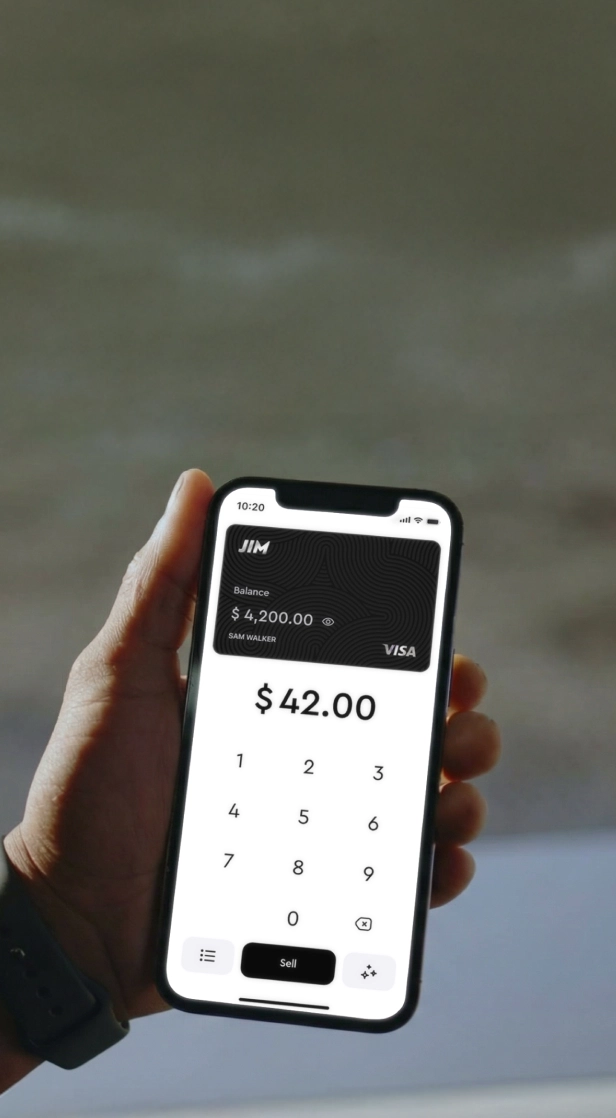
For sales that happen on-site or on-the-go, JIM offers a streamlined solution. With JIM, you can accept debit, credit, and digital wallets directly through your smartphone—just tap and done. There are no hidden costs or extra hardware needed.
At just 1.99% per transaction, it is particularly useful for securing a deposit during a client visit. This rate is very competitive, as average commission rates from other providers can be significantly higher. Here is how it works:
- Get Started: Download JIM app for iOS.
- Make a Sale: Type the sales amount, hit sell, and ask your customer to tap their card or device on your phone.
- Access Funds: Your money is available right on your JIM card as soon as the sale is done—no waiting for bank transfers.
Here are 3 immediate steps to take:
- Decide on your payment terms, such as requiring a 50% deposit for new clients.
- Compare the 1.99% transaction fee of JIM with other mobile payment options.
- Download the JIM app to see how it works on your phone.
Step 6: Secure your funding and manage finances
Find your startup capital
You can fund your initial inventory and operating costs with an SBA Microloan. These loans go up to $50,000 and are offered through nonprofit lenders. Interest rates typically range from 8% to 13%. Approval often depends on your business plan and personal credit.
Another option is equipment financing. This loan uses the POS hardware itself as collateral and can be easier to qualify for. Some new owners make the mistake of using personal credit cards, which carry high interest rates and mix personal and business finances from the start.
Calculate your working capital
You will need enough cash to cover at least six months of operating expenses. This buffer keeps your business running before sales become consistent. A typical budget might include $3,000 for rent, $600 for insurance, and $1,800 for marketing over that period.
To manage this, open a dedicated business bank account as soon as your LLC is formed. This separates your finances for tax purposes. Also, consider accounting software like QuickBooks Online or Xero from day one to track every dollar you spend and earn.
Here are 4 immediate steps to take:
- Research two local SBA Microloan lenders in your area.
- Get a quote for equipment financing based on your initial inventory list.
- Calculate your estimated operating expenses for the first six months.
- Open a separate business checking account.
Step 7: Hire your team and set up operations
Build your sales and support staff
Your first hire should be a Sales Representative. This person will find new clients and conduct product demos. A typical compensation structure is a base salary of $40,000 to $50,000 plus commission. This motivates them to close deals.
Once you have consistent sales, consider a Technical Support Specialist. They handle installations and troubleshoot issues for clients. You can expect to pay a salary between $45,000 and $60,000 for this role. This frees you up to focus on growth.
Many new owners hire too quickly, before they have a solid process. Ensure your product lineup and sales strategy are clear first. Also, ask your hardware distributors about product training programs they offer. This gets your team up to speed without you creating materials from scratch.
Establish your operational systems
To manage your client pipeline, you will want a Customer Relationship Management (CRM) system. Software like HubSpot or Zoho offers free or low-cost plans perfect for a new business. It helps you track leads and follow-ups so nothing falls through the cracks.
As you grow, a good benchmark to aim for is $150,000 to $250,000 in annual revenue per employee. This metric helps you gauge efficiency and decide when it is the right time to expand your team further.
Here are 4 immediate steps to take:
- Draft a job description for a Sales Representative with a base plus commission structure.
- Ask your hardware suppliers about the product training they provide for resellers.
- Compare the free plans of two CRM systems, such as HubSpot and Zoho.
- Set a revenue-per-employee goal for your first year of operation.
Step 8: Market your business and acquire customers
Your first customers will likely come from direct outreach. Create a list of 20-30 local businesses in your niche, like coffee shops or retail stores. Visit them in person during off-peak hours to introduce yourself and your services.
Build your online presence
Set up a professional Google Business Profile. This is free and makes you visible on local maps. Ask your first few clients for reviews, as a 4.5-star rating or higher can significantly increase inquiries. A simple website is also a good idea.
Use content to build trust. Write a short guide on your website titled "5 Questions Retailers Should Ask Before Buying a POS System." Share it on LinkedIn and in local business groups to generate leads and position yourself as an expert.
Track your Customer Acquisition Cost (CAC). Aim for a CAC under $400 per new client initially. Some owners burn their budget on broad ads. A better use of funds is targeted LinkedIn outreach, where you can connect directly with decision-makers.
Here are 4 immediate steps to take:
- Create and fully populate your Google Business Profile.
- Draft a list of 20 local businesses to contact directly.
- Outline a short guide for your website to attract your target customer.
- Connect with 10 local business owners on LinkedIn.
Step 9: Set your pricing strategy
Your pricing has two main parts: the one-time sale of hardware and the recurring income from payment processing. A balanced strategy ensures you make money upfront while you build a long-term revenue stream from transaction fees.
Calculate your hardware markup
For hardware, a standard markup over your wholesale cost is between 20% and 40%. For example, if you buy a card reader for $250 from a distributor, you could price it for your client at $300 to $350.
Some new owners make the mistake of setting their markup too low, thinking it will win them more business. This approach often just cuts into your profit. It is better to justify your price with excellent service and support.
Structure your recurring revenue
The most sustainable income comes from processing fees. You might want to offer an Interchange-plus pricing model. It is transparent for your clients and lets you add a fixed margin, such as 0.20% to 0.40%, on top of the base processing costs.
When you partner with a payment processor, pay close attention to the revenue share agreement. Many resellers accept the first offer they get, leaving money on the table. You should negotiate for a favorable split of the processing fees.
To see how you stack up, analyze the public pricing pages of major players. You can also call a few local competitors and pose as a potential customer to get a quote. This gives you direct insight into market rates.
Here are 4 immediate steps to take:
- Set a standard hardware markup percentage, like 30%, for your initial price list.
- Research the Interchange-plus pricing model to explain its benefits to clients.
- Analyze the pricing structures of two direct competitors in your area.
- Ask a potential payment processing partner about their revenue share options for resellers.
Step 10: Maintain quality and scale your operations
To maintain quality, you should track specific service metrics. After each installation or support call, send a simple survey to measure customer satisfaction (CSAT). A good goal to set is a score of 90% or higher. This gives you a direct pulse on client happiness.
You can also measure your support team's performance. Aim to respond to all support tickets within four business hours. Another key metric is the first-call resolution rate. If you can solve over 75% of issues on the first contact, your clients will notice the efficiency.
Know when to grow
With your quality metrics in place, you can set clear benchmarks for expansion. A simple rule is to hire a new technical support specialist for every 50 to 75 active clients. This ensures your service standards do not slip as your customer base grows.
Some owners make the mistake of hiring more salespeople before their support structure is ready. This often leads to unhappy customers and a damaged reputation. Make sure your operational backend can handle the new business before you chase it.
As you scale, you might want to upgrade your software. An inventory management system like Katana can automate stock tracking. This helps you avoid running out of popular hardware or tying up cash in devices that are not selling well.
Here are 4 immediate steps to take:
- Set a target Customer Satisfaction (CSAT) score of 90% for client interactions.
- Establish a service level agreement (SLA) to respond to support tickets within 4 hours.
- Define a hiring trigger, such as adding a new technician for every 50 clients.
- Research an inventory management system like Katana to prepare for growth.
You now have a clear path to launch your POS sales business. Remember, your long-term success depends less on the hardware and more on the reliable service you offer your clients. You have the roadmap; now go build a business that helps others succeed.
And as you start making sales, you'll need a simple way to get paid. JIM turns your phone into a card reader, so you can accept payments on the spot for a flat 1.99% fee. It's a straightforward solution for your new venture. Download JIM to get started.
.avif)