Starting a skateboard company is a rewarding venture that combines creative design and a love for the culture with solid business savvy. The global market is worth billions, fueled by steady demand for decks and completes from professional riders, casual commuters, and collectors alike.
This guide will take you through the practical steps of validating your business concept, building supplier relationships, acquiring inventory, and obtaining necessary licenses to help you launch a successful skateboard company in the U.S.
Step 1: Plan your business and validate your concept
Your first move is to visit local skateparks and shops. Talk to skaters directly about what they look for in a deck—shape, concave, and graphics. Online, you can monitor discussions on Reddit's r/skateboarding to understand current trends and rider complaints.
Next, analyze your competition. Use their websites to study their product range and price points. For a deeper look at their online strategy, you can use platforms like SEMrush to see what keywords they target and where their web traffic comes from.
Typical startup costs
Many new brands stumble by ordering too much inventory at once. You might want to begin with a small test run of 50-100 decks. This helps you validate designs without a massive financial commitment. This brings us to your initial budget.
Expect manufacturing to be $20-$30 per deck. Graphic design can range from $500 to $2,000. Add another $100-$500 for business registration and about $1,000-$5,000 for a basic e-commerce site. This puts a realistic starting budget between $2,600 and $9,500.
Here are 3 immediate steps to take:
- Survey at least 20 skaters on their preferred deck shapes and graphics.
- Analyze the product lines and prices of three direct competitors.
- Draft a startup budget based on the cost estimates above.
Step 2: Set up your legal structure and get licensed
Most new skateboard brands start as a Limited Liability Company (LLC). This structure protects your personal assets if the business faces debt or lawsuits. An LLC costs between $50 and $500 to form, depending on your state, and offers pass-through taxation.
A mistake to avoid is mixing business and personal funds. Always open a separate business bank account once your LLC is approved. This maintains the legal separation that an LLC provides and simplifies your bookkeeping immensely.
Once your business entity is established, get a free Employer Identification Number (EIN) from the IRS website. You will also need a seller's permit from your state's department of revenue to legally collect sales tax on your products.
Finally, check with your city or county clerk's office for a general business license. These typically cost $50 to $150 annually. Processing times can range from a few days to several weeks, so it is a good idea to start the process early.
Here are 4 immediate steps to take:
- Decide on an LLC structure and file the formation documents with your state.
- Apply for a free Employer Identification Number (EIN) online with the IRS.
- Register for a seller's permit through your state's revenue department.
- Contact your local city or county office to apply for a business license.
Step 3: Protect your business with the right insurance
Insurance protects your company from claims that could otherwise be financially devastating. For a skateboard brand, your primary concern is product liability. This covers you if a customer is injured because your deck snaps or has a manufacturing defect. A single claim can be costly.
Key insurance policies
You should also secure general liability insurance. This policy protects you against claims of injury or property damage that occur during business operations, like at a sponsored skate demo. If you hold inventory, commercial property insurance covers your stock against theft, fire, or damage.
Once you hire your first employee, you will need workers' compensation insurance. This is a state requirement that covers medical costs and lost wages if an employee gets hurt on the job. It is non-negotiable.
Finding a provider and typical costs
A combined general and product liability policy with $1 million in coverage often costs between $1,000 and $3,000 annually. You might want to work with a broker who understands action sports. Providers like The Hartford, Next Insurance, or Veracity Insurance Solutions are good places to start your search.
Here are 4 immediate steps to take:
- Request a quote for a $1 million product liability policy.
- Assess your need for commercial property insurance based on inventory value.
- Compare general liability quotes from at least two different providers.
- Research insurance brokers who have experience with e-commerce or sports brands.
Step 4: Source your decks and set up operations
You can start your brand from a garage or a 10x10 foot storage unit. This space is enough for your first 100-200 decks and costs about $100-$200 per month. At this small scale, you typically do not need to worry about specific commercial zoning.
Finding a deck manufacturer
Your woodshop choice is a major decision. U.S. manufacturers like Generator Distribution or Pennswood produce high-quality decks but often require minimum order quantities (MOQs) of 100 units per graphic. This can represent a large initial investment for a new brand.
Many founders get fixated on domestic production at first. You might want to look at overseas manufacturers, as they can offer MOQs as low as 50 decks. This allows you to test more designs with less financial risk. Always order a physical sample before you commit to a large run.
Shipping and fulfillment gear
For shipping, a thermal label printer from a brand like Rollo will cost around $150-$250 and make fulfillment much faster. You will also need a digital shipping scale ($30) to calculate postage accurately and a stock of boxes or poly mailers for your decks.
Here are 4 immediate steps to take:
- Request catalogs and MOQ info from two U.S. and two overseas deck manufacturers.
- Order a sample deck from your top supplier choice to verify its quality.
- Compare monthly rental costs for a 10x10 self-storage unit in your area.
- Create a shopping list for shipping supplies, including a thermal printer and scale.
Step 5: Set up payment processing
Your online store will be your main sales channel, so you need a payment gateway to accept credit cards and digital wallets. Solutions like Stripe or Shopify Payments integrate directly with most e-commerce platforms.
Expect to pay transaction fees, which are typically around 2.9% plus $0.30 for every online sale. A mistake some new owners make is only planning for online transactions. You will miss sales at demos, pop-ups, and local events.
In-person payments
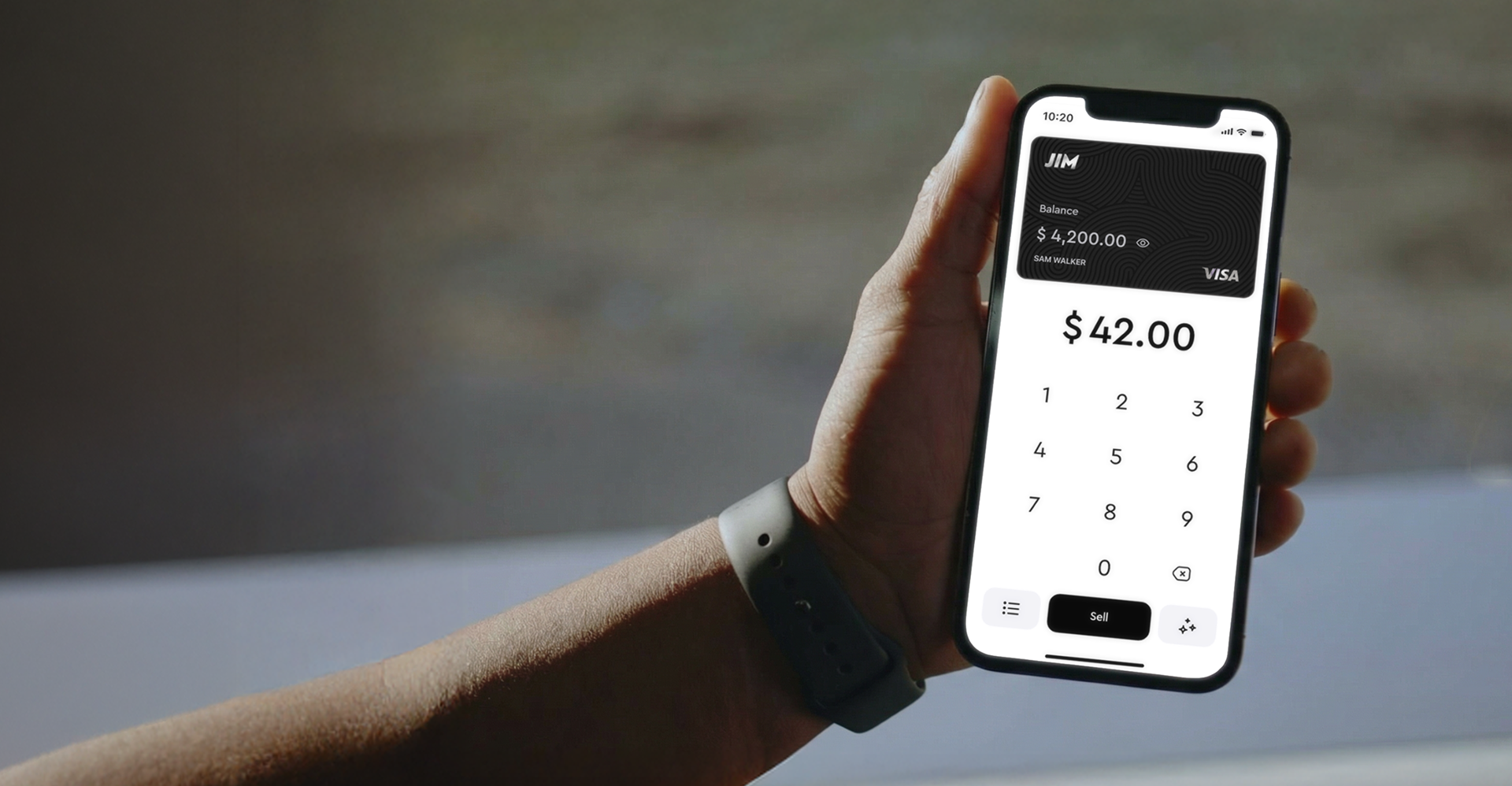
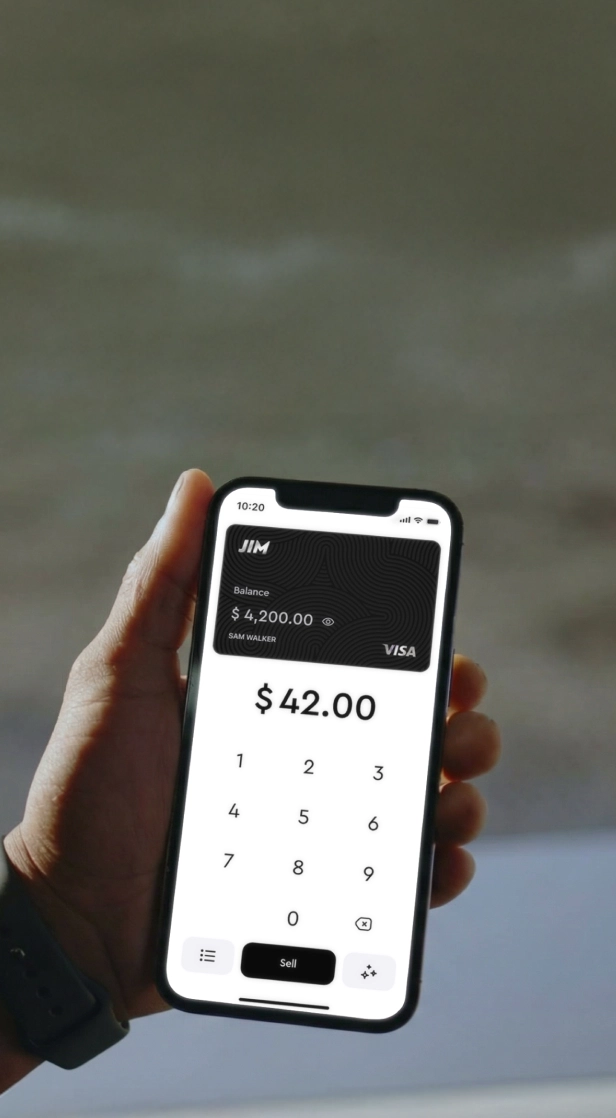
For skateboard companies that need to accept payments on-site or on-the-go, JIM offers a streamlined solution. With JIM, you can accept debit, credit and digital wallets directly through your smartphone - just tap and done.
At just 1.99% per transaction with no hidden costs or extra hardware needed, it's particularly useful for selling decks at a local skate jam. This rate is much lower than the average commission rates other providers offer.
- Get Started: Download the JIM app for iOS.
- Make a Sale: Type the sales amount, hit sell, and ask your customer to tap their card or device on your phone.
- Access Funds: Your money is available right on your JIM card as soon as the sale is done - no waiting for bank transfers.
Here are 3 immediate steps to take:
- Compare transaction fees for two e-commerce payment gateways.
- Decide if you will sell products in person at events or pop-ups.
- Download the JIM app to see how it works for on-the-go sales.
Step 6: Fund your business and manage finances
Most new brands self-fund their first production run. If you need outside cash, an SBA Microloan is a strong option. These government-backed loans provide up to $50,000 and are designed for startups that may not qualify for traditional bank financing.
The average microloan is about $13,000, with interest rates typically between 8% and 13%. You will need a solid business plan and a fair credit score to qualify. This funding is ideal for your second inventory order or a dedicated marketing push.
Working capital for your first six months
You should budget for at least $5,000 to $10,000 in working capital. This covers a reorder of 50-100 decks, social media ad campaigns ($300-$500 per month), and operational costs like e-commerce fees. A frequent misstep is spending everything on inventory with nothing left for marketing.
You might also look into business grants. While few are specific to skateboarding, programs like the Amber Grant award funds to women-owned businesses. The application process is competitive, but the funding does not need to be repaid.
Here are 3 immediate steps to take:
- Draft a six-month operating budget that includes marketing costs.
- Research one SBA Microloan lender in your state.
- Identify one business grant and review its eligibility requirements.
Step 7: Hire your team and manage operations
In the beginning, you are the entire team. You will handle design, marketing, and shipping. A frequent misstep is hiring too quickly. You should wait to bring on paid staff until your revenue can comfortably support the expense.
Your first hires
Your first help will likely be freelancers. A graphic designer is a good place to start. Expect to pay $500 to $2,000 per deck graphic. Always use a contract that defines deliverables, revisions, and ownership of the final art to avoid future disputes.
Once sales pick up, you might consider a part-time social media manager for $20-$30 per hour. Their job is to post content and engage with your followers. This frees you up to focus on product and sales.
For managing these collaborations, a project management platform like Trello or Asana can keep tasks organized. They offer free plans that are perfect when you start.
As a benchmark, many brands wait until they reach at least $100,000 in annual revenue before considering their first full-time employee. This ensures you have stable cash flow to cover a salary.
Here are 4 immediate steps to take:
- Outline the responsibilities for a freelance graphic designer.
- Find a basic freelance work contract template online.
- Set a monthly revenue target that would justify a part-time hire.
- Create a free account on Trello to map out your production workflow.
Step 8: Market your brand and get customers
Your marketing should start on Instagram and TikTok. Create short video clips that show your decks in action and share behind-the-scenes content. A consistent schedule of 3-5 posts per week is a good way to build momentum.
Once you have some content, you might want to sponsor a few local skaters. Offer them free decks in exchange for social media posts and visibility at the skatepark. This is how you build authentic grassroots support for your brand.
Your first ad campaign
You can run a targeted Instagram ad with a small budget of $10-$20 a day. Target users who show interest in skate media like Thrasher or The Berrics. This puts your product directly in front of a relevant audience.
As you run ads, keep an eye on your Customer Acquisition Cost (CAC). A good benchmark for a new e-commerce brand is $20-$40 per customer. If your cost is higher, you can refine your ad creative or audience settings.
A trap to avoid is focusing only on online sales. Show up at local skate contests and markets. Selling in person gets you direct feedback and makes your brand a real part of the local scene.
Here are 4 immediate steps to take:
- Create a content plan for one week of social media posts.
- Identify three local skaters you could potentially sponsor.
- Build a target audience profile for an Instagram ad campaign.
- Find one local skate event to attend in the next two months.
Step 9: Price your products for profit
Pricing models and margins
Let's say your deck costs $25 to produce. The standard industry model is to sell it to a skate shop for $50. The shop then prices it for the customer at $75 or more. This is wholesale, and it gives you a 50% gross margin before other expenses.
Now, if you sell directly from your website, the math gets better. You could price that same $25 deck at $60-$70. This pushes your gross margin above 60% and gives you more cash to reinvest in marketing and new designs.
A trap some founders fall into is pricing too low to get quick sales. This can devalue your brand and makes it difficult to raise prices later. Your price is a signal of your board's quality, so don't undervalue your work from the start.
Setting your markup
For wholesale, a 100% markup (doubling your cost) is the baseline. This is often called keystone pricing. For direct-to-consumer sales, you might aim for a 150-200% markup to cover your marketing and platform fees while still offering a fair price.
To find your sweet spot, analyze the prices of at least five other brands. Look at both established companies and newer startups. This helps you understand what skaters are willing to pay for a deck with your specific features and graphics.
Here are 4 immediate steps to take:
- Calculate your final cost per deck, including manufacturing and shipping.
- Research the retail prices of five competing skateboard brands.
- Set a wholesale price using at least a 100% markup from your cost.
- Determine a direct-to-consumer (DTC) price for your online store.
Step 10: Control quality and scale your operations
Establish your quality standards
For every batch of decks, you need a quality control process. Check each board for delamination, warping, and proper graphic alignment. You might want to keep one perfect "master deck" from your first sample run to compare against all future inventory for concave consistency.
A mistake some new owners make is accepting a high defect rate. An initial rate of 3-5% from a new manufacturer is not uncommon, but you should have an agreement for them to credit or replace any flawed decks. This protects your profit margin and brand reputation.
When to scale up
Once you consistently sell 100-150 decks per month, it is time to think about growth. This is a good signal that you have product-market fit. Your first move is often to hire a part-time warehouse helper to manage packing and shipping, which frees you up for design and marketing.
As your inventory grows beyond 1,000 units, your e-commerce platform's basic stock management may not be enough. You can look at inventory management software like Katana or Cin7 to track stock across multiple sales channels and prevent overselling during a product drop.
Here are 4 immediate steps to take:
- Create a quality control checklist with at least five inspection points.
- Establish a process with your manufacturer for handling defective decks.
- Set a monthly sales volume (e.g., 100 decks) as your trigger to hire help.
- Compare the features of two inventory management platforms like Katana and Cin7.
Starting a skateboard company is about more than just business; it's about contributing to a culture. Remember to stay connected to your local scene, as that authenticity is what skaters value most. You have the roadmap, now go build your brand one deck at a time.
As you sell at skateparks and events, payment should be simple. JIM turns your smartphone into a card reader for a flat 1.99% transaction fee, with no extra hardware needed. Download JIM to get started.
.avif)