Starting a speaking business is a rewarding venture that combines powerful storytelling with smart business strategy. The industry is worth billions, with steady demand for insightful speakers at corporate events, trade conferences, and educational institutions.
This guide will take you through the practical steps to define your niche, build your brand, market your services, and handle the legal setup to help you launch a successful speaking business in the U.S.
Step 1: Plan your business and validate your topic
Research your market and niche
First, validate your speaking topic. Use LinkedIn polls to survey your network on challenges related to your expertise. You can also analyze agendas on conference sites to see what topics are in demand. This gives you direct market feedback before you invest heavily.
Many new speakers choose a topic that is too broad. Instead of "leadership," focus on "leadership for first-time remote managers." A narrow niche makes you the go-to expert and simplifies your marketing efforts.
Analyze competitors and set your fee
With your niche defined, look at other speakers in that space. Search speaker bureau websites like AAE Speakers and BigSpeak. Also, use LinkedIn to find speakers with similar topics to understand their positioning, branding, and the types of events they book.
Budget for startup costs
Your initial investment will likely range from $2,000 to $9,000. A professional demo video is a significant part of this. You can start with quality footage from smaller local gigs to manage this expense early on. Here is a typical cost breakdown:
- Website & Branding: $500 - $3,000
- Demo Video Production: $1,000 - $5,000+
- Marketing Materials (One-Sheet): $200 - $500
- Business Registration (LLC): $300 - $800
Here are 4 immediate steps to take:
- Draft three specific, niche speaking topics based on your expertise.
- Research five competing speakers on LinkedIn or speaker bureau sites.
- Create a startup budget using the cost ranges provided.
- Poll your professional network about your proposed topics.
Step 2: Set up your legal and financial foundation
Choose your business structure
You will want to form a Limited Liability Company (LLC). Many new speakers make the mistake of operating as a sole proprietor, which puts personal assets at risk. An LLC separates your business and personal finances. File with your state's Secretary of State for $50 to $500.
With an LLC, profits and losses pass through to your personal tax return. This avoids the double taxation that corporations face. This structure offers protection without complex compliance.
Get your tax ID and licenses
Once your LLC is approved, get a free Employer Identification Number (EIN) from the IRS website. You need an EIN to open a business bank account and file taxes. The speaking industry does not have special federal licenses, but you will need a local business license from your city or county.
These local licenses typically cost between $50 and $100 annually. Processing times vary from immediate online approval to a few weeks. With your EIN and business license, you can open a dedicated business bank account to keep your finances clean from the start.
Here are 4 immediate steps to take:
- Decide on your business name and check its availability.
- File for an LLC with your state's Secretary of State.
- Apply for a free EIN on the IRS website.
- Research your city or county's business license requirements.
Step 3: Secure your insurance and manage risk
You will want to protect your business with two main policies. General Liability insurance covers bodily injury or property damage, like if someone trips over your projector cord. A $1 million policy typically costs between $300 and $700 annually.
Professional Liability, also called Errors & Omissions (E&O), is also a good idea. It protects you from claims of bad advice, defamation, or copyright infringement in your presentations. Expect to pay $500 to $1,000 per year for a $1 million E&O policy.
Many speakers make the mistake of waiting until a venue requests proof of insurance. You can often bundle General and Professional Liability policies for a discount. This avoids a last-minute scramble and shows clients you are a professional.
When you look for coverage, consider providers like Hiscox, The Hartford, or Thimble that work with consultants and small businesses. A general agent may not understand a speaker's specific risks, so a specialist can find you a better-suited policy.
Here are 4 immediate steps to take:
- Get a bundled quote for General and Professional Liability insurance.
- Research the insurance requirements for three potential speaking venues.
- Contact an insurance provider that specializes in small businesses.
- Review your presentation materials for potential copyright issues.
Step 4: Set up your office and marketing assets
Your speaking business does not need a commercial office, so you can skip lease negotiations and zoning headaches. A dedicated home office is perfect. A quiet space of about 100 square feet provides enough room for a desk and basic recording equipment.
Assemble your marketing toolkit
For virtual presentations, a quality webcam and microphone are non-negotiable. Consider a Logitech C920 webcam ($60-$80) and a Blue Yeti USB microphone ($100-$130). This setup looks professional without a huge initial investment.
With your gear ready, focus on your demo video. This is a 3-5 minute highlight reel that sells your skills to event planners. A common misstep is to use low-quality footage. It is better to have a short, crisp video from one event than a long, poorly shot montage.
You also need a professional one-sheet. This is a single-page PDF with your bio, topics, and contact details. You can create one with Canva for free or hire a designer on Upwork for $200-$500 to make it stand out.
Here are 4 immediate steps to take:
- Set up a dedicated home office space.
- Research prices for a webcam and USB microphone.
- Outline the three main clips for your demo video.
- Draft the content for your speaker one-sheet.
Step 5: Set up your payment processing
Standard practice is to require a 50% deposit to book the date, with the final 50% due on the day of your speech. Make sure your speaking agreement clearly outlines these terms, accepted payment methods, and any late fees.
While corporate clients often prefer bank transfers or checks, you need a way to accept credit cards. This is especially true if you plan to sell books or coaching packages after your presentation. Many speakers miss this opportunity for extra revenue.
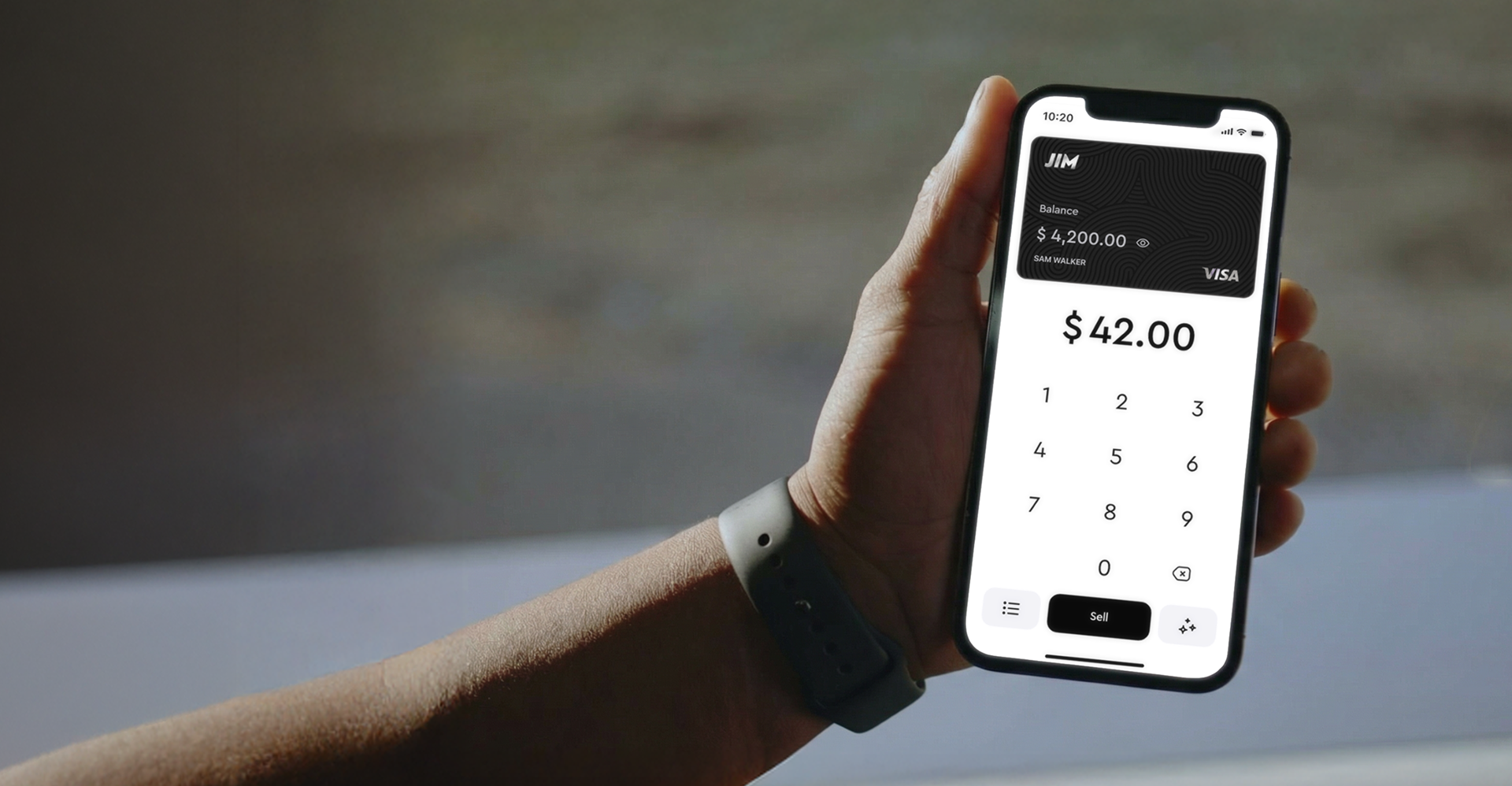
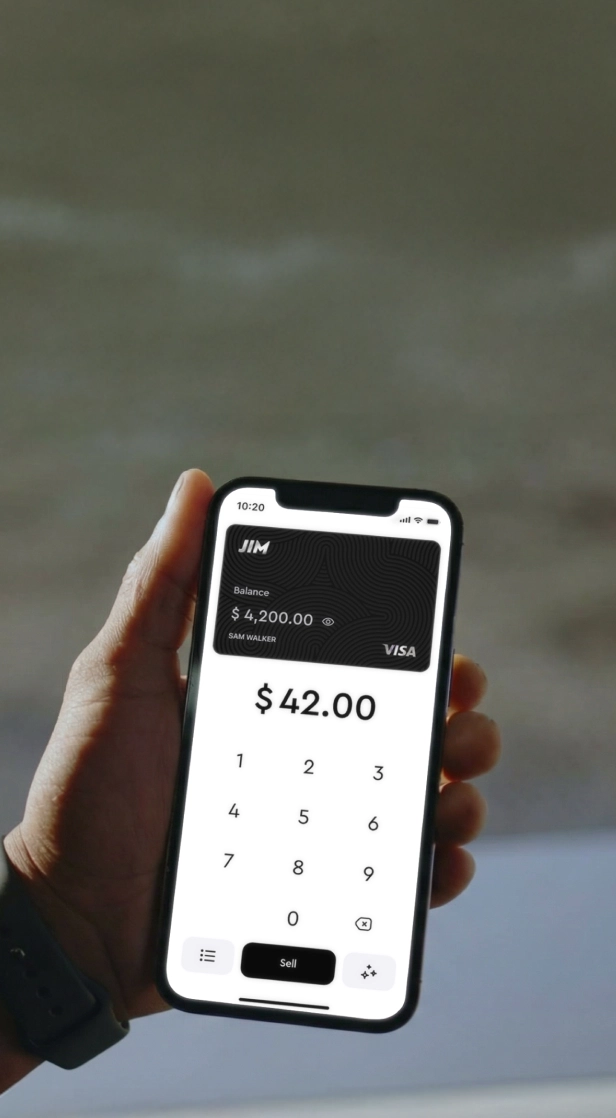
For payments on-the-go, JIM offers a streamlined solution. You can accept debit, credit, and digital wallets directly on your smartphone. Just tap and the transaction is done. It is a great fit for selling merchandise at the back of the room.
At just 1.99% per transaction with no hidden costs or extra hardware, it is very competitive. Other providers often charge between 2.5% and 3.5% and may require you to buy a card reader. With JIM, you avoid those extra expenses.
- Get Started: Download the JIM app for iOS.
- Make a Sale: Type the sales amount, hit sell, and ask your customer to tap their card or device on your phone.
- Access Funds: Your money is available right on your JIM card as soon as the sale is done - no waiting for bank transfers.
Here are 4 immediate steps to take:
- Update your standard speaking agreement to include 50% deposit terms.
- Decide on the primary payment methods you will accept from clients.
- Outline what products or services you could sell after a speech.
- Explore the JIM website to see how it fits your on-site sales plan.
Step 6: Fund your business and manage your finances
Secure your startup funding
Most speakers self-fund or use a business credit card with a 0% introductory APR. This is often the fastest way to cover initial costs. For a larger capital need, you might consider an SBA Microloan. These loans range from $5,000 to $10,000 for new service businesses.
To qualify for an SBA Microloan, you will need a strong business plan and a personal credit score over 680. Interest rates typically fall between 8% and 13%. You can also look for grants from organizations like the National Association for the Self-Employed (NASE), which offers up to $4,000.
Calculate your working capital
Many new speakers forget that booking cycles can be long. An event planner might contact you today for a speech six months from now. You need cash on hand to cover your operating costs during that gap. This is your working capital.
Plan for at least six months of expenses. A safe buffer is $3,000 to $5,000. This covers marketing, software subscriptions, insurance, and travel deposits before your first speaking fees arrive. Underestimating this is a frequent misstep that can stall your business.
Here are 4 immediate steps to take:
- Draft a one-page business plan for a potential loan application.
- Calculate your estimated operating costs for the first six months.
- Research NASE Growth Grant eligibility and application deadlines.
- Compare two business credit cards with 0% introductory APR offers.
Step 7: Hire your team and streamline operations
Build your support team
You will not need a full-time staff at first. A good time to hire is when you spend over five hours a week on administrative tasks. Start with a part-time Virtual Assistant (VA) for $20-$40 per hour to manage your email, calendar, and social media.
Once you have a polished demo video and a few paid gigs, you might consider a booking agent. They find and negotiate speaking opportunities for a 15-25% commission. Many speakers give up too much commission, so cap it in your contract and define performance expectations clearly.
Implement your operations software
To manage client relationships, you can use a speaker-specific CRM like SpeakerFlow or KarmaSpeaker. These platforms help you track leads, contracts, and event details in one place. They prevent important information from getting lost in your inbox.
For scheduling, a service like Calendly or Acuity Scheduling is a great help. It lets event planners book calls with you based on your availability. This eliminates back-and-forth emails and makes you look organized and professional from the first interaction.
Here are 4 immediate steps to take:
- List five administrative tasks you could delegate to a VA.
- Research two speaker-specific CRMs to see which fits your needs.
- Draft a sample booking agent agreement with a 20% commission clause.
- Set up a free Calendly account and embed it on your website.
Step 8: Market your business and get clients
Develop your online presence
Your website is your digital storefront. Use a platform like Squarespace or WordPress to build it. Make sure to feature your demo video, one-sheet, and any testimonials you have. This becomes your central hub for event planners to review your work.
A spot many speakers miss is search engine optimization (SEO). You might want to target keywords like "[your niche] speaker" or "keynote speaker on [your topic]". This simple step helps event planners find you through Google when they search for talent.
Use targeted outreach and content
With your website live, you can shift to direct outreach. Identify 20-30 conferences or companies in your niche. Find the event planner on LinkedIn and send a personalized message about how your topic solves a problem for their audience.
Many new speakers send generic emails, which rarely work. A personalized approach that references a recent company event or theme has a much higher response rate. You can realistically aim for a 5-10% reply rate from this kind of cold outreach.
You can also create content on LinkedIn. Post short video clips or write articles related to your speaking topics. This builds your authority and attracts inbound leads. A consistent schedule, perhaps two or three posts a week, works best.
Here are 4 immediate steps to take:
- List 10 keywords for your website's SEO.
- Identify 20 target companies or conferences for outreach.
- Draft a personalized outreach message template.
- Outline three LinkedIn posts based on your speaking topics.
Step 9: Price your services and create packages
Set your speaking fees
New speakers often price themselves too low. A typical 45-60 minute keynote for a corporate event can range from $5,000 to $15,000. For your first few gigs, you might aim for $2,500 to $5,000 to build your portfolio and gather testimonials.
Half-day workshops (3-4 hours) usually command 1.5x your keynote fee, while full-day engagements can be 2x. Research speakers on bureau sites to see what others with similar experience charge. This gives you a solid market baseline for your own rates.
Create value-based packages
Instead of just a single speech, you can offer packages. A popular option is to bundle a keynote with a follow-up Q&A session or a small group workshop. This positions you as a partner rather than just a one-time speaker and increases your total fee.
For example, you could offer a keynote for $7,500 or a package that includes the keynote plus a 90-minute breakout session for $10,000. This makes the package an attractive upsell for the event planner who wants to maximize your impact.
Here are 4 immediate steps to take:
- Define your starting fee for a 60-minute keynote.
- Create a pricing sheet with rates for half-day and full-day workshops.
- Develop one package that bundles your keynote with another service.
- Research the fees of five comparable speakers in your niche.
Step 10: Control your quality and scale your business
Measure your performance
Your reputation is your quality control. After every speech, send a simple survey to the event planner. Ask them to rate your performance on a 1-10 scale and ask for one thing you could improve. This gives you direct, actionable feedback.
You should also track your re-booking rate and the number of referrals you get from each event. A re-booking rate over 25% in your first two years is a strong signal. Many speakers guess at their performance, but data gives you a clear picture.
Know when to grow
When you consistently book more than three paid speeches a month, it is time to hire a virtual assistant. This frees you to focus on delivery and sales instead of administrative work. Some speakers wait too long and get burned out by logistics.
Once your feedback scores are consistently above 9/10 and you have a solid portfolio of testimonials, you should raise your fees by 20-30%. This is a natural step that reflects your growing expertise and demand. It positions you for higher-tier events.
For a long-term goal, you might look at the Certified Speaking Professional (CSP) designation from the National Speakers Association. It requires extensive experience and income verification, but it is the industry's top earned designation.
Here are 4 immediate steps to take:
- Create a simple post-event feedback survey.
- Set a goal to achieve a 25% re-booking rate.
- Define the booking number that will trigger hiring a VA.
- Look up the requirements for the CSP designation.
Building a speaking business is about more than just expertise, it's about connection. Your unique voice is your greatest asset, so trust it. You have the roadmap, now it is time to take the first step on your journey.
As you book gigs and sell products, you will need a simple way to get paid. JIM turns your smartphone into a card reader for a flat 1.99% fee per transaction, with no extra hardware. Download JIM to get started.
.avif)