Starting a sports memorabilia business is an exciting venture that combines a passion for sports history and collecting with sharp business acumen. The industry is a multi-billion dollar market, with steady demand for items like autographed jerseys and vintage cards from serious collectors, casual fans, and investors alike.
This guide will take you through the practical steps of validating your business concept, acquiring inventory, building supplier relationships, and obtaining the right permits to help you launch a successful sports memorabilia business in the U.S.
Step 1: Plan your business and validate your idea
First, validate your niche by researching what actually sells. Use eBay’s “Sold Items” filter to see real transaction prices, not just optimistic asking prices. Also, check the PSA Population Report to understand the supply of specific graded cards, which helps you spot true rarity.
With that data, you can analyze competitors more effectively. Platforms like Terapeak for eBay data and WorthPoint for auction house results show you historical sales. A frequent misstep is to price items based on what others ask. Always base your prices on completed sales data.
Estimate your startup costs
Speaking of costs, your initial inventory will be the largest part of your budget. Beyond that, you have setup fees and operational expenses. A clear budget prevents overspending before you make your first sale. Here is a typical breakdown to expect.
- Initial Inventory: $2,000 - $10,000
- Business Registration & Permits: $100 - $500
- E-commerce Platform Fees: $30 - $300 per month
- Shipping Supplies: $200 - $500
Here are 3 immediate steps to take:
- Analyze sold listings on eBay for three athletes or teams in your chosen niche.
- Use WorthPoint to research the sales history of five potential inventory items.
- Draft a preliminary budget that outlines your estimated costs for the first six months.
Step 2: Establish your legal structure and get licensed
Choose your business structure
You might want to consider forming a Limited Liability Company (LLC). It separates your personal assets from business debts. Many new sellers make the mistake of operating as a sole proprietorship, which offers no liability protection if your business faces legal issues.
An LLC also provides pass-through taxation, meaning profits are taxed on your personal return. This simplifies accounting. You can register your LLC through your state's Secretary of State website, with fees typically between $50 and $200.
Get your federal and state permits
Next, get an Employer Identification Number (EIN) from the IRS. It is a federal tax ID for your business, it is free, and you can apply online to receive it immediately. You will need this for business banking and taxes.
You also need a state seller's permit, sometimes called a resale certificate. This lets you buy inventory tax-free and requires you to collect sales tax. Check your state's Department of Revenue website. Processing can take a few days to two weeks.
Finally, look into your city or county's requirements. Most require a general business license to operate legally, which can cost between $50 and $150 annually.
Here are 4 immediate steps to take:
- Register your LLC with your state's Secretary of State.
- Apply for a free Employer Identification Number (EIN) on the IRS website.
- Find and apply for a seller's permit through your state's Department of Revenue.
- Check your local city or county government website for business license applications.
Step 3: Insure your business and manage risk
Protect your inventory and property
You will want to secure a Business Owner's Policy (BOP). This bundles General Liability, which covers third-party injuries, and Commercial Property insurance for your inventory. A frequent mistake is to assume your homeowner's policy covers business assets. It almost never does.
A BOP with $1 million in liability coverage typically costs between $500 and $1,200 annually. Also, consider Inland Marine insurance. This protects your memorabilia when it is in transit to shows, grading companies, or customers, which standard property policies often exclude.
Guard against authenticity disputes
Professional Liability insurance, also known as Errors & Omissions (E&O), is another consideration. It protects you if a customer disputes an item's authenticity. A policy with $250,000 in coverage might run from $600 to $1,500 per year, a small price for peace of mind.
You should work with an agent who understands collectibles. General agents may not grasp the specific risks. Look into providers like Collectibles Insurance Services, Hugh Wood Inc., or American Collectors Insurance. They specialize in high-value, unique items and offer tailored policies.
Here are 4 immediate steps to take:
- Request a quote for a Business Owner's Policy (BOP) from a commercial insurer.
- Contact a specialized provider like Collectibles Insurance Services to compare coverage.
- Ask potential insurers specifically about adding Inland Marine coverage for items in transit.
- Review your current homeowner's or renter's policy to confirm its business inventory exclusions.
Step 4: Set up your location and equipment
Most new memorabilia businesses start from home, which avoids high overhead. You just need a dedicated, climate-controlled space like a spare room or office. This protects your inventory from temperature swings and humidity, which can damage cards and autographs over time.
When you decide to expand to a physical storefront, look for a small retail space around 500-1,000 square feet. Before you sign a long-term lease, you might want to test your local market with a booth at a collectibles show or a short-term pop-up shop.
Gather your operational supplies
Your setup directly impacts your sales. Many sellers make the mistake of using poor smartphone photos, which signals a lack of professionalism. A small investment in your presentation can significantly increase what buyers will pay. Here is what you will need to start.
- Photography Setup: A quality camera and a lightbox will cost between $350 and $950. Good lighting and clear photos build trust and justify premium prices for your items.
- Shipping Station: You will need a digital scale, a thermal label printer, and a variety of bubble mailers and boxes. Expect to spend $150 to $400 for these items.
- Archival Supplies: Stock up on penny sleeves, toploaders, and team bags. You can buy these in bulk from distributors like BCW Supplies or Ultra PRO, which often have minimum orders around $100.
Here are 3 immediate steps to take:
- Designate a secure, climate-controlled area in your home for inventory storage.
- Compare prices for a lightbox and a digital shipping scale on Amazon or eBay.
- Open a wholesale account with a supplier like BCW Supplies to get better rates on protective gear.
Step 5: Set up your payment processing
Most online sales will use PayPal or your e-commerce platform’s checkout. For in-person events like card shows, you need a way to accept credit cards. Many new sellers get caught by high transaction fees or clunky card readers that are a hassle to carry around.
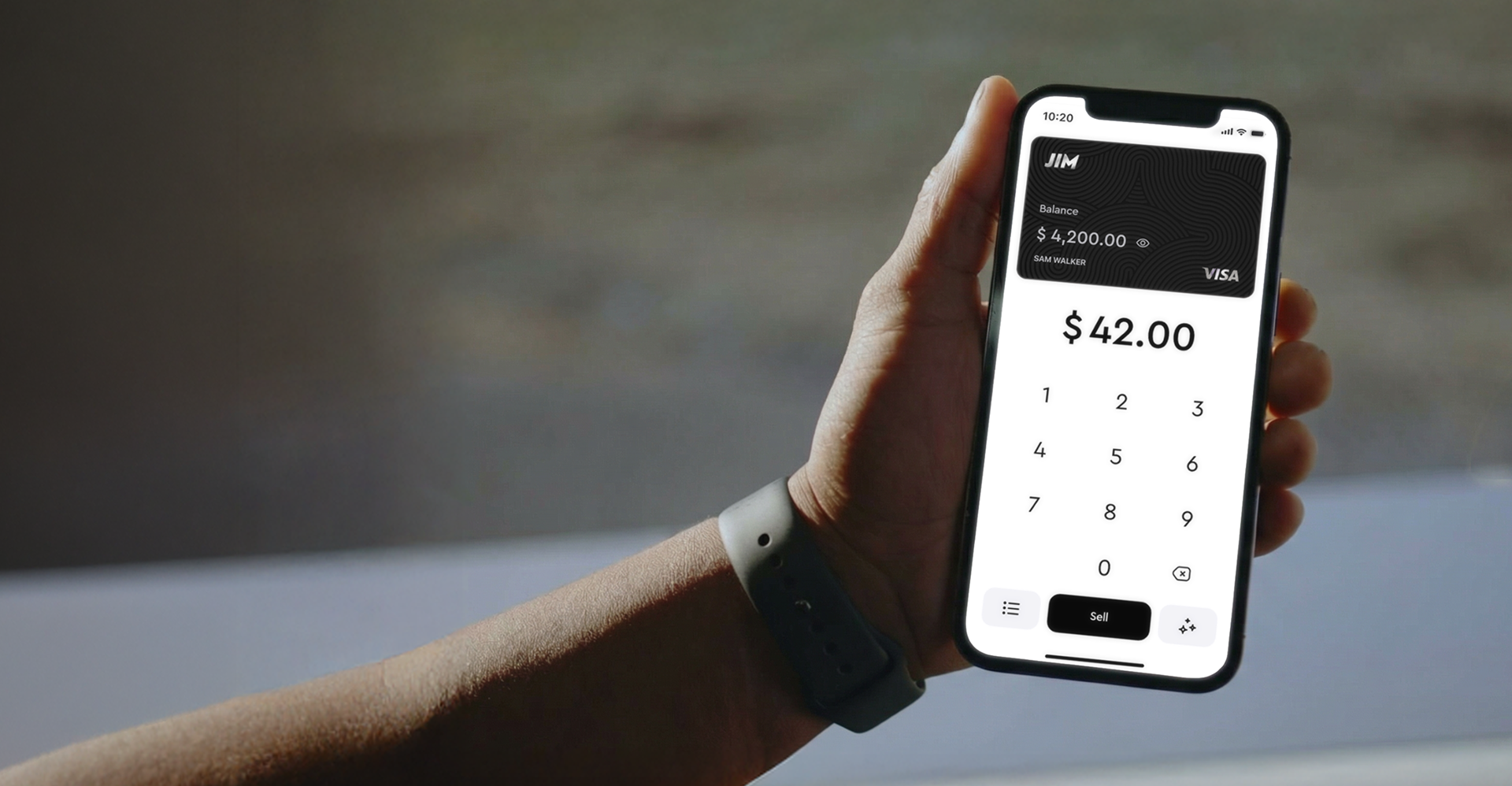
You should look for a solution with transparent pricing and no extra hardware. For sports memorabilia businesses that need to accept payments on-site or on-the-go, JIM offers a streamlined solution. With JIM, you can accept debit, credit and digital wallets directly through your smartphone - just tap and done.
At just 1.99% per transaction with no hidden costs, it's a strong option. Other providers often charge between 2.5% and 3.5% plus monthly fees. It's particularly useful for selling at card shows or local meetups where speed and simplicity matter.
- Get Started: Download JIM app for iOS
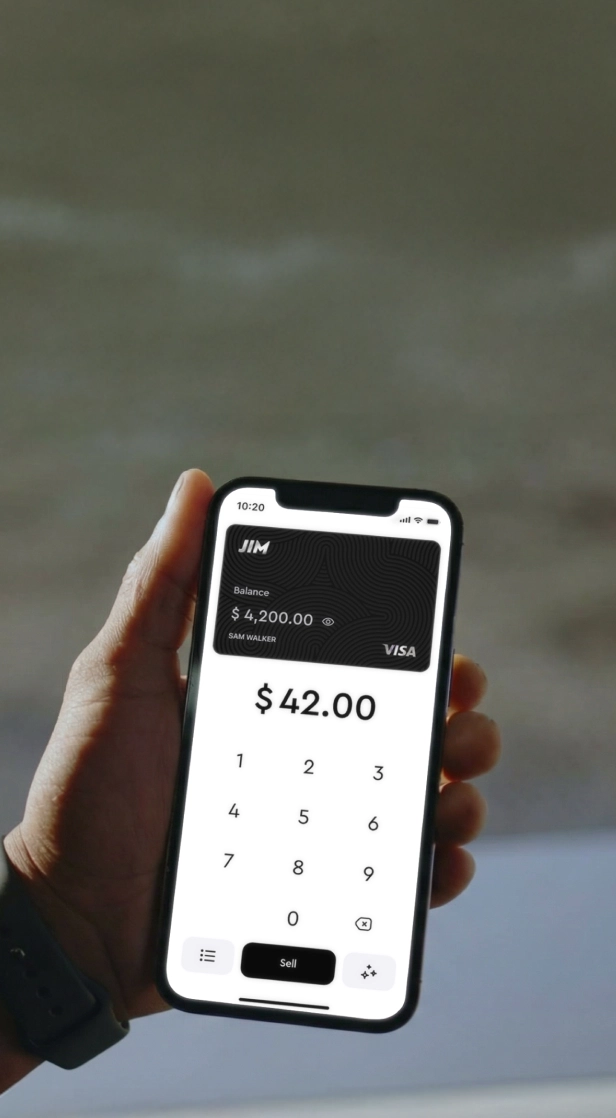
- Make a Sale: Type the sales amount, hit sell, and ask your customer to tap their card or device on your phone
- Access Funds: Your money is available right on your JIM card as soon as the sale is done - no waiting for bank transfers
Here are 3 immediate steps to take:
- Compare the transaction fees of PayPal, Square, and JIM for a typical sale amount.
- Download the JIM app for iOS to see how the interface works.
- Decide which payment methods you will offer for both online and in-person sales.
Step 6: Fund your business and manage finances
Secure your startup funding
Traditional banks often hesitate to fund inventory-based online businesses. Instead, look into the SBA Microloan program. It provides loans from $500 to $50,000 through nonprofit lenders, with interest rates typically between 8% and 13%. These are great for initial inventory purchases.
You might also consider online lenders like Accion Opportunity Fund. They are often more flexible with new e-commerce sellers who lack a long credit history. Their approval process is usually faster than a bank's, sometimes taking just a few days.
Calculate your working capital
Your working capital is the cash you need to operate for the first six months. Many new sellers focus only on the cost of inventory and run out of money for platform fees and shipping. This can stall your business before it even gets going.
To avoid this, add your initial inventory budget to six months of operating expenses. This means your target for working capital should be between $3,000 and $12,000 to cover all your costs while you build sales momentum.
Here are 3 immediate steps to take:
- Research the SBA Microloan program requirements on the SBA website.
- Calculate your estimated working capital needs for the first six months.
- Explore online lenders like Accion Opportunity Fund to compare their loan products.
Step 7: Build your team and manage operations
You will likely handle everything yourself at first. A good benchmark to consider your first hire is when you consistently hit $8,000-$10,000 in monthly revenue, or when packing orders takes more than 15 hours per week.
Define key roles
Your first hire will probably be a part-time Shipping Assistant. This person handles packing, label printing, and post office runs for about $15-$20 per hour. This frees you up to focus on sourcing and listing new inventory.
As you grow, an Inventory Specialist becomes valuable. They manage listings, track stock levels, and handle initial item sorting. Expect a salary range of $40,000 to $55,000 for a full-time position. Many new owners delegate authentication too early; keep this critical task for yourself.
Streamline your workflow
To manage your growing stock, use an inventory management app like Sortly. It helps you track items from purchase to sale, preventing you from selling an item you no longer have. Plans often start around $25 per month.
As you build your team, watch your payroll costs. A healthy target for a small e-commerce business is to keep total staff expenses under 20% of your gross revenue. This ensures you maintain profitability while you scale.
Here are 4 immediate steps to take:
- Set a monthly revenue goal that will signal it is time to hire.
- Draft a simple job description for a part-time Shipping Assistant.
- Explore inventory management apps like Sortly to see how they fit your workflow.
- Calculate what 20% of your current monthly revenue is to set a payroll budget.
Step 8: Market your business and find customers
Your marketing should start on visual platforms like Instagram and Twitter. Post high-quality photos of your inventory. Think "mail day" unboxings or reveals of freshly graded cards. This builds excitement and shows you are an active collector, not just a seller.
Build your online presence
Many new sellers only post sales listings. You will find more success if you engage with the community. Share stories behind your items or offer collecting tips. This builds trust and a loyal following that leads to sales.
Once you have some content, you can run targeted ads. A Facebook ad campaign aimed at fans of a specific team can be effective. A typical Customer Acquisition Cost (CAC) in e-commerce is $15-$40, so a small budget of $100 can test the waters.
Engage with the community
Do not overlook niche online forums like the Blowout Cards Forums or Net54. These are hubs for serious collectors. Participate in discussions and build a reputation. A well-known member often gets the first look when others decide to sell their collections.
Here are 4 immediate steps to take:
- Create an Instagram account and post your top five items using high-quality photos.
- Join a sports card forum like Blowout Cards and participate in a discussion.
- Set up a small Facebook ad campaign with a $50 budget targeting fans of one team.
- Follow 10 other memorabilia dealers on social media to study their marketing approach.
Step 9: Price your inventory for profit
Your pricing strategy should be based on market data, not guesswork. Use eBay’s “Sold Items” filter and 130point.com to see what items actually sold for. Many new sellers make the mistake of pricing based on active listings, which often reflect unrealistic hopes, not real market value.
For example, if you bought a card for $10 and data shows it consistently sells for $25, your price is $25. Don’t list it for $40 just because another seller has one at that price. That inventory will likely sit unsold.
Set your profit margins
A good target for raw, ungraded cards is a 50-100% markup. For higher-cost graded cards, a 20-40% margin is more common. Your profit is not just the sale price minus your cost. You must also subtract platform fees, which are typically 12-15%, plus shipping expenses.
To illustrate, if you sell a card for $100 that cost you $60, your gross profit is $40. After a 13% eBay fee ($13) and $5 shipping, your net profit is actually $22. Always calculate your net profit to ensure a sale is worthwhile.
Here are 3 immediate steps to take:
- Use 130point.com to find the accepted offer price for three of your items.
- Calculate the net profit for one of your items after all fees and shipping costs.
- Set a minimum markup percentage for your lower-cost inventory to guide your pricing.
Step 10: Control quality and scale your operations
Your reputation hinges on the quality and authenticity of your items. For cards and autographs, the industry standard is third-party authentication from services like PSA, BGS, or SGC. A good metric to track is your submission success rate; aim for over 95% of items to pass authentication.
Many sellers hurt their credibility by trying to authenticate valuable items themselves. For any item you plan to sell for over $200, using a trusted third-party authenticator is the best way to protect your business and build buyer confidence.
Know when to grow
Once you consistently reach $15,000 in monthly revenue, it is time to think about expanding your team. This is a good point to hire an Inventory Specialist. This move frees you up to focus on sourcing high-value collections and making strategic decisions.
As your inventory grows beyond 500 items, spreadsheets become a liability. You can move to an inventory management system like Sortly to track your stock. For finances, adopt QuickBooks Online to get a clear picture of your profitability and simplify tax preparation.
Here are 4 immediate steps to take:
- Submit five mid-value items to a grader like PSA to learn the process.
- Set a monthly revenue goal that will trigger your next hire.
- Sign up for a free trial of an inventory management system like Sortly.
- Review your profit and loss from the last three months to find your most profitable categories.
You now have a roadmap to turn your passion for sports into a business. Remember that your knowledge as a fan is your greatest asset. It helps you spot value where others do not. Trust your instincts, follow the data, and build something you are proud of.
As you start making sales, especially at shows, getting paid should be simple. JIM turns your phone into a card reader for a flat 1.99% fee, with no extra hardware. It keeps things easy so you can focus on the sale. Download JIM and get ready.
.avif)