Starting a studio business is a rewarding venture that combines your creative passion and technical skill with business savvy. The rise of digital platforms and niche markets makes it more accessible than ever to enter this field, but that accessibility also means you'll face plenty of competition.
This guide will take you through the practical steps of validating your business concept, securing funding, selecting the right location, and acquiring the right equipment to help you launch a successful studio business in the U.S.
Step 1: Plan your business and validate your idea
First, research your local market to see what services are in demand. You can browse platforms like Peerspace or Splacer to check the hourly rates and amenities of competing studios. Also, look through local creative groups on social media to understand what people are missing.
Estimate your startup costs
Initial investment can vary widely. A frequent oversight is to forget smaller expenses. Plan for one-time costs like a security deposit ($2,000-$10,000), basic equipment ($5,000-$25,000), and business licenses ($100-$500). Also, budget for recurring monthly expenses.
For a broader view of your competition, you might use business databases like ReferenceUSA. This can help you identify underserved niches. Google Trends is another good resource to compare local interest in different studio types, such as podcasting versus photography studios.
Here are 3 immediate steps to take:
- List the rates and offerings of three to five competing studios in your area.
- Create a spreadsheet to budget for startup costs, including rent, equipment, and licenses.
- Use Google Trends to check search volume for your intended studio services in your city.
Step 2: Establish your legal framework and obtain licenses
You might want to consider forming a Limited Liability Company (LLC). It protects your personal assets if the business faces legal issues. An LLC also offers pass-through taxation, meaning profits are taxed on your personal return, which simplifies paperwork compared to a corporation.
Many new owners start as a sole proprietorship to save money, but this leaves personal assets like your home and car vulnerable. Filing for an LLC with your Secretary of State typically costs between $50 and $500 and can take one to three weeks.
Secure federal and local permits
With your business structure decided, get an Employer Identification Number (EIN) from the IRS. It is free and the application on the IRS website takes minutes. You will need this for taxes and to open a business bank account.
Next, contact your city or county clerk’s office for a General Business License, which can cost $50 to $200 annually. You will also likely need a Certificate of Occupancy to confirm the space is safe for business use. An inspection for this may cost $100 to $400.
Here are 3 immediate steps to take:
- File for an LLC with your state’s Secretary of State office.
- Apply for a free Employer Identification Number (EIN) on the IRS website.
- Check your city’s government website for business license and Certificate of Occupancy forms.
Step 3: Set up insurance and manage risk
Secure the right insurance coverage
General Liability insurance protects against client injuries or property damage in your studio. A typical $1 million policy costs between $400 and $900 annually. This is your foundational coverage.
Next, you need Property Insurance for your gear. A frequent misstep is to undervalue equipment. Create a detailed inventory to ensure your policy covers the full replacement cost, not just the depreciated value. This coverage might add $500 to $2,000 to your yearly premium.
If you offer advice or services like photo editing, Professional Liability insurance covers claims of negligence. Also, you must have Workers’ Compensation if you hire employees. Commercial Auto insurance is only necessary if you use a vehicle for business purposes.
You might want to get quotes from providers like Hiscox, The Hartford, or Full Frame Insurance. They understand creative businesses. A specialized agent can find better rates and ensure you meet any specific requirements, like those from a landlord.
Here are 3 immediate steps to take:
- Get a quote for a $1 million General Liability policy.
- Create a detailed inventory of your equipment to get an accurate Property Insurance quote.
- Contact an insurance provider that specializes in creative businesses, such as Hiscox or The Hartford.
Step 4: Secure your location and acquire equipment
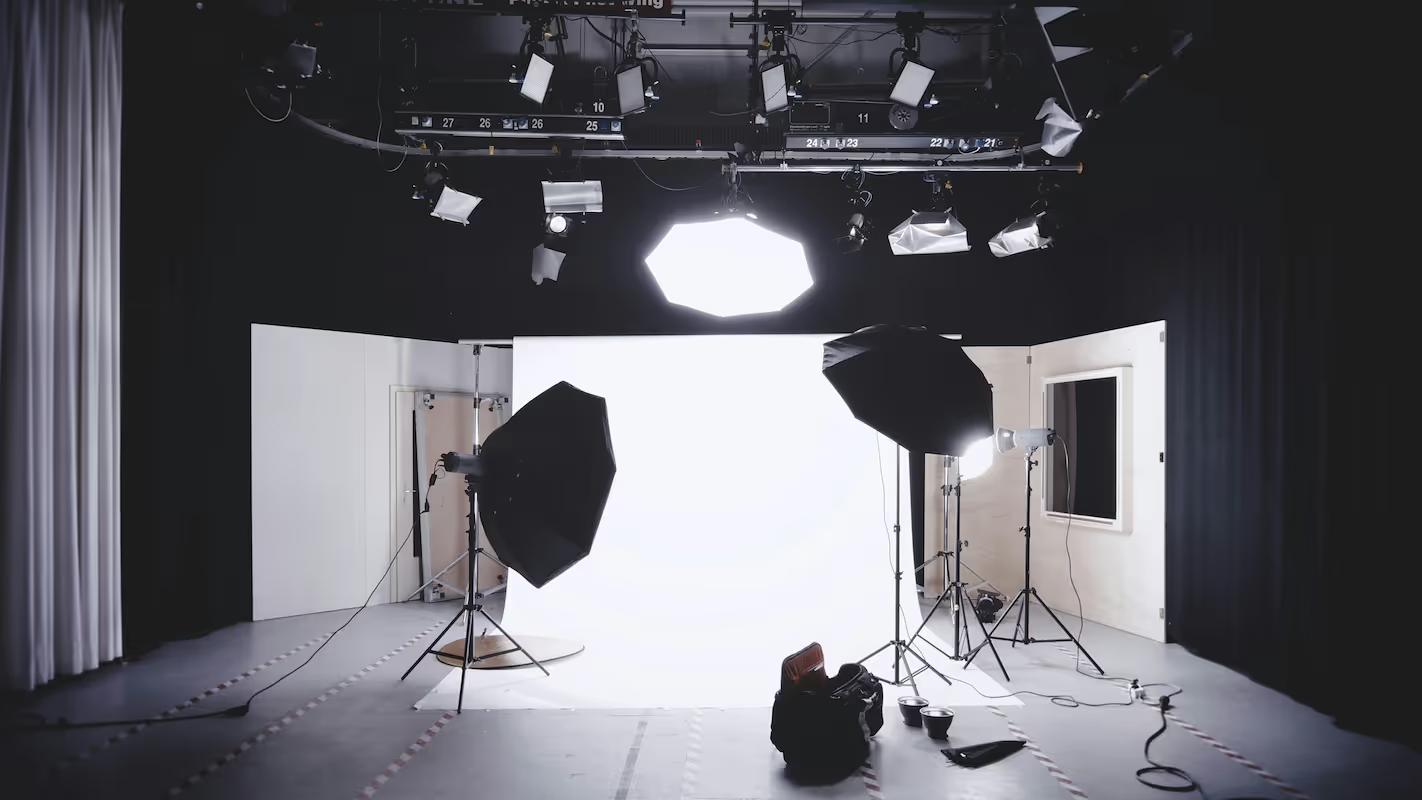
Look for commercial spaces between 700 and 1,500 square feet. A key detail is ceiling height; aim for at least 12 feet to accommodate lighting setups. Check that the property’s zoning classification, often commercial (C1/C2) or light industrial, permits studio operations.
When you find a potential space, prepare to negotiate the lease. You might ask for a Tenant Improvement (TI) allowance to help pay for modifications like soundproofing or electrical upgrades. A 3- to 5-year lease with an option to renew offers stability without overcommitment.
Purchase your core equipment
With the space secured, you can acquire your gear. A frequent mistake is to overspend on a camera body. Instead, prioritize lighting and lenses. Good lighting separates professional studios from amateur ones. You can find reliable equipment from retailers like B&H Photo Video or Adorama.
Here is a sample budget for starter equipment:
- Two studio strobes with softboxes: $1,000–$3,000
- Backdrop support system with paper rolls: $300–$800
- C-stands, sandbags, and grip gear: $500–$1,500
- A high-resolution 27-inch monitor: $400–$900
Here are 4 immediate steps to take:
- Search commercial real estate sites for spaces with 12-foot ceilings.
- Draft a list of lease negotiation points, including a request for a TI allowance.
- Price out a starter lighting kit and backdrop system from an industry supplier.
- Confirm the zoning for any potential location allows for business use.
Step 5: Set up your payment processing
Establish clear payment terms. A standard practice is to require a 50% non-refundable deposit to secure a booking. The final balance is then typically due on the day of the service. This policy protects your schedule and cash flow from cancellations.
When you choose a payment solution, look for low transaction fees and quick access to your money. The ability to accept payments anywhere is also a major advantage, whether you are in the studio or on location for a shoot.
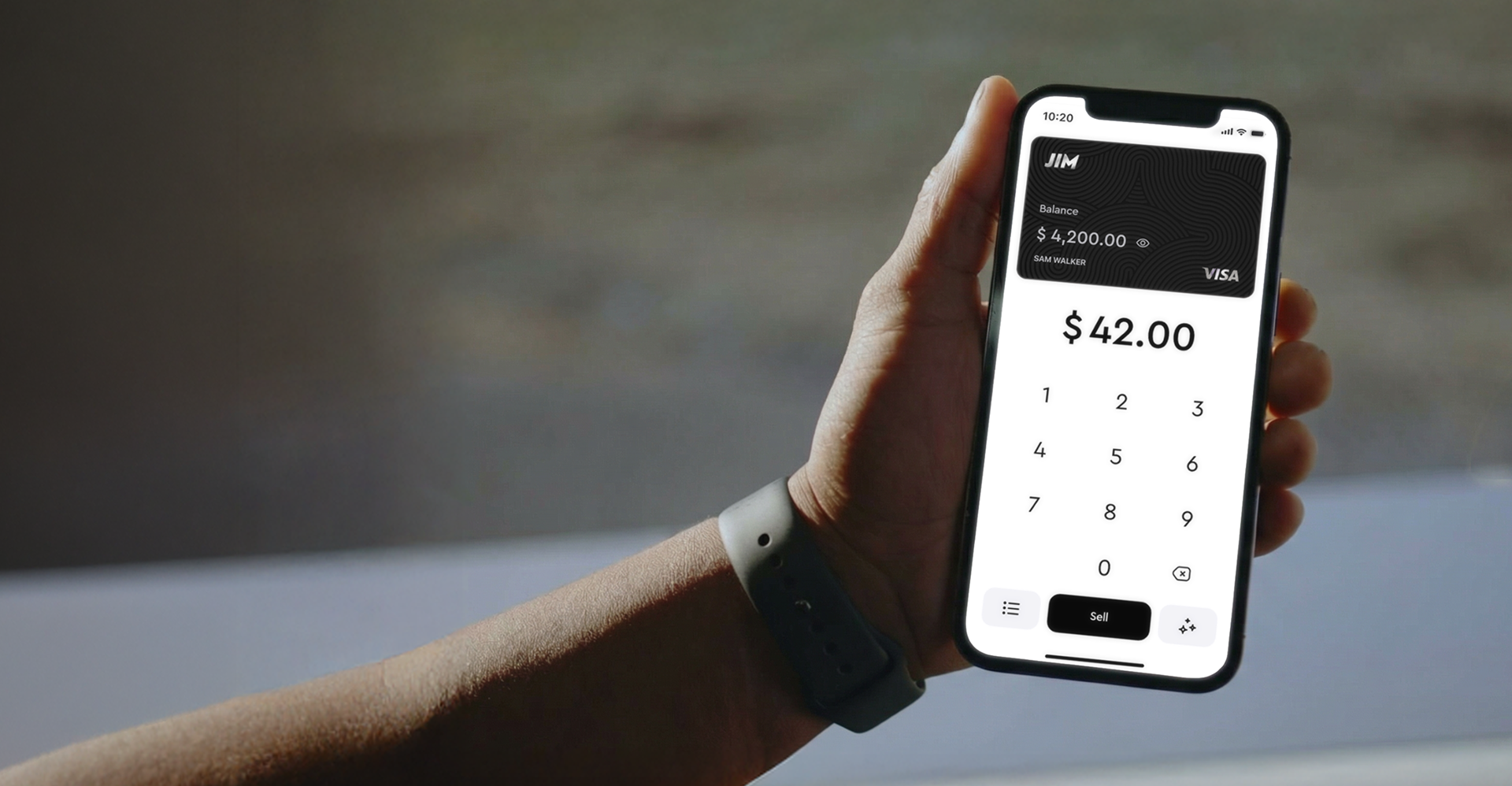
For studios that need to accept payments on-site or on-the-go, JIM offers a streamlined solution. You can accept debit, credit, and digital wallets directly through your smartphone. Other providers often charge 2.5% to 3.5% plus additional fees per transaction.
At just 1.99% per transaction with no hidden costs or extra hardware needed, it is particularly useful for collecting a final payment right after a session. Your money is available instantly, which helps manage your daily cash flow effectively.
- Get Started: Download the JIM app for iOS.
- Make a Sale: Type the sales amount, hit sell, and ask your customer to tap their card or device on your phone.
- Access Funds: Your money is available right on your JIM card as soon as the sale is done—no waiting for bank transfers.
Here are 3 immediate steps to take:
- Decide on your payment terms, such as a 50% deposit policy.
- Compare payment solutions based on transaction fees and hardware needs.
- Download the JIM app to see how it works for your business.
Step 6: Fund your business and manage finances
Find the right funding source
You might start with an SBA 7(a) loan. These are designed for small businesses, and studio startups often seek $50,000 to $150,000. Interest rates typically range from the prime rate plus 2.75% to 4.75%.
To qualify, you generally need a credit score over 680 and a strong business plan. Many new owners get rejected because they lack detailed financial projections. Lenders need to see you have mapped out your revenue for at least three years.
In addition to loans, you can pursue arts-focused grants. The National Endowment for the Arts (NEA) has programs, but local arts councils often provide smaller, more attainable grants for creative businesses like yours.
Plan your working capital
With funding in mind, you need to calculate your working capital. Aim to have at least six months of operating expenses saved. For a small studio, this buffer is typically between $18,000 and $45,000 to cover rent, utilities, and marketing.
Here are 4 immediate steps to take:
- Check your credit score to see if you meet the 680+ threshold.
- Draft a three-year financial projection for your business plan.
- Research your local arts council for grant opportunities and deadlines.
- Calculate six months of operating expenses to set your working capital goal.
Step 7: Hire your team and set up operations
Build your support staff
You likely will not need full-time employees right away. Many new owners make the mistake of hiring too soon, which strains cash flow. You might want to start with a freelance Studio Assistant to help with gear setup and client hospitality during sessions.
Expect to pay an assistant between $20 and $35 per hour, based on their experience and your market. Once your business grows, you can consider a part-time Studio Manager for scheduling and client communication. A manager's salary often ranges from $45,000 to $65,000 annually.
Streamline your daily workflow
With your team in mind, it is time to organize your workflow. To avoid double-bookings, use a studio management platform. Software like HoneyBook or Studio Ninja helps you manage calendars and automate client communication. These systems typically cost between $20 and $50 per month.
Also, establish clear operational procedures. Create checklists for opening and closing the studio. This ensures tasks like cleaning and securing the space are done consistently. As a financial guide, aim to keep total staff costs under 35% of your gross revenue.
Here are 4 immediate steps to take:
- Draft a job description for a freelance Studio Assistant.
- Compare features of management software like HoneyBook and Studio Ninja.
- Create a checklist for your studio’s opening and closing procedures.
- Calculate your payroll budget based on projected revenue.
Step 8: Market your studio and get clients
Your first move is to build a professional online portfolio. Use a platform like Squarespace or Wix to create a clean website. It should feature high-quality photos of your studio from multiple angles and showcase any past work to build credibility.
Develop your social media strategy
Focus on visual platforms like Instagram and Behance. You can post behind-the-scenes content, finished projects, and testimonials. Use local hashtags, such as #[YourCity]Creatives or #[YourCity]Studio, to attract nearby clients searching for a space.
Many new owners make the mistake of posting inconsistently. You should aim for three to five posts per week to stay visible. This keeps your studio top-of-mind when a photographer or brand needs to book a location.
Engage with your local creative community
List your studio on rental platforms like Peerspace or Splacer. To stand out, respond to inquiries within an hour and keep your calendar updated. Also, consider partnerships with local ad agencies or freelance photographers. You could offer a 10% referral fee for booked clients.
Speaking of costs, you will want to track your Customer Acquisition Cost (CAC). For a new studio, a CAC between $50 and $150 per client is a reasonable target. This metric helps you decide which marketing channels provide the best return on investment.
Here are 4 immediate steps to take:
- Create a portfolio website with high-quality images of your studio.
- Post three to five times a week on Instagram using local hashtags.
- List your space on a rental platform like Peerspace.
- Reach out to three local creative agencies to propose a partnership.
Step 9: Price your services for profitability
Choose your pricing model
Start with an hourly rate. Many studios charge between $75 and $200 per hour, depending on the market and equipment offered. This model works well for short bookings and new clients who want to test your space.
You might also offer packages. A half-day rate (4 hours) could be $400, and a full-day rate (8 hours) could be $750. Packages provide clients with a better value and give you more predictable revenue.
Calculate your profit margin
A frequent oversight is to set prices without knowing your break-even point. Calculate your total monthly expenses and divide by the number of hours you plan to be open. If your costs are $60 per hour, a 25% profit margin means you need to charge at least $75.
Many new owners compete on price alone, but this can attract the wrong clients. Instead, justify a higher rate with premium lighting, unique backdrops, or excellent customer service. Aim for a net profit margin between 20% and 40%.
Here are 4 immediate steps to take:
- Analyze the pricing of three local competitors on Peerspace.
- Calculate your break-even hourly rate based on your monthly expenses.
- Create two package deals, such as a half-day and a full-day rate.
- Draft a rate card that lists your hourly, package, and add-on prices.
Step 10: Maintain quality and scale your operations
To ensure consistent quality, create a simple checklist for studio setup and breakdown before and after each client session. This maintains a professional standard. Also, send a short feedback survey after every booking to measure client satisfaction.
A frequent mistake is to wait for complaints. Proactive feedback helps you fix small issues before they become big problems. Aim for a client rebooking rate of at least 40% within your first year. This is a strong indicator of service quality.
Know when to grow
Your booking rate is your primary guide for expansion. Once you consistently reach 70-80% capacity for two straight quarters, you might explore leasing a larger space or opening a second location. This data justifies the financial risk to lenders or investors.
When administrative work consumes more than 10 hours of your week, consider hiring a part-time Studio Manager. This frees you to focus on high-value tasks. Your studio management software, like HoneyBook, can also help you manage a growing client list and automate follow-ups.
Here are 4 immediate steps to take:
- Create a post-booking feedback survey with 3-5 questions.
- Track your monthly booking rate in a spreadsheet.
- Set a revenue goal that will trigger hiring a part-time manager.
- Review your studio management software for client retention features.
Your studio's success hinges on the experience you create. Great gear is a start, but a welcoming atmosphere and smooth operations will bring clients back. You have a solid plan to follow. Now it is time to bring your vision to life.
A part of that smooth experience is simple payments. JIM turns your phone into a card reader for a flat 1.99% fee, with no extra hardware needed. Download JIM to handle sales easily from day one.
.avif)