A ticket selling business is an exciting venture, one that blends a passion for live events and sharp marketing skills with business savvy. The global market is worth billions of dollars, fueled by a steady demand for tickets to concerts, sports games, theater shows, and festivals.
This guide will take you through the practical steps of validating your business concept, obtaining necessary licenses, building supplier relationships, and securing funding to help you launch a successful ticket selling business in the U.S.
Step 1: Plan your business and validate your idea
First, define your niche. Instead of selling everything, you could focus on a specific area like local college sports, regional music festivals, or Broadway shows. This helps you become an expert and build a targeted customer base.
Research your market and competitors
Use Google Trends to gauge public interest in upcoming events or artists. You should also monitor venue websites and social media for presale announcements. Many new sellers only watch giants like StubHub, but your real competition might be smaller, local resellers. Analyze their pricing and fees.
Estimate your startup costs
Your initial investment will vary based on your niche and scale. A lean start is possible if you manage your ticket inventory carefully. A thoughtful budget prevents early cash flow problems. Here is a typical breakdown to expect:
- Business Licensing: $100 - $500
- Website Platform: $50 - $300 per month
- Initial Ticket Inventory: $2,000 - $10,000+
- Initial Marketing: $500 - $2,000
Here are 3 immediate steps to take:
- Draft a one-page business plan outlining your chosen niche.
- Analyze three direct competitors, noting their ticket prices and fees.
- Create a detailed startup budget based on the cost ranges above.
Step 2: Set up your legal structure and get licensed
Choose your business structure
You might want to form a Limited Liability Company (LLC). It protects your personal assets if the business is sued and offers pass-through taxation, which is simpler than corporate taxes. Filing fees range from $50 to $500, depending on your state.
Navigate licensing and regulations
Ticket reselling laws vary greatly by state. New York, for example, requires a specific license. A common mistake is ignoring state-specific price caps on resold tickets, which can lead to fines. Check your state’s Secretary of State website for its rules.
Also, be aware of the federal BOTS Act, which makes it illegal to use software to bypass ticket purchasing limits. While there is no single federal reseller license, the FTC enforces this rule. You will also need a general business license from your city or county.
Here are 3 immediate steps to take:
- Decide on an LLC structure and file the paperwork with your state.
- Research your specific state and local laws for ticket reselling.
- Apply for a general business license from your city or county clerk.
Step 3: Secure insurance and manage risk
Protect your business with the right coverage
General Liability Insurance is your baseline. It covers third-party claims like bodily injury or property damage. You should look for a policy with at least $1 million in coverage. Annual premiums typically range from $400 to $900 for a small online operation.
You will also want Professional Liability Insurance, often called Errors & Omissions (E&O). This protects you if a client suffers a financial loss from your service, for example, if a ticket you sold is invalid. Coverage of $1 million is also standard here.
A frequent misstep is to rely only on general liability. It will not cover you for ticket-related errors. You need a separate E&O policy for that protection. Providers like Hiscox, The Hartford, and Next Insurance offer policies suitable for small online businesses.
Understand ticket-specific risks
Beyond invalid tickets, your main risks are event cancellations and data security. If an event is canceled, you are responsible for refunds, which can create cash flow issues. Also, if you store customer data, a breach could expose you to significant liability without cyber insurance.
Here are 3 immediate steps to take:
- Request a quote for a $1 million General Liability policy.
- Compare pricing for an Errors & Omissions policy from two providers.
- Ask potential insurers how their policies handle event cancellations.
Step 4: Set up your workspace and technology
Your digital-first office
An online ticket business does not need a physical storefront. You can operate from a home office, which keeps your overhead low. Just make sure you have a dedicated, quiet space to manage inventory and customer service without distractions.
A common mistake is to mix personal and business activities on one computer. You should invest in a dedicated work laptop ($800 - $1,500) and a secure, private high-speed internet plan ($50 - $100 per month). Never use public Wi-Fi for transactions.
The right tech stack
Your technology is your storefront. Beyond a computer, you will need a few other items to operate professionally. This setup ensures you can act fast when tickets drop and handle customer issues smoothly.
- Business Phone Line: A VoIP service like Google Voice costs about $10-$30 per month and separates business calls from personal ones.
- Ticket Management Platform: This software helps you track inventory and sales. Expect to pay $50-$300 monthly, as noted in your startup budget.
With your tech ready, you can focus on getting tickets. Your suppliers are the primary vendors like Ticketmaster, AXS, and venue box offices. Get familiar with their platforms and create accounts so you are ready for on-sale dates.
Pay close attention to their purchase limits. Most vendors cap transactions at 2 to 8 tickets. This is your effective "minimum order quantity" and directly impacts how much inventory you can acquire for any single event.
Here are 3 immediate steps to take:
- Designate a dedicated home office space for your business.
- Price out a business laptop and a secure internet plan.
- Create accounts on Ticketmaster and AXS to prepare for on-sales.
Step 5: Set up payment processing
You need a reliable way to accept payments. Most online ticket sales use credit cards, debit cards, or digital wallets. When you choose a payment solution, focus on low transaction fees and fast access to your funds. This directly impacts your cash flow for buying new inventory.
Many processors charge 2.5% to 3.5% plus a flat fee. A frequent mistake is to ignore these costs, which shrink your profit margins. Slow fund transfers are also a problem, as they can delay your ability to purchase tickets for the next big event.
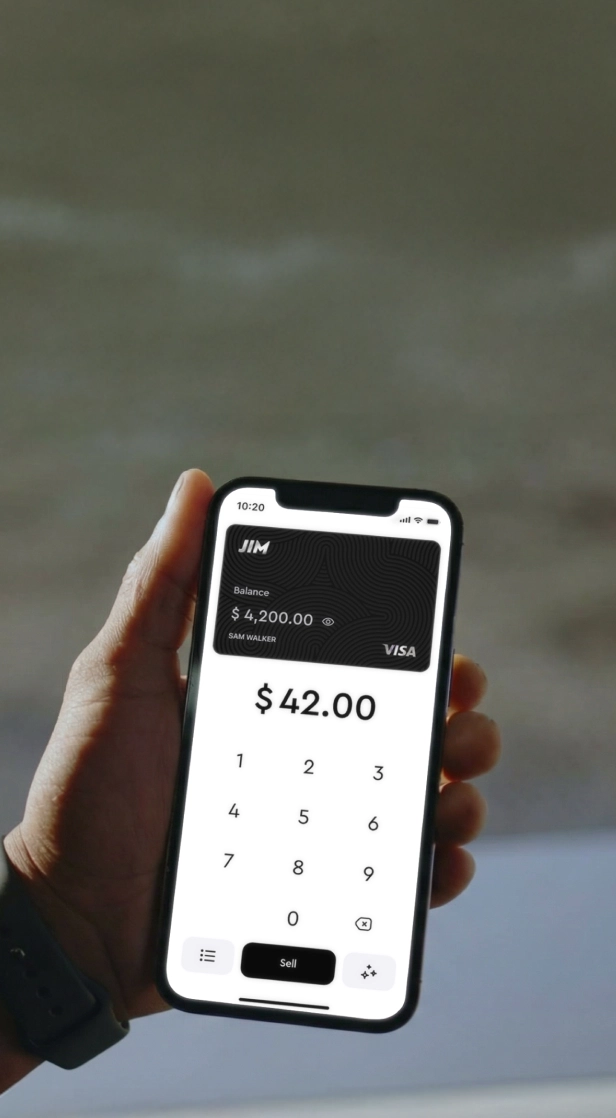
For sales on-site or on-the-go, a mobile solution is a game-changer. For ticket selling businesses that need to accept payments in person, JIM offers a streamlined solution. With JIM, you can accept debit, credit and digital wallets directly through your smartphone - just tap and done.
At just 1.99% per transaction with no hidden costs or extra hardware needed, it's particularly useful for last-minute sales outside a venue. This rate is competitive, as other providers often have higher commission rates. Here is how it works:
- Get Started: Download JIM app for iOS
- Make a Sale: Type the sales amount, hit sell, and ask your customer to tap their card or device on your phone
- Access Funds: Your money is available right on your JIM card as soon as the sale is done - no waiting for bank transfers
Here are 3 immediate steps to take:
- Compare transaction fees from two traditional online payment processors.
- Evaluate if you will handle in-person sales for last-minute tickets.
- Download the JIM app to see how it works for mobile payments.
Step 6: Fund your business and manage finances
Traditional bank loans are tough for new ventures. Instead, look at business credit cards with 0% introductory APRs for your first ticket purchases. This gives you a short-term, interest-free loan. You can also explore SBA microloans, which range from $500 to $50,000.
SBA lenders like Accion Opportunity Fund often work with startups. Expect interest rates between 8% and 13%. For your first six months, you will need enough working capital to cover inventory and operating costs. Aim for $15,000 to $25,000 to start comfortably.
Keep your finances clean
Open a dedicated business checking account as soon as your LLC is formed. A trap many new sellers fall into is mixing personal and business funds. This habit complicates taxes and, more importantly, can void the liability protection your LLC provides.
Use accounting software like QuickBooks Self-Employed or Wave from the start. These platforms help you track income, expenses, and profit margins on each event. This data is what you will use to make smarter ticket buying decisions in the future.
Here are 3 immediate steps to take:
- Research business credit cards that offer a 0% introductory APR.
- Open a dedicated business checking account for your LLC.
- Calculate your working capital needs for the first six months.
Step 7: Hire your team and manage operations
When to make your first hire
In the beginning, you will be the entire team. You should only consider a hire once administrative tasks prevent you from the core work of finding and buying new ticket inventory. This is your main revenue-generating activity.
Your first hire will likely be a part-time Virtual Assistant (VA). Their main job is to handle customer emails and phone calls. You can find qualified VAs for $15 to $25 per hour on platforms like Upwork.
Set your team up for success
Once you decide to hire, clear training is vital. A frequent error is to assume a new person will understand your business. Create simple documents that explain how to process refunds for canceled shows and how to verify order details.
For task management, a shared board on Trello or Asana works well. As for when to hire, a good benchmark is when your gross profit consistently tops $5,000 per month. At that point, your time is better spent on growth, not just daily tasks.
Here are 3 immediate steps to take:
- List all the daily administrative tasks you could delegate to a VA.
- Create a one-page training document for customer service responses.
- Set a monthly gross profit goal that will be your trigger to hire.
Step 8: Market your business and acquire customers
Build your online presence
Your marketing should be event-driven. Focus your efforts on social media platforms like Instagram and Facebook. Create posts that highlight specific upcoming concerts or games. Use relevant hashtags to reach fans who search for that event.
A frequent mistake is to run generic ads. Instead, use targeted ads on Facebook for users who show interest in a specific artist or team. Aim for a Customer Acquisition Cost (CAC) under $25 for your initial campaigns.
Use email and direct outreach
Start an email list from your first sale. You can use a service like Mailchimp to send alerts about new tickets for similar events. This builds a loyal customer base. An email list often has a high conversion rate, sometimes over 3%.
Also, consider partnerships. You could connect with local fan clubs or corporate offices that need blocks of tickets. This direct approach can secure bulk sales with zero ad spend.
Here are 3 immediate steps to take:
- Set up a business profile on Instagram or Facebook.
- Draft three targeted social media posts for a specific upcoming event.
- Create a free account on Mailchimp to start your email list.
Step 9: Price your tickets for profit
Your pricing strategy must be dynamic. For most events, a markup of 25% to 100% over face value is a solid starting point. For high-demand shows, this can jump to 300% or more. A $150 ticket might sell for $300 if the artist is popular.
To set your price, research what similar tickets sell for on StubHub and SeatGeek. Some sellers make the mistake of only adding a small margin to their cost. You should price based on market demand, not what you paid.
Now that you know where to look, consider these common pricing models:
- Fixed Markup: Apply a set percentage over your cost, like 50%. This works well for events with stable demand and helps simplify your process.
- Dynamic Pricing: Adjust prices based on real-time market factors. If a team makes the playoffs, prices go up. If a headliner cancels, they drop.
- Undercutting: Price your tickets just below the cheapest competitor. This strategy helps you sell inventory quickly, which is great for cash flow.
Here are 3 immediate steps to take:
- Track the price of one event on StubHub and SeatGeek for three days.
- Calculate a 50% and 150% markup for a sample ticket you might buy.
- Decide if you will use a fixed markup or dynamic pricing for your first few sales.
Step 10: Maintain quality and scale your business
Your reputation is built on trust. Aim for a 100% ticket validity rate and send digital tickets within one hour of payment. For customer service, a response time under 12 hours sets a professional standard. These are your core quality metrics.
To track your performance, you can use simple data points. Monitor your ticket error rate, which should always be zero. After a sale, you might send a one-question survey to gauge customer satisfaction. This feedback shows you where to improve.
Benchmarks for growth
Once your monthly gross profit consistently exceeds $5,000, it is time to scale. This is the point where you should reinvest profits into buying larger blocks of tickets for high-demand events. It is also the trigger to bring on more help.
As you grow, manual tracking becomes difficult. Many sellers graduate from spreadsheets to specialized inventory software like Ticket Utils. This helps manage hundreds of listings across multiple marketplaces and prevents double-selling, a mistake that can damage your reputation.
Here are 3 immediate steps to take:
- Define your customer service response time goal.
- Set a monthly profit goal that will trigger your first major reinvestment.
- Research one ticket management software platform like Ticket Utils.
Conclusion
Your ticket business is built on speed and market sense. Above all, remember your reputation is your most valuable asset, earned with every valid ticket you sell. You have the roadmap, now you can confidently start your venture.
As you make sales, especially last-minute ones, a fast way to get paid is important. JIM turns your phone into a card reader for a simple 1.99% fee, with no extra hardware. It makes in-person transactions easy. Download JIM to be ready.
.avif)