Starting a trivia business is a rewarding venture that combines creativity and a knack for public speaking with business savvy. The market is surprisingly accessible, with steady demand from bars, corporate events, and private parties, but that accessibility doesn't mean success comes easy.
This guide will take you through the practical steps of validating your business concept, acquiring equipment, and obtaining necessary licenses to help you launch a successful trivia business in the U.S.
Step 1: Plan your business and validate your idea
Before you spend a dollar, become a trivia regular for a week. Visit different bars and venues on their trivia nights. Pay attention to crowd size, the host’s energy, and what kinds of questions get the best reaction. Check local Facebook Events to find more under-the-radar gigs.
Analyze the local competition
Create a simple spreadsheet to track your findings. Note the venue, the trivia company, the format of the game, and the prizes offered. Many new hosts make the mistake of only looking at competitor websites; you need to go to their shows to understand the atmosphere and audience engagement.
Estimate your startup costs
With a clearer picture of the market, you can map out your startup costs. A reliable sound system with a microphone will run you $200-$500. For questions, a subscription service costs about $50-$150 per month. Writing your own is an option, but expect to spend 8-10 hours per event.
- Business Formation (LLC): $100 - $500, depending on your state.
- Initial Marketing (flyers, website): $50 - $200.
Your initial investment will likely fall between $400 and $1,350. This range gives you some flexibility as you get started.
Here are 3 immediate steps to take:
- Scout at least two competing trivia nights in person this week.
- Build a spreadsheet of 10-15 potential venues in your target area.
- Draft a startup budget using the cost estimates provided.
Step 2: Establish your legal structure and get licensed
Most new trivia hosts should consider forming a Limited Liability Company (LLC). This structure protects your personal assets, like your home and car, if your business is ever sued. For tax purposes, an LLC is simple; profits and losses pass through to your personal tax return.
A frequent misstep is operating as a sole proprietor to save on upfront fees. This approach offers no liability protection. Think of the $100-$500 LLC filing fee not as a cost, but as insurance for your personal finances.
Secure your required licenses
With your structure chosen, register your LLC with your state's Secretary of State. Then, get a free Employer Identification Number (EIN) from the IRS website. Even without employees, you will need an EIN to open a business bank account, which keeps your finances separate.
Finally, obtain a general business license from your city or county clerk. This typically costs $50-$100 per year. While the venue is responsible for its own liquor and public performance licenses, you are responsible for your own business's legal registration.
Here are 4 immediate steps to take:
- Decide on your business structure; an LLC is often the best start.
- Visit the IRS website to apply for your free Employer Identification Number (EIN).
- Go to your Secretary of State’s website to find LLC formation documents and fees.
- Check your local city or county clerk’s website for business license applications.
Step 3: Secure your insurance and manage risk
Your first insurance policy should be for general liability. This protects you if someone gets hurt or if you damage property at an event, for example, if a guest trips over a speaker cable. Many venues will not hire you without it.
A standard policy with $1 million of coverage per occurrence typically costs between $400 and $900 annually. A frequent oversight is to assume the venue’s insurance covers your operations. It almost never does, and you will likely need to provide them with a certificate of insurance.
Other policies for your trivia business
As your business grows, you might want to consider additional coverage. These policies address risks specific to your operations.
- Professional Liability: This covers disputes over your services, such as a scoring error that costs a team a significant prize.
- Inland Marine Insurance: This protects your equipment like laptops and sound systems while you transport them or use them at a venue.
- Workers’ Compensation: If you hire another host or an assistant, state law requires you to have this coverage.
You can get quotes from insurers that work with entertainers and small businesses. Look into providers like Hiscox, The Hartford, and Next Insurance to compare rates and find a policy that fits your needs.
Here are 4 immediate steps to take:
- Request a quote for a $1 million general liability policy.
- Ask a potential venue about its insurance requirements for vendors.
- List your equipment and its total value to determine if you need inland marine coverage.
- Compare quotes from at least two providers, such as Hiscox or Next Insurance.
Step 4: Acquire your gear and secure venues
Your trivia business is mobile, so you do not need a commercial space or worry about zoning. Your "locations" are the bars, breweries, and restaurants you partner with. This model keeps your overhead extremely low as you get started.
Assemble your trivia host kit
A dependable sound system is your most important physical asset. A portable PA system with a wireless microphone will cost between $300 and $600. You can find reliable entry-level options from brands like Behringer or Mackie on sites like Sweetwater.
While not required immediately, a portable projector and screen add a professional touch for visual rounds. This part of your kit will likely cost an additional $200 to $400. It helps you stand out from hosts who only read questions aloud.
Land your first weekly gig
With your gear in mind, start approaching venue managers. Go on a slow afternoon, like a Tuesday or Wednesday, and bring a one-page sell sheet that explains your service. Offer a free or discounted trial night to demonstrate the crowd you can draw.
Many new hosts make the mistake of accepting a vague verbal agreement. When you negotiate payment, whether it is a flat fee ($150-$300) or a revenue share, always follow up with an email that confirms the rate, date, and time.
Here are 4 immediate steps to take:
- Research two portable PA systems on Sweetwater or B&H Photo Video.
- Design a simple one-page sell sheet for your service on Canva.
- Identify five potential venues in your area and find the manager's name.
- Draft an email template to confirm booking details with venues.
Step 5: Set up your payment and booking systems
Most venues will pay you via check or direct deposit after the event. For private parties, it is smart to require a 50% deposit upfront to secure the date. This protects you from last-minute cancellations. Always send a professional invoice for your services.
A simple contract is also a good idea, especially for corporate or private events. It should outline the date, time, location, and your fee. Many hosts just use a detailed email confirmation for weekly bar gigs to keep things simple.
Choose your payment solution
Now, let's talk about getting paid. For deposits or on-site payments, you need a way to accept cards. Many payment solutions charge 2.5% to 3.5% per transaction and may have monthly fees or require you to buy extra hardware.
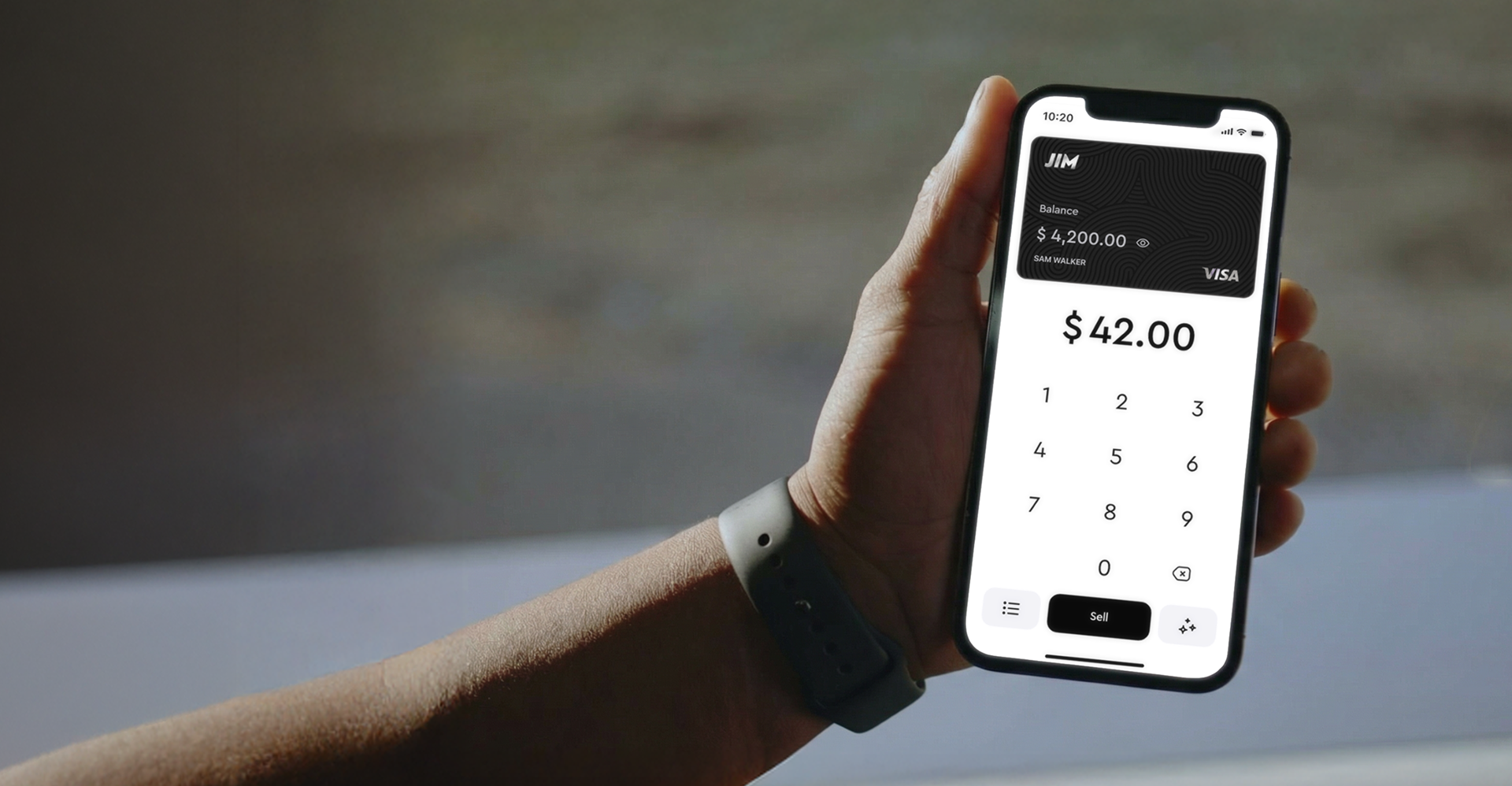
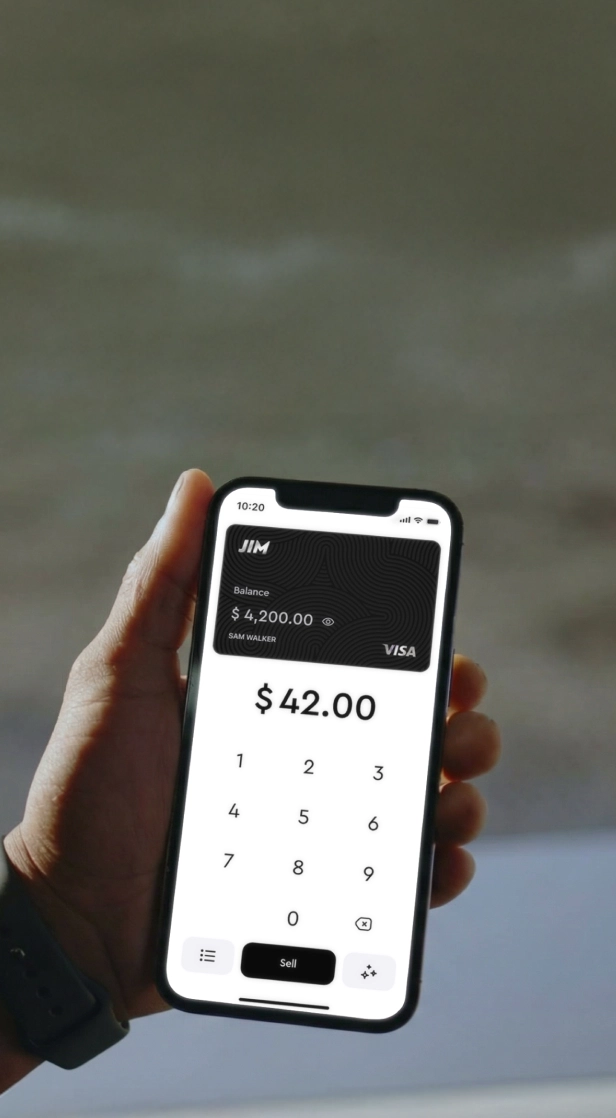
For trivia businesses that need to accept payments on the go, JIM offers a streamlined solution. You can accept debit, credit, and digital wallets directly through your smartphone. At just 1.99% per transaction with no hidden costs, it is particularly useful for collecting deposits at client meetings.
Here is how it works:
- Get Started: Download the JIM app for iOS.
- Make a Sale: Type the sales amount, hit sell, and ask your customer to tap their card or device on your phone.
- Access Funds: Your money is available right on your JIM card as soon as the sale is done. No waiting for bank transfers.
Here are 4 immediate steps to take:
- Draft a simple service agreement template for private events.
- Decide on your deposit policy for corporate and private bookings.
- Create a professional invoice template using Google Docs or a similar program.
- Download the JIM app to see how it works on your phone.
Step 6: Fund your business and manage your finances
Your startup costs are low, so you likely will not need a large bank loan. Most hosts self-fund with personal savings. A business credit card can also cover initial equipment purchases while you build business credit.
If you need a small boost, an SBA Microloan is a solid option. These loans range from $500 to $50,000, with interest rates typically between 8% and 13%. Grants are rare for this type of business, but check with your local small business development center for any regional opportunities.
Set up your financial system
Many new hosts make the mistake of mixing personal and business funds. Open a separate business checking account as soon as your LLC is formed. This simplifies tax preparation and presents a more professional image to your clients.
For your first six months, you should plan to have $1,500 to $2,500 in working capital. This amount covers ongoing costs like question subscriptions, insurance premiums, and marketing materials before you establish a steady income stream.
Here are 4 immediate steps to take:
- Open a dedicated business bank account.
- Research the SBA Microloan program requirements in your area.
- Calculate your 6-month working capital needs.
- Create a simple bookkeeping spreadsheet to track all income and expenses.
Step 7: Build your team and manage operations
When you are ready to expand, your first hire will be a part-time Trivia Host. This person runs the show, engages the crowd, and manages scoring. Pay is typically per-gig, ranging from $75 to $150 for a two-hour event.
Many new owners try to host every show themselves, which quickly leads to burnout and caps your income. Hiring a second host lets you run simultaneous events, effectively doubling your revenue potential on a busy night.
Running the day-to-day
You do not need complex management software at this stage. A shared Google Calendar works perfectly for scheduling hosts and venues. For team communication, a simple group chat will keep everyone updated on event details and any last-minute changes.
There are no formal certifications for trivia hosts. The best training is hands-on. Have a new host shadow you for two or three gigs, then let them co-host before they run a show solo. This builds their confidence and protects your reputation.
Here are 4 immediate steps to take:
- Draft a job description for a part-time Trivia Host.
- Set up a shared Google Calendar to manage your event schedule.
- Outline a simple, three-show training plan for new hires.
- Calculate your potential monthly revenue with a second host.
Step 8: Market your business and get customers
Build your online presence
Create a Facebook and Instagram page for your business. Post short video clips of high-energy moments from your shows, tag the venue, and encourage players to tag themselves. This content is your best advertisement.
A frequent mistake is to assume the venue will handle all promotion. You must build your own following. Run small, targeted Facebook ads for $5-$10 per day aimed at people within a 5-mile radius of your weekly gig. This helps ensure a consistent crowd.
Create strategic partnerships
With your online presence established, approach local businesses to sponsor prizes. You can offer a local brewery gift card or merchandise from a nearby boutique. In return, you give them a shout-out during the event. This elevates your prize quality with no out-of-pocket cost.
For a specific campaign, you could host a themed trivia night. For example, run a "90s Music" night and partner with a local record store for the grand prize. This creates a unique event that is easier to promote and attracts a dedicated audience.
Here are 4 immediate steps to take:
- Create a Facebook business page and post one video clip from a mock or real event.
- Design a flyer for a themed trivia night using a program like Canva.
- Draft an email template to pitch prize sponsorships to local businesses.
- Set a $50 budget for your first week of targeted social media ads.
Step 9: Set your pricing strategy
Your pricing determines your profitability. For weekly bar gigs, a flat fee of $150-$300 for a two-hour event is standard. This model is simple and provides predictable income. Some venues might propose a revenue share, but this can be risky for you.
Many new hosts undercharge because they only factor in their on-site time. Remember to account for the 8-10 hours of question writing and preparation. Your price should reflect the full scope of your work, not just the performance.
Price your private and corporate events
Private and corporate gigs should be your high-margin services. You might want to set your rates between $400 and $700 for a standard two-hour package. These events often require custom questions and more coordination, which justifies the higher fee.
To understand the local market, you can call a few competitors and inquire about their rates for a private party. This direct research is more effective than just looking at websites, where pricing is often not listed.
Here are 4 immediate steps to take:
- Set your standard flat fee for a two-hour weekly trivia night.
- Determine your base price for a two-hour private event.
- Create a simple rate sheet that outlines your services and fees.
- Research the private event rates of two competitors in your area.
Step 10: Maintain quality and scale your operations
There are no formal certifications for trivia. Your reputation is your quality control. Create a simple checklist for every show that covers question accuracy, audio clarity, and host energy. This ensures a consistent experience, which is what keeps venues and players coming back.
Measure your performance
You need to track your success with clear numbers. Many hosts guess at their performance, but data shows you where to improve. Focus on these key metrics for your weekly gigs.
- Venue Retention: Aim to keep over 90% of your venues year-over-year.
- Audience Growth: Track a 10-15% increase in players over the first three months at a new venue.
- Direct Feedback: After a show, ask the manager for a quick rating on a 1-5 scale.
Once you have to turn down more than two gigs a month, it is time to hire another host. Scaling too fast with an untrained host is a frequent misstep that can damage your reputation. Use the three-show training plan from Step 7 to prepare them.
For managing clients, a shared Google Calendar works well initially. When you start booking more than five private events a month, you might consider a client management platform like HoneyBook or Dubsado to handle contracts and invoices more efficiently.
Here are 4 immediate steps to take:
- Create a one-page quality checklist for your events.
- Track weekly attendance at one venue for the next four weeks.
- Set a revenue or gig-frequency goal that will trigger your first hire.
- Look at the features of a client management platform like HoneyBook.
You now have a complete guide to start your trivia business. Remember, your personality is the main attraction. The questions are important, but your energy makes the night memorable. You have a clear plan, so go make it happen.
As you book those first events, getting paid should be the easy part. JIM turns your smartphone into a card reader for a flat 1.99% fee, with no extra hardware. It keeps your cash flow simple. Download JIM to get started.
.avif)