Starting a vendor booth business is an exciting venture that combines your creative passion and product knowledge with smart business sense. The low startup costs and flexibility make it an accessible market to enter, but that accessibility doesn't mean success comes easy.
This guide will take you through the practical steps of validating your business concept, obtaining the right permits, acquiring inventory, and selecting your locations to help you launch a successful vendor booth business in the U.S.
Step 1: Plan and validate your business concept
Your first move is to become a student of your local market scene. Visit farmers' markets, craft fairs, and festivals not as a customer, but as a researcher. Observe what people actually buy, note the price points of popular items, and see which booths draw the biggest crowds.
Analyze the competition
Next, identify your direct competitors. Search Etsy and Instagram for vendors in your region to see their product range and online presence. Many people make the mistake of only looking at what’s popular, but you should look for gaps in the market that your product can fill.
Estimate your startup costs
With a clearer picture of the market, you can map out your finances. A common misstep is to buy too much inventory before you have any sales data. It is better to start small. Your initial investment will likely fall between $800 and $3,400, depending on your product.
- Business permits and licenses: $50 - $200
- Booth setup (tent, table, displays): $200 - $700
- Initial inventory: $500 - $2,000
- Event fees (per event): $50 - $500
Here are 3 immediate steps to take:
- Visit two different types of local markets to observe customer behavior.
- Create a spreadsheet to track 5-10 local competitors, their products, and their prices.
- Draft a preliminary budget for your first three events using the cost ranges above.
Step 2: Set up your legal structure and licensing
First, you need to formalize your business. Most new vendors choose a Sole Proprietorship for its simplicity, but this structure does not separate your personal assets from business debts. An LLC offers liability protection, which is a safer route.
Choose your business structure
Forming an LLC might cost between $50 and $500 in state filing fees. While it requires more paperwork, it establishes your business as a separate legal entity. A frequent mistake is to mix personal and business finances, which can negate the protection an LLC provides.
Secure your licenses and permits
With your business structure chosen, you can get the necessary paperwork. You will likely need permits from federal, state, and local agencies.
- Federal: Get a free Employer Identification Number (EIN) from the IRS website. You will need this to open a business bank account, even if you do not plan to hire employees.
- State: Apply for a seller's permit through your state's department of revenue. This permit allows you to collect sales tax and typically costs under $50, with a processing time of 2-4 weeks.
- Local: Contact your city or county clerk for a general business license. Also, ask event organizers about temporary vendor permits, as you often need one for each specific market.
Here are 4 immediate steps to take:
- Decide if a Sole Proprietorship or an LLC is the right fit for your business.
- Apply for a free Employer Identification Number (EIN) directly from the IRS.
- Find your state's department of revenue website to learn about its seller's permit application.
- Check your city's official website for local business license requirements.
Step 3: Secure your business insurance
Understand your coverage needs
Most event organizers will require you to have General Liability insurance. This protects you if a customer is injured at your booth. A $1 million policy is standard, with annual premiums typically between $300 and $600. You should also confirm your policy includes Product Liability coverage.
Product Liability is vital if your product could cause harm, like a food item causing an allergic reaction. If you use a vehicle exclusively for your business, you will need a Commercial Auto policy. Also, if you hire help, you must have Workers' Compensation insurance.
Find the right provider
Some insurance companies specialize in policies for vendors. You might want to explore providers like ACT Insurance or the Food Liability Insurance Program (FLIP). General small business insurers like Hiscox are also a solid option. Many new vendors assume their personal policies offer protection, but this is rarely true.
When you apply for event permits, organizers often ask to be listed as an "additional insured" on your policy. This is a standard request, so make sure your insurance provider can accommodate it without extra fees. This step protects the event organizer if a claim originates from your booth.
Here are 4 immediate steps to take:
- Get a quote for a $1 million General Liability policy that includes Product Liability.
- Review your personal auto insurance policy to confirm if it covers business-related use.
- Research vendor-specific insurers like ACT Insurance and compare them to general providers like Hiscox.
- Ask a local event organizer for a copy of their vendor insurance requirements.
Step 4: Select your events and purchase equipment
Choose the right events
Your "location" is the event itself. Most organizers provide a standard 10x10 foot space. Popular festivals and markets often require applications 3 to 6 months in advance, so plan your calendar accordingly. Booth fees can range from $50 to over $500 per event.
Many new vendors assume bigger crowds mean more sales. Instead, you should match your product to the event's specific demographic. A niche craft fair might be more profitable for a handmade jeweler than a large, general-interest street festival.
Invest in your booth setup
With a few events on your calendar, you can focus on your physical setup. A professional appearance directly impacts customer trust and sales. Many vendors regret buying cheap equipment that fails during an event, so a little extra investment here pays off.
- 10x10 Canopy Tent: $150 - $400. A commercial-grade frame is a smart upgrade that withstands wind and rain.
- Tables and Coverings: $50 - $150. A 6-foot folding table and a floor-length tablecloth create a clean look.
- Product Displays: $100 - $300. Use crates, shelves, or racks to add vertical height and visual interest.
- Mobile Payment System: The hardware is often under $50, but compare transaction fees which are typically 2.5% to 3.5%.
Here are 4 immediate steps to take:
- Create a calendar of application deadlines for 3-5 target events.
- Research commercial-grade 10x10 canopy tents from suppliers like Eurmax or ABCanopy.
- Sketch a layout for your booth to plan your display and customer flow.
- Compare the transaction fees for two different mobile payment systems.
Step 5: Set up your payment processing
You need a reliable way to get paid. While some customers still use cash, most expect to pay with a card or digital wallet. Not accepting these payments means you will lose sales. Your goal is a fast, simple checkout process.
Choose your payment solution
When you look at payment solutions, focus on the transaction fees. Many providers charge between 2.5% and 3.5% per tap or swipe. Some also require you to buy separate card reader hardware, which adds to your startup costs.
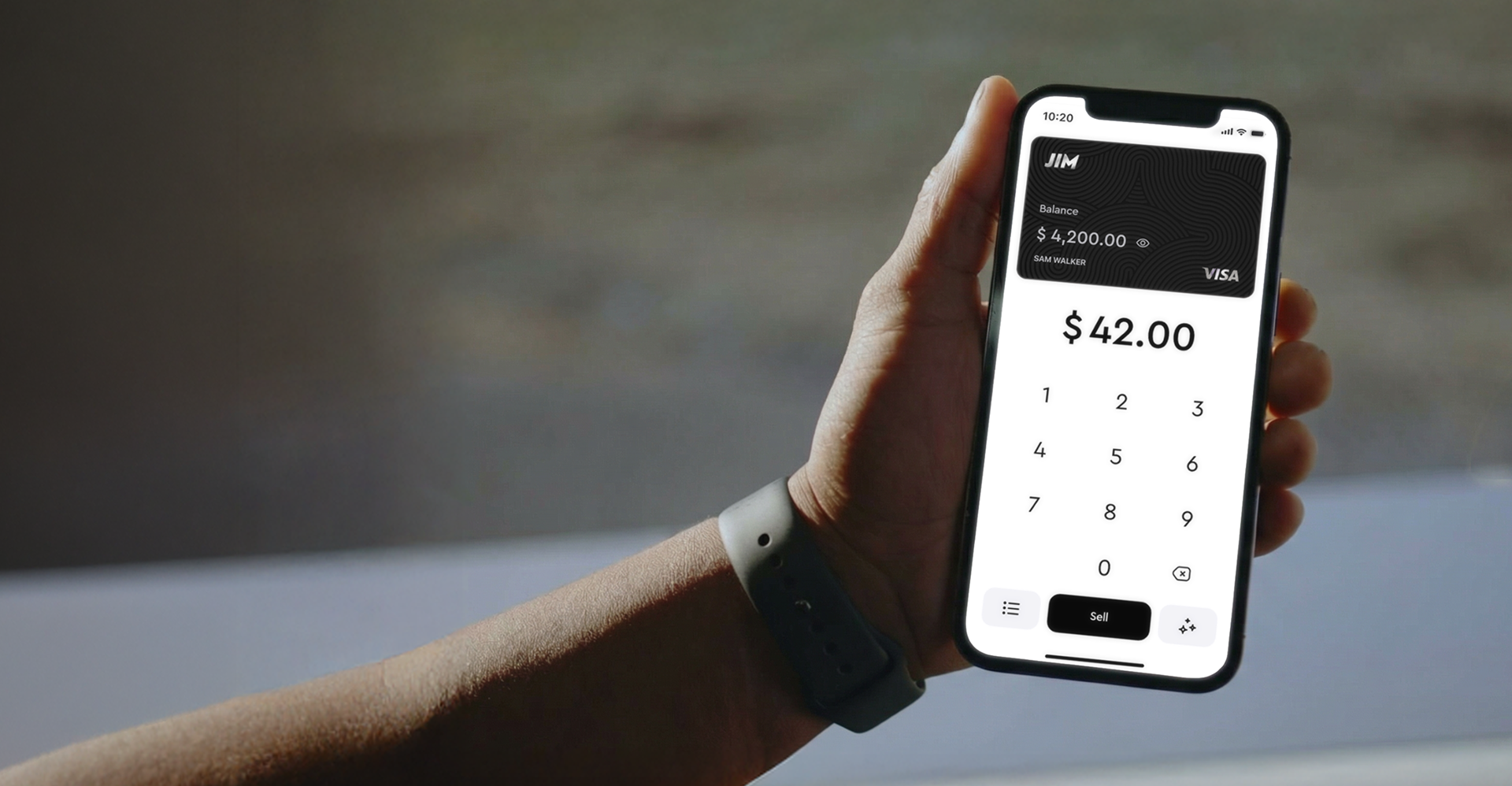
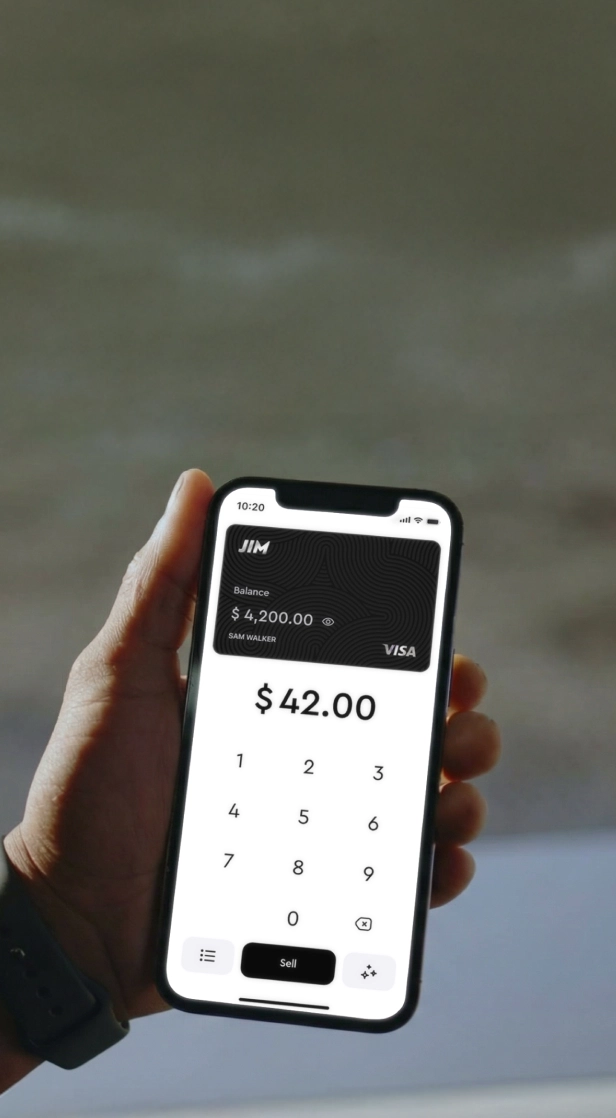
For vendor booth businesses that need to accept payments on-site, JIM offers a streamlined solution. With JIM, you can accept debit, credit, and digital wallets directly through your smartphone. Just tap and done.
At just 1.99% per transaction with no hidden costs or extra hardware needed, it's particularly useful for handling quick sales at busy markets. This rate is noticeably lower than what many other providers offer.
- Get Started: Download the JIM app for iOS.
- Make a Sale: Type the sales amount, hit sell, and ask your customer to tap their card or device on your phone.
- Access Funds: Your money is available right on your JIM card as soon as the sale is done - no waiting for bank transfers.
Here are 3 immediate steps to take:
- Decide what payment types you will accept at your booth.
- Compare the 1.99% transaction fee from JIM with other providers.
- Plan how much cash you will need for change at your first event.
Step 6: Fund your business and manage finances
Find your startup capital
Most vendors self-fund with personal savings. If you need a boost, you might look into the SBA Microloan Program. These loans range from $500 to $50,000 and are great for inventory or equipment. Interest rates are typically between 8% and 13%.
You apply through specific nonprofit lenders, not the SBA directly. In addition, grants are an option, though they are competitive. You could explore the Amber Grant for women entrepreneurs or search for local arts grants through your city’s economic development office.
Manage your working capital
You should have enough cash to cover your first six months of operation. This includes event fees, inventory replenishment, and marketing costs. A good target is to have $2,000 to $5,000 set aside. This ensures you can book future events and restock popular items.
Many new vendors only budget for their initial inventory. They forget they need cash on hand to buy more products after the first few events, which can stop their progress. A business credit card can also help manage cash flow for small, recurring purchases.
Here are 4 immediate steps to take:
- Open a separate business checking account to keep finances clean.
- Research one SBA Microloan intermediary lender in your state.
- Calculate your working capital needs for the first six months.
- Look up your local arts council for small business grant opportunities.
Step 7: Staff your booth and run operations
You will likely handle all operations yourself when you begin. Once your sales grow or you want to attend multiple events at once, you might hire a Booth Assistant. This person helps with setup, customer interactions, and sales.
Pay for this role typically ranges from $15 to $25 per hour, based on your area and the person's experience. A good financial benchmark is to keep labor costs under 20% of your event-day revenue. If you pay someone $120 for the day, you should aim for at least $600 in sales.
You do not need formal scheduling software. A shared Google Calendar or text messages are fine for coordinating with one or two helpers. Some vendors make the mistake of hiring friends without setting clear terms. Always use a simple written agreement that details the pay and responsibilities.
No specific certifications are required, but you must train your helper on your product line and payment system. Also, be sure to understand your state's labor laws for classifying and paying temporary workers to remain compliant.
Here are 4 immediate steps to take:
- Draft a one-page job description for a Booth Assistant.
- Research the average hourly retail wage in your city.
- Create a training checklist covering your top 5 products and payment process.
- Check your state's department of labor website for rules on temporary employees.
Step 8: Market your business and attract customers
Your marketing should start before you even set up your tent. Use Instagram to show off your products with high-quality photos. Post 3-5 times a week and use local hashtags like #[YourCity]Market or #[YourNeighborhood]Events to attract a nearby audience.
Build your own audience
Do not rely solely on event foot traffic. Capture customer information by using an email sign-up sheet at your booth. You can offer a small incentive, like a 10% discount on their next purchase, for their email. This list is your direct line to repeat customers.
A common mistake is to assume the event organizer handles all promotion. You must announce your attendance on your social media channels at least a week in advance. Post reminders the day before and the morning of the event to draw your followers to your booth.
Collaborate with other vendors
Partner with a non-competing vendor for a joint giveaway on social media. For example, a candle maker could team up with a potter. This strategy exposes your brand to a new, relevant audience at no cost beyond the prize itself.
Here are 4 immediate steps to take:
- Set up a business profile on Instagram and post three pictures of your products.
- Create a simple email sign-up sheet to use at your next event.
- Identify one local vendor you could partner with for a giveaway.
- Draft a social media post announcing your attendance at your next market.
Step 9: Price your products for profit
Your pricing should cover more than just your materials. A standard method is cost-plus pricing. First, calculate your Cost of Goods Sold (COGS) by adding your material costs and your labor. Then, multiply that number by 2 to 4 to get your retail price.
Many vendors underprice because they forget to pay themselves. If a product takes you one hour to make, assign a value to that hour. Also, factor in a percentage of your overhead costs like booth fees and payment processing into each item’s price.
A 3x markup is a solid starting point for many handmade goods. For example, if a candle costs you $5 in wax, wick, and labor, a 3x markup sets the price at $15. This gives you a gross profit margin of about 67%, which covers overhead and leaves room for profit.
With a baseline price set, see how it compares to the market. Look at similar items on Etsy or at local fairs. You do not need to be the cheapest. If your quality is higher, your price should reflect that value. Customers often associate higher prices with better quality.
You can also use pricing psychology. For instance, pricing an item at $29 instead of $30 can feel more attractive to a buyer. Consider offering bundle deals, like three soap bars for $20, to encourage larger purchases and increase your average sale value.
Here are 4 immediate steps to take:
- Calculate the full cost, including labor, for one of your signature products.
- Apply a 3x markup to that cost to determine a starting retail price.
- Find three competitors and note how their pricing and quality compare to yours.
- Create one bundle deal to test at your next event.
Step 10: Maintain quality and scale your operations
Maintain product quality
As your business grows, consistency is key. Create a simple quality checklist for your main products. This could include final dimensions, color consistency, and finish. A common mistake is to rush production and let standards slip as orders increase.
You can measure quality with a few simple numbers. Aim for a product return or complaint rate below 2%. Also, track your repeat customer rate through your email list. If 15-20% of your subscribers make a second purchase within six months, your quality is resonating.
Know when to scale
With quality under control, you can look for growth signals. If you consistently sell 80% or more of your inventory at events, it is a strong sign you should increase production. You are leaving money on the table if you sell out too early.
Hiring becomes a real option when you start to turn down good events. If you have to say no to more than two markets a month because you are already booked, it is time to find a booth assistant. This allows you to be in two places at once.
As you grow, spreadsheets for inventory can get complicated. You might consider software like Craftybase, which is built for small-scale makers. It helps you track raw materials and finished goods, so you know exactly what to make and when.
Here are 4 immediate steps to take:
- Create a one-page quality checklist for your best-selling product.
- Calculate your sell-through rate for your next two events.
- Keep a log of events you decline due to scheduling conflicts.
- Explore the features of an inventory management system like Craftybase.
Conclusion
You have a solid plan to launch your vendor booth. Remember that each market is a new conversation with your customers, so listen to what they tell you through their purchases. Your success comes from adapting to that feedback. You have the steps, now go make it happen.
As you connect with customers, make payments simple. JIM lets you accept cards right on your phone for a flat 1.99% fee, with no extra hardware. This keeps the checkout process quick and your focus on the sale. Download JIM to get started.
.avif)