Starting a wedding videography business is a rewarding venture that combines creative storytelling and technical skill with business savvy. While high-quality cameras are more affordable now, making it easier to start, standing out in a crowded market requires real dedication.
This guide will walk you through the practical steps of acquiring equipment, defining your style, obtaining the right permits, and pricing your services to help you launch a successful wedding videography business in the U.S.
Step 1: Create your business plan and validate the market
Analyze your local market
Before you buy any gear, gauge your local market. Spend a few hours on platforms like The Knot and WeddingWire to see how many videographers serve your area. This gives you a quick snapshot of your competition and market saturation.
Look beyond the number of competitors and study their work. Review their portfolios to understand popular styles, from cinematic to documentary. Note their package prices and what they include, such as hours of coverage or drone footage. A common misstep is to copy a competitor's price without understanding your own costs.
Estimate your startup costs
Mapping out your expenses helps you create a realistic budget. Initial investments can range from $5,000 to over $10,000, so it helps to see where the money goes. Your gear will be the largest category. Here is a typical breakdown of what you might spend:
- Equipment: $4,000 - $8,000+ for cameras, lenses, audio gear, and a stabilizer.
- Business Formation: $100 - $500 for LLC registration, plus around $500 annually for liability insurance.
- Software and Website: $240 - $600 per year for editing software like Adobe Premiere Pro and website hosting.
Here are 3 immediate steps to take:
- Research 10 local videographers on The Knot or WeddingWire.
- Draft a basic equipment list with estimated costs for your budget.
- Outline three sample packages with pricing based on your research.
Step 2: Set up your legal structure and get licensed
Choose your business structure
Most new videographers choose a Limited Liability Company (LLC). This structure protects your personal assets. You can file through your state's Secretary of State website for $50 to $500. Also, secure general liability insurance with at least $1 million in coverage, as most venues require it.
With your business registered, get an Employer Identification Number (EIN) from the IRS. It is your federal tax ID number and is free to obtain online. You need it to open a business bank account and file taxes, separating your finances from day one.
Secure state and local licenses
You will also likely need a general business license from your city or county. Check your local government's website for specifics. These licenses typically cost between $50 and $150 annually and confirm you can operate legally in your area.
Many wedding venues and public spaces like parks require special filming permits. A frequent misstep is to assume venue permission covers this. Always ask the venue coordinator and check with the local film office. Permit costs can range from $25 to over $500, so factor this into your pricing.
Here are 4 immediate steps to take:
- File for an LLC with your state's Secretary of State.
- Apply for a free EIN on the IRS website.
- Get a quote for a $1 million general liability insurance policy.
- Research filming permit policies for three popular local wedding venues.
Step 3: Secure the right insurance coverage
Protect your business and gear
With your business registered, the next move is to protect it. Your $1 million general liability policy is a start, as most venues require it for slip-and-fall incidents. But it does not cover your professional work or equipment.
You need dedicated equipment insurance. Many videographers mistakenly believe their homeowner's policy covers gear used for work, but it usually does not. A policy covering a $10,000 kit can cost between $400 and $600 annually and protects against theft or damage on location.
Also, consider professional liability insurance. This covers you if a memory card fails or you miss a key moment. It handles claims of negligence if a client is unhappy with the final video, which can save your business from a costly lawsuit.
Find the right provider
You might want to get quotes from insurers who understand creative professionals. Companies like Hiscox, Full Frame Insurance, and The Hartford offer policies tailored to videographers. They understand the specific risks you face better than a general agent might.
Here are 4 immediate steps to take:
- Get a quote for a $1 million general liability insurance policy.
- Calculate the full replacement value of all your equipment.
- Request a quote for equipment and professional liability from a provider like Hiscox.
- Ask a popular local venue for their specific insurance requirements for vendors.
Step 4: Purchase your core equipment
Build your kit from home
You do not need a commercial studio. Most wedding videographers operate from a home office. A dedicated space of 100 square feet is enough for gear storage and a desk for edits. Since clients will not visit, home business zoning rules are rarely an issue.
Your starting camera and audio kit
Your gear is your biggest initial investment. Plan to spend between $7,000 and $10,000 for a professional setup. You will need two camera bodies for multiple angles. A popular choice is the Sony A7 series, which costs around $2,000 to $2,500 per body.
A mistake some make is to overlook audio. Great video with poor sound feels amateur. Allocate at least $500 for a wireless lavalier mic system from Rode or DJI and an on-camera shotgun mic. For smooth shots, a gimbal like the DJI RS 3 is a solid purchase at around $550.
You can find all this equipment at online retailers like B&H Photo Video or Adorama. They do not have minimum orders, so you can buy gear as your budget allows.
Here are 4 immediate steps to take:
- Create a gear spreadsheet with costs from B&H Photo Video.
- Price out a two-camera body setup with a versatile 24-70mm lens.
- Research a complete audio kit with one lavalier and one shotgun mic.
- Compare two gimbals like the DJI RS 3 and the Zhiyun Weebill 3.
Step 5: Set up your payment system
Most videographers require a 50% non-refundable deposit to secure the wedding date. The final 50% is typically due one week before the event. This structure protects your time and cash flow. Make sure these terms are clearly stated in your client contract.
Choose your payment processor
You need a reliable way to accept payments. Many processors charge close to 3% per transaction and can hold your funds for several days. When you are just starting, every dollar and every day counts, so look for a solution with low fees and fast payouts.
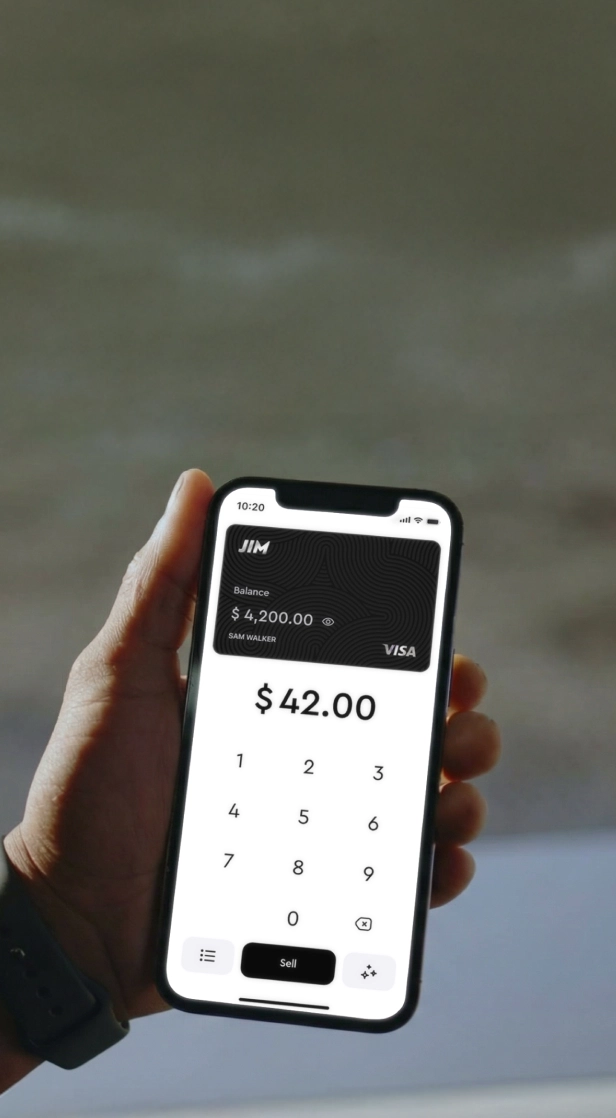
For videographers who need to accept payments on-site, JIM offers a streamlined solution. With JIM, you can accept debit, credit, and digital wallets directly through your smartphone. Just tap and the payment is done. It is particularly useful for collecting final payments from clients.
At just 1.99% per transaction with no hidden costs or extra hardware needed, its rate is more favorable than the average commission from other providers. Here is how it works:
- Get Started: Download the JIM app for iOS.
- Make a Sale: Type the sales amount, hit sell, and ask your customer to tap their card or device on your phone.
- Access Funds: Your money is available on your JIM card as soon as the sale is done, with no waiting for bank transfers.
Here are 3 immediate steps to take:
- Draft your payment terms, including a 50% deposit policy.
- Add your payment schedule to your client contract template.
- Download the JIM app to explore its features for on-site payments.
Step 6: Fund your business and manage your finances
Secure your startup capital
Most videographers self-fund with personal savings or a business credit card. A card with a 0% introductory APR can give you a year to pay off gear without interest. This is often the quickest way to get the capital you need for your initial equipment purchases.
You might also look into an SBA Microloan, which offers up to $50,000. These loans are designed for small businesses and have interest rates between 8% and 13%. They are a solid option if you need more than a credit card can offer.
Manage your working capital
A mistake some new owners make is to spend their entire budget on gear. You need working capital to cover at least six months of operating costs. This means setting aside $3,000 to $5,000 for insurance, software subscriptions, and marketing before client deposits become consistent.
Grants are competitive, but you can find them. The Amber Grant, for example, awards funds to women entrepreneurs. Also, consider reinvesting profits from your first few weddings to upgrade gear. This approach helps you grow your business without taking on debt.
Here are 4 immediate steps to take:
- Calculate your 6-month working capital needs.
- Research the SBA Microloan program on the SBA website.
- Explore one business credit card with a 0% introductory APR.
- Look up the Amber Grant application to see if you qualify.
Step 7: Build your team and streamline operations
As you book more weddings, you cannot be in two places at once. Your first hire will likely be a second shooter to capture alternate angles and B-roll. Expect to pay a day rate of $250 to $500, depending on their experience and the gear they bring.
A frequent misstep is hiring a friend without clear terms. Always use a contract that outlines their pay, responsibilities, and what happens with the footage they shoot. This protects both of you and keeps the relationship professional.
Streamline your workflow
With more people and projects, organization is key. A client management system like HoneyBook or Studio Ninja can manage contracts, invoices, and questionnaires. These platforms typically cost between $20 and $40 per month and prevent double bookings or missed client emails.
Once your annual revenue approaches $50,000, consider hiring a freelance editor. This frees you up to film more weddings. Editors often charge per project, from $300 to $700 for a highlight film, letting you scale your business without adding a full-time salary.
Formal videography certifications are not standard; your portfolio is your best credential. However, if you plan to offer drone footage, you must obtain a Part 107 license from the FAA. This is a legal requirement for commercial drone use in the U.S.
Here are 4 immediate steps to take:
- Draft a standard contract for a second shooter.
- Sign up for a free trial of a CRM like HoneyBook.
- Research the FAA's Part 107 drone license requirements.
- Outline the tasks you would delegate to a freelance editor.
Step 8: Market your business and find clients
Build your online portfolio and social proof
Your website and Instagram are your digital storefronts. Post your best highlight films and add client testimonials as you get them. Use Instagram Reels to share behind-the-scenes clips or quick editing reveals. This content shows your personality and skill, which helps couples connect with you.
Network with other wedding vendors
Your best leads will come from referrals. Connect with wedding planners, photographers, and venue managers. A great way to build these relationships is to offer your services for a styled shoot. You get portfolio content, and they get a promotional video. It is a win-win.
A mistake some make is to rely solely on paid ads. Vendor referrals often have a much higher booking rate because the trust is already established. These relationships are your most valuable marketing asset, so nurture them.
Use wedding directories strategically
Platforms like The Knot and WeddingWire can put you in front of couples actively looking for vendors. Listing your business here can be effective, but it requires an investment. You might want to start with a small budget, around $200 per month, to test the platform's return.
Here are 4 immediate steps to take:
- Create an Instagram Reel with your best footage.
- Email three local wedding planners to introduce your services.
- Research listing prices for The Knot or WeddingWire in your area.
- Outline a proposal for a styled shoot with a local photographer.
Step 9: Price your services and packages
Develop your pricing structure
Most videographers offer three packages. For example, a basic 6-hour package might be $3,000. An 8-hour package with a second shooter could be $4,500. A premium 10-hour package with drone footage and a short teaser film might go for $6,000.
A mistake many new videographers make is to underprice their work just to land the first few clients. This can make it difficult to raise your rates later. Price based on the value you provide, not just the hours you work. Your final price should aim for a 50-60% profit margin after all costs.
Offer à la carte add-ons
In addition to packages, you can boost revenue with à la carte options. These allow couples to customize their coverage. You might offer raw footage for an extra $500, a one-minute social media teaser for $400, or an extra hour of coverage for $350.
To figure out your pricing, analyze at least five local competitors from WeddingWire or The Knot. Note their package inclusions and prices. Do not copy them directly, but use the data as a benchmark to position your own services in the market.
Here are 4 immediate steps to take:
- Outline three wedding packages with specific deliverables and prices.
- Create a list of five à la carte add-ons with individual prices.
- Calculate your cost for a typical wedding, including a second shooter.
- Research the public pricing of five local competitors.
Step 10: Maintain quality and scale your operations
While the industry lacks formal certifications, your own quality standards become your reputation. Aim to deliver all highlight films within 4 to 6 weeks. Before any export, check that audio levels are consistent and that your color grade looks uniform from the first look to the final dance.
Know when to grow
Once you consistently book over 15 weddings a year, it is time to find a reliable second shooter or freelance editor. This prevents burnout and lets you focus on booking more clients. Many videographers make the mistake of hiring help too soon, which drains cash flow.
When your annual revenue approaches the $50,000 mark, plan to reinvest 10-15% back into the business. This is a good time to upgrade a primary camera body or invest in a high-end cinema lens that elevates your work.
Use software to manage growth
As your team grows, email chains become messy. A platform like Frame.io allows freelance editors to upload cuts for your review and lets you leave time-stamped comments directly on the video. This streamlines feedback and costs around $20 per month.
Here are 4 immediate steps to take:
- Create a personal quality control checklist for your final edits.
- Set a revenue goal, like $50,000, for your first major gear upgrade.
- Research the pricing and features of a video review platform like Frame.io.
- Calculate how many weddings per year would require you to hire an editor.
Starting a wedding videography business is about more than gear. Remember you capture once-in-a-lifetime moments for people. Your ability to connect with couples is just as important as your technical skill. You have the roadmap, now go build your business.
As you build, keep your payments simple. JIM turns your smartphone into a card reader, so you can accept payments on-site without extra hardware for a flat 1.99% fee. Download JIM and get your first payment sorted.
.avif)