Starting a wine tasting business is a rewarding venture that blends a passion for wine with sharp business savvy. The wine industry is a multi-billion dollar market, with steady demand for unique tasting experiences from tourists, corporate clients, and local enthusiasts alike.
This guide will take you through the practical steps of validating your business concept, obtaining the right licenses, securing funding, and building supplier relationships to help you launch a successful wine tasting business in the U.S.
Step 1: Validate your business concept
Define your market
First, pinpoint your unique angle. Will you specialize in natural wines, specific regions like Napa Valley, or offer food pairings? Surveying potential customers in your area helps you understand their price points and preferences. A common misstep is a generic offering that fails to stand out.
Visit at least five local competitors. You can find them with a quick search on Google Maps. Note their pricing, atmosphere, and event schedules, then analyze their online reviews to spot gaps in the market you could fill.
Estimate your startup costs
With your concept refined, you can map out your budget. Initial investment often falls between $25,000 and $100,000, a figure that depends heavily on your location and scale. A clear financial plan is a great asset when you seek funding.
Here is a typical breakdown of initial expenses:
- Licensing and permits: $500 - $5,000
- Lease and renovation: $15,000 - $60,000+
- Initial wine inventory: $5,000 - $15,000
- Glassware, furniture, and equipment: $3,000 - $10,000
- Initial marketing: $2,000 - $5,000
Here are 3 immediate steps to take:
- Draft a one-page summary of your unique wine tasting concept.
- Create a spreadsheet to estimate your startup costs using the ranges above.
- Identify and visit three direct competitors to analyze their customer experience.
Step 2: Secure your legal structure and licenses
Choose your business structure
Most new wine tasting businesses register as a Limited Liability Company (LLC). This structure protects your personal assets, like your home, if the business faces a lawsuit. Profits pass through to your personal tax return, which avoids the double taxation that corporations face.
While an S Corp is another option, the LLC is generally simpler to set up and manage. It is a good idea to speak with a CPA to confirm the best choice for your financial situation.
Navigate the licensing maze
You will work with three levels of government: federal, state, and local. The main federal body is the Alcohol and Tobacco Tax and Trade Bureau (TTB). However, your most time-consuming task will be securing a state license from your local Alcohol Beverage Control (ABC) board.
This on-sale wine license can cost between $3,000 and $20,000 and often takes 6 to 12 months for approval. A frequent misstep is signing a lease before the license is in hand. You should try to negotiate a lease that is contingent on license approval.
In addition to the state license, you will also need:
- A federal Employer Identification Number (EIN) from the IRS
- A local city or county business license
- A health department permit if you plan to serve food
- A Certificate of Occupancy for your physical space
Here are 4 immediate steps to take:
- Consult a lawyer or CPA to formally establish your LLC.
- Apply for a free Employer Identification Number (EIN) on the IRS website.
- Contact your state's Alcohol Beverage Control (ABC) board for their on-sale wine license application.
- Check your city's zoning requirements for your proposed location.
Step 3: Secure your insurance and manage risk
Key insurance policies
Protecting your business from day one is non-negotiable. You will need General Liability insurance for accidents like slips and falls, and Property Insurance to cover your building, equipment, and wine inventory from damage or theft.
The most important policy is Liquor Liability insurance. Many owners mistakenly believe general liability covers alcohol-related incidents, but it does not. This separate policy protects you if an over-served patron causes harm. A $1 million policy is the standard starting point.
If you hire even one employee, you must have Workers' Compensation insurance. Depending on your policy bundle, annual premiums can range from $2,000 to $7,000. With these policies in place, you can operate with confidence.
You might want to get quotes from providers who specialize in the hospitality industry. Consider companies like the Food Liability Insurance Program (FLIP), The Hartford, or a broker through Insureon to find competitive rates and appropriate coverage.
Here are 4 immediate steps to take:
- Request quotes for a $1 million liquor liability policy.
- Contact an insurance broker who specializes in hospitality.
- Review your lease agreement to confirm its required insurance coverage amounts.
- Get a quote for workers' compensation if you plan to hire staff.
Step 4: Find your location and buy equipment
Secure the right space
Look for a space between 1,000 and 2,500 square feet. This size supports a tasting bar, seating for 20-40 guests, and storage. Confirm the property is zoned for commercial use, which permits retail and beverage service. High foot traffic and good visibility are a major plus.
When you negotiate your lease, include a contingency clause that makes the agreement dependent on your liquor license approval. You might also ask for a Tenant Improvement (TI) allowance. This is a contribution from the landlord to help cover your renovation costs.
Stock your tasting room
With a location in mind, you can budget for equipment. Your main expenses will be refrigeration and glassware. A commercial glass washer, while a significant purchase, will save you countless hours. You can find most items at suppliers like WebstaurantStore or a local restaurant supply depot.
Here are some typical costs for key items:
- Commercial wine refrigerators: $2,000 - $8,000
- POS system and payment processor: $500 - $1,500
- Commercial glass washer: $3,000 - $7,000
- Quality glassware: $5 - $15 per stem
Here are 4 immediate steps to take:
- Draft a list of your ideal location requirements, including size and zoning.
- Research commercial real estate listings in your target neighborhoods.
- Create a budget for initial equipment purchases using the price ranges above.
- Identify two local restaurant supply stores to compare prices.
Step 5: Set up your payment processing
You will need a reliable way to accept payments. Most customers use credit cards, debit cards, or digital wallets. When you look for a payment solution, focus on low transaction fees and transparent pricing. Many providers charge 2.5% to 3.5% plus monthly fees.
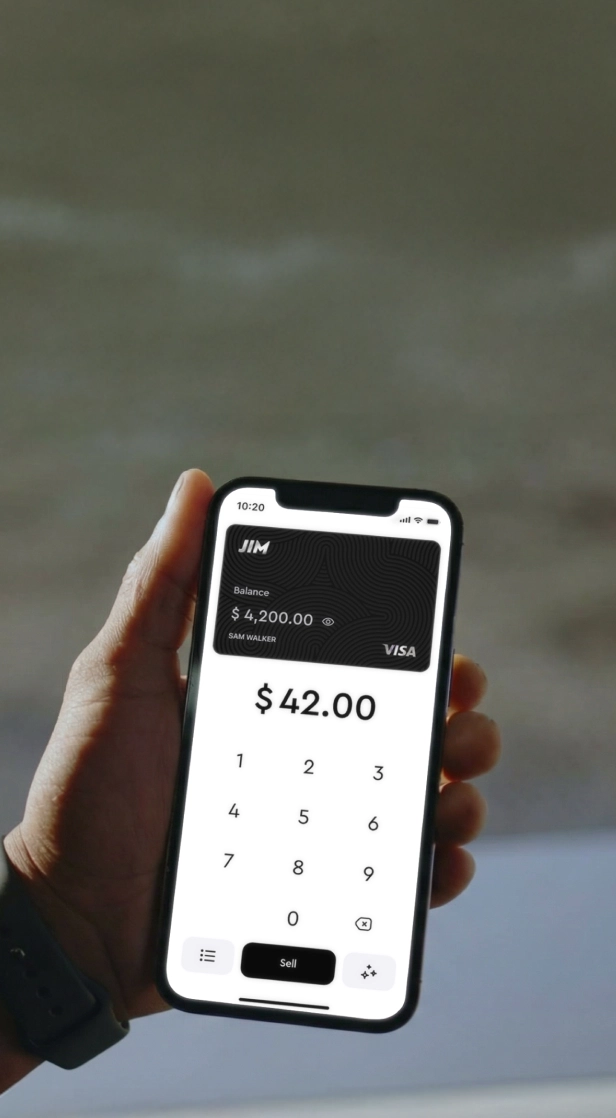
For a wine tasting business that needs to accept payments on-site or on-the-go, JIM offers a streamlined solution. With JIM, you can accept debit, credit, and digital wallets directly through your smartphone. Just tap and you are done.
The rate is just 1.99% per transaction with no hidden costs or extra hardware needed. This is particularly useful for processing payments at private events or pop-up tastings. The lower rate means more money stays in your business.
Here is how it works:
- Get Started: Download the JIM app for iOS.
- Make a Sale: Type the sales amount, hit sell, and ask your customer to tap their card or device on your phone.
- Access Funds: Your money is available on your JIM card as soon as the sale is done, with no waiting for bank transfers.
Here are 3 immediate steps to take:
- Compare the transaction fees of at least two other payment processors with JIM's rate.
- Download the JIM app to see how it functions on your smartphone.
- Estimate your monthly sales volume to calculate potential processing fee savings.
Step 6: Fund your business and manage finances
Secure your funding
The SBA 7(a) loan is a popular choice for new ventures. For a wine tasting room, lenders often approve amounts between $50,000 and $150,000. You will generally need a credit score above 680 and a detailed business plan to qualify. Interest rates typically sit at Prime + 3-4%.
You can also explore equipment financing for large purchases like refrigerators or a glass washer. The equipment itself acts as collateral, which can make approval easier. A business line of credit is another option for managing cash flow, especially for purchasing wine inventory before you open.
Plan your cash flow
You should have enough working capital to cover at least six months of operating expenses. This includes rent, payroll, inventory, and marketing. For a small tasting room, this often means having $20,000 to $50,000 in cash reserves from day one.
A spot where new owners often get tripped up is underestimating the cash needed for initial inventory and marketing. It is easy to focus on the lease and renovations, so be sure to budget enough to stock your shelves and attract your first customers.
Here are 4 immediate steps to take:
- Request your credit report to confirm your score.
- Contact your bank to ask about their SBA 7(a) loan process.
- Calculate six months of operating expenses to set your working capital target.
- Research two equipment financing companies for your major purchases.
Step 7: Hire your team and set up operations
Build your front-of-house team
Your first hires will likely be a Tasting Room Associate and a Manager. The associate is your frontline role, responsible for pouring wine and processing sales. Expect to pay $15-$20 per hour plus tips. A passion for wine is a great starting point.
The Tasting Room Manager runs the show. They handle staff scheduling, inventory, and event coordination. This role typically commands a salary between $45,000 and $65,000 annually, depending on experience and location.
Training and daily management
Most states require anyone who serves alcohol to have a Responsible Beverage Service (RBS) certification, so check with your local ABC board. While formal wine education like a WSET certificate is a plus, you can train new staff on your specific wine selection.
A frequent misstep is understaffing on weekends, which creates long waits. A good ratio is one server for every 10-15 guests. For scheduling, platforms like Homebase or 7shifts help manage shifts and team communication effectively.
Here are 4 immediate steps to take:
- Draft job descriptions for a Tasting Room Associate and Manager.
- Research your state's Responsible Beverage Service (RBS) training requirements.
- Calculate your ideal staff-to-guest ratio based on your floor plan.
- Compare features of two scheduling platforms like Homebase and 7shifts.
Step 8: Market your business and acquire customers
Create your digital storefront
Your website and social media are your digital front doors. Focus on Instagram, where visual content shines. Post high-quality photos of your space, your wines, and happy customers. Use local hashtags and geo-tags so people in your area can find you easily.
Start an email list from your first day. You can offer guests a 10% discount on a future tasting if they sign up. This direct line to your customers is perfect for announcing new wines or special events. Platforms like Mailchimp offer free plans to get you started.
Forge local partnerships
Connect with nearby hotels, B&Bs, and corporate event planners. You could offer them a 15% commission for each booking they send your way. This creates a steady stream of customers with minimal upfront cost. A simple one-page agreement keeps everything clear.
A mistake some owners make is trying to do everything alone. Instead, collaborate with a local cheesemonger or chocolatier for a pairing event. You both promote the event to your respective audiences, which doubles your reach and splits the marketing effort.
As you spend on marketing, track your Customer Acquisition Cost (CAC). Divide your monthly marketing spend by the number of new customers. A CAC under $50 is a solid benchmark for this type of local business. This tells you which channels give you the best return.
Here are 4 immediate steps to take:
- Set up an Instagram business profile and post five high-quality photos of your space.
- Contact two local hotels to propose a referral partnership.
- Create an email sign-up form using a service like Mailchimp.
- Calculate your target Customer Acquisition Cost based on a hypothetical $500 monthly ad spend.
Step 9: Develop your pricing strategy
Your pricing strategy has two main parts: tasting fees and bottle prices. For tastings, a flight of three to five 2-ounce pours is standard. You can price these flights between $15 and $35, depending on the wines you feature. You might also offer premium flights for $40+.
For by-the-glass sales, a common markup is three to four times your wholesale cost. If a bottle costs you $10, you would price a glass around $12, getting about four glasses per bottle. This approach helps you reach a healthy gross profit margin of 65-75%.
Retail bottle sales for guests to take home have a lower markup, usually 50-100% over wholesale. A mistake some owners make is pricing too low across the board. This can hurt your brand perception and make it difficult to cover your operating costs consistently.
With these numbers in mind, review the menus of your top three competitors. Note their prices for flights, glasses, and bottles. This analysis helps you position your offerings competitively without starting a price war. You want to compete on experience, not just price.
Here are 4 immediate steps to take:
- Create three sample tasting flights at different price points ($15, $25, $35).
- Calculate the by-the-glass price for a wine with a $12 wholesale cost using a 3x markup.
- Research the online menus of three local competitors to compare their flight prices.
- Set a retail markup policy for take-home bottles, such as 75% over wholesale.
Step 10: Maintain quality and scale your business
Track your performance
As your business grows, you must maintain the quality of your customer experience. Use online reviews as your guide. Aim for a 4.5-star average or higher on platforms like Google and Yelp. A simple feedback card at the table can also provide direct, valuable insights.
Your wine club health is another key indicator. A churn rate below 15% annually shows you are keeping your most loyal customers happy. If the rate climbs, it is time to re-evaluate your offerings or member benefits.
Know when to grow
Growth should be a deliberate decision based on data. When your staff-to-guest ratio consistently exceeds 1-to-15 on weekends, it is time to hire another associate. This prevents long waits and maintains service quality. A mistake some owners make is waiting too long to hire.
Once you hit 80% capacity on Friday and Saturday nights for two consecutive months, you can start to explore expansion. This could mean adding more seating or looking for a second location. To manage this growth, consider wine club software like Commerce7 or WineDirect to automate tasks.
Here are 4 immediate steps to take:
- Create a simple customer feedback form with one to three questions.
- Calculate your current staff-to-guest ratio for your busiest night.
- Set a target for your wine club churn rate, aiming for under 15% annually.
- Research two wine club management platforms like Commerce7 or WineDirect.
You now have a clear path to launch your wine tasting business. Remember, success hinges on the experience you create for every guest. It is the small details that build loyalty. With this plan in hand, you are ready to take the first step.
As you focus on the customer experience, simplify your payments. JIM turns your smartphone into a card reader, so you can accept payments anywhere with a flat 1.99% fee and no extra hardware. Download JIM to get started.
.avif)