A wrapping paper business can be a rewarding venture, letting you combine your creative flair with sharp business sense. It's a market worth billions, driven by consistent demand for wrapping paper for birthdays, holidays, and other special occasions.
This guide will take you through the practical steps, from validating your business concept and building supplier relationships to acquiring inventory and securing the right permits, to help you launch a successful wrapping paper business in the U.S.
Step 1: Validate your business plan
Analyze competitors and find your niche
Start with market research to see what already sells. Visit local stationery shops and craft fairs to feel paper quality and see price points. Online platforms like Etsy and Pinterest are also excellent places to spot current design trends and popular themes.
Once you have a feel for the market, analyze your competition. You can use resources like Statista for broad market data or Similarweb to check a competitor's website traffic. A frequent oversight is to focus only on large companies; you can learn a lot from successful small-scale sellers.
Estimate your startup costs
Speaking of planning, let's outline your initial costs. A budget for these expenses helps set a solid foundation. Expect monthly fees for design software like Adobe Illustrator ($20-$50) and an e-commerce site like Shopify ($30-$100).
Your first inventory run will be the largest upfront investment, typically between $1,000 and $5,000 for paper, printing, and packaging. Business registration and permits usually add another $100 to $500, depending on your location.
Here are 3 immediate steps to take:
- Research five direct competitors on Etsy, and note their top-selling items and pricing.
- Draft an initial budget with estimated costs for your first inventory order and software subscriptions.
- Use Google Trends to compare search interest for three of your potential design themes.
Step 2: Set up your legal structure and licensing
Choose your business structure
You should first decide on a business structure. An LLC is a popular choice because it separates your personal assets from business debts. This structure also offers pass-through taxation, meaning profits are taxed on your personal return, which simplifies filings.
Once your structure is set, get a federal Employer Identification Number (EIN) from the IRS. It's free and you can apply online. You will need this number to open a business bank account and, if you plan to hire, for payroll.
Secure your permits and licenses
At the state level, you will need a seller's permit from your state's Department of Revenue. A frequent mistake is to skip this step, which can result in fines. Also, check with your city or county clerk for a general business license, which costs around $50 to $100 annually.
State registration fees are typically between $50 and $150, with processing times of one to three weeks. These are small but necessary investments to operate legally and avoid issues down the road.
Here are 4 immediate steps to take:
- Apply for a free EIN directly on the IRS website.
- Decide if an LLC or sole proprietorship is right for you and file the formation documents.
- Visit your state's Department of Revenue site to find the seller's permit application.
- Contact your city clerk's office about the cost and process for a local business license.
Step 3: Protect your business with the right insurance
General liability insurance is your baseline protection. A $1 million policy is standard and covers claims like a customer injury at your market stall. Expect annual premiums between $400 and $900. You should also add product liability coverage, which protects you if your paper causes damage.
Many new owners assume their homeowner's policy covers business inventory, but that is rarely the case. Commercial property insurance protects your paper stock from fire, theft, or water damage. Premiums will depend on the value of your inventory.
Once you hire your first employee, you will need workers' compensation insurance. If you use a vehicle for deliveries, you will also need a commercial auto policy. For e-commerce businesses, providers like Hiscox, Next Insurance, and The Hartford are good places to start your search for quotes.
Here are 4 immediate steps to take:
- Get quotes for a combined general and product liability policy.
- Review your homeowner's insurance to confirm its business-related exclusions.
- Research workers' compensation requirements in your state if you plan to hire.
- Compare small business policies from providers like Hiscox or Next Insurance.
Step 4: Secure your space and equipment
Find your workspace
You can start this business from home. A dedicated space of 100-200 square feet in a spare room or clean garage is plenty. A frequent oversight is not checking local rules; look up your city’s “home occupation permit” requirements to ensure you comply with zoning.
If you decide to rent a small studio, try to negotiate a one or two-year lease. This gives you flexibility as your business finds its footing. Make sure the space is dry and climate-controlled to protect your paper stock from damage.
Get your supplies and equipment
Your main physical items will be a large, self-healing cutting mat ($50-$100), a rotary cutter ($20-$40), and sturdy shelving ($100-$300). For shipping, you will need mailing tubes and boxes, which you can source from suppliers like Uline.
For paper, look at vendors like Paper Mart. Before you place a large order, always get samples to test the feel and print quality. Custom printers often have minimum order quantities (MOQs), so plan for an initial run of 500 to 1,000 sheets per design.
Here are 4 immediate steps to take:
- Measure a dedicated 100-200 sq ft area in your home for storage and packing.
- Check your city’s website for its home occupation permit regulations.
- Price out a large cutting mat and rotary cutter from a local art supply store.
- Request paper samples from a supplier like Paper Mart to test quality.
Step 5: Set up your payment processing
For online sales, platforms like Shopify have built-in payment processors that charge around 2.9% + $0.30 per transaction. A frequent mistake is to overlook these fees, which can add up. Always factor them into your pricing from day one to protect your profit margins.
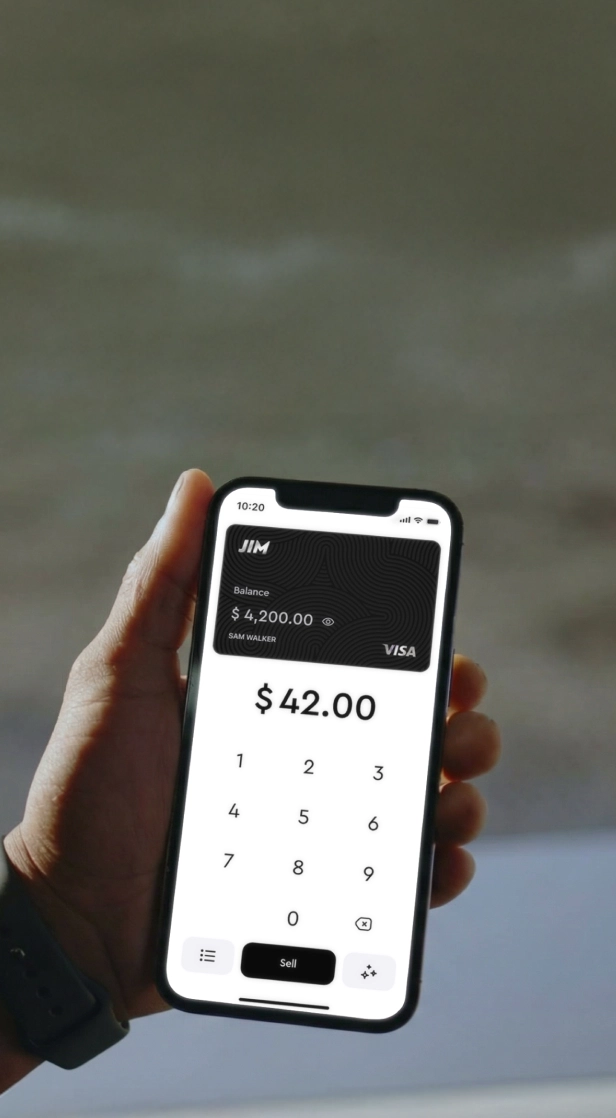
Many wrapping paper businesses also sell in person at craft fairs and holiday markets. For these on-the-go sales, JIM offers a streamlined solution. With JIM, you can accept debit, credit, and digital wallets directly through your smartphone—just tap and done.
At just 1.99% per transaction with no hidden costs or extra hardware, it is particularly useful for keeping costs low at markets. This rate is competitive against the higher average commissions other mobile payment providers offer. Your money is available right on your JIM card instantly.
Getting started with JIM
- Get Started: Download the JIM app for iOS.
- Make a Sale: Type the sales amount, hit sell, and ask your customer to tap their card or device on your phone.
- Access Funds: Your money is available on your JIM card as soon as the sale is done—no waiting for bank transfers.
Here are 3 immediate steps to take:
- Review the transaction fees for your chosen e-commerce platform.
- Download the JIM app to see how it works on your phone.
- Decide on your sales channels (online, markets, or both) to pick the right payment mix.
Step 6: Fund your business and manage finances
Secure your startup funding
Many founders start with personal savings. If you need external funds, consider an SBA Microloan. These loans go up to $50,000 with interest rates between 8-13%. They are designed for new businesses that may not qualify for traditional bank loans.
You might also look for grants. The Amber Grant gives monthly awards to women entrepreneurs. Also, check with your local arts council, as they often have grants for creative businesses. A frequent misstep is to seek a large bank loan too soon, as they prefer established sales records.
Set up your financial systems
With funding in mind, let's talk about managing it. You will need about $3,000 to $8,000 in working capital for your first six months. This covers inventory, marketing, and other costs before your sales are steady.
Open a separate business bank account immediately. This is a non-negotiable step that uses the EIN you got in Step 2. Mixing personal and business finances is a common error that creates tax headaches and hides your true profitability.
From day one, use accounting software like Wave (which is free) or QuickBooks. This helps you track every dollar and see how your business performs.
Here are 4 immediate steps to take:
- Calculate your 6-month working capital needs based on your budget.
- Research the SBA Microloan program requirements on the SBA website.
- Open a dedicated business checking account using your EIN.
- Compare features of accounting software like Wave and QuickBooks.
Step 7: Hire your team and set up operations
Your first hire
You will likely start as a one-person operation. Plan to hire your first part-time employee once you consistently ship 50-75 orders per week. This prevents burnout and frees you to focus on design and growth.
Your first role will probably be a Packing and Shipping Assistant. Responsibilities include printing labels, carefully packing orders, and managing inventory levels. Expect to pay an hourly rate of $15 to $20, depending on your local market.
A frequent misstep is to misclassify this person as a contractor. To avoid legal issues, use a payroll service like Gusto or QuickBooks Payroll to handle taxes and ensure you comply with labor laws from day one.
Daily operations
With your systems in place, you can now refine your daily workflow. Map out every action from the moment a customer places an order to when you hand the package to the carrier. This creates a standard process for you and any future hires.
For managing tasks beyond order fulfillment, a simple project board can work wonders. Use a platform like Trello to track design ideas, marketing campaigns, and supplier communications. This keeps your business organized as it grows.
Here are 4 immediate steps to take:
- Draft a job description for a part-time Packing and Shipping Assistant.
- Set a weekly order volume that will signal it is time to hire.
- Map your entire order fulfillment process, from click to shipment.
- Research payroll providers like Gusto to understand costs and features.
Step 8: Market your products and win customers
Build your online presence
Focus your marketing on visual platforms. Pinterest and Instagram are your best channels. Create high-quality photos and short videos that show your paper's texture and unique designs. A frequent mistake is to use poor lighting, which makes even the best paper look cheap.
You might want to run targeted ads. Start with a small budget of $5 to $10 per day on Pinterest or Instagram to promote your most popular designs. Aim for a 1-2% conversion rate, which is a solid benchmark for a new e-commerce store.
Explore wholesale opportunities
Once you have your online store running, consider wholesale. This gets your products into physical boutiques. Platforms like Faire connect you with thousands of retailers looking for new inventory. Retailers typically expect a 50% discount off your retail price.
Before you approach shops, prepare a professional line sheet. This is a simple one-page document with product photos, SKUs, and wholesale pricing. Many new sellers get caught without one when a retailer shows interest, so have it ready from the start.
Here are 4 immediate steps to take:
- Set up a Pinterest Business account and create boards for your design themes.
- Take high-quality photos of at least five of your paper designs.
- Create a one-page line sheet with your product details and wholesale prices.
- Research five local gift shops or stationery stores that could be a good fit for your brand.
Step 9: Set your pricing strategy
Calculate your costs
First, figure out your Cost of Goods Sold (COGS) for each sheet. This includes the paper, printing, and a share of design software fees. Many new sellers forget to add transaction fees (around 3%) and the cost of mailing tubes or boxes into this number.
For example, if a printed sheet costs $1.50, packaging is $0.50, and fees are $0.20, your total COGS is $2.20. A clear view of this number prevents you from accidentally underpricing your work and losing money on sales.
Set your retail price
A simple way to start is the cost-plus model. You can mark up your COGS by 2x to 3x to set your retail price. This should give you a healthy profit margin of 50-70%. Using our $2.20 COGS example, a 2.5x markup would result in a retail price of $5.50.
Once you have a number, check it against competitors on Etsy or at local markets. If your paper is higher quality or has a more unique design, you can justify a higher price. Adjust your price based on what the market will support.
Here are 4 immediate steps to take:
- Calculate the full COGS for one sheet of your main paper design.
- Research the prices of five similar wrapping paper products on Etsy.
- Set a test price for one design using a 2.5x markup.
- Create a simple spreadsheet to track your pricing and profit margins per design.
Step 10: Maintain quality and scale your operations
Set your quality benchmarks
Your paper's quality is your reputation. Create a checklist for each print run. Specify the paper weight (e.g., 80-100 GSM), the exact Pantone color codes for your designs, and the trim accuracy. This gives your printer clear, measurable targets to hit.
A frequent oversight is approving a print run based only on a digital proof. Always demand a physical press proof. This is your only chance to catch color shifts or feel the paper texture before you commit to thousands of sheets. Also, ask suppliers if their paper is FSC-certified.
Prepare for growth
Once you consistently hit 50-75 orders per week, it is time to bring on part-time help. When managing inventory takes more than five hours a week, you should look into inventory management software like Katana to automate tracking and reordering.
You can also scale through product expansion. After a design sells more than 500 units, consider it validated. You can then expand that popular design into related products like gift tags or greeting cards to increase your average order value.
Here are 4 immediate steps to take:
- Create a quality checklist with paper weight, color codes, and trim specs.
- Ask your printer for a physical press proof on your next order.
- Set a weekly order volume that will signal it is time to hire.
- Identify your top-selling design as a candidate for a product line extension.
Starting a wrapping paper business is a journey of creativity and smart planning. Remember that your unique designs and the quality of the paper are your biggest assets. You have the steps, now go turn your artistic vision into a successful brand.
As you start to sell, especially at markets, a simple payment solution helps. JIM turns your phone into a card reader for a flat 1.99% fee per sale, with no extra hardware. It makes getting paid easy, so you can focus on your customers. Download JIM to get started.
.avif)