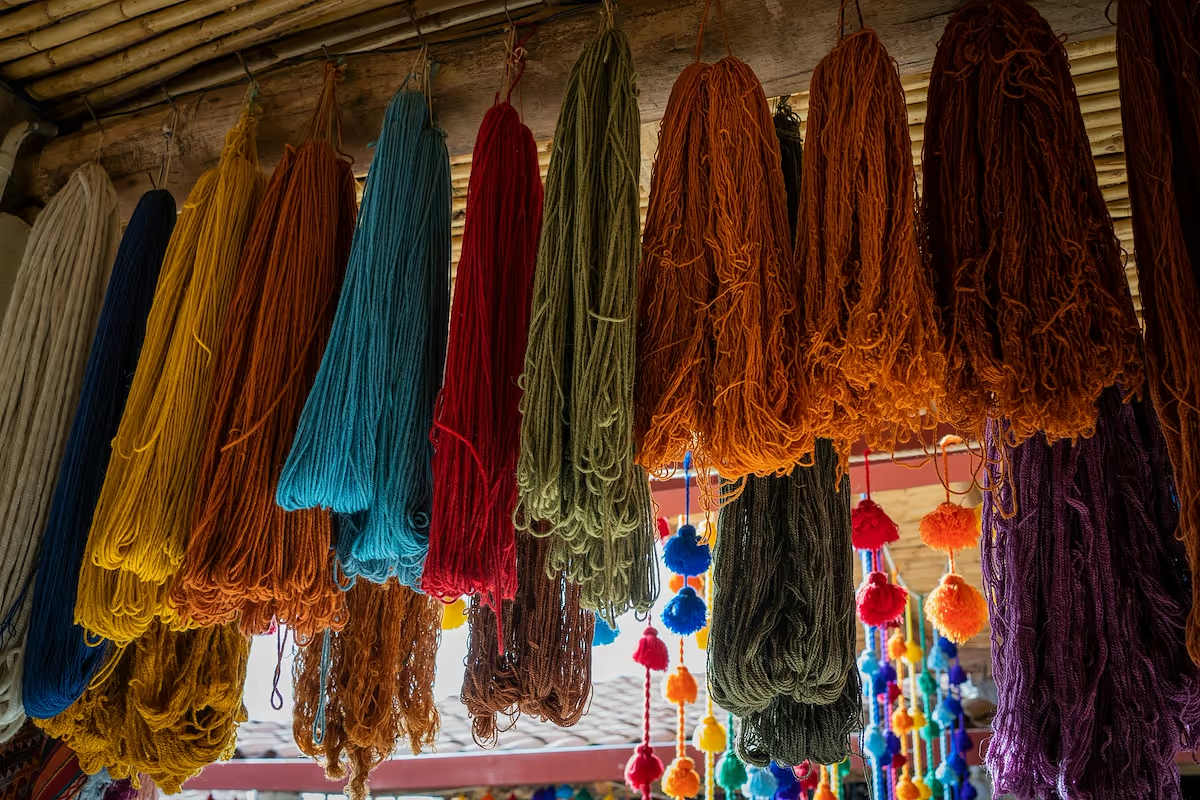
Starting a yarn dyeing business is a rewarding venture that combines a passion for color and textiles with business savvy. The market is accessible with a relatively low barrier to entry, but that also means you'll need a unique brand to stand out from the crowd.
This guide will take you through the practical steps of validating your business concept, acquiring equipment, building supplier relationships, and obtaining the necessary permits to help you launch a successful yarn dyeing business in the U.S.
Step 1: Plan your business and validate your idea
First, figure out what knitters and crocheters actually want to buy. Spend a few weeks on platforms like Etsy, Ravelry, and Instagram. Search hashtags like #handdyedyarn and #indiedyer to see popular color styles, fiber bases, and price points from other small businesses.
You should also visit a few local yarn stores. Notice which hand-dyed yarns they stock and which ones sell quickly. If you can, chat with the owner about what their customers look for. This direct feedback is incredibly valuable for shaping your own product line.
Estimate your startup costs
Your initial investment can range from $950 to over $2,800. A frequent misstep is to forget hidden costs like shipping supplies or payment processing fees. You might want to factor these in from the start to price your yarn correctly and avoid losing money on early sales.
Here is a typical breakdown of where that money goes:
- Dyeing Equipment: Expect to spend $300-$800 on dedicated stainless steel pots, a heat source like an induction cooktop, a gram scale, a yarn swift, and a ball winder.
- Initial Supplies: Budget $500-$1,500 for your first batch of undyed yarn bases, acid dyes from suppliers like Dharma Trading Co., citric acid, and safety gear.
- Business Admin: Set aside $150-$500 for LLC registration fees, which vary by state, and initial costs for a website or an Etsy shop.
Here are 3 immediate steps to take:
- Research 10 competing indie dyers on Etsy or Instagram, and note their pricing and branding.
- Create a spreadsheet to budget for your initial costs using the categories above.
- Visit two local yarn stores to observe their hand-dyed yarn selection and retail prices.
Step 2: Set up your legal structure and get licensed
You should consider forming a Limited Liability Company (LLC). This structure protects your personal assets if the business faces debt or lawsuits. It is simpler to manage than a corporation and offers pass-through taxation, meaning profits are taxed on your personal return.
Many new dyers operate as a sole proprietorship to save on fees, but this leaves personal finances exposed. The cost of an LLC, typically $50 to $500 depending on your state, is a worthwhile investment for peace of mind.
Federal and state requirements
At the federal level, the FTC requires accurate fiber content labels on your yarn. You will need to apply for a free Registered Identification Number (RN) from the FTC to use on your tags instead of your full business name.
Next, register for a state seller’s permit to collect and remit sales tax. You may also need a local business license from your city or county. If you work from home, check for any home-based business permit rules to ensure you are compliant.
Here are 4 immediate steps to take:
- Decide on a business name and register it with your state.
- File your LLC formation documents with your Secretary of State.
- Apply for a Registered Identification Number (RN) on the FTC website.
- Research your state’s requirements for a seller’s permit.
Step 3: Insure your business and manage risk
You should secure insurance before you sell your first skein. General liability and product liability are often bundled together and can cost $300 to $700 annually. This protects you if a customer has an allergic reaction or if your yarn damages their property.
Also, consider business property insurance. This covers your inventory of undyed yarn, dyes, and equipment like pots and winders against theft or damage. Many new dyers forget to check if their homeowner's policy covers business activities. It usually does not, which can be a costly surprise.
Unique risks in yarn dyeing
Your work involves specific risks. Water damage from a dye pot spill, chemical fumes in a poorly ventilated space, and repetitive strain injuries from winding yarn are all real possibilities. A good policy should account for these scenarios, so be sure to mention them when you request a quote.
You might want to get quotes from providers that understand craft businesses, such as ACT Insurance, Hiscox, or The Hartford. They are more familiar with home-based operations and can offer tailored policies that a general agent might overlook. Make sure your coverage is active before your first sale.
Here are 4 immediate steps to take:
- Request quotes from at least two insurers that specialize in craft businesses.
- Calculate the total replacement value of your yarn inventory and equipment.
- Review your homeowner’s or renter’s policy for any business-related exclusions.
- Ask potential insurers how their policies cover water damage and chemical spills.
Step 4: Set up your workspace and buy equipment
You need a dedicated area of at least 100 square feet. A well-ventilated garage, basement, or spare room with easy water access works well. Before you commit, check your local zoning ordinances for any restrictions on home-based businesses, as some areas have specific rules.
Your dyeing equipment checklist
You can acquire your initial equipment for $300 to $800. A frequent mistake is to use aluminum pots; they react with acid dyes and will ruin your colors. Stick to stainless steel pots, which you can often find secondhand at restaurant supply stores.
- Dedicated Pots: Two or three 20-quart stainless steel pots ($50-$150).
- Heat Source: An induction cooktop provides consistent heat ($70-$200).
- Measurement & Winding: A gram scale ($20-$40) and a yarn swift and ball winder combo ($60-$150) are necessary for processing skeins.
Sourcing your yarn and dyes
For supplies, look at vendors like Dharma Trading Co. or Dyer Supplier. Some have minimum orders, like 1 kilogram per yarn base. You might want to start with just two or three popular types, such as a Superwash Merino sock yarn and a DK weight wool.
Here are 4 immediate steps to take:
- Measure your potential workspace to confirm it meets the 100-square-foot guideline.
- Create a shopping list for your equipment with a budget based on the price ranges above.
- Research undyed yarn prices from two different suppliers.
- Check your city or county website for home-based business zoning rules.
Step 5: Set up payment processing
You will need a way to accept payments, whether you sell online or at markets. A frequent miscalculation is forgetting that payment processors take a cut of every sale. These fees add up, so you should account for them in your pricing from day one.
Most platforms charge between 2.5% and 3.5% per transaction. When you are starting, look for a payment solution with clear, low-cost pricing to protect your profit margins. This is especially important for in-person sales where options vary widely.
For sales at a craft fair or fiber festival, JIM offers a simple way to get paid. You can accept debit, credit, and digital wallets directly through your smartphone. Just tap and the sale is done, with no extra hardware needed.
At just 1.99% per transaction and no hidden costs, its rate is very competitive. Your money is also available on your JIM card immediately after the sale, so you do not have to wait for bank transfers.
- Get Started: Download JIM app for iOS
- Make a Sale: Type the sales amount, hit sell, and ask your customer to tap their card or device on your phone
- Access Funds: Your money is available right on your JIM card as soon as the sale is done - no waiting for bank transfers
Here are 3 immediate steps to take:
- Compare the transaction fees of your online sales platform with mobile payment solutions.
- Calculate how a 1.99% versus a 3.5% fee affects the profit on a $30 skein of yarn.
- Decide if you will sell in person, online, or both to choose the right payment setup.
Step 6: Secure funding and manage your finances
For your first six months, you should plan for $2,000 to $5,000 in working capital. This covers ongoing costs like yarn restocks, dye supplies, and marketing efforts before sales become consistent.
If your personal savings do not cover this, you might look into an SBA Microloan. These loans, typically under $50,000, are designed for startups and have interest rates between 8% and 13%.
You could also apply for grants, which you do not have to repay. Look into programs like the Amber Grant for Women or check with your local arts council, as they sometimes offer funding for craft-based businesses.
Keep your finances separate
Once you have funding, open a dedicated business bank account. A frequent misstep is mixing personal and business finances. This complicates tax season and makes it difficult to track your actual profit margins on each batch of yarn.
Here are 4 immediate steps to take:
- Create a six-month budget projecting your supply and marketing costs.
- Research one SBA Microloan lender in your state.
- Search the Amber Grant website for application deadlines.
- Open a separate business bank account.
Step 7: Hire your first employees and set up operations
You will likely handle everything yourself at first. Once your annual revenue consistently hits the $50,000 to $75,000 range, you might consider hiring help to keep up with demand and avoid burnout.
Your first hire will probably be a part-time Studio Assistant. Their main duties would include winding skeins, applying labels, and packing orders. This frees you to focus on dyeing new colorways and marketing your brand.
Compensation and training
A typical wage for this role is $15 to $20 per hour, depending on your local cost of living. No special certifications are required. You will provide all the on-the-job training for your specific methods of processing yarn.
A frequent misstep is not having clear procedures before you hire. You should document your workflow for key tasks like how to twist a skein perfectly. This makes training an assistant much simpler and ensures consistency for your customers.
For managing operations, you do not need complex software yet. Your e-commerce platform and a spreadsheet are often enough for scheduling and inventory. When you are ready, a program like Craftybase can help you track inventory and costs more closely.
Here are 4 immediate steps to take:
- Track your monthly revenue to see when you approach a $50,000 annual run rate.
- Write a job description for a part-time Studio Assistant.
- Create a simple, written guide for how to label and pack a skein.
- Review the inventory management features of your sales platform.
Step 8: Market your business and find customers
Your marketing should start on Instagram. High-quality photos are non-negotiable. Post bright, color-accurate images of your skeins against a neutral background. Use hashtags like #handdyedyarn and #indiedyedyarn to reach your target audience of knitters and crocheters.
Many new dyers make the mistake of only posting product shots. You should also share behind-the-scenes content. Show your dye pots, your winding process, and even your mistakes. This storytelling builds a loyal following that connects with your brand, not just your product.
Use collaborations and email marketing
You might want to offer yarn support to knitwear designers. This means you provide free yarn for a new pattern design. In return, the designer promotes your yarn to their audience. A single popular pattern can drive hundreds of sales and is a common growth strategy.
Also, build an email list from day one. An email list gives you a direct line to your customers. You can offer a 10% discount for new subscribers. Aim for an open rate of 20-30%, which is a healthy benchmark for a niche retail business like yours.
Here are 4 immediate steps to take:
- Create a list of 10 relevant hashtags for your yarn on Instagram.
- Draft an outreach email to a knitwear designer you admire.
- Set up a simple email signup form on your website offering a 10% discount.
- Schedule your first week of social media posts with a mix of product and process content.
Step 9: Price your yarn for profit
To set your prices, first calculate your cost of goods sold (COGS) for each skein. This includes the undyed yarn, dye, and mordants. Many new dyers forget to factor in their own labor, so decide on an hourly wage for yourself and add it to the cost.
Use a cost-plus pricing model
For example, if your undyed yarn costs $8, supplies are $1, and your labor for one skein is $4, your total COGS is $13. To achieve a healthy gross profit margin of 50-60%, you should price that skein between $26 and $32.
Once you have a baseline, look at what similar dyers charge on Etsy or at local yarn stores. If their prices are much higher, you might have room to increase yours. This helps you understand the market's perceived value for yarns like yours.
You should also consider wholesale pricing from the start. Most shops expect a 50% discount off your retail price. Your standard retail price needs to be high enough that you can still make a profit on these wholesale orders.
Here are 4 immediate steps to take:
- Calculate the total cost of goods sold (COGS) for one skein, including your labor.
- Determine a target retail price that gives you a 50-60% profit margin.
- Analyze the prices of five comparable hand-dyed yarns on Etsy.
- Calculate a potential wholesale price based on a 50% discount from your retail price.
Step 10: Maintain quality and scale your operations
Establish your quality standards
Consistency is your best marketing tool. Create a "dye bible" to document every colorway recipe with exact dye weights and methods. A frequent mistake is to eyeball measurements, which leads to customer disappointment when a favorite colorway changes between batches.
You should also test every dye lot for quality. Submerge a small sample in warm water with a bit of wool wash for 20 minutes. If the water stays clear, your yarn is properly set. If it bleeds color, you need to revisit your heat-setting process before selling.
Know when to grow
Once your quality is consistent, you can plan for growth. When you spend more than 15 hours a week just on winding and packing, it is time to hire help. Another sign is when your shop updates sell out in under 24 hours consistently for three or more months.
As you scale, a spreadsheet might not be enough. You might want to look into a program like Craftybase. It helps you track inventory, calculate your cost of goods sold accurately, and manage your dye recipes, which is a big help when you have an assistant.
Here are 4 immediate steps to take:
- Create a "dye bible" to record your color recipes and methods.
- Perform a bleed test on one skein from every new dye lot.
- Set a weekly hour limit for administrative tasks that would trigger hiring an assistant.
- Review an inventory management system like Craftybase to see how it fits your workflow.
Starting a yarn dyeing business is a creative journey. Remember that your unique color palette is your brand's signature, so consistency is everything. With a good plan in place, you have what it takes to turn your passion for color into a successful venture.
And when you make your first sales at a market, getting paid should be simple. JIM turns your phone into a card reader for a flat 1.99% fee, no extra hardware needed. You can Download JIM to get started.
.avif)