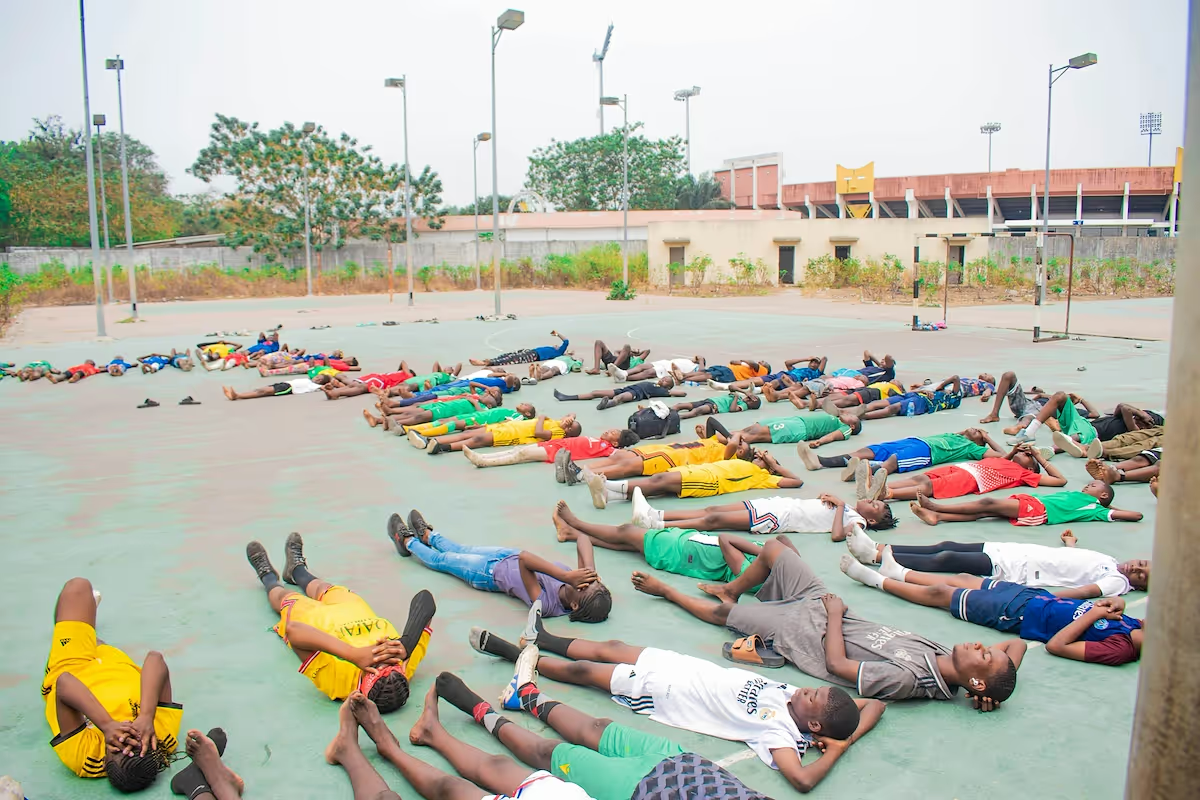
Starting a youth sports training business is a rewarding venture that combines a passion for coaching young athletes with smart business sense. The industry is worth billions, with steady demand for skills training from school teams, local clubs, and individual athletes.
This guide will take you through the practical steps of validating your concept, obtaining the right licenses, selecting a location, and acquiring equipment to help you launch a successful youth sports training business in the U.S.
Step 1: plan your business and validate your idea
First, gauge local demand. You might talk to athletic directors at schools or board members of youth leagues. Ask what skills they need help to develop in their athletes. This helps you define a specific niche, like soccer footwork for kids under 10, instead of a general approach.
With this in mind, identify your competition. A simple Google Maps search for "youth sports training" in your area reveals direct competitors. You can also check local business directories or parent forums on social media to see who else offers similar services and what they charge.
Estimate your startup costs
Your initial investment will vary, but you can create a solid budget. Many new owners make the mistake of underestimating costs, which puts pressure on the business early on. A clear budget prevents this.
- Equipment: $2,000 - $10,000. This covers cones, balls, nets, and other training aids specific to your sport.
- Insurance: $500 - $2,000 annually. Do not just get the cheapest plan. Ensure it specifically covers liability for training young athletes.
- Business Formation & Licenses: $100 - $500. This includes state registration and any local permits.
- Marketing: $500 - $3,000 for a basic website, flyers, and online ads to attract your first clients.
Here are 3 immediate steps to take:
- Contact two local schools or sports leagues to ask about their current training gaps.
- Create a list of 3-5 direct competitors in your area and note their services.
- Draft a preliminary budget with estimated costs for equipment and insurance.
Step 2: establish your legal structure and get licensed
You might want to form a Limited Liability Company (LLC). It separates your personal assets from business debts, which means if the business faces a lawsuit, your personal savings are protected. It is a popular choice for its simplicity and protection.
With an LLC, profits pass through to your personal tax return, which avoids the double taxation you see with C Corporations. It offers more protection than a sole proprietorship, where you and the business are legally the same entity.
Once you choose a structure, get an Employer Identification Number (EIN) from the IRS. It is free and you can apply online. You will need this number to open a business bank account and hire any future employees.
Secure your state and local licenses
Next, register your business with your state's Secretary of State, which can cost between $50 and $300. You will also need a general business license from your city or county. Check their websites for the exact forms and fees.
A frequent misstep is to ignore youth-specific rules. Many cities require special permits for businesses that work with children. You will likely need to complete background checks for all staff through your state's designated agency, a process that can take several weeks.
Also, look into requirements from national governing bodies for your sport, like USA Football or U.S. Soccer. They often mandate certifications, such as the SafeSport training, which is a standard for youth coaches.
Here are 4 immediate steps to take:
- Decide between an LLC and a sole proprietorship for your business structure.
- Apply for a free Employer Identification Number (EIN) on the IRS website.
- Contact your city clerk to identify the specific business licenses you need.
- Research your state’s requirements for background checks for youth coaches.
Step 3: secure insurance and manage risk
Choose the right insurance coverage
General Liability is your foundation, covering injuries and property damage. For youth sports, you should seek at least $1 million in coverage, which typically costs $500 to $2,000 annually. You will also need Professional Liability insurance to protect you if a parent claims your coaching was negligent.
If you hire staff, Workers’ Compensation is mandatory in most states. A frequent error is to buy a generic policy. You must confirm that your plan specifically covers youth athletic activities, as some insurers exclude certain sports. Read the fine print before you commit.
Find a specialized provider
General insurance agents may not understand your specific needs. You might want to get quotes from providers who focus on sports, like K&K Insurance, Sadler Sports & Recreation Insurance, or American Specialty Insurance. They know the risks involved with coaching kids and can offer appropriate coverage.
Plan for specific risks
Beyond basic injuries, you must prepare for serious situations. Your policy should include Abuse and Molestation coverage, which is a standard requirement for businesses that work with minors. Also, create clear safety protocols for concussions and equipment use before your first session.
Here are 4 immediate steps to take:
- Get quotes for a $1 million General Liability policy.
- Ask each provider if their policy includes Abuse & Molestation coverage.
- Contact two specialized sports insurance carriers for rate comparisons.
- Draft a one-page safety protocol for your primary sport.
Step 4: select a location and buy equipment
You will want to find a space zoned for commercial or recreational use. Check with your city’s planning department for specifics. A 1,500 to 3,000 square foot facility is a good start. Many new owners overlook parking and accessibility, so make that a priority.
Negotiate your lease
When you find a spot, you might propose a shorter initial lease of one to two years with an option to renew. This lowers your risk. You can also ask the landlord for a Tenant Improvement (TI) allowance to help pay for any needed renovations.
Purchase your gear
A frequent misstep is buying too much specialized equipment upfront. You can start with basics like agility ladders ($20-$40), sets of cones ($30-$50), and a few portable goals ($100-$300 each). You can find these items from suppliers like BSN Sports or Gopher Sport.
Here are 4 immediate steps to take:
- Research local zoning codes for "recreational facilities" on your city's website.
- Price out a starter equipment package from a supplier like BSN Sports.
- Ask a commercial real estate agent about typical lease terms in your area.
- Create a list of must-have features for a facility, including parking.
Step 5: set up your finances and payment processing
Most trainers charge upfront for a package of sessions or a full season. You might offer a 4-session pack for $200 or a 10-week program for $500. This approach secures your revenue and client commitment from the start.
Before you collect any money, open a dedicated business bank account. This keeps your personal and business finances separate, which simplifies tax time and makes your business look more professional. Your EIN is all you need to open one.
Choose your payment processor
Many new owners get stuck with only cash or checks, which is inconvenient for parents. A frequent mistake is picking a payment system with high fees or monthly charges that eat into your profits, so compare your options carefully.
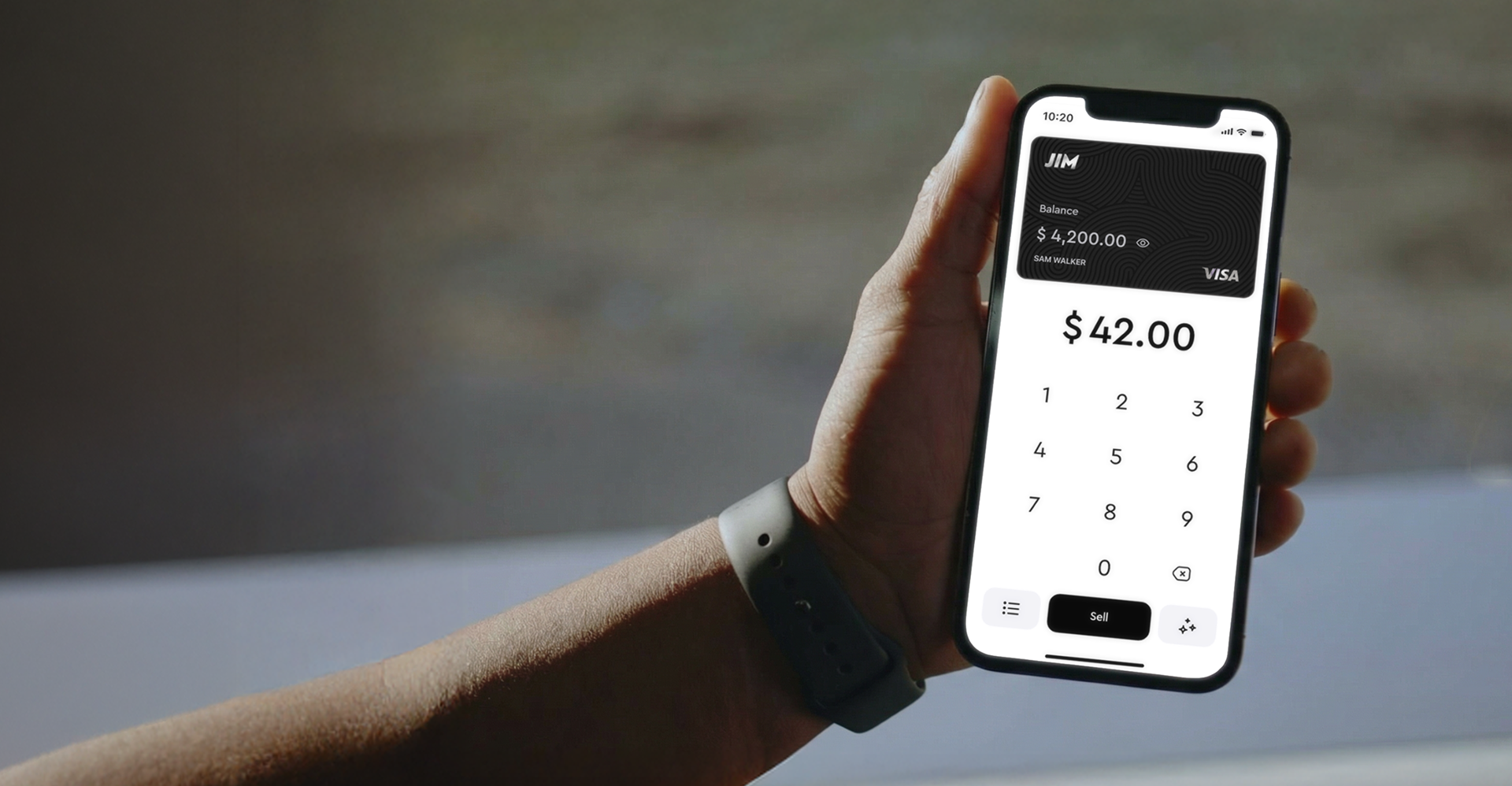
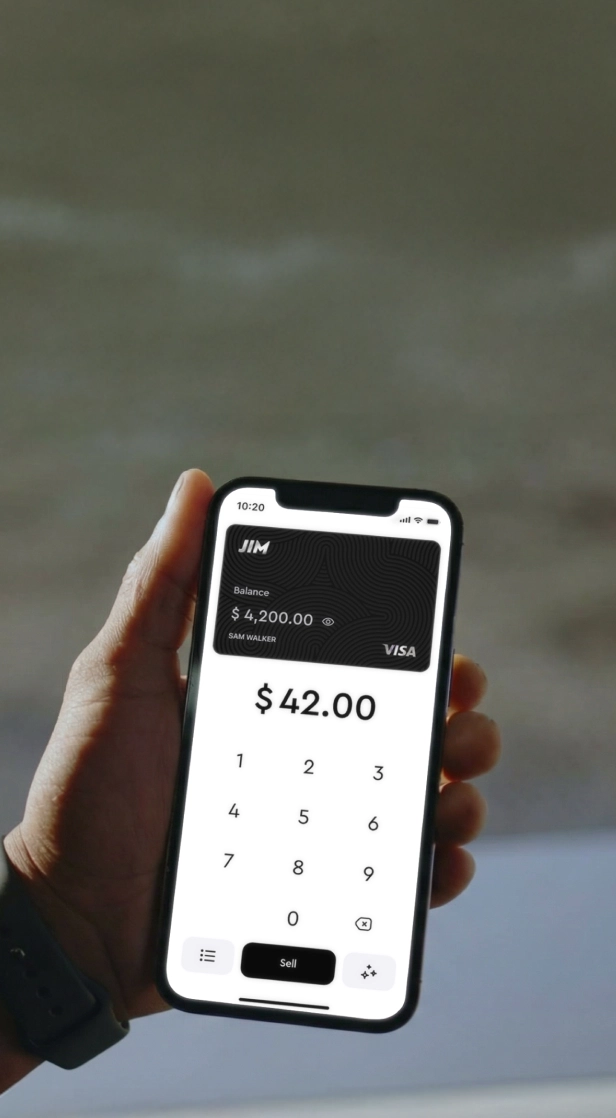
For accepting payments on-site or on-the-go, JIM offers a streamlined solution. With it, you can accept debit, credit, and digital wallets directly through your smartphone. Just tap and the payment is done.
At just 1.99% per transaction with no hidden costs or extra hardware, it provides great value. Other providers often charge 2.5% to 3.5% plus monthly fees. It is particularly useful for collecting drop-in fees at the field or selling branded t-shirts on the spot.
Getting started is straightforward:
- Get Started: Download JIM app for iOS
- Make a Sale: Type the sales amount, hit sell, and ask your customer to tap their card or device on your phone
- Access Funds: Your money is available right on your JIM card as soon as the sale is done - no waiting for bank transfers
Here are 4 immediate steps to take:
- Open a dedicated business bank account using your EIN.
- Decide on your pricing structure, like per-session or seasonal packages.
- Compare payment processing rates, keeping the 1.99% benchmark in mind.
- Download the JIM app to explore its features for collecting payments.
Step 6: secure funding and manage your finances
You might look into an SBA Microloan, which offers up to $50,000. These are great for startups. Interest rates typically range from 8% to 13%. You will need a solid business plan and a decent credit score to qualify.
Also, search for grants. The U.S. Soccer Foundation offers grants for programs that create safe play spaces. Many local community foundations also have funds for youth development projects. These do not require repayment but have specific application cycles.
Estimate your working capital
You will need enough cash to cover expenses for the first six months before you turn a profit. This buffer, known as working capital, prevents early financial strain. It should cover rent, insurance, marketing, and your own salary.
Many new owners forget to include their own salary in this calculation. This puts immense pressure on personal finances. Plan to pay yourself a modest salary from day one, even if it is small. It makes the business more sustainable.
Here are 4 immediate steps to take:
- Research the SBA Microloan program requirements on their website.
- Identify one local community foundation with youth program grants.
- Calculate your working capital needs for the first 6 months.
- Create a simple profit and loss projection for your first year.
Step 7: hire your team and set up operations
Build your coaching staff
You will likely start with an Assistant Coach. Their role is to help run drills and manage small groups. Expect to pay between $15 and $25 per hour. A Lead Coach, who plans sessions and communicates with parents, can earn $25 to $40 per hour.
It is tempting to hire a friend who loves sports, but you need qualified staff. Require all coaches to have First Aid/CPR and SafeSport certifications. Also, run a background check on every person you hire. This is non-negotiable when you work with children.
Streamline your operations
Manual scheduling creates confusion for parents and staff. You might want to use a management platform like TeamSnap or LeagueApps. These systems handle rosters, schedules, and parent communication in one place, which saves you hours of administrative work each week.
As for your finances, a good benchmark is to keep total staff salaries between 40% and 60% of your revenue. This ratio helps ensure your business remains profitable as you grow and add more coaches to your team.
Here are 4 immediate steps to take:
- Draft a job description for an Assistant Coach, listing required certifications.
- Compare the features of TeamSnap and LeagueApps for your needs.
- Set a target coach-to-athlete ratio for your group sessions.
- Outline a simple parent communication plan for schedule updates.
Step 8: market your business and acquire customers
You can start with grassroots marketing to build local trust. Create simple flyers with your program details and post them at community centers, libraries, and local sports shops. This direct approach works well for a community-focused business.
Another powerful strategy is to partner with schools or youth leagues. You might offer to run a free 30-minute demo clinic for a team. This lets parents and kids see your coaching style firsthand, which is often your best sales tool.
Establish your online presence
Create a simple Facebook or Instagram page to share photos and videos from your sessions. You can also post testimonials from happy parents. This builds social proof and gives potential clients a place to see your business in action.
Many new owners make the mistake of spreading their marketing budget too thin across too many platforms. Instead, focus your energy. Join one or two local parent groups on Facebook to answer questions and become a trusted resource.
As you market, track your spending. A good Customer Acquisition Cost (CAC) to aim for is between $50 and $150 per new family. If you spend $300 on flyers and get three sign-ups, your CAC is $100.
Here are 4 immediate steps to take:
- Design a one-page flyer with your contact info and program details.
- Join two local parent groups on Facebook to introduce your business.
- Contact one school's athletic director to offer a free demo clinic.
- Set a marketing budget for your first month, aiming for a CAC under $150.
Step 9: set your pricing and define your services
You can structure your prices in a few ways. Many trainers offer packages, like an 8-session pack for $240, or a monthly membership for unlimited group clinics at $150. Drop-in rates, around $35-$50 per session, are good for trials but less predictable for revenue.
Define your service tiers
Clearly outline what each price includes. For example, a "Beginner Soccer Package" might cover four 60-minute group sessions on fundamentals. A "Private Coaching" option could be $80 per hour. This clarity helps parents choose the right fit and prevents misunderstandings about what they get.
Before you finalize numbers, check what 3-4 local competitors charge. Many new owners make the mistake of just pricing lower. Instead, calculate your prices to achieve a 20-40% profit margin after you account for rent, insurance, and your own time. Your unique value justifies a solid price.
Here are 4 immediate steps to take:
- List the exact services you will offer, from private lessons to group clinics.
- Research the pricing of three local competitors for a comparable service.
- Create two pricing packages, like a 4-session and an 8-session option.
- Calculate your target price per session to achieve a 30% profit margin.
Step 10: maintain quality and scale your operations
To keep parents happy, you need consistent quality. You can measure this with a simple parent feedback survey after each season. Ask them to rate their experience on a 1-10 scale. A score of 9 or 10 is your goal. Also, maintain a low coach-to-athlete ratio, like 1:8, for group sessions.
You might want to get your coaches certified through the Positive Coaching Alliance. This shows parents you are committed to a high standard of youth development, not just athletic skill. It provides a consistent framework for your entire team.
Know when to grow
Once your classes are consistently 80% full for two months, it is time to add more sessions or a new coach. Many owners expand too fast and dilute their coaching quality. Instead, create a training manual that outlines your specific drills and communication style for all new hires.
When you manage more than 100 athletes, a simple scheduler is not enough. You can look at platforms like Upper Hand or iClassPro. They handle complex registrations, waitlists, and multi-location management, which prepares you for the next stage of growth.
Here are 4 immediate steps to take:
- Draft a 3-question parent feedback survey to send after a program ends.
- Set a target coach-to-athlete ratio, such as 1:8, for your sessions.
- Research the Positive Coaching Alliance certification for your staff.
- Review the features of a management platform like Upper Hand or iClassPro.
Starting your youth sports business is about more than just drills and profits. Your real success is the positive impact you have on young athletes. You have the roadmap, so take that first step with confidence.
As you get started, make payments simple. JIM turns your phone into a card reader, so you can accept payments anywhere for a flat 1.99% fee, with no extra hardware. Download JIM to get set up.
.avif)