Starting an ATV rental business is an exciting venture that combines a passion for the outdoors with sharp business acumen. The off-road vehicle market is a multi-billion dollar industry, fueled by consistent demand from tourists, trail riders, and families looking for adventure.
This guide will take you through the practical steps of obtaining the right permits, selecting a location, securing funding, and acquiring your fleet to help you launch a successful ATV rental business in the U.S.
Step 1: Research the market and plan your finances
Start by validating demand. Visit your local tourism board and speak with hotel concierges to understand tourist interest in outdoor activities. You can also browse travel forums like TripAdvisor for discussions about your target area to gauge what visitors are looking for.
Next, analyze your competition. Use Google Maps to identify all ATV rentals within a 50-mile radius. Study their websites, fleet size, pricing structures, and customer reviews. A frequent misstep is entering an oversaturated market without a unique angle, so know who you are up against.
Break down your startup costs
Your initial fleet is the largest investment. A new, reliable ATV costs between $8,000 and $15,000. For a small fleet of five, you should budget $40,000 to $75,000. This is a significant part of your startup capital, so accurate budgeting is important.
In addition, factor in commercial liability insurance, which can run $1,000 to $3,000 per vehicle annually. Other costs include safety gear at about $200 per rider, business licenses, and booking software like FareHarbor, which can have setup or monthly fees.
- Here are 4 immediate steps to take:
- Contact your local tourism office to request visitor data.
- Identify and list the pricing for three direct competitors.
- Create a detailed startup budget with itemized cost estimates.
- Request an initial insurance quote from an agent who specializes in powersports.
Step 2: Establish your legal structure and get licensed
Choose your business structure
Forming a Limited Liability Company (LLC) is a smart move. It separates your personal assets from business debts, which is important in a high-risk industry. Profits pass through to your personal taxes, which simplifies accounting.
An S Corporation is another option that can offer tax advantages once your business becomes more profitable. You might want to consult a CPA to compare the two based on your projected income.
Secure federal, state, and local permits
First, get a free Employer Identification Number (EIN) from the IRS website. You will need this for taxes and hiring. Next, register your LLC with your state’s Secretary of State. This typically costs between $50 and $500.
Your city or county clerk’s office will issue a general business license. However, many new owners mistakenly stop there. You will likely need a Special Use Permit to operate on public lands, which can take several months to secure from agencies like the Bureau of Land Management (BLM).
- Here are 4 immediate steps to take:
- Decide between an LLC and an S-Corp after a brief CPA consultation.
- Apply for a free EIN directly on the IRS website.
- Check your Secretary of State’s website for LLC filing fees and timelines.
- Contact the local BLM or state park office about their permit process.
Step 3: Secure insurance and manage risk
You will need several layers of insurance. Start with General Liability coverage of at least $1 million. Also, get a Commercial Auto policy for your fleet. Premiums can range from $1,000 to $3,000 per ATV annually, so this is a significant operational cost to budget for.
If you plan to hire employees, you must also have Workers’ Compensation insurance. In addition, Property Insurance protects your office, gear, and other physical assets from events like theft or fire.
A mistake some new owners make is to use a general insurance agent. You should instead contact providers who specialize in powersports, like McGraw Powersports, XINSURANCE, or CBIZ Sattler. They understand the industry and can ensure your policy covers off-road commercial use.
Develop your risk management plan
Beyond insurance, a solid liability waiver is your first line of defense. Have a lawyer draft this document to make sure it is enforceable in your state. It should clearly outline all potential risks that customers accept before they get on an ATV.
You must also implement mandatory safety briefings and gear checks for every renter. This practice not only reduces accidents but also shows your commitment to safety, which can help with your insurance rates over time.
- Here are 4 immediate steps to take:
- Request quotes from two powersports-specific insurance providers.
- Ask a lawyer to review your rental agreement and liability waiver.
- Confirm your commercial auto policy explicitly covers off-road use.
- Create a checklist for your pre-ride safety briefing.
Step 4: Select your location and buy equipment
Look for a property with at least 2,000 square feet. You need space for an office, gear storage, and vehicle maintenance. Check with your local planning department for zoning requirements; you will likely need a Commercial General (CG) or Light Industrial (LI) classification.
When you negotiate a lease, ask for a large, accessible outdoor area for loading and customer parking. A mistake some owners make is to focus only on the building, but you need ample space to maneuver trailers and stage your ATVs for rentals.
Purchase your fleet and gear
Beyond the ATVs themselves, you need a reliable utility trailer, which can cost between $3,000 and $7,000. You will also need safety equipment for each rider. Budget around $150-$300 per person for a DOT-approved helmet, goggles, and gloves.
You might be tempted to buy cheaper consumer-grade helmets, but commercial-use safety gear is a requirement for most insurance policies. For parts and accessories, you can open accounts with distributors like Tucker Powersports, but for the ATVs, build a relationship directly with a local dealership for fleet pricing and service.
- Here are 4 immediate steps to take:
- Contact your city’s planning department about CG or LI zoning.
- Get quotes for a 12-foot utility trailer from two local dealers.
- Price out five sets of DOT-approved helmets and goggles.
- Ask an ATV dealership about their fleet purchase programs.
Step 5: Set up your payment system
You will need to accept credit cards, as most customers expect this. It is also standard practice to place a security deposit hold of $500 to $1,500 per ATV on the customer's card to cover potential damages.
A frequent oversight is underestimating transaction fees, which can eat into profits. While many processors charge 2.5% to 3.5% plus monthly fees, better rates are available if you know where to look.
Handle on-the-go payments
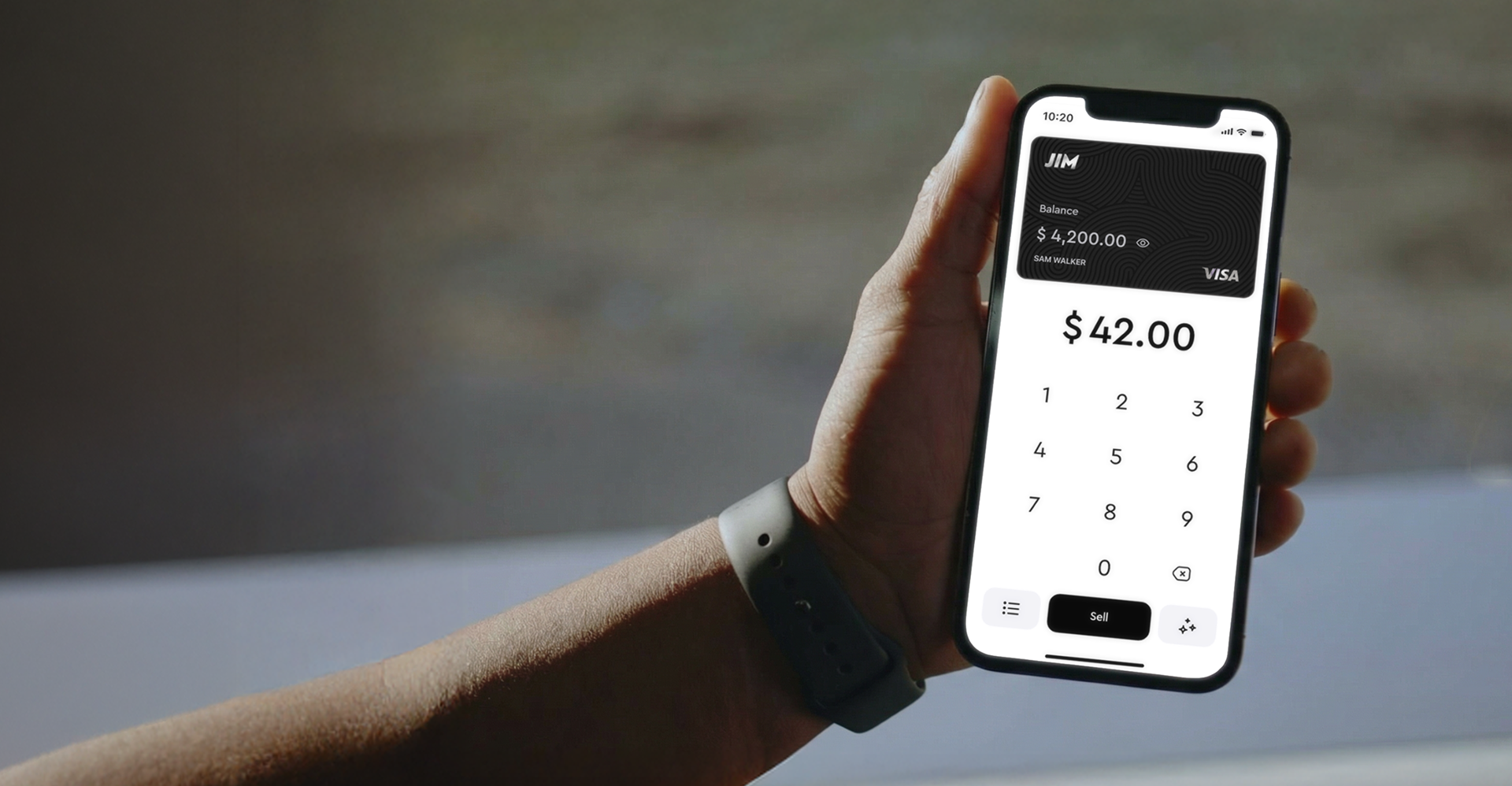
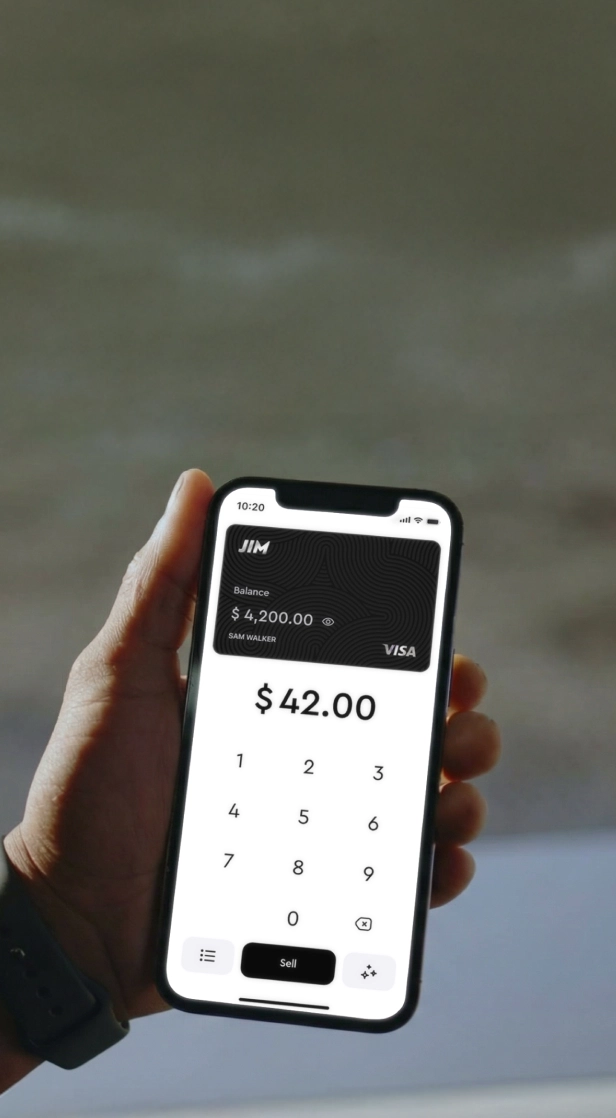
For a business that needs to accept payments on-site or on-the-go, JIM offers a streamlined solution. With JIM, you can accept debit, credit, and digital wallets directly through your smartphone—just tap and done.
At just 1.99% per transaction with no hidden costs or extra hardware needed, it is particularly useful for handling walk-up customers or selling tour upgrades right at the trailhead.
- Get Started: Download the JIM app for iOS.
- Make a Sale: Type the sales amount, hit sell, and ask your customer to tap their card or device on your phone.
- Access Funds: Your money is available right on your JIM card as soon as the sale is done—no waiting for bank transfers.
Here are 3 immediate steps to take:
- Decide on a standard security deposit amount for your ATVs.
- Download the JIM app to see how it works on your phone.
- Compare JIM’s 1.99% rate to two other payment processors.
Step 6: Secure your funding and manage finances
An SBA 7(a) loan is a strong option for funding. Lenders favor these because the government guarantees a portion of the loan. For a startup fleet and initial expenses, you might seek between $75,000 and $150,000. Expect interest rates around the Prime rate plus 3-5%.
You could also pursue equipment financing, which uses the ATVs themselves as collateral. This often has a faster approval process than traditional loans. A frequent oversight is to mix personal and business funds, so open a dedicated business bank account as soon as your LLC is formed.
Calculate your working capital
Lenders will want to see you have enough cash to cover at least six months of operating expenses without any income. This is your working capital. For a small operation, this typically falls between $25,000 and $35,000 to cover rent, insurance, maintenance, and marketing.
Many new owners get denied for loans because they only ask for enough to buy the ATVs. You must include this six-month operating buffer in your loan application to show you can survive a slow start. Your local Small Business Development Center (SBDC) can help you prepare these projections for free.
Here are 4 immediate steps to take:
- Contact your local SBDC for free help with your loan application.
- Request an equipment financing quote for a five-ATV fleet.
- Calculate your estimated 6-month operating expenses for your loan proposal.
- Open a dedicated business checking account at your local bank or credit union.
Step 7: Hire your team and set up operations
Your first hire should be a reliable Tour Guide. This person leads tours, handles safety briefings, and performs basic vehicle checks. Plan to pay a competitive wage, typically $18 to $25 per hour plus tips, to attract experienced candidates who ensure a great customer experience.
At a minimum, require all guides to have current First Aid and CPR certifications. Some states also mandate specific off-road guide licenses, so you will want to check with your local Department of Natural Resources for any specific training requirements in your area.
Streamline your daily operations
A good rule of thumb for staffing is one guide for every four to five customer ATVs. This ratio ensures safety and a personalized experience. To manage schedules without headaches, you can use a simple app like Homebase to coordinate shifts and communicate with your team.
Some new owners try to save money by hiring friends without experience or by running tours understaffed. This often leads to poor reviews and safety lapses, which can damage your reputation before you even get going. Invest in qualified staff from day one.
Here are 4 immediate steps to take:
- Draft a job description for a Tour Guide with pay and required certifications.
- Check your state’s website for any off-road guide licensing rules.
- Set your guide-to-customer ratio for all tours.
- Explore a scheduling app like Homebase to see its features.
Step 8: Market your business and get customers
Start with local partnerships. Approach hotel concierges and visitor centers with a proposal that offers a 10-15% commission on referred bookings. This channel often converts well because the customer already trusts the source of the recommendation.
Your website is your digital storefront, so make it count. It needs high-quality photos and videos that show the experience, not just the vehicles. Integrate a booking system like FareHarbor or Peek Pro to allow customers to reserve their spot 24/7.
Build your online audience
Focus your social media efforts on Instagram and Facebook. A mistake some owners make is to post static pictures of their fleet. Instead, you should post short video clips of customers enjoying the trails. This shows the fun and helps potential renters picture themselves there.
You can also run targeted Facebook ads. Aim them at users whose recent behavior shows they are "in-market for travel" and are located within 20 miles of your business. A small budget of $10-$20 per day is enough to start generating initial bookings.
Finally, claim your Google My Business profile right away. Encourage every customer to leave a review, as this is a powerful trust signal for new renters. Make sure to respond to all feedback, both positive and negative, to show you are an engaged owner.
Here are 4 immediate steps to take:
- Draft a partnership email to send to three local hotels.
- Claim and complete your Google My Business profile.
- Set up a test Facebook ad campaign with a $10 daily budget.
- Compare the features of FareHarbor and Peek Pro for your website.
Step 9: Set your pricing and profit margins
Start by offering both hourly and package rates. A common structure is $90-$150 per hour for a single-rider ATV. You can also offer a half-day (4-hour) package for around $350 or a full-day (8-hour) rental for $550. This encourages longer, more profitable bookings.
Price your guided tours separately
Guided tours should command a premium. Price them per person, not per vehicle. A three-hour guided tour could be priced at $225-$300 per rider. This reflects the value of the guide’s expertise, access to exclusive trails, and the curated experience you provide.
Your goal should be a gross profit margin of 50-60% per rental. Many owners make the mistake of only covering fuel and insurance. You must also factor in $15-$25 per rental hour for long-term maintenance and eventual vehicle replacement to avoid future cash flow problems.
While it is tempting to undercut competitors, this often starts a race to the bottom. Instead, position your business as a premium option. Justify higher prices with newer ATVs, superior safety gear, and exceptionally trained guides. Customers will pay more for a better, safer experience.
Here are 4 immediate steps to take:
- Set your final hourly, half-day, and full-day rental rates.
- Create two guided tour packages with per-person pricing.
- Calculate your profit per rental after factoring in all costs.
- Write a short statement explaining why your experience justifies your price.
Step 10: Maintain quality and scale your operation
Establish your quality standards
Your reputation depends on vehicle reliability. Implement a strict daily inspection protocol for each ATV. A simple checklist can ensure guides check tire pressure, fluid levels, and brakes before and after every rental. Aim for a fleet readiness rate of 95% or higher.
To measure service quality, track customer feedback. Use your booking software to send an automated post-rental survey. Your goal should be an average rating of 4.8 stars or higher. Also, monitor your repeat customer rate, as a 10-15% return rate is a strong sign of success.
Know when to grow
With your standards in place, you can look for growth signals. When your fleet utilization consistently exceeds 75% during peak season, it is time to add more ATVs. You might consider hiring a second full-time guide once you average more than 10 guided tours per weekend.
Many owners make the mistake of only budgeting for new vehicles. Remember that adding two ATVs also means higher insurance premiums, more maintenance hours, and a larger marketing spend. Factor these operational cost increases into your growth plan to avoid cash flow issues.
Here are 4 immediate steps to take:
- Create a daily pre- and post-ride vehicle inspection checklist.
- Set up an automated email to request customer reviews after each rental.
- Calculate your fleet utilization rate from last month to set a growth benchmark.
- Project the increased insurance and maintenance costs for adding two more ATVs.
You now have the steps to build a successful ATV rental business. Remember that you are selling an adventure, not just a rental. Prioritize safety and excellent service, and your reputation will drive your growth. Now, go make it happen.
And when it comes to payments, keep it simple. JIM lets you accept cards on your smartphone for a 1.99% transaction rate, with no extra hardware. This makes it easy to handle walk-ups or on-site upgrades. Download JIM and you are ready.
.avif)