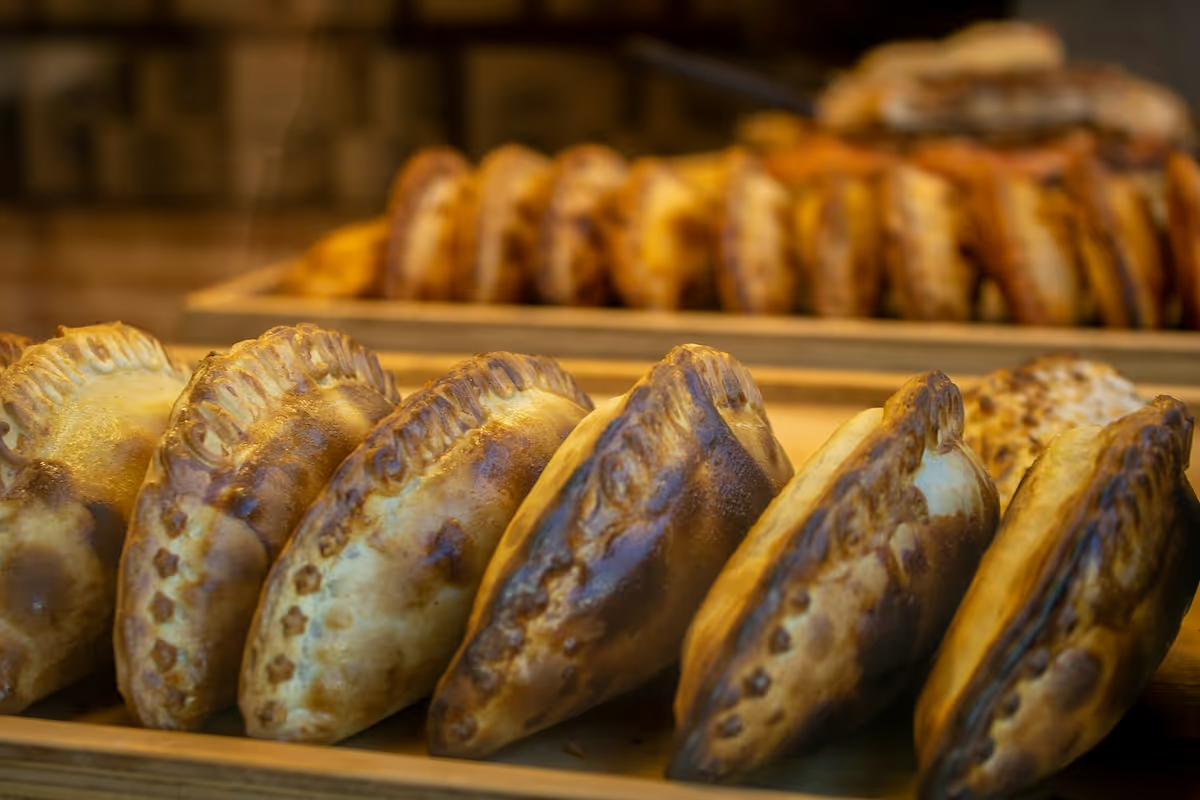
Starting an empanada business is a rewarding venture that combines your culinary passion with business savvy. The market is quite accessible thanks to the product's versatility and lower startup costs than a full restaurant, but this accessibility also means you'll face competition.
This guide will take you through the practical steps of validating your business concept, obtaining necessary licenses, selecting the right location, and acquiring equipment to help you launch a successful empanada business in the U.S.
Step 1: Plan your business and validate your concept
Start by researching your local market. Visit farmers' markets and food truck rallies to see what sells, note pricing, and talk to customers. You can also create a simple survey with Google Forms to ask potential buyers about their preferred fillings and what they would pay.
Next, analyze your competition. Use Google Maps and Yelp to find other empanada sellers in your area. A frequent misstep is forgetting to check social media. Search Instagram for #[YourCity]Food or #empanadas to find pop-up competitors who are not on official maps.
Understand your startup costs
Your initial investment for a food cart or kiosk setup typically ranges from $10,000 to $50,000. Having a clear budget is important, as the initial expenses can feel substantial. It helps to break down the major costs to see where your money will go.
- Food Cart or Kiosk: $3,000 - $20,000
- Cooking Equipment (fryer, warmer, fridge): $2,000 - $10,000
- Licenses and Permits: $500 - $2,000
- Initial Inventory and Supplies: $1,000 - $3,000
Here are 4 immediate steps to take:
- Visit two local food markets to observe customer behavior and pricing.
- Create a 5-question survey for potential customers using Google Forms.
- List all direct empanada competitors within a 10-mile radius.
- Draft a preliminary budget using the cost ranges provided above.
Step 2: Establish your legal structure and get licensed
First, form a Limited Liability Company (LLC). This structure protects your personal assets if the business faces debt or lawsuits. It also offers pass-through taxation, which means profits are taxed on your personal return, a simpler setup than a corporation.
Secure your licenses and permits
With your legal entity sorted, get a free Employer Identification Number (EIN) from the IRS website. You need this for taxes and to hire employees. Next, visit your state's Secretary of State website to officially register your business name and entity.
Your local health department is the main agency you will work with. Many people underestimate the time this takes. Plan for a 30-90 day window for approvals, so it is smart to start this process early. You will likely need the following:
- Food Handler's Permit: For anyone who touches food. Costs are around $15-$50 per person.
- Health Department Permit: For the business itself. Expect to pay $200-$1,000 annually.
- Mobile Vending Permit: Specific to your city or county. Costs vary from $100 to over $1,500.
Here are 4 immediate steps to take:
- File for an LLC through your state's business portal.
- Apply for a free EIN on the IRS website.
- Download the food vendor application from your local health department's website.
- Find and enroll in a state-approved Food Handler's Permit course online.
Step 3: Secure your insurance and manage risk
Insurance protects your investment from the unexpected. Budgeting for it early prevents financial strain later. For a food cart, you should plan for annual premiums between $1,000 and $4,000, depending on your coverage and location.
Key insurance policies for your business
You will want to secure a few specific policies. Many new owners make the mistake of getting a basic policy, only to find it does not cover food-specific incidents. Always confirm your policy includes Product Liability, which covers claims of foodborne illness.
- General Liability: Covers customer slips and falls. A $1 million policy is standard, with annual premiums from $400 to $700.
- Commercial Property: Protects your cart and equipment from theft or damage. Coverage should match your equipment's value.
- Workers' Compensation: Required in most states if you have even one employee. Costs are a percentage of your payroll.
- Commercial Auto: If you use a vehicle for business, your personal auto policy will not cover it.
With this in mind, consider providers that specialize in the food industry. Companies like the Food Liability Insurance Program (FLIP), Insureon, and Next Insurance understand the risks of a mobile food business and can offer tailored packages.
Here are 4 immediate steps to take:
- Request quotes from food-specific insurers like FLIP or Insureon.
- Confirm your General Liability policy explicitly includes Product Liability coverage.
- Create an inventory of your equipment to determine your Commercial Property coverage needs.
- If you plan to hire, research your state's Workers' Compensation requirements.
Step 4: Find a location and buy equipment
Find your prep space
You will prepare your food in a licensed commissary kitchen. Look for a space between 200-500 square feet. Check your city’s zoning codes for areas marked for commercial use, often labeled C1 or C2, that permit food production.
When you find a spot, try to negotiate a short-term lease of 3-6 months. Many new owners make the mistake of signing a year-long lease before they have steady income. An hourly rental is an even better way to start.
Purchase your equipment
Your equipment choices directly affect your workflow and product quality. A frequent oversight is to use residential appliances; they will not pass a health inspection and cannot handle the volume. You need commercial-grade, NSF-certified items.
Here is a basic list with average costs:
- Commercial Deep Fryer (2-basket): $800 - $2,500
- Dough Sheeter: $1,500 - $4,000
- Heated Holding Cabinet: $1,000 - $3,000
- Commercial Refrigerator: $2,000 - $5,000
Suppliers like WebstaurantStore or Restaurant Depot are good places to start. For equipment, you can typically buy single units. For ingredients, you will need to meet case-pack minimums.
Here are 4 immediate steps to take:
- Identify three commissary kitchens in your area and compare their hourly rates.
- Review your city’s zoning map for districts that allow commercial food preparation.
- Price out a commercial deep fryer and dough sheeter from a supplier like WebstaurantStore.
- Ask potential landlords about their willingness to accept a 6-month initial lease.
Step 5: Set up your payment processing
Choose your payment system
Most customers expect to pay with a card or phone, so you need a reliable way to accept cashless payments. Many new owners pick a system without looking at the fees, but those small percentages add up. A typical rate is 2.6% plus 10 cents per tap.
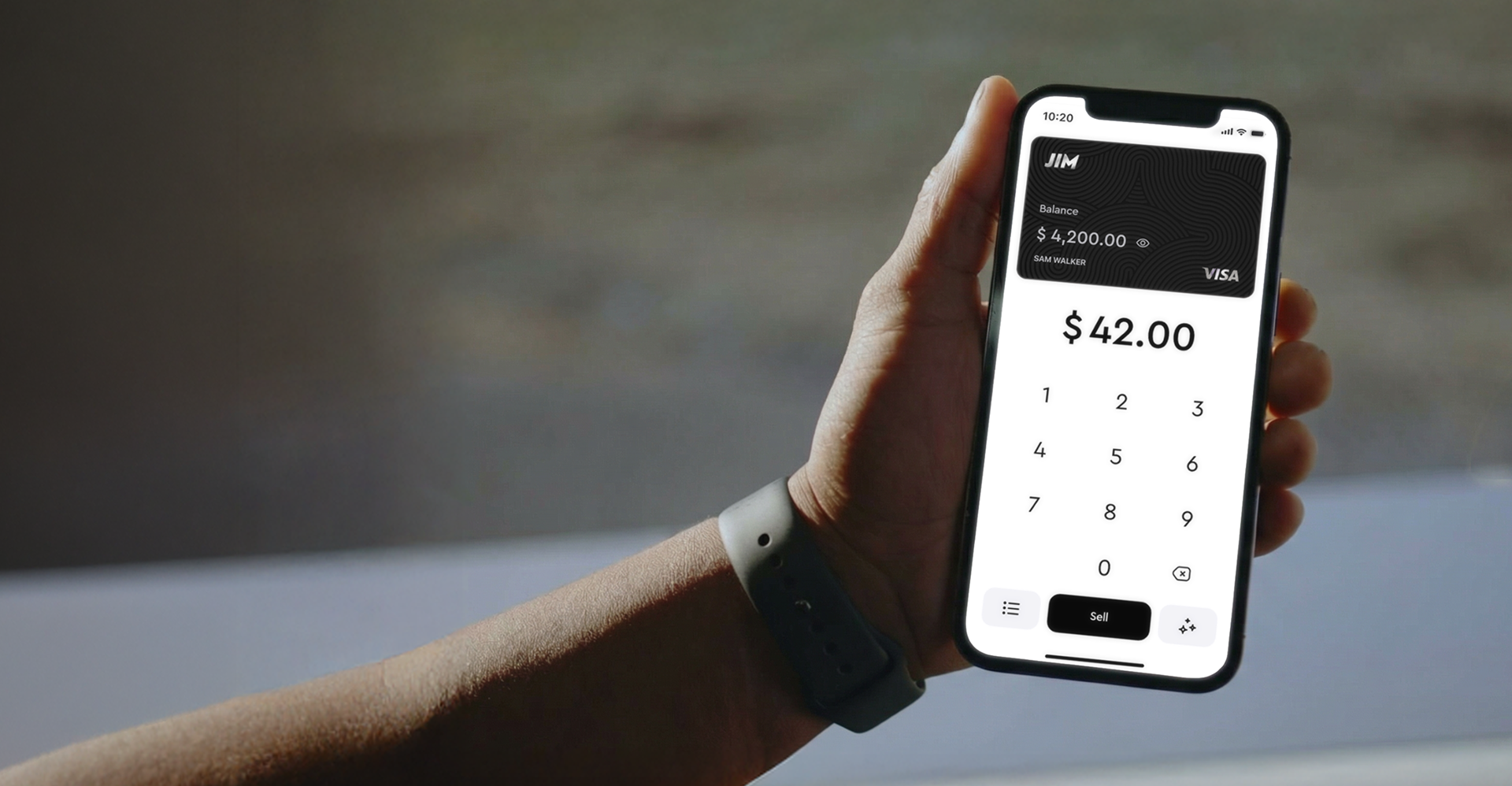
For a mobile business that needs to accept payments on the go, JIM offers a streamlined solution. With JIM, you can accept debit, credit, and digital wallets directly through your smartphone. Just tap and you are done. The rate is a flat 1.99% per transaction with no hidden costs.
This is much lower than the average 2.5% to 3% plus extra fees other providers charge. Since no extra hardware is needed, it is particularly useful for keeping your counter space clear at a busy farmers' market or food truck rally.
Here is how it works.
- Get Started - Download the JIM app for iOS.
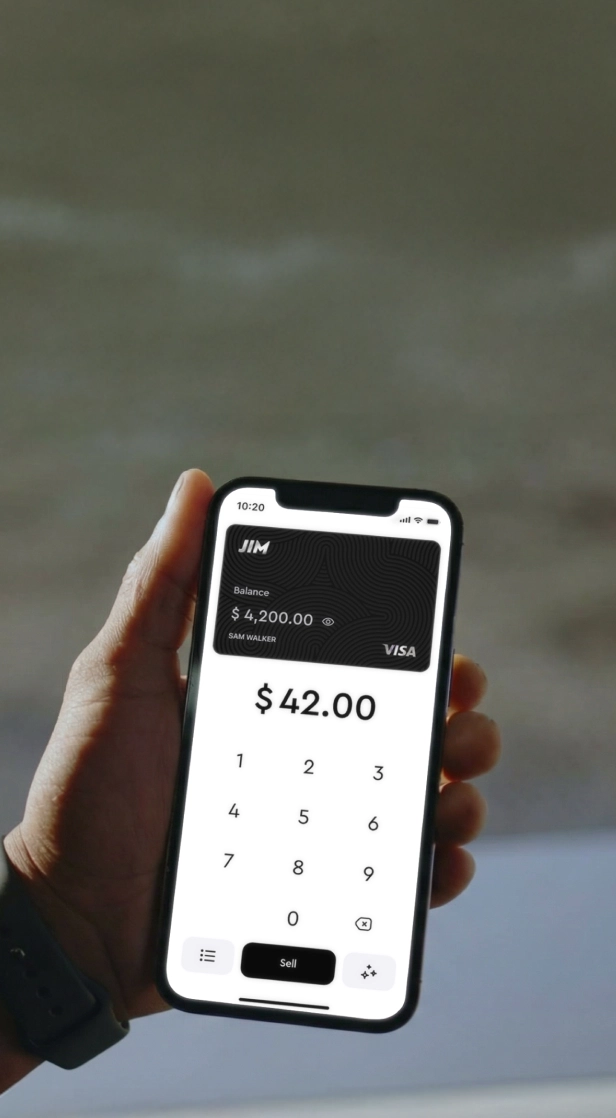
- Make a Sale - Type the sales amount, hit sell, and ask your customer to tap their card or device on your phone.
- Access Funds - Your money is available right on your JIM card as soon as the sale is done, with no waiting for bank transfers.
Here are 3 immediate steps to take
- Calculate your potential monthly savings with a 1.99% rate versus a standard 2.6% rate based on your sales forecast.
- Download the JIM app to see the interface for yourself.
- Decide if you will also accept cash and plan how you will manage your cash float and deposits.
Step 6: Fund your business and manage finances
With your plan in place, it is time to secure funding. Many new owners assume they need a large bank loan, but smaller, more accessible options are often a better fit. Look into SBA Microloans, which offer up to $50,000 and are designed for startups.
Community Development Financial Institutions (CDFIs) are another great resource. They focus on supporting local businesses. For these loans, expect interest rates between 6-9% and have a business plan and a personal credit score over 650 ready to show.
Calculate your working capital
You need cash on hand for the first six months. A good target is between $5,000 and $15,000. This fund covers your initial inventory, commissary kitchen rent, marketing costs, and any unexpected equipment repairs. Underestimating this is a frequent misstep that can stall a new business.
Also, search for grants. While not guaranteed, they provide funds you do not have to repay. Use search terms like "[Your City] small business grant" or check with your local economic development agency for food entrepreneurship programs.
Here are 4 immediate steps to take:
- Research two SBA Microloan lenders in your state.
- Draft a six-month budget to determine your exact working capital needs.
- Check your personal credit score to see where you stand.
- Search your city’s economic development website for local business grants.
Step 7: Hire your team and set up operations
As you grow, you cannot do it all alone. Your first hires will likely be a Prep Cook to handle food production and a Cashier to manage sales. This frees you up to oversee the entire operation.
Define roles and pay
A Prep Cook will manage dough, prepare fillings, and assemble empanadas. Expect to pay between $15 and $20 per hour. A Cashier takes orders and provides customer service. Their pay is often $12 to $16 per hour, plus tips.
Everyone who handles food must have a Food Handler's Permit. Many new owners make the mistake of hiring friends without clear roles, which can lead to confusion. Create simple, one-page job descriptions to avoid this.
Streamline your scheduling and costs
Use a scheduling app like 7shifts or Homebase to manage shifts. Many offer free plans for small teams. This helps you track hours and avoid understaffing during your busiest times, like the lunch rush.
Aim to keep your total labor cost below 30% of your revenue. This is a standard benchmark for food businesses. As you schedule, watch this percentage to maintain profitability without sacrificing service quality.
Here are 4 immediate steps to take:
- Draft one-page job descriptions for a Prep Cook and a Cashier.
- Check local job boards to confirm competitive pay rates in your area.
- Sign up for a free plan with a scheduling app like 7shifts or Homebase.
- Add the Food Handler's Permit requirement to your job descriptions.
Step 8: Market your business and get customers
Your marketing begins on social media. Focus on Instagram, where food visuals perform best. Post high-quality photos of your empanadas and use local hashtags like #[YourCity]Foodie. A frequent misstep is inconsistent posting; aim for 3-5 posts per week to stay on your customers' radar.
Build local buzz
Partner with non-competing businesses. You could supply empanadas for a local brewery's trivia night or an office lunch. This introduces your product to an established customer base. Also, consider a simple loyalty program, like a "buy nine, get one free" punch card, to encourage repeat visits.
Run a one-day special, such as "Flavor of the Week," and promote it on social media. This creates urgency and can boost sales by 15-20% for that day. Track your results to see which promotions work best. Your goal is to build a loyal following, not just one-time buyers.
Here are 4 immediate steps to take:
- Create an Instagram business profile and plan your first week of posts.
- List three local businesses, like a coffee shop or office park, to approach for a partnership.
- Design and print simple "buy 9, get 1 free" punch cards.
- Run a one-day "buy two, get one free" special and track the sales lift.
Step 9: Price your empanadas for profit
First, calculate your cost per empanada. This number must include ingredients, labor, and a fraction of your overhead like kitchen rent. A good target for your food cost is 25-35% of your menu price. Many new owners guess this number, which can quietly erase profits.
Create your pricing structure
With your cost per unit known, you can set a price. A standard food service markup is 300%. If one empanada costs you $1.25 to make, a 300% markup puts your menu price at $3.75. This leaves you with a 75% gross profit margin before other expenses.
Next, research your competitors' prices. If they sell for $4.00, pricing at $3.75 could give you an edge. If your empanadas are larger or use premium ingredients, you might justify a price of $4.50. Your price tells a story about your quality.
You should also create bundle deals to increase the average order value. Consider a "3 for $10" special or a lunch combo with a drink for $12. These offers encourage customers to spend more than they might have planned, which boosts your daily revenue.
Here are 4 immediate steps to take:
- Calculate your exact cost to make one empanada, including all ingredients and labor.
- Research the menu prices of three direct competitors in your area.
- Decide on a target food cost percentage for your business, aiming for 25-35%.
- Draft two bundle deals, such as a multi-pack and a meal combo.
Step 10: Control quality and scale your operations
Maintain consistent quality
Create a simple quality checklist. For every batch, check one empanada for a target weight, like 4.5 ounces, and a safe internal temperature of 165°F. Many new owners rely on memory, but a written standard prevents inconsistent customer experiences.
You can also track customer feedback. A simple comment card or a quick question at checkout provides valuable data. If you receive more than two complaints about the same issue in a week, it is time to review your process.
Know when to grow
Growth should be data-driven. When you consistently sell out two hours before closing for a full month, it is a sign to increase production. Another key metric is when your prep time for one person exceeds four hours daily. That is your cue to hire a prep cook.
To manage this growth, you might consider inventory software like MarketMan or Orca. These systems help track ingredient usage and automate reordering when you expand. They can connect directly with suppliers like Restaurant Depot, which simplifies your supply chain.
Here are 4 immediate steps to take:
- Create a quality checklist with a target weight and temperature for your empanadas.
- Decide on a customer feedback method, such as a simple comment card.
- Set a benchmark for when to hire, like when daily prep time exceeds four hours.
- Research an inventory management system like MarketMan for future growth.
You now have the roadmap for your empanada business. The most important thing to remember is that consistent quality and great flavor are what create loyal customers. With a solid plan in hand, you are ready to start.
As you prepare for your first sales, a simple solution like JIM lets you accept payments right on your smartphone, with no extra hardware. The flat 1.99% fee helps keep your costs predictable. Download JIM and you are set to go.
.avif)